
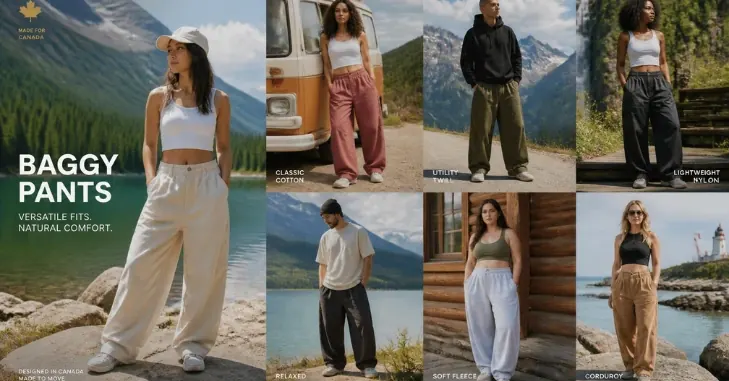
Loose silhouettes can feel comfortable without making an outfit look unfinished. Baggy pants give Canadian wardrobes room, movement, and plenty of styling flexibility. The right pair depends on shape, fabric, rise, length, and how you plan to wear them.
A relaxed pair should feel roomy through the hips and legs without sliding at the waist. Choose fabric weight around the season and your commute. Use one clear anchor, such as a fitted top or structured jacket. That contrast keeps the extra volume intentional, not accidental.
| What to check | Practical starting point | Why it matters |
| Waist | Secure without pinching | Keeps the silhouette anchored |
| Rise | Mid or high for easier styling | Creates clearer proportions |
| Leg shape | Relaxed, wide, barrel, cargo, or parachute | Changes the outfit’s overall direction |
| Hem | Clean break or controlled stacking | Prevents dragging and excess bunching |
| Fabric | Match weight to season and use | Affects drape, warmth, and structure |
| Shoes | Choose them before judging length | Footwear changes how the hem falls |
| Canadian weather | Consider rain, snow, salt, and heat | Long hems can become impractical outdoors |
Are Baggy Pants Still in Style in Canada in 2026?
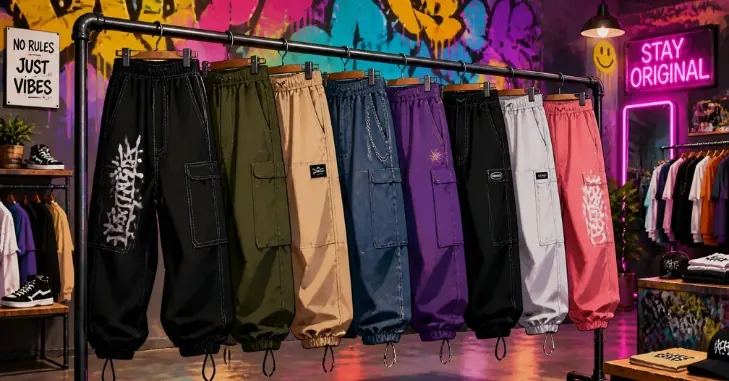
Baggy Pants Relaxed denim remains visible in major fashion coverage during 2026. Vogue highlighted loose denim as a continuing street-style and model-off-duty silhouette in January. British Vogue later covered slightly cleaner versions sitting between wide and straight cuts.
Current styling advice is also moving away from oversized clothing everywhere at once. A September 2026 stylist interview recommended concentrating volume in one part of an outfit. That approach works naturally with roomy bottoms and cleaner tops or jackets.
This shift matters for Canadian wardrobes because practicality often determines whether a trend earns repeat wear. Long hems may work beautifully indoors but struggle with rain, slush, or snow. A slightly cleaner cut can keep the relaxed effect while making daily wear easier.
Choose the Shape Before You Choose the Size
A loose silhouette can come from several different cuts. Wide-leg trousers stay roomy higher up the leg, while barrel shapes curve out before narrowing. Cargo and parachute styles add volume through construction, pockets, gathers, or lightweight fabric.
| Style | Strong fit for | Advantages | Trade-offs |
| Relaxed denim | Everyday casual outfits | Durable, familiar, easy to layer | Heavy denim can feel bulky |
| Wide-leg trousers | Polished casual or workwear | Clean drape and versatile styling | Extra length needs careful hemming |
| Cargo trousers | Streetwear and casual outfits | Useful pockets and stronger detail | Large pockets add visual weight |
| Parachute styles | Warm weather and casual wear | Lightweight and easy to move in | Thin fabric can look highly casual |
| Barrel-leg styles | Fashion-led everyday outfits | Distinct shape without extreme width | Curved proportions need suitable shoes |
For a first pair, start with relaxed denim or a softly structured wide-leg trouser. Both shapes work with more tops and footwear than highly exaggerated cuts. Save dramatic pockets or extreme volume for wardrobes that already support those details.
Use the Three-Point Fit Test
Don’t assume a loose look means buying several sizes larger. The garment should still fit deliberately at its main anchor points. Check the waist, seat, and hem before deciding whether the size works.
1. Check the waist anchor
The waistband should stay where you intend to wear it. It should not require constant pulling, tightening, or repositioning. A belt can add style, but it should not rescue an incorrect size.
2. Look for room through the seat
The seat should have ease without creating a large empty pocket of fabric. Sit down and walk before judging the fit. Fabric should move freely without pulling sharply across the hips.
3. Judge the hem with your shoes
Try the trousers with footwear you expect to wear regularly. A slight break can create a relaxed appearance without covering the entire shoe. Longer stacking needs more care during wet Canadian seasons.
This approach separates intentional looseness from simply wearing a garment that is too large. It also makes online size charts more useful. Compare garment measurements with a relaxed pair you already own.
Pick Fabric for Weather and Repeat Wear
Denim offers enough structure to hold a loose silhouette clearly. Medium-weight cotton twill gives a similar effect with less denim texture. Both fabrics work well for spring, fall, and many cooler summer days.
Light cotton, linen blends, and technical woven fabrics suit warmer conditions. Wool blends and heavier twills make more sense once temperatures fall. Fabric weight matters as much as fibre because two cotton trousers can feel completely different.
If you prefer cropped proportions during warmer weather, StyleVanta’s capri pants guide explains how hem placement changes an outfit. The Bermuda shorts guide also covers longer, relaxed summer silhouettes. Both options add volume without letting fabric reach the ground.
Style a Roomy Silhouette Without Looking Swallowed
The simplest approach is to create one visual anchor. A fitted tee, compact knit, tucked shirt, or shorter jacket can define the upper body. You do not need a cropped top if that is not your preference.
Oversized tops can still work with loose bottoms. Add structure with a visible waistband, an open shirt, defined shoulders, or deliberate layering. This keeps the outfit directional instead of letting every piece blend.
Shoes can either continue the volume or create contrast. Sneakers, loafers, boots, ballet flats, and heels all appear with relaxed denim in current fashion coverage. Vogue’s2026 styling examples show that the silhouette can move between casual and polished combinations.
For long hems, judge footwear before paying for alterations. A pair tailored for sneakers may sit differently over boots or slim flats. Keeping one main shoe category in mind makes the final length easier to choose.
Canadian Seasonal Outfit Formulas
- Spring: relaxed denim + fitted knit + trench or light jacket + sneakers.
- Summer: lightweight wide trousers + tank or tee + open shirt + sandals.
- Early fall: loose denim + fine knit + bomber or field jacket + loafers.
- Cold fall: structured wide trousers + sweater + wool coat + boots.
- Winter indoors: roomy trousers + low-bulk base layer + knit + indoor shoes.
Canadian fall often rewards removable layers instead of one bulky outfit.StyleVanta’s fall clothes guide covers dressing for changing temperatures during the same day. That approach works especially well with a roomy lower half.
Winter creates a different problem because hems meet snow, salt, and wet pavement. Choose a cleaner break when you walk or use public transit frequently. You can still keep volume through the leg without letting the fabric sweep the ground.
Can Relaxed Fits Work for Business Casual?
They can work when the fabric and construction resemble tailored trousers. Look for clean pleats, structured waistbands, simple colours, and controlled hems. Avoid treating sweatpants or highly distressed denim as automatic office substitutes.
Pair a polished version with a knit, collared shirt, blouse, blazer, or refined cardigan. Loafers, boots, flats, or simple leather shoes can strengthen the workwear direction.StyleVanta’sCanadian business-casual guide explains how workplace expectations can vary.
Youremployer’ss dress code still matters more than the silhouette. Some creative workplaces may accept relaxed denim, while traditional offices may prefer tailored trousers. Start more polished when you are unsure.
How to Shop Online in Canada
Current Canadian search results show loose-fit categories at Gap Canada, Zumiez Canada, Zara Canada, and Hollister. That gives shoppers options across denim, streetwear, and everyday casual styles. Stock, colours, sizes, and promotions can change frequently.
Start with measurements rather than themodel’ss overall appearance. Check waist, rise, inseam, hip measurements, and leg opening whenever the retailer provides them. Then compare those numbers with clothing you already wear comfortably.
Before ordering, check these details.
- whether prices are shown in Canadian dollars;
- the retailer’s Canadian shipping terms;
- return costs and final-sale restrictions;
- fabric composition and stretch;
- model height and listed garment size;
- rise and inseam measurements;
- whether the hem is designed to stack or finish cleanly.
Sizing up isn’t automatically the right move. Many garments already include extra ease within their intended cut. Buying larger without checking measurements can create waist and rise problems.
Our Recommendation: Start With One Versatile Pair
For most wardrobes, begin with a mid-rise or high-rise relaxed cut in a neutral colour. Choose denim, cotton twill, or another fabric with enough structure to hold its shape. Keep the hem compatible with shoes you already wear.
The strongest purchase should create at least three outfits using clothing you already own. Try one casual combination, one layered seasonal look, and one more polished outfit. If all three work, the silhouette has a better chance of earning repeat wear.
Build the Look Around Clothes You Already Wear
A relaxed silhouette works best when it solves a wardrobe need instead of creating several new ones. Check your tops, jackets, and footwear before adding another pair. That small review helps you choose colour, fabric, and hem length with more confidence.
Start with fit, then consider trend details after the foundation feels right. Canadian weather makes practical proportions especially valuable across several seasons. Choose a pair you can style three ways, and let repeat wear guide the rest.
Frequently Asked Questions
Are baggy pants still in style in Canada in 2026?
Yes, relaxed and roomy silhouettes remain visible across current fashion coverage and Canadian retail categories. The direction is becoming slightly more controlled rather than disappearing. Cleaner proportions can also make the look easier to wear repeatedly.
Should you size up for a loose fit?
Not automatically, because many styles already include substantial ease. Start with the brand’s measurements and your normal waist size. Size up only when the intended fit or measurement chart supports that decision.
What tops work with loose trousers?
Fitted tees, compact knits, tucked shirts, polos, and shorter jackets create easy balance. Oversized shirts can work when another element defines the outfit. A visible waistband or structured shoulder can provide that definition.
What shoes work with a relaxed leg?
Sneakers and loafers provide easy everyday options. Boots, flats, sandals, and heels can also work with the right hemlengths. Current Vogue coverage shows relaxed denim with footwear ranging from brogues to ballet flats.
What is the difference between baggy and wide-leg trousers?
Baggy describes the overall relaxed fit and can include several leg shapes. Wide-leg usually describes trousers that stay broad through much of the leg. A garment can therefore be both wide-leg and relaxed without every loose style being wide-leg.
How long should the hem be?
The answer depends on footwear, weather, and the effect you want. A slight break gives volume without excessive dragging. Canadians who walk through wet weather may prefer less fabric pooling around the shoe.