

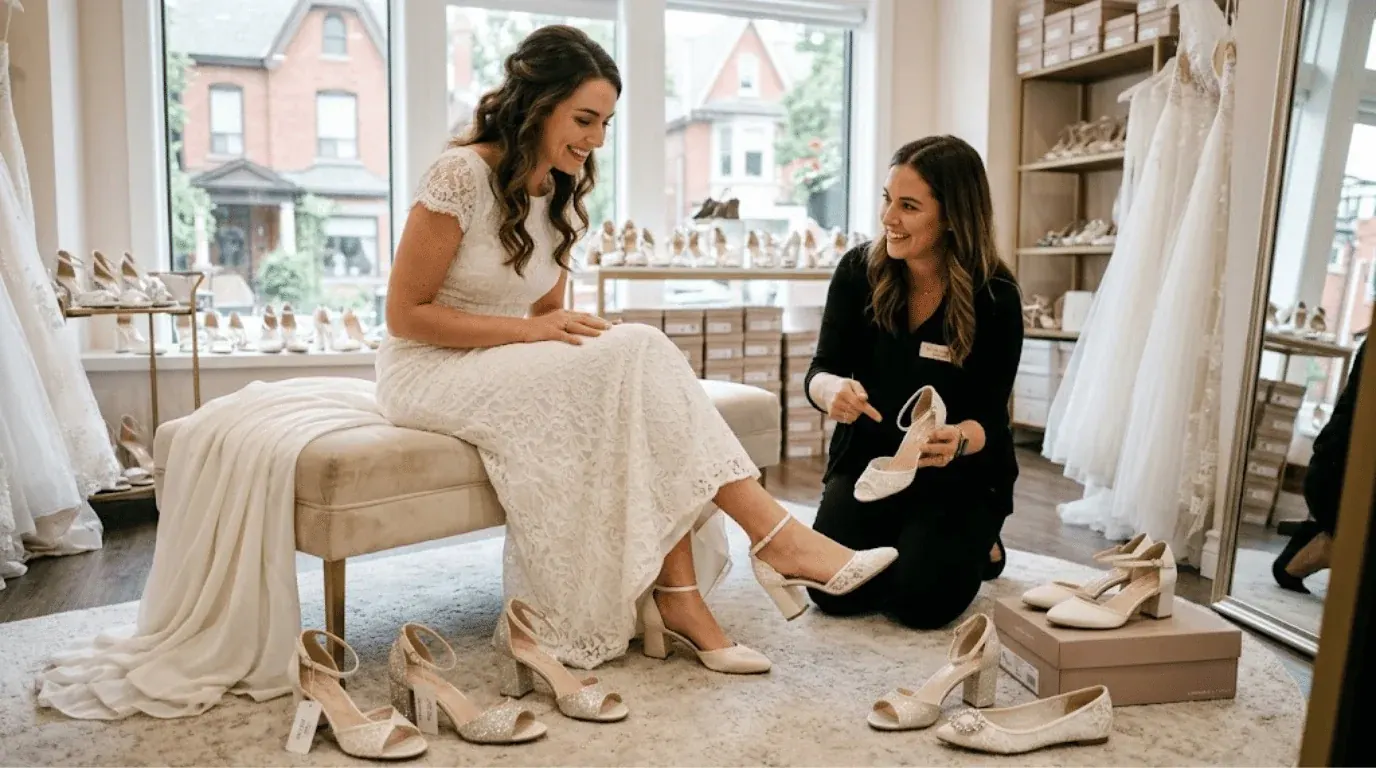
The best bridal shoes should suit your dress, venue, comfort needs, and the amount of walking you expect on your wedding day. Canadian shoppers can choose from pumps, block heels, kitten heels, flats, sandals, platforms, and even wedding sneakers. Your smartest choice is the pair that still feels right several hours into the celebration. Our related guide, Types of Heels, goes further into this.
Start with comfort and venue conditions, then choose heel height, colour, and decorative details. A block or kitten heel suits many long wedding days. Flats work well for outdoor venues and dancing. Higher heels make more sense when you already wear them comfortably and have limited walking planned.
| Shopping decision | Good starting point | Check before buying |
|---|---|---|
| Heel height | Low or moderate for longer wear | Your normal heel tolerance |
| Outdoor venue | Block heel, flat, or stable sandal | Grass, gravel, decking, weather |
| Formal indoor venue | Pump, slingback, kitten heel, or stiletto | Walking and standing time |
| Colour | White, ivory, nude, metallic, or soft colour | Dress tone and accessories |
| Comfort | Secure fit with useful cushioning | Toe room, straps, heel slip |
| Online purchase | Canadian retailer or Canada-friendly seller | CAD pricing, shipping, returns, duties |
| Dress fitting | Bring your intended wedding footwear | Hem length with the exact heel height |
Compare the Main Wedding Shoe Styles
There is no single silhouette that works for every bride. The right option depends on your dress, venue, height preference, and how much time you’ll spend standing.
| Style | Strong points | Possible trade-off | Best suited to |
|---|---|---|---|
| Block heels | Stable base with useful height | Can appear heavier than a narrow heel | Long events, outdoor ceremonies |
| Kitten heels | Modest height and refined shape | Less dramatic than higher heels | Classic dresses, city weddings |
| Pumps | Clean, formal appearance | Heel and toe fit need care | Ballrooms, hotels, formal ceremonies |
| Strappy sandals | Light, dressy appearance | Thin straps can create pressure | Summer and destination weddings |
| Flats | Easy movement and low profile | Less added height | Gardens, beaches, dancing |
| Platforms | Height with more sole underfoot | Bulkier silhouette | Modern gowns, statement looks |
| Sneakers | Comfortable and secure | Too casual for some dress codes | Receptions, informal weddings |
Current Canadian assortments reflect that range. Naturalizer lists wedding heels, sandals, flats, sneakers, block heels, and low-heel styles, while DSW Canada lets shoppers filter wedding footwear by heel height, colour, width, and style.
Our recommendation: If you aren’t committed to a specific silhouette, start with a moderate block heel or low heel with a secure fit. It offers a useful balance between formality, stability, and wear time.
How to Choose Bridal Shoes for Your Venue
Your venue should influence the shoe before decorative details do.
A ballroom, hotel, or restaurant gives you the widest choice. Smooth indoor floors can work with pumps, slingbacks, sandals, or stilettos. Think about stairs and the distance between the ceremony, photographs, dinner, and reception.
Grass changes the equation. Thin heels can sink into soft ground, while gravel can make narrow heels unstable. A block heel, wedge, flat, or stable sandal usually gives you more surface contact.
For a beach wedding, consider flats, low sandals, or another design that works on sand. A delicate high heel may spend more time in your hand than on your foot.
Canadian weather deserves its own plan. Spring rain, autumn chill, or winter snow can make dress footwear impractical for outdoor wear. Many brides wear weather-ready footwear for travel and change into it after arriving at the venue.
If you’re still choosing your gown, StyleVanta’s wedding dress guide explains how silhouette, venue, budget, and fit work together. Finalize your ceremony footwear before the dress hem is altered.
Comfort Matters More Than the Heel Number
A low heel can hurt when the shoe fits poorly. A higher shoe can feel manageable when the shape suits your foot, and you’re accustomed to that height.
Start with toe room. Your toes shouldn’t feel compressed when you stand. Check whether your foot slides forward, whether the heel lifts as you walk, and whether straps rub sensitive areas.
Cushioning helps, but padding can’t fix the wrong size. Secure construction matters too. An adjustable ankle strap or slingback may hold the foot more reliably than a loose mule.
StyleVanta’s kitten heel sandals guide notes that heel placement, straps, cushioning, and width can affect comfort as much as heel height. Those checks become more important when you expect hours of standing, photographs, and dancing.
Wear the pair indoors before the wedding while keeping the soles clean. Test them on stairs and during prolonged standing. If you plan to wear hosiery, test the shoes with it.
Match the Colour to the Dress Without Overthinking It
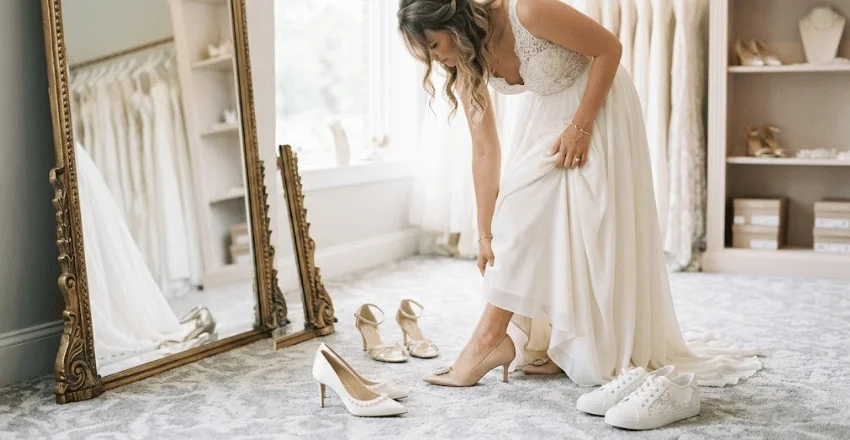
White isn’t the only bridal option. Ivory or cream can coordinate with warmer gowns. Bright white can pair well with cooler whites and crisp, modern dresses. Nude tones keep the footwear understated, while silver and gold can connect the dress with jewellery or metallic accessories.
A skin-inspired neutral can also have strong repeat-wear value. StyleVanta’s guide to nude heels explains why beige, tan, blush, caramel, taupe, and deeper browns can all serve as neutral choices.
You don’t need an exact dress-to-shoe colour match. If the footwear is barely visible, comfort and usefulness may matter more. A shorter dress gives the shoe more visual weight, so colour and decoration become more noticeable.
Pearls, crystals, bows, satin, lace, mesh, and floral details remain common across current wedding collections. David’s Bridal currently lists styles ranging from satin and crystal heels to embellished flats and wedding sneakers.
What Do Wedding Shoes Cost in Canada?
Budget varies widely by brand, materials, construction, and designer positioning. Current Canadian-facing listings show mainstream options around the double-digit to low-hundreds range, with sale prices sometimes lower. DSW Canada currently shows many wedding styles priced between C$60 and C$140 before considering clearance pricing. JJ’s House lists numerous options priced between C$43 and C$100.
Luxury footwear sits in a different category. Jimmy Choo’s Canadian bridal collection currently includes many designs above C$1,000.
That doesn’t make an expensive pair automatically more suitable. Compare fit, construction, materials, return terms, and how often you expect to wear the shoes again.
Use Your Dress Fitting to Avoid a Hem-Length Problem
Bring the exact shoes, or a pair with the same heel height, to the final dress fittings. Changing from a flat to a high heel can change where a floor-length gown lands. A hem fitted around one shoe height may drag or sit shorter when you switch.
If you want ceremony heels and reception flats, tell your alterations professional. The difference between the two heights matters. You may decide that a lower ceremony heel reduces the change enough to make both pairs practical.
This is also a good time to test how the gown moves around your feet. Walk, turn, sit, and use stairs if possible.
A Canadian Online Shopping Checklist
Check the following points before you order wedding footwear online.
- the retailer’s size chart and width options;
- the measured heel height rather than judging photos;
- upper, lining, sole, and footbed materials;
- whether straps can be adjusted;
- customer reviews that discuss fit or width;
- whether prices are shown in Canadian dollars;
- shipping times before your fitting dates;
- return windows and final-sale exclusions;
- return-shipping costs;
- possible taxes or duties on cross-border orders.
Sizing deserves extra attention because brands don’t always fit the same way. If you use European sizing, StyleVanta’s size 40 shoe guide illustrates why measurements and brand-specific charts matter more than assuming one conversion always fits.
Leave enough time for an exchange. Ordering days before a fitting removes options if the size or shape is wrong.
Choose One Pair or Plan a Reception Change
Buying two pairs isn’t required. One comfortable pair is simpler. You won’t need to manage a second box, and your dress hem stays consistent. This works especially well with moderate heels, flats, and supportive low-heel designs.
A second pair makes sense when your ceremony style has a clear comfort trade-off. You might wear a formal pump for the ceremony, then change into flats or sneakers for dancing.
If you change shoes, keep the height difference in mind. Your gown shouldn’t become a tripping hazard once you switch.
For a wider look at what is current beyond wedding footwear, StyleVanta’s trending shoes in Canada guide covers broader footwear directions for 2026.
The Best Choice Is the Pair That Fits the Whole Day
Don’t choose wedding footwear from a close-up product photo alone. Picture the full schedule. Consider walking, photographs, the ceremony, standing through greetings, dinner, and dancing. Add your venue surface and dress length to that picture.
For many Canadian weddings, our pick is a secure low-to-moderate-heeled shoe or a well-fitting flat that works with the gown and venue. Choose a bolder or more delicate design once you know you can wear it comfortably.
Then test the pair before the event and bring a small backup plan if needed. That gives your feet one less reason to distract you from the day.
Frequently Asked Questions
What are the most comfortable bridal shoes?
Comfort depends on fit, foot shape, heel position, toe room, cushioning, straps, and your level of comfort with the height. Low block heels, kitten heels, supportive flats, and secure sandals are sensible starting points for long events.
Should wedding shoes be white or ivory?
They don’t have to be either. White, ivory, nude, blush, silver, gold, and other colours can work. Match the shoe to your dress tone, accessories, and the amount of footwear visible beneath the gown.
Can a bride wear flats?
Yes. Flats can suit formal, outdoor, destination, and casual weddings. Current bridal collections include ballet flats, pointed styles, embellished sandals, and other low-profile options. Naturalizer and David’s Bridal both currently carry dedicated wedding-flat selections in Canada.
Are block heels better for an outdoor wedding?
They’re often more practical than narrow stilettos because the wider heel gives more contact with the ground. Flats and stable sandals are also worth considering for grass, gravel, or uneven surfaces.
When should I buy my wedding footwear?
Buy it before your final alterations if heel height can affect the dress hem. Leave enough time to test the fit indoors and exchange the pair if necessary.
Do I need a second pair for the reception?
No. A second pair is useful when your ceremony shoes aren’t suited to hours of dancing or standing. If you switch to a much lower shoe, check how the dress hem falls afterward.
What should I wear under my wedding dress?
That depends on the gown’s cut, fabric, support, and opacity. StyleVanta’s bridal lingerie guide covers undergarment choices that can be tested alongside your dress and footwear during fittings.