

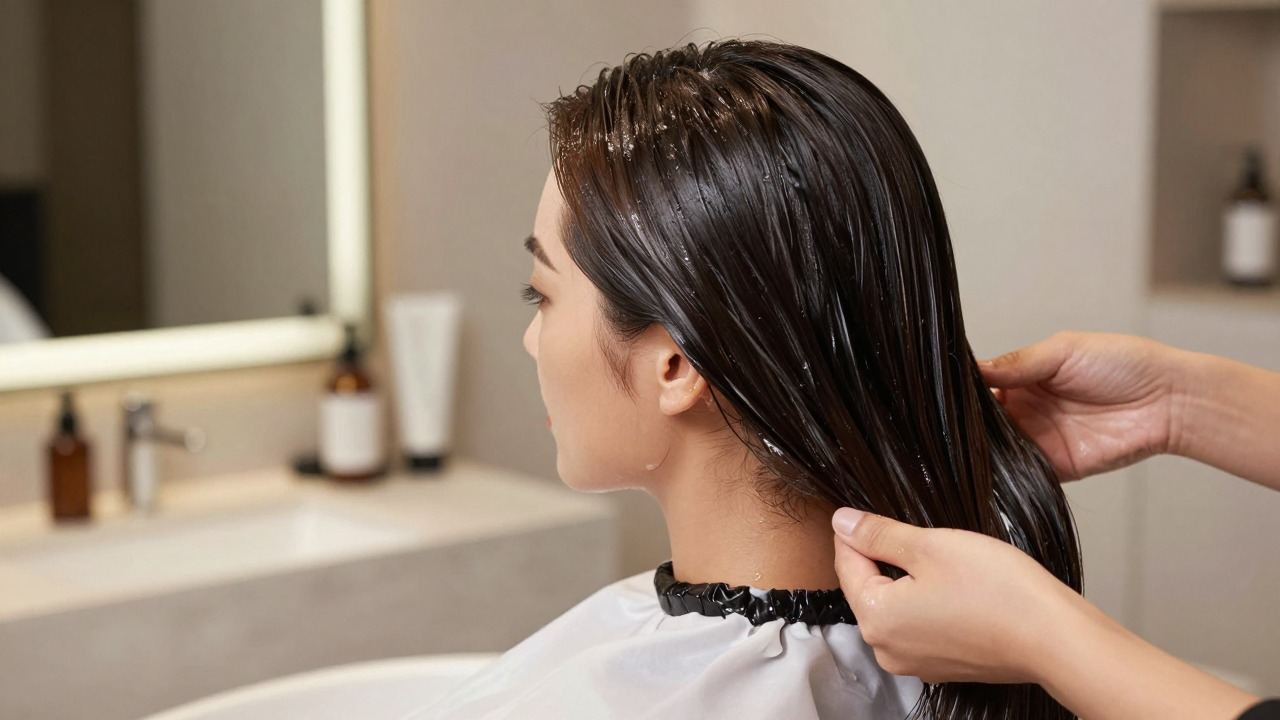
A chelating shampoo is a deep-cleaning formula designed to bind minerals and metals that can collect on hair after repeated water exposure. It can help when dullness, stiffness, brassiness, or a coated feel points to mineral buildup rather than oil or styling residue. Used too often, though, a strong cleanser can leave dry or processed hair feeling rougher.
Mineral-targeting cleansers use chelating agents such as EDTA, phytic acid, citric acid, or sodium gluconate to bind metal ions so they can be rinsed away. They differ from standard clarifiers, which rely mainly on cleansing surfactants to remove oil, silicones, dry shampoo, and styling residue.
At a glance
| Question | What to know |
|---|---|
| Main purpose | Removes or reduces mineral and metal deposits on hair |
| Common sources | Hard water, well water, swimming pools, and repeated mineral exposure |
| Ingredients to look for | EDTA, phytic acid, sodium gluconate, and other chelating agents |
| Different from clarifying? | Yes. Clarifiers mainly target oil and styling-product residue |
| Best frequency | Occasional use based on exposure, hair condition, and product directions |
| Colour-treated hair | Choose a colour-safe formula and avoid unnecessary overuse |
| Aftercare | Rinse well and follow with a suitable conditioner or mask |
1. What Is Chelating Shampoo and What Does It Remove?
Chelation is a chemical binding process. Certain ingredients attach to charged metal ions, helping them remain suspended in water so they can be rinsed from the hair.
That matters because tap water can leave more than water behind. Calcium and magnesium are the minerals most associated with water hardness. Copper, iron, and other metals can also reach hair through water or environmental exposure.
Laboratory research supports the idea that hair takes up hardness minerals. One PubMed-indexed study found that human hair can absorb meaningful amounts of calcium and magnesium from tap water. Chemically damaged samples absorbed more than healthier samples under similar conditions.
A separate study found significantly greater magnesium deposits in hair washed with hard water. It did not find a corresponding significant change in surface structure. That distinction matters. Mineral buildup is well supported, while the degree of physical damage caused by hard water remains less certain.
This is why a mineral-removing wash makes the most sense when your exposure and symptoms point in the same direction.
2. Chelating vs. Clarifying: Which Cleaner Matches the Problem?
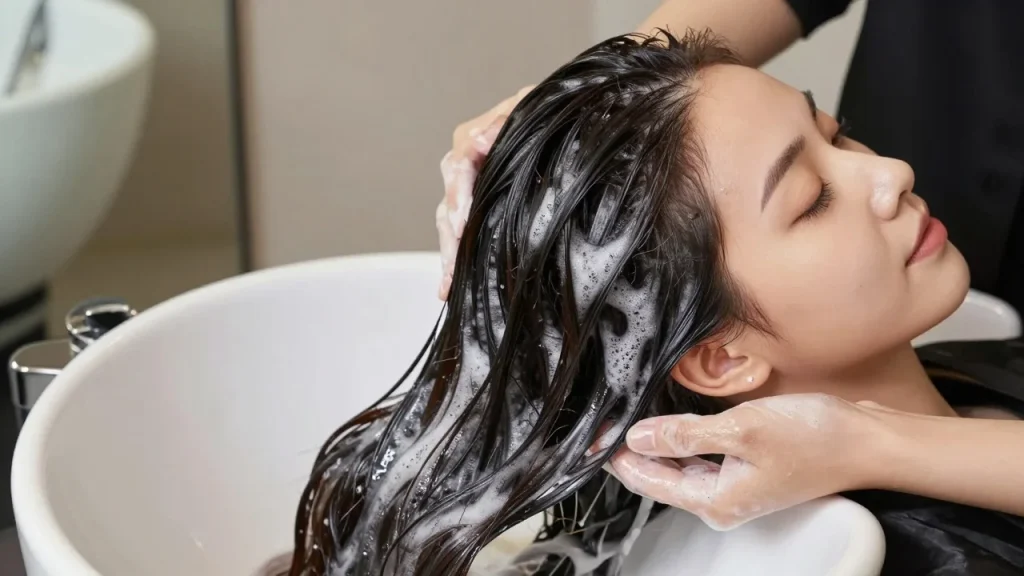
The two terms often appear together, but they are not interchangeable.
A clarifying cleanser mainly removes substances such as sebum, silicone, dry shampoo, hairspray, waxes, and other styling residue. A chelating formula more specifically targets positively charged minerals and metals.
| If your main problem is | Better first match | Why |
|---|---|---|
| Oily roots | Clarifying cleanser | Targets excess oil and residue |
| Heavy styling-product buildup | Clarifying cleanser | Strong surfactants wash away accumulated products |
| Hard-water deposits | Chelating cleanser | Binding agents target mineral ions |
| Frequent swimming | Mineral-targeting or swimmer formula | Can address metals and mineral residue |
| Mixed product and mineral buildup | Dual-purpose formula | Some products combine both cleansing functions |
If grease is the real issue, Stylevanta’s shampoo for oily hair guide is a more useful starting point than immediately switching to a stronger mineral-removal product.
One practical rule makes the choice easier: match the cleanser to the substance you are trying to remove. A stronger shampoo is not automatically a better shampoo.
3. Six Signs Mineral Buildup May Be the Problem
No single symptom proves that minerals are sitting on your hair. Instead, look for a pattern of exposure and changes.
Common clues include:
- Hair stays dull after a normal wash. Oil is gone, but shine does not return.
- The lengths feel stiff, rough, or coated. This may be more noticeable after repeated hard-water exposure.
- Your usual conditioner seems less effective. Hair can feel difficult to soften even when your routine has not changed.
- You swim frequently. Pool exposure can add another source of minerals and metals.
- Light or coloured hair develops an unwanted tone. Copper and other deposits can contribute to visible colour changes.
- The problem follows a water change. Hair that behaves differently after moving or travelling may be reacting to a new water supply.
These signs are also associated with product buildup, chemical damage, heat damage, and other hair concerns. That is why exposure matters as much as appearance. Current hair-care guidance similarly recommends distinguishing mineral residue from ordinary product buildup before choosing a cleanser.
If your roots become greasy quickly but the lengths otherwise feel normal, start with an oil-focused routine instead.
4. What Ingredients Should You Look For?
You do not need to become a cosmetic chemist to read the back of a bottle. A few ingredient names can tell you whether a formula has mineral-binding potential.
Common chelating agents include:
- Disodium EDTA
- Tetrasodium EDTA
- Phytic acid
- Sodium gluconate
- Citric acid in formulas designed around mineral removal
Current dermatologist- and stylist-informed hair-care resources commonly identify EDTA, phytic acid, and sodium gluconate among the ingredients used for mineral control.
Still, seeing EDTA on an ingredient list does not tell you how strong the finished product will be. The concentration, complete formula, pH, surfactants, and intended use all matter.
EDTA can also be added at a lower level to support formula stability. For that reason, look for both the ingredient list and an explicit claim about hard water, metals, minerals, or chelation.
A product designed for occasional mineral removal should also provide clear directions about frequency and contact time. Follow those instructions rather than borrowing a routine from a different formula.
5. How Often Should You Use a Mineral-Removing Cleanser?
There is no universal schedule.
Current professional and consumer guidance generally treats these products as periodic treatments rather than automatic every-wash shampoos. Suggested routines range from weekly use for heavy exposure to much less frequent use for drier or processed hair.
Your starting frequency should depend on:
- how hard your water is;
- whether you swim often;
- how much product you use;
- whether your hair is bleached or chemically treated;
- how dry your hair already feels;
- the directions on the specific bottle.
More is not better. If your hair becomes unusually rough, tangled, or dry after treatment, give it more time between washes.
Following up with conditioner is also sensible because mineral-removing formulas may contain stronger cleansing systems than your everyday shampoo.
6. What About Colour-Treated, Bleached, Curly, or Dry Hair?
Processed hair needs more care, but that does not necessarily mean avoiding mineral removal entirely.
Research suggests chemically damaged hair can take up more calcium and magnesium than untreated hair. This finding is particularly relevant to bleached or highly processed hair and supports managing mineral exposure carefully.
At the same time, aggressive cleansing can make already-dry hair feel less comfortable. A formula intended for coloured hair is a better choice when preserving pigment matters.
If you use a temporary hair colour, Stylevanta’s semi-permanent hair colour guide explains why repeated strong cleansing can shorten the life of deposited pigment.
Curly hair is not automatically unsuitable for chelation. The bigger concern is dryness. If your curls lose softness easily, use the treatment only when mineral buildup gives you a clear reason to do so.
The same caution applies after chemical smoothing. Check the aftercare requirements in Stylevanta’s keratin hair treatment guide before introducing a stronger cleanser into your routine.
7. How to Use It Without Overdoing It
The bottle’s directions come first because formulas differ. A simple routine usually looks like this:
- Wet the hair thoroughly. Saturation helps the cleanser spread without excessive rubbing.
- Apply the amount directed on the label. Work it through the areas exposed to water, including the lengths.
- Do not invent a longer processing time. Leave it on only as long as the manufacturer directs.
- Rinse thoroughly. Residual cleanser does not improve the result.
- Condition afterwards. Use a conditioner or mask that suits your hair’s normal moisture needs.
Avoid pairing several harsh cleansing treatments in the same wash unless the product instructions specifically support doing so.
You also do not need to scrub the hair aggressively. The chemistry and cleansing system should do the work.
What Chelation Cannot Fix
Mineral removal has a specific job. It is not a universal repair treatment.
First, it does not soften the water coming from your tap. If your water continues to contain significant mineral levels, deposits can return.
Second, it cannot reverse damage caused by bleach, heat, friction, or mechanical stress. Hair may remain rough after mineral removal because the fibre itself has been altered.
Third, dullness alone is not proof of hard-water buildup. Product residue can cause a similar appearance, as can dryness and repeated chemical processing.
Scientific studies illustrate why that distinction matters. Some research has reported reduced tensile strength after hard-water exposure, while another controlled study found no significant difference in tensile strength or elasticity.
The safest conclusion is narrower: hard-water minerals can deposit on hair, but mineral deposits should not be blamed for every texture or breakage problem.
Frequently Asked Questions
Can chelating shampoo remove hair colour?
It can contribute to colour fading, depending on the formula and the type of pigment in your hair. Strong cleansing can be especially noticeable with semi-permanent colour. Choose a colour-safe product when possible and follow its stated frequency.
Is chelating the same as clarifying?
No. Clarifying mainly targets oil and styling-product buildup. Chelating specifically uses ingredients that can bind mineral and metal ions. Some shampoos combine both functions.
Can I use a mineral-removing wash every time I shampoo?
Usually, there is no reason to do so unless the manufacturer designed the product for that frequency. Many formulas are intended as periodic treatments. Follow the label and reduce the frequency if your hair starts feeling dry or rough.
Do I need one if I have soft water?
Not automatically. Swimming, well-water exposure, chemical processing, or other metal contact can still create a reason for mineral removal. If you have no relevant exposure pattern or buildup symptoms, a stronger cleanser may offer little benefit.
Will it permanently solve hard-water hair problems?
No. The wash can remove deposits already on the hair, but it does not change the mineral content of the water itself. Continued exposure can lead to new accumulation.