

Choosing a wedding band sounds simple until you start comparing metals, widths, finishes, and prices. For Canadian shoppers, men’s wedding rings range from traditional gold bands to lightweight titanium, scratch-resistant tungsten, platinum, and more decorative designs.
The right choice should suit your hand, daily routine, personal style, and long-term plans. A ring can look excellent in a product photo yet feel uncomfortable after eight hours of wear. Comfort and practicality deserve as much attention as appearance.
For most Canadian grooms, a comfortable 5 to 7 mm band in gold, platinum, titanium, or tungsten is a sensible starting point. Choose the metal based on weight, scratch resistance, resizing needs, and budget. Then compare the width, profile, finish, and fit before deciding which design works for everyday wear.
| Buying factor | What to consider |
| Metal | Weight, color, durability, maintenance, resizing |
| Width | Finger size, comfort, visual presence |
| Fit | Standard or comfort-fit interior |
| Finish | Polished, brushed, matte, hammered, textured |
| Lifestyle | Work, sports, tools, gloves, frequent hand use |
| Budget | Metal, width, craftsmanship, stones, customization |
| Long-term use | Resizing, refinishing, repairs, changing preferences |
How to Compare Men’s Wedding Rings Before You Buy
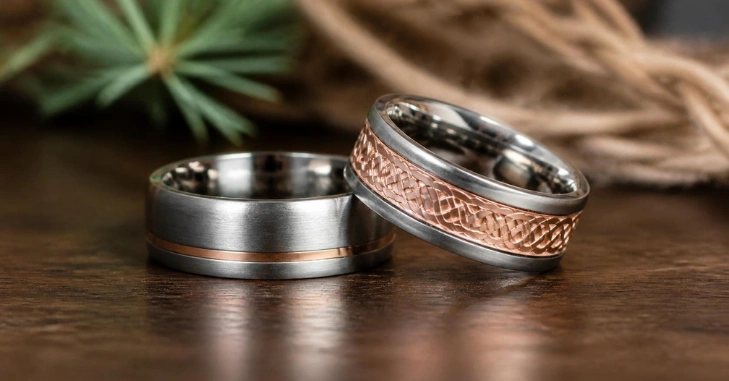
A useful comparison of men’s wedding rings in Canada starts with how you expect to wear the band. Do you work with your hands? Do you remove jewelry for sports or training? Have you never worn a ring before? Would you want the option to resize it in years? These questions can help you choose a wedding band that matches your lifestyle, comfort needs, and long-term plans.
Those questions quickly narrow the choices. Canadian jewelry guides commonly focus on the same major factors: metal, width, fit, finish, lifestyle, and budget. Gold remains a traditional option, while titanium and tungsten appeal to shoppers looking for alternative metals. Platinum offers a heavier precious-metal feel.
Here is a practical comparison:
| Material | Feel | Key advantage | Main drawback | Good fit for |
| 14K gold | Moderate weight | Traditional and generally resizable | Can scratch with wear | Buyers wanting a classic long-term band |
| 18K gold | Moderate weight | Higher gold content and rich color | Softer and usually more expensive | Buyers prioritizing precious-metal character |
| Platinum | Heavy | Naturally white and substantial | Higher purchase price | Buyers who like weight and premium precious metals |
| Tungsten | Heavy | Strong scratch resistance | Usually cannot be resized | Active wearers confident in their size |
| Titanium | Very light | Comfortable and lightweight | Resizing is limited or unavailable. | People who dislike heavy jewelry |
Gold: the flexible classic
Gold is still one of the easiest places to start. Yellow gold provides the familiar warm look associated with traditional wedding jewelry. White gold offers a cooler appearance, while rose gold gives the band a warmer pink tone.
One major advantage is serviceability. Gold bands can generally be resized, repaired, polished, or refinished by a jeweler. That may matter more after ten or twenty years than it does during wedding planning.
Pros: classic appearance, multiple colors, usually resizable, widely available.
Cons: scratches develop with daily wear, and white gold may require periodic rhodium replating to maintain its bright surface. Michael Hill also notes that gold develops its own patina with age.
Platinum: substantial and naturally white
Platinum appeals to shoppers who want a dense precious metal without relying on a plated white finish. It feels noticeably heavier than gold. That weight can make the band feel substantial, though someone who has never worn jewelry may prefer a lighter option.
Pros: naturally white, resizable, dense, and suited to long-term wear.
Cons: costs more than many alternatives and will still develop surface marks and patina through regular use.
Tungsten: Scratch Resistance at a Lower Price
Tungsten carbide is popular because it resists everyday scratching better than traditional precious metals. It also feels substantial on the finger. The trade-off is flexibility: tungsten bands generally cannot be resized. A severe impact can cause the material to crack rather than bend.
Pros: strong scratch resistance, substantial feel, and often accessible pricing.
Cons: not normally resizable and less forgiving if your ring size changes.
Titanium: Light and easy to wear
Titanium provides almost the opposite wearing experience. It is strong but notably light. That can suit someone who dislikes the sensation of a heavy band or has never worn a ring every day. Titanium is also used for contemporary black, grey, and mixed-material designs.
Pros: lightweight, durable, modern appearance.
Cons: resizing options are limited, and the surface can collect scratches over time.
What Width Works Best?
Men’s bands commonly fall around the 4 to 8 mm range, though narrower and wider designs exist. Canadian and international buying guides regularly use this range when explaining fit and proportions.
Here is a simple way to narrow it down.
- 4 to 5 mm. Slimmer and understated.
- 6 mm. Balanced visual presence for many hands.
- 7 to 8 mm. Bolder and more noticeable.
Finger proportions matter, but there is no formula that says a certain hand must wear a certain width. Try more than one width if possible. A difference of only 1 or 2 mm can change both the look and how much of the finger the ring covers.
Wider bands can also fit more snugly because more metal touches the finger. Confirm the final size while wearing a band close to your intended width.
Comfort Fit vs. Standard Fit
The profile is easy to overlook when shopping online. A standard-fit band usually has a flatter interior. A comfort-fit ring has a more rounded inner surface, reducing the amount of metal pressing against the finger.
Comfort fit can be especially appealing for medium and wide bands. It may also suit shoppers who aren’t used to wearing jewelry. Sizing can vary between profiles, so don’t assume a size taken from one ring will transfer perfectly to another design.
StyleVanta’s guide to promise ring sizing and ring selection also notes that Canadian retailers commonly use the North American numeric ring-size system.
Pick a Finish That Matches Real Life
The finish changes the personality of a plain band without requiring gemstones or elaborate details. A polished finish reflects the most light and creates a traditional jewelry look. Fine scratches can also be easier to see on a mirror-like surface.
A brushed or satin finish produces a softer reflection. It works well for understated contemporary designs and can make minor wear less visually obvious.
A hammered finish adds texture. Small surface changes may blend naturally into an already irregular pattern.
Mixed finishes give another option. A polished bevel around a brushed center, for example, can add contrast without making the ring ornate.
That preference fits a broader movement toward personal and mixed styling. StyleVanta’s 2026 Canadian jewelry trends guide covers mixed metals, stronger shapes, and personal details across current accessories.
Should Your Band Match Your Partner’s Ring?
It can, but it doesn’t have to. Matching bands may share the same metal, finish, engraving, or design language. They don’t need to be identical. You could choose yellow gold while your partner wears white gold. One ring could be plain while the other includes diamonds. A shared engraving can create a private connection between two otherwise different designs.
If you’re coordinating the band with a diamond engagement ring, consider how the metals look together. StyleVanta’s Canadian diamond ring buying guide explains how metal color can also affect the appearance of a diamond setting. For broader inspiration, the StyleVanta jewelry section gathers the site’s current ring and accessory coverage.
How Much Should You Budget in Canada?
There is no single correct wedding band budget. Metal, width, weight, craftsmanship, gemstones, brand, and customization can all change the final price.
A recent Canadian market guide places many men’s bands around CA$400 to CA$1,800, with tungsten and titanium generally occupying the lower part of the range and platinum reaching higher price points. Treat those figures as market references rather than fixed retail prices because precious-metal pricing and individual designs vary.
Instead of starting with a prestige material, decide what you need the band to do. If future resizing matters, paying more for gold or platinum may make sense. If scratch resistance matters more and your size is stable, tungsten may fit your priorities. If weight bothers you, titanium deserves consideration.
A Simple Wedding-Band Buying Checklist
Before paying, confirm these points:
- Get your finger measured using the sizing system used by the retailer.
- Try a width close to the one you plan to order.
- Confirm whether the band has a standard or comfort-fit interior.
- Ask whether the material can be resized later.
- Check the return, exchange, and resizing policy.
- Consider whether your job or hobbies require removing rings.
- Compare the final Canadian price, including taxes and possible shipping charges.
- Check how the finish is expected to age.
- Confirm engraving details before placing a customized order.
The best decision is rarely the ring with the longest feature list. It is the one whose trade-offs make sense for your normal day.
Our Verdict
For a first wedding band, 14K gold is a strong all-round choice when you value traditional styling and future resizing. Tungsten makes sense when scratch resistance and price matter more than resizing. Titanium is worth considering when low weight is your priority. Platinum suits shoppers who want a dense precious metal and accept the higher cost.
After choosing the material, compare a few widths and finishes on your hand. That order prevents appearance from distracting you from comfort and long-term practicality.
A wedding band doesn’t need to follow somebody else’s idea of what a groom should wear. Choose a piece you can picture wearing with work clothes, winter layers, formalwear, and a T-shirt years after the ceremony.
Conclusion
Choosing men’s wedding rings in Canada is ultimately about finding the right balance between comfort, durability, appearance, budget, and long-term practicality. A wedding band should look appropriate on your wedding day, but it should also feel comfortable during ordinary Canadian life, from work and weekends to formal occasions and everyday activities.
Gold remains a dependable choice for men who want a classic appearance, broad availability, and the possibility of future resizing. Platinum is ideal for those who prefer a naturally white, dense precious metal and don’t mind paying more. Tungsten stands out for its excellent scratch resistance and substantial feel, while titanium offers a lightweight alternative for men who prefer barely noticeable jewelry.
Frequently Asked Questions
What should I look for when buying men’s wedding rings in Canada?
Start with metal, width, fit, and lifestyle. Check whether the material can be resized, then compare finishes and prices. Canadian shoppers should also confirm taxes, shipping terms, returns, and the retailer’s sizing policy before ordering.
What is the most practical metal for a men’s wedding band?
There isn’t one winner for everyone. Gold works well if resizing matters. Tungsten offers strong scratch resistance. Titanium feels lightweight. Platinum suits buyers who prefer a dense precious metal.
What width should a man choose?
Around 4 to 8 mm covers many common men’s styles. Narrower bands appear more subtle, while 7 to 8 mm bands create stronger visual presence. Trying different widths is more reliable than choosing from hand size alone.
Can tungsten or titanium wedding bands be resized?
Usually not in the same way as gold or platinum. Some titanium designs may allow limited adjustment, but many alternative-metal bands cannot be conventionally resized. Confirm the policy for the exact ring before buying.
Do couples need matching wedding bands?
Buying early gives you time to confirm sizing, order the preferred design, arrange engraving, and handle an exchange if necessary. Build extra time into the plan for customized or made-to-order rings.