

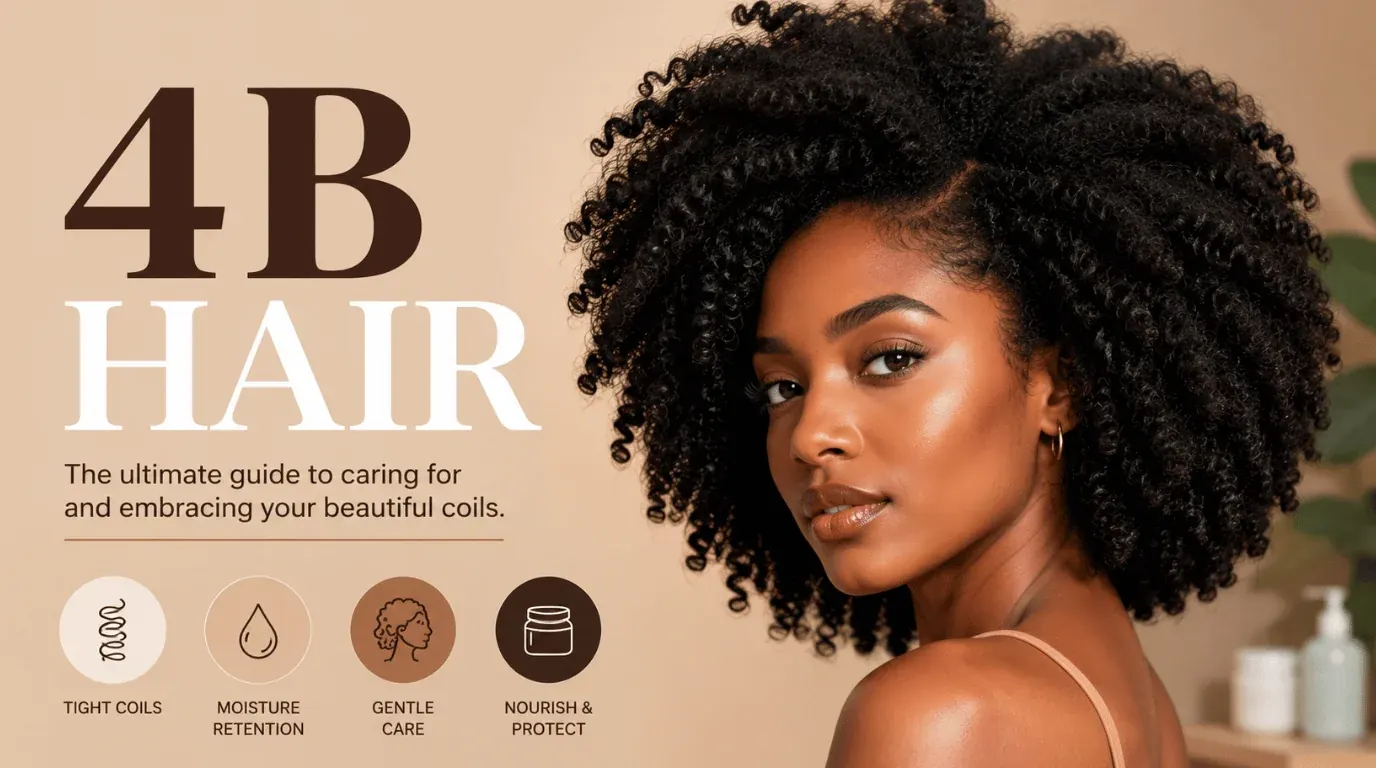
4B hair is a tightly coiled texture that commonly forms small Z-shaped bends rather than obvious ringlets. It can have plenty of volume and shrinkage, while individual strands may be fine, medium, or coarse. A useful care routine focuses less on chasing perfect curl definition and more on conditioning, gentle detangling, low-tension styling, and protecting the ends from unnecessary breakage.
| 4B Hair | Practical starting point |
| Curl pattern | Tight bends or zig-zag shapes rather than loose spirals |
| Definition | May look fluffy or less defined without styling |
| Shrinkage | Often significant, so dry length can look much shorter. |
| Main care focus | Conditioning, slip, gentle handling, and length retention |
| Detangling | Work in sections with conditioner and plenty of slip. |
| Styling | Twists, braid-outs, puffs, Afros, flat twists, and other low-tension styles |
| Canadian seasons | Adjust product weight and drying methods as conditions change. |
| Hair typing | Use it as a guide, not a complete diagnosis of what your strands need |
What Is a 4B Hair?
The 4B category sits within the Type 4 family of tightly curled and coiled textures. Its most recognizable feature is a strand pattern that bends back and forth instead of forming a smooth spiral. That description is useful, but hair typing has limits. Two people placed in the same category may have different strand thickness, density, porosity, damage, scalp needs, and styling habits. More from us: 4C Hair.
Current dermatology literature also stresses that Afro-textured hair covers a broad spectrum rather than one uniform fiber type. You may also have more than one pattern on your head. The crown could look looser while the sides or nape appear more tightly packed. You don’t need every section to match a chart before choosing a routine.
How to Tell 4A, 4B, and 4C Apart
Think of the labels as visual reference points rather than strict rules.
| Type | Common visible pattern | Definition | Typical appearance |
| 4A | Small S-shaped or spiral coils | More naturally visible | Springy, clearly formed coils |
| 4B | Angular or Z-shaped bends | Moderate to low without styling | Dense, fluffy, highly textured |
| 4C | Extremely tight bends or coils | Often the least visible | Very dense with substantial shrinkage |
The neighboring categories can overlap. That is why curl pattern alone shouldn’t decide your shampoo, conditioner, or styling products. Pay attention to how your own strands respond. Product weight, detangling needs, scalp comfort, and breakage tell you more about your routine than a letter by itself.
A Simple 4B Hair Care Routine
A good routine doesn’t need a crowded product shelf. Start with a few repeatable habits and change one thing at a time.
1. Clean your scalp when it needs cleansing.
Focus shampoo mainly on the scalp, where oil, sweat, flakes, and styling residue collect. Let the lather move through the lengths while you rinse instead of aggressively scrubbing the ends. The American Academy of Dermatology recommends washing dry, curly, thick, or textured hair according to its needs and applying shampoo primarily to the scalp. There isn’t one perfect wash-day schedule. Your scalp, activity level, protective styles, product use, and buildup should guide the timing. We cover this in more depth in Afro Hair in Canada.
2. Condition every wash day
The conditioner improves slip and makes tightly textured strands easier to separate. Apply it through the lengths, paying close attention to sections that knot or feel rough. For extra conditioning, a rinse-out mask can be useful when your regular conditioner no longer gives enough softness.
StyleVanta’s guide to choosing a hair mask for dry hair explains how to match treatment weight to strand thickness and damage. Rich isn’t automatically better. Fine, dense coils can still become coated or limp under too much butter, oil, or heavy cream.
3. Detangle in sections
Divide the hair into manageable sections before tackling knots. Add conditioner or a detangling product, then work from the ends upward rather than pulling straight from the roots.
This is one area where advice for straight hair doesn’t always transfer well. Dermatologists specifically note that tightly curled or textured hair may be easier to brush or comb while wet, which can help reduce breakage from dry manipulation. Use your fingers, a wide-tooth comb, or a detangling tool that moves through the section without excessive force.
4. Add leave-in moisture without layering everything you own.
A leave-in conditioner can improve manageability, reduce friction, and make styling easier. The AAD notes that leave-in products can be particularly useful for curly, dry, tangled, or frizz-prone strands.
Apply enough to coat the hair lightly. If your coils feel sticky, greasy, stiff, or coated after drying, reduce either the amount or the number of products you’re layering. Oil can help with feel and lubrication, but it isn’t a replacement for conditioner or water-based care.
5. Dry with less heat and friction
Air-drying is one option, but it isn’t the only acceptable method. If you prefer a dryer, keep the temperature and airflow controlled and avoid repeatedly heating the same section.
For styles where you want to preserve natural texture, StyleVanta’s 3C Hair explains lower-airflow drying techniques for curls. A soft T-shirt or microfibre towel can also reduce rough rubbing after washing. Whatever method you choose, handle the hair gently while it is vulnerable to stretching and tangling.
6. Choose low-tension styles.
Twists, loose braids, puffs, flat twists, stretched Afros, braid-outs, and twist-outs can all work well. Protective styling is most helpful when the style protects the ends without creating constant tension at the scalp.
Pain is not a sign that braids or extensions were installed correctly. Repeated pulling can contribute to traction-related hair loss. If your scalp feels sore, the hairline looks stressed, or small hairs are breaking around a style, reduce the tension.
7. Protect the length you already have.
People sometimes interpret breakage as slow growth. If new hair appears at the roots but your overall length barely changes, damaged ends may be breaking at a similar pace. StyleVanta’s guide on how to make hair grow faster without damaging it explains why length retention matters alongside normal growth.
At night, loosely secure longer hair and reduce friction with a satin or silk bonnet, scarf, or pillowcase. A 2026 review of Afro-textured hair care also discusses nighttime silk coverings and gentle cleansing as useful parts of a healthy routine.
Adjust Your Routine for Canadian Seasons
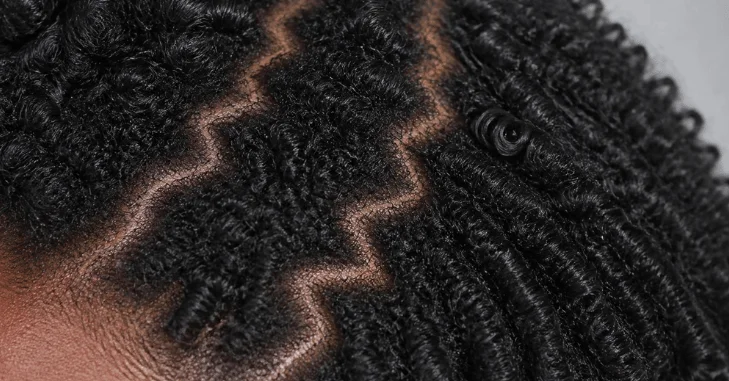
You don’t need an entirely different collection of products every season. Small adjustments are usually easier to judge. During periods when indoor air feels especially dry, your lengths may feel rougher or become more prone to static. Try adding a little more conditioner or using a leave-in before reaching immediately for several heavy oils.
In warmer, humid conditions, the same rich styling combination may feel heavier. Start with less product and see how the finished hair behaves before adding another layer. Winter hats, scarves, and coat collars can also create friction around the hairline and nape.
A smooth lining or protective layer between rough fabric and your hair can help reduce repeated rubbing. The goal is responsiveness. Change your routine because your hair is showing you a need, not simply because the calendar changed.
Styles That Work With Tight Coils
Your ideal style depends on whether you want definition, stretch, volume, or fewer styling sessions. For maximum natural volume, a shaped Afro lets the texture expand without forcing individual curls to clump. A twist-out or braid-out creates a more uniform pattern while stretching some shrinkage.
Flat twists and loose two-strand twists can keep the ends contained for several days. Puffs are quick, but avoid making the base so tight that your edges feel pulled.
If you’re thinking about a shorter shape, StyleVanta’s short curly hair guide covers tapered crops, rounded Afros, pixies, and other cuts while accounting for shrinkage and density. A curl-experienced stylist can also assess how your hair falls when dry before removing significant length.
When Hair Type Isn’t the Main Problem
A curl chart can’t diagnose scalp disease, sudden shedding, or progressive thinning. Pay attention when you see changes such as bald patches, persistent scalp inflammation, a widening part, unusual shedding, or ongoing hairline loss. Those concerns deserve medical assessment rather than another styling product. The same applies to severe breakage that doesn’t improve after reducing heat, chemical processing, and tension. A dermatologist can help separate cosmetic damage from a scalp or hair-loss condition.
Build a Routine Around Your Own Hair
Knowing your curl category can give you a useful starting point, but your strands still make the final decision. Begin with gentle cleansing, consistent conditioning, careful detangling, controlled heat, and low-tension styling. Watch how your hair responds for several wash days before changing several products at once.
That approach makes it easier to tell what is helping. It also keeps the focus where it belongs: healthy-looking, manageable hair that works with your natural texture rather than against it.
Frequently Asked Questions
What does 4B hair look like
It commonly has tight, angular bends that resemble a Z or zig-zag pattern. It may appear fluffy, dense, and less naturally defined than 4A coils. Many people have a mixture of neighboring curl patterns.
Does this hair type need oil every day?
There is no single schedule for everyone. Cleanse often enough to keep your scalp comfortable and remove sweat, oil, flakes, and product residue. Adjust the schedule for your scalp and styling habits rather than following a fixed internet rule.
Should you detangle coils wet or dry?
Wet, conditioned hair usually provides more slip for tightly textured strands. Work in sections and start near the ends. Avoid forcing a comb through a resistant knot.
How often should tightly coiled hair be washed?
There is no single schedule for everyone. Cleanse often enough to keep your scalp comfortable and remove sweat, oil, flakes, and product residue. Adjust the schedule for your scalp and styling habits rather than following a fixed internet rule.
Is shrinkage a sign of unhealthy hair?
No. Shrinkage is a normal feature of tightly curled and coiled textures. A large difference between stretched and dry length doesn’t mean your hair has stopped growing.
Are protective styles always healthier?
No. They can reduce daily manipulation, but excessive tension can harm the hairline and scalp. A useful protective style should feel comfortable and shouldn’t require pain to stay secure.