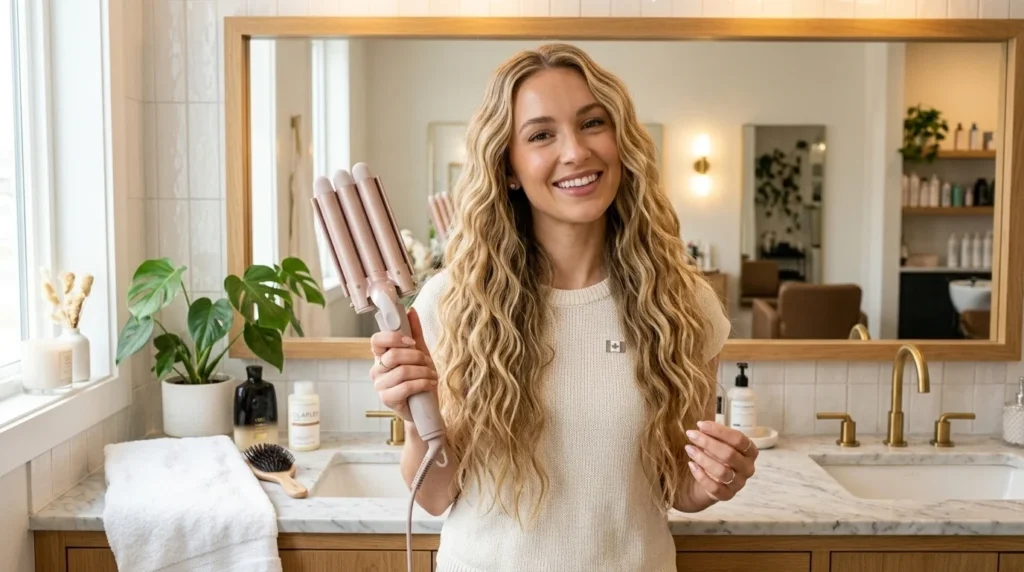


If you want a hair mask for dry hair, start with a moisture-focused formula that suits your strand thickness and level of damage. Fine hair usually needs a lighter rinse-out treatment. Thick, curly, bleached, or heat-styled hair can often handle richer conditioning. Follow the product’s recommended timing, then adjust the frequency based on how your hair feels after drying.
For Canadians, the right routine can also change with the seasons. Cold weather, indoor heating, swimming, frequent styling, colour treatments, and mineral buildup can all affect how rough or manageable your hair feels. A treatment works better when it addresses the cause instead of trying to solve every problem with the richest product available.
| Hair concern | Good starting point | What to watch |
| Fine, dry strands | Lightweight moisture treatment | Flat roots or coated ends |
| Thick or coarse dryness | Rich conditioning formula | Incomplete rinsing |
| Curly or coily hair | Moisture plus slip for detangling | Product buildup |
| Bleached or heat-damaged hair | Moisture plus repair ingredients | Excess protein or stiffness |
| Oily roots, dry ends | Apply mainly from mid-lengths to ends | Heavy product near the scalp |
| Hard-water exposure | Address buildup before adding more conditioning | Mistaking mineral residue for dryness |
What Makes a Good Hair Mask for Dry Hair?
A useful formula usually combines conditioning agents with ingredients that improve softness, slip, and moisture retention. Glycerin, fatty alcohols, plant oils, butters, silicones, and conditioning compounds are common examples. The ingredient list alone does not tell you how heavy the finished product will feel. Formula balance matters. Fine hair may respond better to a lighter cream, while dense or coarse strands can often tolerate richer products.
If shampoo already leaves your hair feeling rough, review your cleansing routine as well. StyleVanta’s guide to choosing a sulfate-free shampoo explains when a gentler cleanser may suit dry, curly, colour-treated, or processed hair.
Moisture and Damage Are Not the Same Thing
Dryness often appears as rough texture, dullness, tangling, static, or frizz. Damage may also cause breakage, split ends, loss of strength, or problems after bleaching and repeated heat styling. This distinction matters when shopping. A moisture treatment may soften dry strands without addressing structural damage. A bond- or protein-focused product can make more sense when bleach, colour treatments, chemical services, or heat caused the problem. The American Academy of Dermatology also recommends regular conditioning and limiting excessive heat. These steps can help reduce avoidable dryness and breakage over time.
Match the Weight to Your Hair Texture
Fine or naturally straight strands can become limp under rich creams. Start with a small amount and keep it mostly on the mid-lengths and ends. StyleVanta’s straight-hair care guide follows the same approach: lighter products for finer strands and more conditioning where coarse or processed ends need it. Curly, oily, thick, or highly processed hair may need more product for adequate coverage. That still does not mean every wash requires an intensive treatment.
5 Canada Picks for Different Dry-Hair Needs
The products below were available through Canadian brand or retailer pages when checked on August 28, 2026. Prices can change, so confirm the current listing before buying.
| Pick | Best suited to | Key features | Canadian price checked |
| 1. Amika Soulfood | General dryness across many textures | Jojoba oil, sea buckthorn; 5–7-minute rinse-out treatment | CAD$52 for 250 mL |
| 2. Garnier Whole Blends Honey Treasures | Budget-conscious shoppers with dry or damaged hair | Shea butter, sunflower oil, honey, glycerin; 1-minute treatment | CAD$10.98 for 340 mL at Walmart Canada |
| 3. Moroccanoil Intense Hydrating Mask | Medium-to-thick dry strands | Argan oil, glycerin, and conditioning agents; 5–7 minutes | CAD$62.50 for 250 mL at Sephora Canada |
| 4. Briogeo Don’t Despair, Repair! | Dryness with visible damage or breakage | Plant proteins plus rosehip and sweet almond oils | CAD$53 for 237 mL at Sephora Canada |
| 5. K18 Leave-In Molecular Repair Treatment | Bleach, colour, chemical, or heat damage | Leave-in peptide treatment; 4-minute processing time | CAD$107.50 for 50 mL |
1. Amika Soulfood: Our Pick for Straightforward Dryness
Amika Soulfood is a sensible first choice when softness and conditioning are the main goals. The Canadian formula features jojoba seed oil and sea buckthorn, and the brand positions it for hair types 1 through 4C.
Pros: Suitable for a broad range of hair textures, available in several sizes, and formulated with moisture in mind.
Cons: It costs more than drugstore treatments and contains fragrance.
2. Garnier Honey Treasures: Our Budget Pick
Garnier’s one-minute treatment stands out for its price. Its Canadian ingredient list includes shea butter, sunflower oil, glycerin, and honey. Walmart listed the 340 mL tub at CAD$10.98 when checked.
Pros: Low price, short processing time, and a widely available brand.
Cons: It targets damaged hair as well as dryness, so people with fine strands should start with a modest amount.
3. Moroccanoil Intense Hydrating: A Richer Option for Thicker Strands
Moroccanoil describes this treatment as suitable for medium-to-thick dry hair. The formula contains glycerin, argan oil, fatty alcohols, silicone, and other conditioning ingredients. Its stated processing time is five to seven minutes.
Pros: Rich texture, short treatment time, and a formula designed with thicker, dry hair in mind.
Cons: The richer formula may be more than fine or easily weighed-down hair needs.
4. Briogeo Don’t Despair, Repair!: When Dryness Comes With Damage
Briogeo combines conditioning oils with plant proteins. That makes it more relevant when rough texture comes with processing, brittleness, or breakage rather than simple moisture loss.
Pros: Combines conditioning ingredients with protein-based support.
Cons: Protein-containing formulas are not automatically necessary for hair that is only dry.
5. K18: Choose It for Damage, Not Simple Dryness
K18 differs from the rinse-out products above. It is a four-minute leave-in treatment marketed for damage caused by bleach, colour treatments, chemical services, and heat. The Canadian 50 mL size was listed at CAD$107.50.
Pros: Clear damage-focused purpose and a short processing time.
Cons: High price and less direct focus on moisture-only concerns.
How to Use a Mask Without Making Your Hair Flat or Greasy
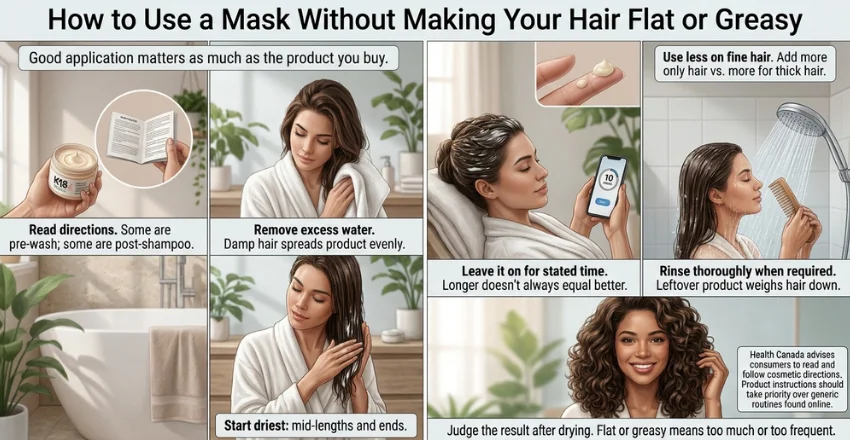
Good application matters as much as the product you buy.
- Read the product directions first. Some treatments are used after shampooing, while certain pre-wash formulas require a different routine.
- Remove excess water. Damp hair usually allows a cream to spread more evenly than dripping-wet strands.
- Start where your hair is driest. For many people, that means the mid-lengths and ends.
- Use less on fine hair. Add more only if the first application does not adequately cover your lengths.
- Leave it on for the stated time. A longer processing time does not automatically produce better results.
- Rinse thoroughly when required. Leftover product can make strands feel coated or heavy.
- Judge the result after drying. Soft, flexible hair suggests a good fit. Flat or greasy hair may indicate that you used too much product or applied it too frequently.
Health Canada advises consumers to read and follow cosmetic directions carefully. Product instructions should take priority over generic routines found online.
How Often Should You Use It?
Once a week is a practical starting point for many dry-hair routines. Recent expert guidance suggests that drier, damaged, or chemically treated hair may sometimes benefit from more frequent treatments. Fine or oily hair may need them less often. Pay attention to the results rather than forcing a fixed schedule. If the ends remain rough, you might increase the frequency within the product’s recommended directions. If your hair loses volume or feels coated, cut back.
A Canada-Specific Check: Could Buildup Be Part of the Problem?
Hard-water minerals can accumulate on hair, and chemically processed strands may absorb more mineral deposits. Still, roughness alone does not prove that hard water caused the problem. Product residue, heat styling, colouring, and dryness can create similar symptoms. If your hair stays dull or stiff despite conditioning, StyleVanta’s chelating shampoo guide explains how mineral-targeting cleansers differ from ordinary clarifying products.
Combination hair needs a different approach. If your scalp gets greasy while your ends stay dry, avoid covering the roots with a rich treatment. StyleVanta’s shampoo for oily hair guide covers cleansing options for oily roots without ignoring dry lengths.
Our Verdict
For straightforward dryness, Amika Soulfood is our first pick because its formula focuses on conditioning and suits a broad range of hair textures. Garnier Honey Treasures makes more sense when budget is the main concern.
Choose Moroccan oil if your medium-to-thick strands need a richer formula. Briogeo is a stronger fit when dryness comes with visible damage. K18 is the most specialized option here and makes more sense after bleaching, colouring, chemical services, or repeated heat exposure. The key is matching the treatment to the problem. Buying the richest or most expensive product does not guarantee better results.
Start with one treatment that suits your hair texture and use it consistently for several wash days. Then change only one part of your routine at a time. If cleansing seems to be contributing to dryness, compare your current shampoo with StyleVanta’s sulfate-free and chelating guides before buying another conditioning product.
Frequently Asked Questions
How Often Should I Use a Hair Mask for Dry Hair?
Start with around once a week and follow the product directions. If your hair stays rough, a formula designed for more frequent use may suit you. Reduce the frequency if your strands become limp, greasy, or coated.
Should I Apply a Mask Before or After Shampooing?
Most rinse-out treatments are designed for use after shampooing, but pre-shampoo products are an exception. Always check the label before changing the order of your routine.
Should I Put a Rich Treatment on My Scalp?
Usually, dry lengths need the most attention. Heavy application near the scalp can weigh down fine hair or contribute to buildup. Use a scalp product only when its directions specifically recommend scalp application.
Is a Moisture Treatment Enough for Bleached Hair?
Not always. Bleached hair can be both dry and structurally damaged. A conditioning formula may improve softness, while a repair-focused treatment may better address concerns such as breakage caused by chemical processing.
What Should I Do If My Hair Still Feels Rough?
Look at your full routine. Consider cleansing strength, heat use, colouring, mineral exposure, brushing, and towel friction. The AAD recommends conditioning after washing, handling hair gently, and limiting excessive heat.