
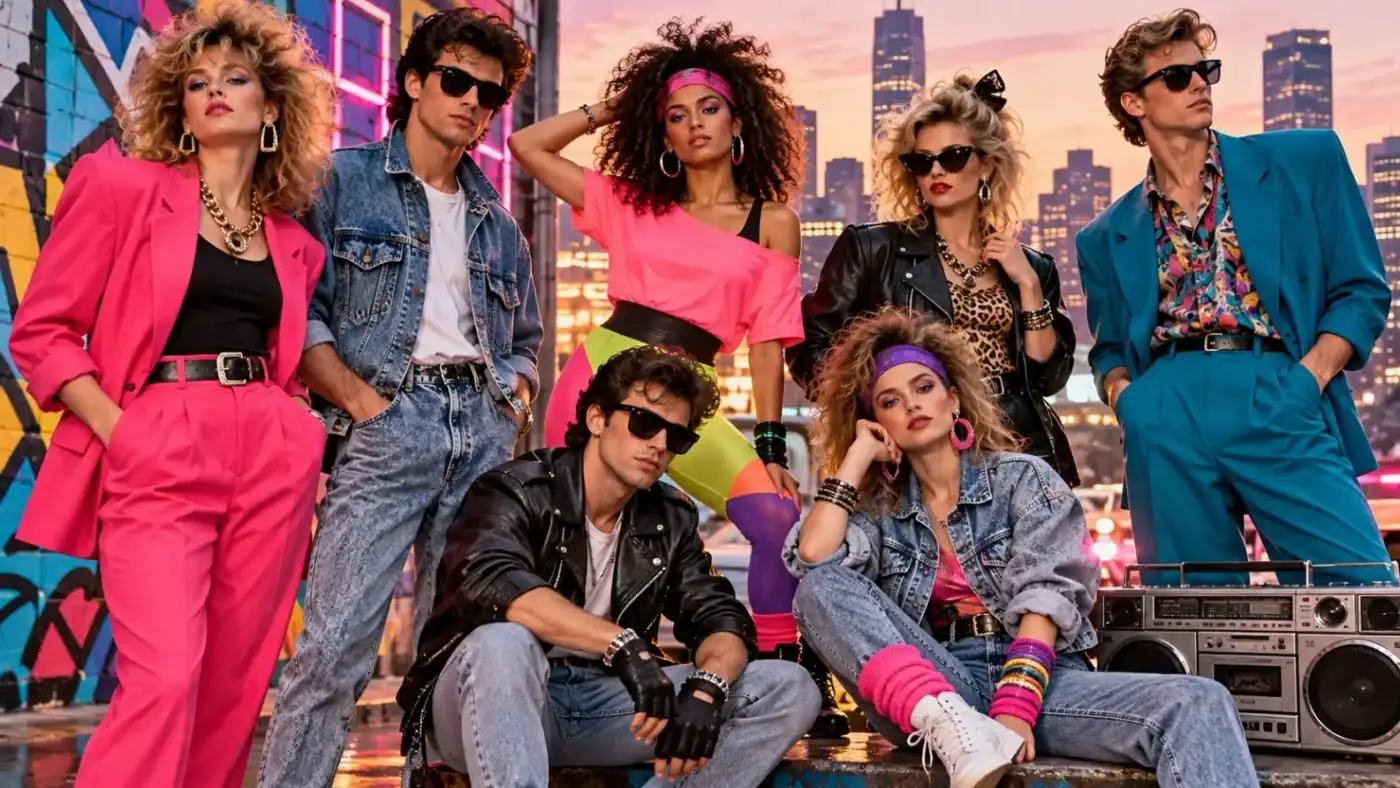
80s fashion was bold, expressive, and far more varied than neon leggings and oversized shoulder pads. The decade mixed power tailoring, relaxed denim, athletic clothing, leather, bright colors, and dramatic accessories. Today, many of those ideas are returning in cleaner, easier-to-wear forms.
80s fashion featured strong shoulders, high-waisted denim, leather jackets, colorful activewear, oversized tops, statement accessories, and bold tailoring. In Canada, aerobics culture, music, practical layering, and denim all helped shape the decade. Modern outfits work best when you borrow one or two retro elements instead of recreating a complete costume. More from us: Y2K Fashion in Canada.
| Iconic trend | Typical 1980s look | Easy modern version |
|---|---|---|
| Power dressing | Padded blazer and matching trousers | Relaxed blazer with straight jeans |
| High-waisted denim | Acid wash or straight jeans | Clean high-rise denim |
| Athletic style | Leg warmers, leotard and leggings | Leggings with an oversized sweatshirt |
| Leather | Biker jacket and bold accessories | Leather jacket with simple basics |
| Bright color | Neon-worn head to toe | One saturated accent |
| Oversized knitwear | Long, bulky sweaters | Relaxed knit with fitted bottoms |
| Statement jewelry | Large earrings and layered pieces | One sculptural accessory |
| Double denim | Jean jacket with jeans | Similar denim washes with a simple top |
What Defined 80s Fashion?
The decade embraced contrast rather than one universal uniform. Polished tailoring existed beside punk influences, sportswear, denim, romantic dresses, Western clothing, and colorful street style. Strong silhouettes and visible accessories gave many outfits their distinctive character.
Early-decade clothing could also be more restrained than popular nostalgia suggests. Neutral sweaters, coats, high-waisted trousers, leather pieces, and practical separates appeared alongside brighter looks. Color and exaggerated proportions became especially visible as the decade progressed.
Modern interest has moved beyond nostalgia. Spring 2026 runway coverage featured pronounced shoulders, suits, bomber jackets, taffeta, and other clear references to the period. That revival makes retro styling surprisingly relevant for a current Canadian wardrobe.
12 Iconic 80s Fashion Trends Worth Remembering
1. Power Suits and Strong Shoulders
Few details communicate the decade faster than a pronounced shoulder. Blazers and suits often used padding to create a broad, structured silhouette. The effect made ordinary office clothing feel assertive and highly visible.
You don’t need extreme padding to recreate the idea now. Choose a relaxed blazer with modest shoulder structure, then add straight jeans or tailored trousers. For office styling, StyleVanta’s guide to business casual in Canada offers practical ways to balance tailoring with everyday pieces.
2. High-Waisted Denim
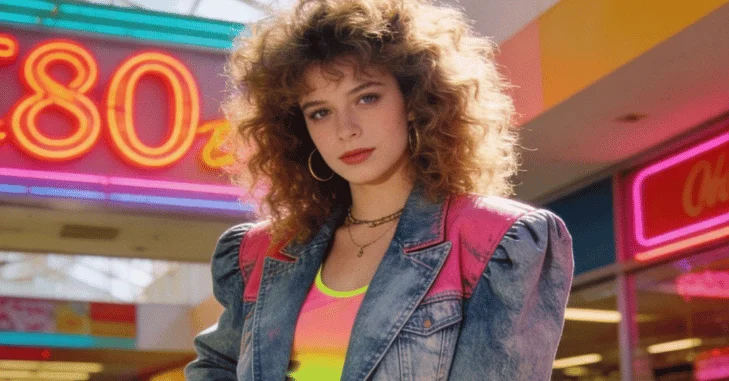
High rises, straight legs, designer jeans, and distinctive washes became important parts of the decade’s casual wardrobe. Denim could look rugged, polished, youthful, or rebellious depending on its styling. Double-denim combinations also became closely associated with the period.
For a current outfit, start with high-rise straight jeans and a simple knit or tucked tee. Add a denim jacket if you want a stronger retro reference. Keeping the footwear and accessories simple prevents the combination from feeling like a theme-party outfit.
3. Acid-Wash Jeans
Acid-wash denim pushed ordinary jeans toward a more graphic appearance. Its high-contrast finish suited a decade that frequently favored clothes with immediate visual impact. Jackets, jeans, and coordinated denim outfits all carried the treatment.
Modern acid wash works better as the main feature rather than one detail among many. Pair washed jeans with black, cream, grey, or another quiet color. A simple jacket and clean footwear can bring the finish into a contemporary wardrobe.
4. Aerobics-Inspired Clothing
Fitness culture had a major influence on clothing during the period. Leg warmers, leotards, headbands, leggings, and colorful spandex became recognizable parts of popular culture. The Canadian Museum of History specifically documents how aerobics became part of fashion in 1980s Canada.
The modern equivalent doesn’t require wearing workout gear from head to toe. Try leggings with an oversized sweatshirt, colorful socks, or a fitted athletic layer under a casual jacket. The connection remains visible without sacrificing practicality.
5. Oversized Sweaters
Large sweaters offered a softer counterpoint to structured jackets and fitted bottoms. Long and bulky knits appeared throughout the decade, often paired with narrow trousers or leggings. This contrast between volume and a slimmer base remains useful today.
Canadian weather makes this trend especially easy to adapt to. Choose a roomy knit with straight denim, leggings, or a cleaner trouser shape. Keep enough room under your coat so the sleeves and shoulders don’t bunch during winter.
6. Leather Jackets
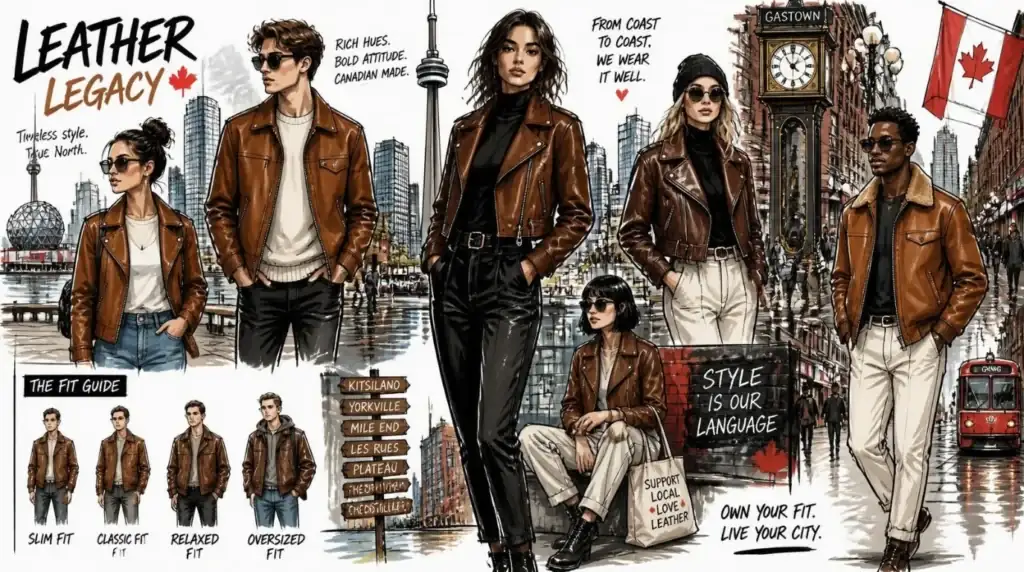
Leather brought rock and punk influences into mainstream wardrobes. Biker jackets could be worn with denim, graphic tees, boots, dresses, and other contrasting pieces. Black leather also offered an alternative to the colorful stereotype often attached to the decade.
Try a restrained leather jacket with straight jeans and a plain top today. A skirt or simple dress can create a softer contrast. The key is allowing the jacket to carry the retro reference instead of adding every rock-inspired accessory at once.
7. Bright and Neon Colours
Electric pink, green, orange, yellow, and other saturated shades became memorable parts of mid-decade style. Color appeared across activewear, accessories, casual clothing, and evening looks. It helped make the era’s clothing instantly recognizable.
For everyday wear, use one bright color rather than five. A saturated sweater, handbag, scarf, or shoe can give neutral clothing an unmistakable retro note. This approach also makes strong colors easier to repeat across seasons.
8. Leg Warmers
Leg warmers grew beyond their practical dance origins through the decade’s fitness boom. They were often combined with leggings, leotards, sweatshirts, and athletic footwear. Their layered appearance became closely tied to popular images of 1980s exercise culture.
They can still make sense during cold Canadian months. Choose a neutral knitted pair over leggings or tights and combine them with simple boots. Avoid adding a headband, neon leotard, and several other period references unless you’re intentionally creating a costume.
9. Capri and Cropped Pants
Cropped trousers were not invented in the decade, but shorter shapes were revived during the early 1980s. Capri and pedal-pusher influences sat alongside ankle-length and high-waisted trousers. That history makes today’s cropped-pant revival feel less disconnected from retro styling than it might appear.
Hem placement matters more than copying an old photograph. StyleVanta’s capri pants guide for Canada explains how rise, calf position, fabric, and footwear change the finished proportions. Use those details to make the silhouette suit your own wardrobe.
10. Bold Accessories
Accessories rarely needed to disappear into an outfit. Jewelry, belts, sunglasses, hair accessories, and statement footwear could become focal points. Bigger proportions also complemented the stronger clothing silhouettes of the period.
Modern styling calls for more editing. Choose large earrings, a noticeable belt, or a sculptural bag rather than wearing every statement piece together. One confident accessory often communicates the decade more effectively than several competing ones.
11. Mini Skirts and Statement Dresses
The decade included short skirts, fitted shapes, romantic details, lace, puffed sleeves, and dramatic evening fabrics. Pop culture helped turn some of these elements into recognizable youth and performance looks. Canada’s own Mitsou Gélinas famously used a black mini skirt, bustier, short jacket, and borrowed vintage boots for her 1988 “Bye bye mon cowboy” image.
You can borrow the proportions without reproducing a stage outfit. Pair a mini with an oversized blazer, opaque tights, or simple boots. Alternatively, choose a puff-sleeve or taffeta-inspired dress and keep the jewelry understated.
12. Double Denim
Denim-on-denim became one of the decade’s lasting casual formulas. Western clothing also had an audience in Canada during the period, including cowboy boots, denim jackets, jeans, and related pieces.
A current version can be simple. Wear straight jeans with a denim shirt or jacket, then break up the combination with a white, grey, or black base layer. Similar washes look cleaner, while contrasting washes create a more casual result.
How to Wear 80s Fashion Without Looking Like You’re in Costume
The easiest rule is to choose one dominant retro idea per outfit. Strong shoulders, bright color, acid-wash denim, statement jewelry, or an oversized silhouette can establish the reference. Adding all five can shift the outfit from inspired to theatrical.
Balance is also important. Pair an oversized blazer with a fitted base, or wear roomy knitwear with straighter bottoms. If you’re experimenting with looser trousers, StyleVanta’s baggy pants styling guide explains how the waist, seat, hem, and footwear affect the proportions.
Keep modern pieces visible throughout the outfit. Current shoes, a simple handbag, clean makeup, or contemporary denim can ground an older silhouette. This approach lets the retro detail feel deliberate rather than accidental.
Easy 80s-Inspired Outfit Ideas for Canada
A modern power look starts with a roomy blazer, fitted knit, straight jeans, and loafers or ankle boots. You get the strong upper-body silhouette without exaggerated padding. It can also move between casual offices, dinners, and city weekends.
For winter, combine an oversized sweater with leggings or straight jeans and weather-appropriate boots. Add a colourful scarf if you want another period reference. The outfit borrows the decade’s proportions while remaining practical for cold conditions.
Spring and fall offer more room for leather. Wear a biker jacket over a plain tee or knit with high-rise denim and simple boots. On warmer days, StyleVanta’s Canadian summer outfit ideas can help you adapt denim and lighter layers for changing temperatures.
What Made 1980s Style in Canada Distinctive?
Canadian fashion absorbed many international influences, but local music, climate, retail, and fitness culture gave those trends their own context. The Canadian Museum of History documents Montréal’s aerobics scene as part of the decade’s broader fitness phenomenon. It also preserves clothing and stories connected with Canadian performers from the period.
Mitsou’s late-decade image offers a useful example of how personal that style could become. Her famous 1988 outfit mixed pieces from her existing wardrobe with vintage boots borrowed from her mother. She bought only the hat, showing that memorable styling didn’t necessarily require an entirely new wardrobe.
That idea remains useful now. Start with clothes you own, then add one strong silhouette, texture, colour, or accessory. Retro inspiration becomes more wearable when it works with your real life rather than replacing it.
Which 80s Trends Work Best Today?
Structured blazers, high-waisted jeans, leather jackets, roomy knits, cropped trousers, and statement accessories are among the easiest ideas to reuse. They already overlap with current wardrobe staples, so they don’t require a complete styling change. Recent fashion coverage also shows renewed interest in pronounced shoulders and tailored silhouettes.
Neon, leg warmers, dramatic acid wash, and oversized jewellery can work too. They simply create a stronger period reference and need more restraint around them. If you prefer classic dressing, StyleVanta’s old money style guide provides a useful contrast based on restrained colours and traditional tailoring.
Frequently Asked Questions About 80s Fashion.
What was popular in 80s fashion?
Power suits, shoulder pads, high-waisted jeans, oversized sweaters, leather jackets, colourful activewear, leg warmers, statement jewellery, and bold accessories were widely associated with the decade. Styles changed throughout the 1980s, so not everyone dressed in neon or exaggerated clothing. The era included minimalist, preppy, punk, athletic, Western, romantic, and corporate influences.
What did women wear in the 1980s?
Women’s wardrobes included tailored suits, high-waisted trousers, jeans, leggings, sweaters, mini skirts, dresses, leather pieces, athletic clothing, and statement accessories. Popular silhouettes ranged from broad shoulders to fitted leggings and straight jeans. Occasion clothing could also use lace, taffeta, volume, and other decorative fabrics.
What did men wear in the 1980s?
Men’s clothing included jeans, sport coats, suits, leather jackets, sportswear, colourful shirts, sneakers, boots, and casual knitwear. Some mid-decade looks paired T-shirts with broad-shouldered jackets and lighter colours. Western and rock influences created other recognizable alternatives.
Is 80s style coming back in 2026?
Designers are clearly revisiting important elements from the period. Spring 2026 fashion coverage highlighted strong shoulders, oversized suits, bomber jackets, taffeta, and corporate-inspired tailoring. Modern versions tend to edit the original proportions rather than reproduce complete period outfits.
How can I dress 80s without looking like I’m wearing a costume?
Choose one or two recognizable details and keep everything else current. Try a structured blazer with jeans, a leather jacket over basics, or one bright accessory with neutral clothing. Modern footwear and restrained accessories help keep the final outfit wearable.
Bring the Best of the Decade Into Your Wardrobe
The lasting appeal of the 1980s comes from its willingness to experiment with proportion, colour, texture, and identity. You don’t need shoulder pads, neon, and leg warmers in the same outfit to capture that confidence. A single oversized blazer or strong denim look can make the reference clear.
For Canadians, practical styling matters as much as nostalgia. Choose retro elements that work with your weather, existing clothes, footwear, and daily routine. Then browse more fashion and personal-style guides from StyleVanta to build outfits that feel current rather than copied from another decade.