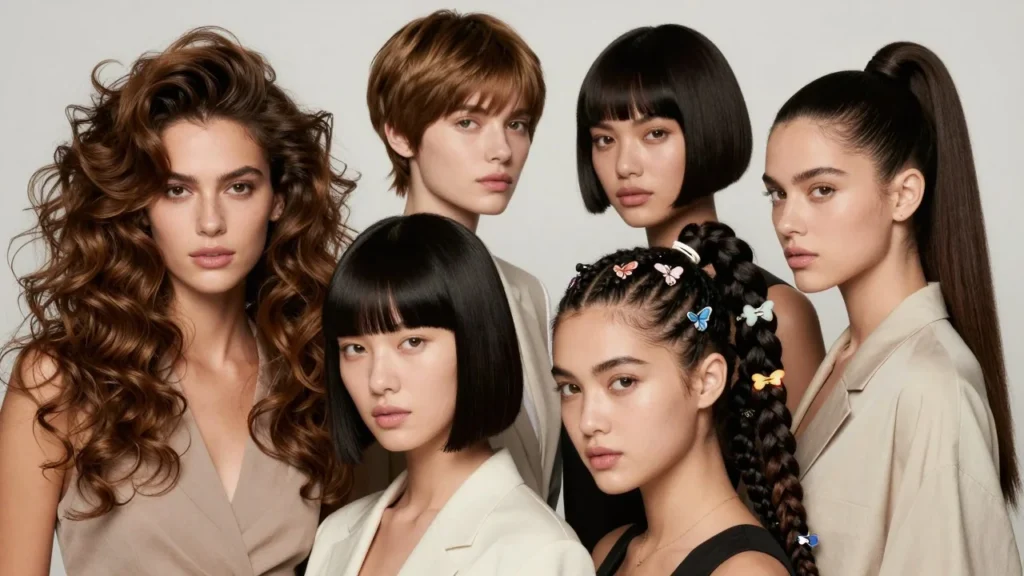


Auburn hair blends red and brown into a rich colour that can range from softly coppery to deep mahogany. The right version depends less on a shade name and more on your natural depth, skin undertone, desired contrast, and willingness to maintain red pigment.
Auburn is a red-brown colour family rather than one fixed shade. It can lean lighter and coppery, balanced and chestnut-like, or deep with mahogany and wine tones. Choose the depth first, adjust the warmth to your complexion, then decide whether you want all-over colour, highlights, balayage, or a lower-commitment tint.
| Quick fact | What to know |
|---|---|
| Colour family | Red-brown |
| Typical range | Light copper-brown to deep mahogany-brown |
| Softer option | Fine warm highlights or balayage |
| Bolder option | Rich all-over red-brown colour |
| Main upkeep issue | Red tones can lose intensity between colour services |
| Best starting point | Choose depth and undertone before selecting a formula |
What Is Auburn Hair and What Makes It Different?
The defining feature is a visible mix of brown and red. Cambridge Dictionary describes auburn as a reddish-brown hair colour, while current professional colour guides place it between traditional brunette and brighter red shades.
That middle ground is what makes the colour flexible. You can keep plenty of brunette depth and add a subtle red cast. You can also increase copper, gold, cherry, or mahogany tones for a stronger result.
It helps to compare neighbouring colour families before choosing.
| Shade | Main impression | Compared with auburn |
|---|---|---|
| Copper | Brighter orange-red | Usually lighter and more visibly red |
| Chestnut | Warm brown with red-gold notes | Usually more brown-dominant |
| Mahogany | Deep brown-red | Darker and often more muted |
| Burgundy | Wine or violet-red | Cooler and more purple |
| Auburn | Balanced red-brown | Sits between brunette and stronger red |
If you prefer a brunette result with more gold and less red, StyleVanta’s honey-brown colour guide gives you a useful comparison.
10 Shades and Colour Placements Worth Considering

1. Classic medium red-brown
This is the easiest reference point for the colour family. Medium brown depth keeps the result grounded, while clear red warmth prevents it from looking like standard brunette. It works well when you want a noticeable change without moving toward bright copper.
2. Light copper auburn
A lighter version brings more copper and gold into the mix. The finish appears brighter and warmer, especially in natural light. This direction can make sense for naturally dark blonde or light brown bases because the depth change may be smaller.
3. Deep auburn brunette
Deep brown provides the foundation, with red appearing as a rich reflection rather than a bright surface colour. This is a useful option if you want to stay clearly brunette.
For more dark-red comparisons, StyleVanta’s existing hair-colour resources include deeper red, mahogany, burgundy, and related directions on its hair colour guide for brown skin.
4. Chestnut auburn
Chestnut-inspired colour increases the brown and soft golden side of the formula. The result feels warmer than neutral brunette without becoming strongly orange. It can be a comfortable first move into red colour for someone who wants subtlety.
5. Mahogany auburn
Mahogany adds extra depth and creates a browner, more subdued red. Depending on the formula, the result may include muted cherry or wine reflections. Choose this direction when deep colour suits your starting base, and you want less visible orange warmth.
6. Burgundy-tinted auburn
A small violet or wine influence can move the colour cooler and deeper. It is distinct from full burgundy because the brown foundation remains noticeable. This variation can also help people who like red but do not want a strongly copper finish.
7. Golden auburn
Gold softens the transition between brown and red. It can produce a bright, warm result without looking as orange as classic copper. Ask your colourist to keep the depth aligned with your natural base if easy grow-out matters to you.
8. Dimensional highlights
You do not need to colour every strand. Warm red-brown highlights over brunette can add visible movement while preserving much of your existing shade. Face-framing ribbons make the change more noticeable. Finer pieces through the lengths create a quieter effect.
9. Red-brown balayage
Balayage concentrates colour away from the scalp and can leave a natural-looking root. That usually makes regrowth less obvious than a solid root-to-end change.
If easy grow-out is a priority, compare the placement with StyleVanta’s ombre hair guide before settling on a technique.
10. Hidden red-brown panels
An underlayer lets you add warmer colour without changing the full surface. You can reveal more of it in ponytails, braids, curls, or half-up styles.
StyleVanta’s peekaboo colour guide explains how hidden placement changes visibility and commitment.
How to Match the Shade to Your Skin Undertone
Skin depth and undertone are separate decisions. Fair, medium, brown, and deep complexions can each have warm, cool, neutral, or olive undertones.
Warm or golden undertones often pair naturally with copper, amber, gold, and chestnut influences. Cooler undertones can work with deeper, more neutral red-browns or versions containing muted cherry and wine tones. Neutral complexions have more room to move between both directions.
Olive skin can suit rich brunette depth with controlled warmth. If bright orange seems too strong, keep the base neutral and add red selectively.
Professional colour guides also stress that this colour family can be adjusted rather than treated as one universal formula.
Your Starting Colour Changes the Plan
A reference photo does not show the work required to reach it. Naturally light or medium hair may accept a visible red-brown shift with less lightening. A darker brunette base may show deep red reflections without a major lift. Creating a much lighter, brighter result from dark hair can require more processing.
Previously coloured hair needs extra care because artificial pigment affects the next colour service. Tell your stylist about permanent dye, bleach, henna, colour removers, and chemical services before choosing a formula. If you want a softer temporary shift, ask whether a deposit-only formula can create enough visible change on your current base. It can add pigment, but it cannot substantially lighten dark natural hair.
How to Keep Red-Brown Colour Looking Fresh
Red shades can change as deposited pigment fades, so your routine matters. Garnier Canada specifically notes that auburn and other reds can be prone to fading.
A practical routine includes:
- Wash according to your scalp needs rather than automatically shampooing every day.
- Choose products intended for coloured hair when possible.
- Keep excessive heat styling to a minimum and use suitable heat protection.
- Condition processed mid-lengths and ends well.
- Protect coloured strands from prolonged sun exposure.
- Ask your colourist whether a gloss or colour-depositing product suits your formula.
The American Academy of Dermatology also recommends extra care with lightening because stronger colour changes can increase dryness and damage.
A Canadian Safety Note Before Dyeing at Home
Read the instructions and warnings on your specific product rather than relying on a previous colouring experience.
Health Canada says permanent and semi-permanent dyes using certain colour ingredients must carry warnings about possible skin irritation and directions for a preliminary skin test. It also advises repeating the recommended test before each use because sensitivity can develop after earlier problem-free applications.
Stop using a product if the test area develops redness, burning, itching, blistering, or irritation. Follow the manufacturer’s timing and application directions, and never use ordinary hair dye on eyelashes or eyebrows.
What to Tell Your Colourist
Instead of asking for a single shade name, describe the decisions behind the result. Bring reference photos taken in different lighting, explain how much red you want to see, and say whether you want to remain brunette.
Also discuss your preferred root depth, placement, previous colour history, and realistic maintenance schedule. A clear request such as “deep brunette with muted red warmth and soft face-framing dimension” gives more information than the shade name alone.
Choose the Colour Before You Choose the Trend
Start with three decisions: how light or dark you want to be, how much red you want to see, and how often you are willing to maintain the result. Then choose the placement and formula that fit those priorities.
Frequently Asked Questions
Is auburn hair red or brown?
It is both. The colour is defined by a red-brown balance, but the ratio can change. Some versions look like warm brunette with red reflections, while lighter formulas can move closer to copper.
Is auburn the same as copper?
No. Copper normally shows more orange-red brightness, while auburn keeps a stronger brown foundation. A copper-heavy formula can sit near the lighter end of the same general red spectrum.
Can dark brown hair become auburn without bleach?
Sometimes a big red-brown tonal change is possible without major lightening, especially when the goal is added warmth rather than a lighter result. The exact outcome depends on your natural depth, previous colour, formula, and desired brightness.
Does this colour work with cool skin undertones?
Yes, but the formula may need adjustment. A colourist can reduce strong orange or gold and use deeper neutral, cherry, mahogany, or wine-influenced tones instead.
Is balayage easier to maintain than all-over colour?
It can be. Leaving the natural root intact often makes regrowth less obvious. Full permanent colour gives a more uniform result but usually creates a clearer root line as the hair grows.