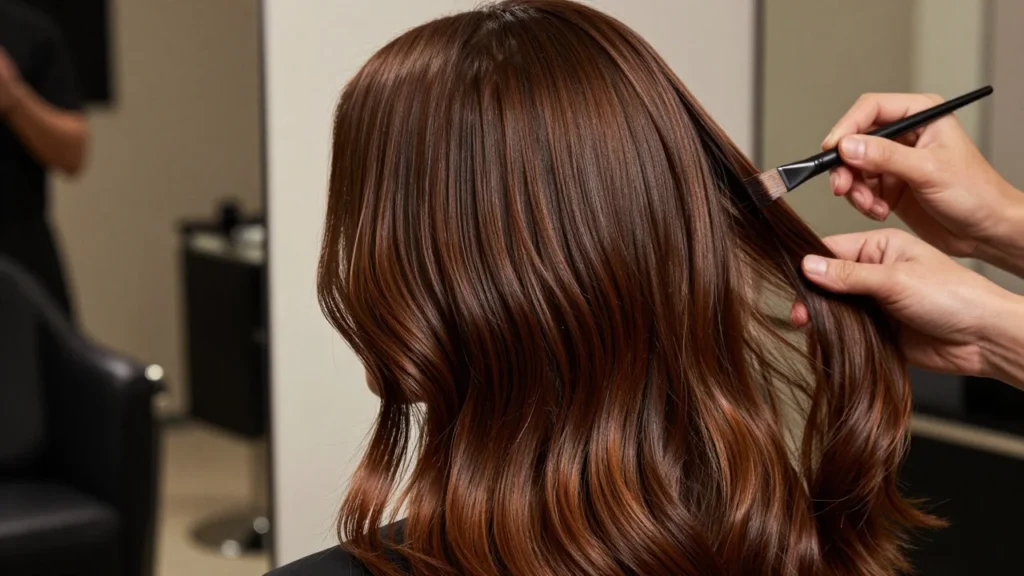

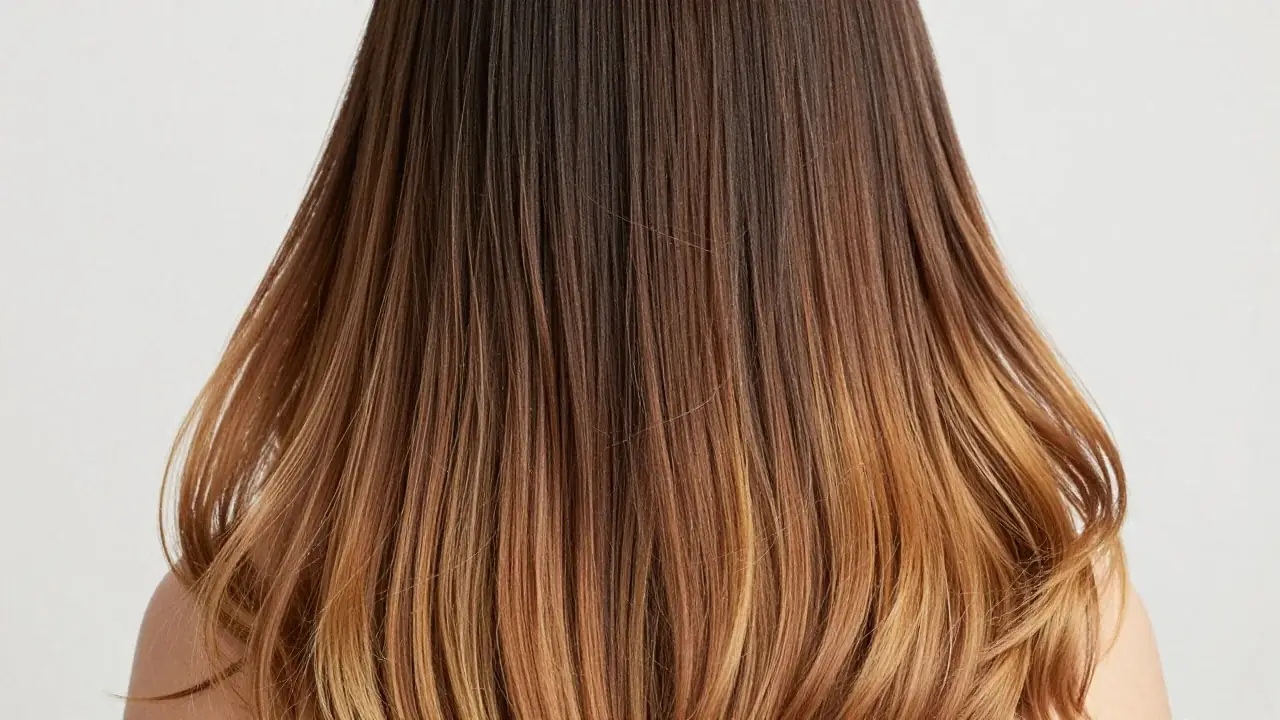
The sharp, two-tone ombré of the early 2010s has evolved. Today’s versions favour softer blends, polished tones, face-framing brightness, and transitions designed around your natural base.
Ombre hair is a colour effect that moves gradually from a darker base to lighter or bolder ends. Modern versions use softer transitions, face-framing brightness, and custom tones rather than a harsh dip-dye line. It can work with many hair colours and textures, with medium to long hair giving a colourist more room for a gradual blend.
| Quick fact | What to know |
| Main effect | A gradual shift from darker roots to lighter or differently coloured ends |
| Modern finish | Softer, more blended, and less sharply divided |
| Common shades | Caramel, beige blonde, honey, ash, copper, rose, and pastel tones |
| Maintenance | Usually lower at the roots because natural regrowth can remain part of the look |
| Best blending space | Medium and long hair, though bobs and other shorter cuts can work |
| Compared with balayage | Ombré describes the colour effect; balayage describes a placement technique |
What Makes Modern Ombré Look Different?
Traditional ombré creates a clear dark-to-light progression. The roots stay deeper, while the mid-lengths begin the transition and the ends carry most of the brightness.
That basic idea remains, but colourists now have more ways to soften the result. Newer versions often look more refined, with face-framing highlights and smoother transitions rather than abrupt colour changes.
This matters when choosing inspiration photos. A high-contrast black-to-platinum fade will look much bolder than a chocolate-to-caramel melt, even though both use the same general colour concept.
If your haircut also needs to work with a distinctive front hairline, Stylevanta’s widow’s peak styling guide explains how parts, bangs, texture, and length can change the finished shape.
12 Modern Colour Ideas to Consider
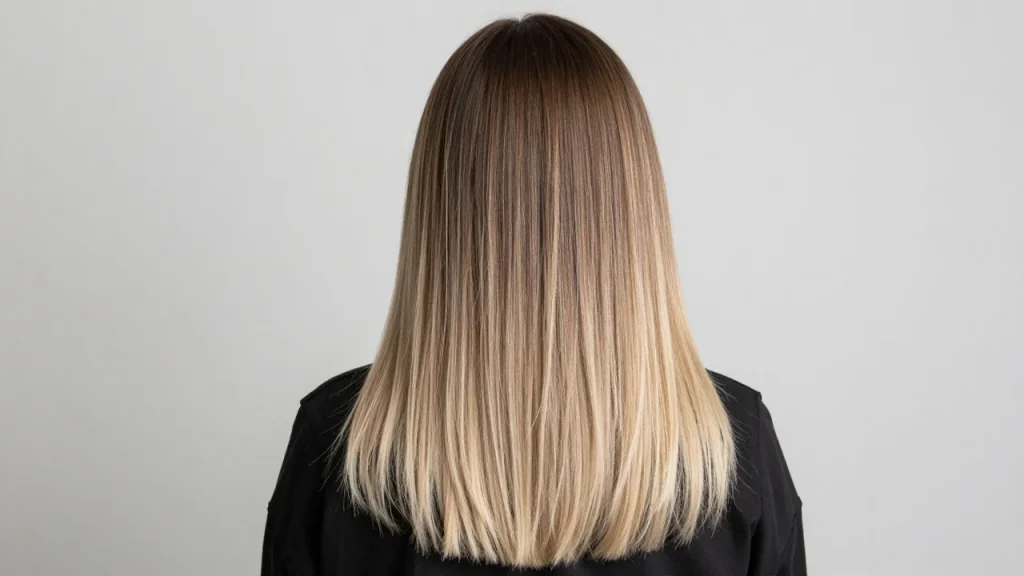
The most useful way to choose a shade is to start with your existing base, then decide how much contrast you want. You don’t have to jump from dark brown to pale blonde. We cover this in more depth in Brown Balayage for Brunettes.
| Colour idea | Contrast | The finished effect |
| Chocolate to caramel | Soft | Warm and understated |
| Espresso to beige blonde | Medium | Neutral with visible brightness |
| Brunette to honey blonde | Medium | Warm, luminous ends |
| Black to ash blonde | High | Cool and graphic |
| Brown to dark blonde | Soft | Natural-looking and subtle |
| Auburn to strawberry blonde | Medium | Warm red-to-gold movement |
| Brunette to copper | Medium | Rich and warm |
| Copper to golden blonde | Medium | Bright without going fully blonde |
| Brown to rose gold | Medium | Soft fashion colour |
| Blonde to pastel pink | Medium | Playful with lighter roots |
| Dark roots to lilac | High | Creative and cool-toned |
| Reverse blonde to brunette | High | A lighter-to-darker twist |
Caramel and blonde remain familiar options, but copper, rose, pink, platinum, and other creative colour combinations can also create striking gradients.
For the softest result, keep the end colour relatively close to your natural base. If you want the gradient to become the main feature of the hairstyle, increase the contrast.
How Ombre Hair Differs From Balayage and Sombré
The terms often appear together, but they don’t mean exactly the same thing.
| Feature | Ombré | Balayage | Sombré |
| What it describes | A gradient colour effect | A freehand highlighting technique | A softer version of ombré |
| Placement | Brightness builds toward the ends | Selected pieces are painted throughout the hair | Gentle dark-to-light progression |
| Typical contrast | Medium to strong | Soft to medium | Low |
| Finished look | Directional fade | Scattered dimension | Subtle gradient |
Balayage is primarily an application method, while ombré describes how the finished colour progresses through the hair. A stylist can even use balayage-style painting to help create an ombré result.
Sombré is useful if you like the idea of a gradient but don’t want an obvious two-tone effect. It creates a subtler transition that keeps the colour change closer to the base.
Can You Wear It on Short or Curly Hair?
Yes, but placement becomes more important as the hair gets shorter.
A bob or lob can provide enough length for a visible transition. Very short cuts give the colourist less space to move gradually from one tone to another, so softer contrast may look more balanced. Shorter and medium-length styles can still support the effect when the colour is adjusted to the haircut.
Curly and wavy textures can also carry graduated colour. Changes in tone can emphasize bends, curls, and layers because different sections catch the light differently.
Your haircut still matters as much as the shade. For related styling and hair-care content, you can browse Sophie Palmer’s hair guides on Stylevanta.
How Much Maintenance Should You Expect?
The roots are one reason this style can be easier to maintain than colour that begins directly at the scalp. If your natural root remains untouched, new growth doesn’t automatically create an obvious regrowth line.
An ombré colour can often go several months before a larger refresh is required. The actual schedule depends on the shade, contrast, previous colour, and how quickly the tone changes. Fashion colours and pale blondes may need tonal refreshing sooner.
The ends deserve more attention. Creating a much lighter finish may involve lightener, and chemically processed lengths can become drier. Conditioning is especially important after lightening.
For everyday care:
- Use shampoo and conditioner intended for colour-treated hair.
- Apply heat protection before using hot tools.
- Keep lightened ends conditioned and trim them when needed.
- Ask your colourist whether your shade needs a toner or tinted treatment between appointments.
- Use lukewarm rather than very hot water when washing coloured hair.
Colour-safe products, heat protection, and occasional tonal refreshes can help maintain the finished shade between salon appointments.
What to Tell Your Colourist
A reference photo helps, but explain what you like about it.
Instead of saying only, “I want this colour,” point out the type of transition you want. Tell your colourist whether you prefer a natural root, a root shadow, strong contrast, face-framing brightness, or a barely visible blend.
It also helps to mention any previous permanent colour, bleach, highlights, or other chemical services. Your hair’s starting condition affects how light the ends can reasonably become in one appointment.
A useful consultation can focus on three choices: where the gradient starts, how many levels of contrast you want, and whether the finished tone should feel warm, neutral, cool, or creative.
Choose the Contrast Before You Choose the Shade
The strongest inspiration photo isn’t always the one with your favourite colour. Look first at how dark the roots are, where the transition begins, and how bright the ends become.
Save two or three examples with a starting colour and length similar to yours. Then ask a professional colourist which result is realistic without pushing your ends beyond their current condition.
For more practical hair, fashion, and personal-style inspiration, explore Stylevanta’s latest style guides as you plan your next look
Frequently Asked Questions
Is ombre hair still in style in 2026?
Yes. The styling has changed from the sharper dip-dye looks associated with the early 2010s. Softer blends, dimensional colour, root shadows, and face-framing pieces can give newer versions a more polished finish.
How long does an ombré colour last?
A full refresh can often be spaced several months apart because the darker root area grows out more naturally. Toners, pale blondes, and fashion shades may need attention sooner to keep the desired colour looking fresh.
Is ombré damaging?
The gradient itself isn’t the issue. Lightening is what can leave the processed mid-lengths and ends feeling drier, especially when a dark base needs significant lift. Your hair’s starting condition and the amount of lightening required both matter.
Is ombré or balayage better?
Neither is automatically better. Choose a stronger gradient when you want the colour transition to be noticeable. Choose balayage when you prefer scattered, hand-painted brightness and softer dimension. The two approaches can also be combined.
What shade is easiest for a first-timer?
A lower-contrast transition is usually the simplest place to start visually. Think dark brown to caramel, brunette to honey, or a soft sombré effect rather than jumping straight to platinum or a vivid fashion colour.