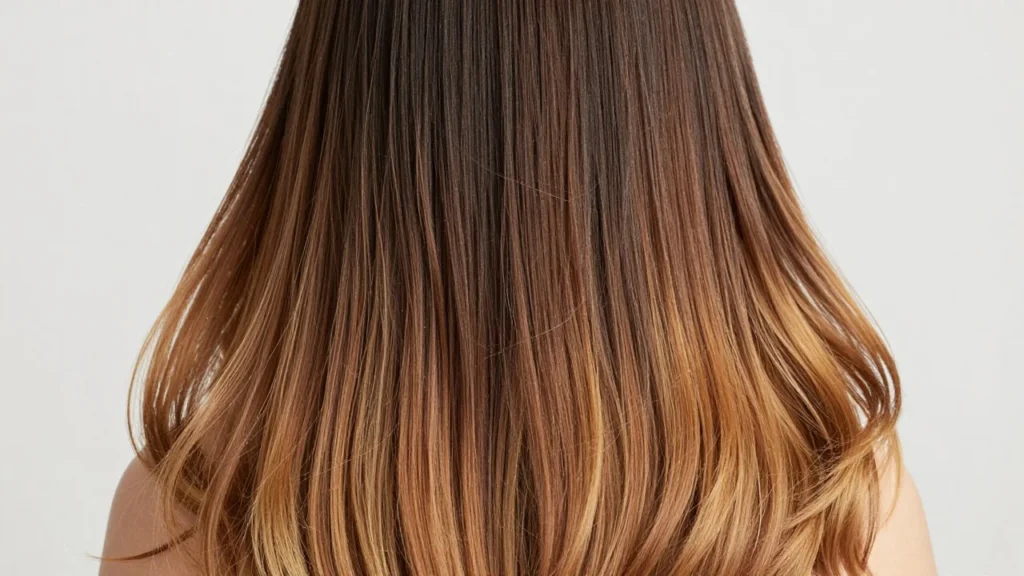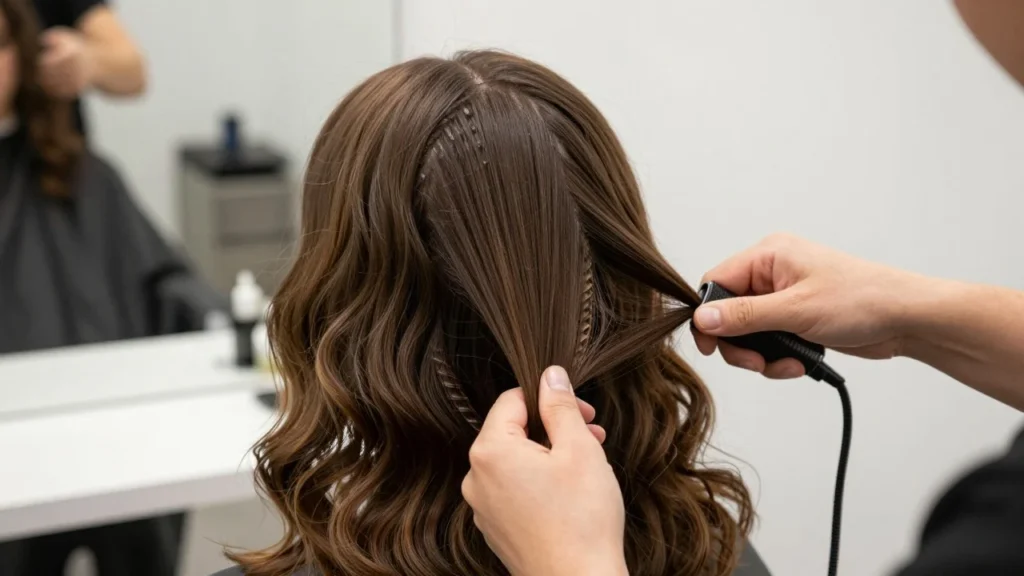

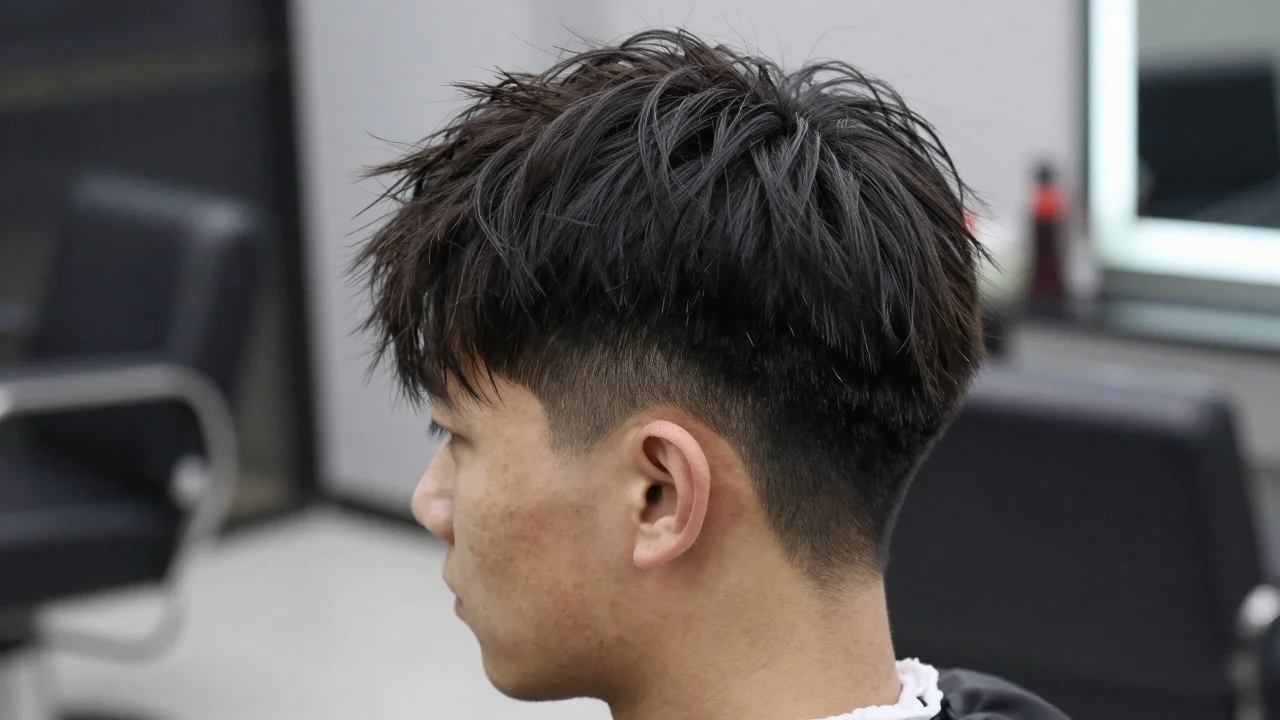
A middle part haircut divides the hair near the centre so that both sides frame the face. Modern versions can look soft and flowing, textured and casual, or sharp with a taper or fade. The right version depends less on copying a photo and more on matching the length, layers, texture, and sides to your hair.
A centre-parted cut works with straight, wavy, and curly textures when there is enough length at the front for the hair to separate naturally. Softer layers create movement, while tapers and fades give the sides a cleaner outline. For the easiest daily styling, choose a shape that follows your natural growth pattern instead of fighting it. StyleVanta’s hair and personal-style guidance offers related ideas.
| Key detail | What to know |
| Best length | Usually short-to-medium or longer, depending on the finish |
| Hair textures | Straight, wavy, curly, and thick hair can all work |
| Common variations | Curtains, textured layers, taper, fade, flow, undercut |
| Styling effort | Low to moderate |
| Useful products | Light cream, mousse, texture spray, flexible paste |
| Best barber tip | Bring a photo showing a similar hair texture |
| Main mistake | Cutting the front too short for the desired curtain effect |
What Is a Middle Part Haircut?
The defining feature is the centre split, not one specific length or side treatment. The front can fall toward the eyebrows, sweep back from the face, or blend into longer layers.
Classic curtains tend to leave more softness around the sides. A newer interpretation may combine a centre split with a low taper, fade, or shorter back and sides.
That flexibility explains why two cuts with the same part can look completely different. One can feel polished enough for work, while another can have loose texture and a relaxed finish.
Which Face Shapes and Hair Types Suit It?
Most face shapes can suit centre-parted hair, but small adjustments can make a noticeable difference.
For a round face, a little height through the top can keep the shape from looking too wide. Avoid creating excessive volume directly beside the cheeks.
A long or rectangular face often benefits from softer volume at the sides and less height at the crown. Longer curtains can help frame the upper face.
With a square face, loose layers can soften a strong jawline. Oval faces offer more flexibility because many lengths and finishes tend to look proportionate.
Hair texture matters as much as face shape. Straight hair often needs layering or a light styling product for movement. Wavy hair already has natural bend, while curls can create a fuller, more textured version of the same basic shape.
12 Centre-Parted Styles Worth Considering
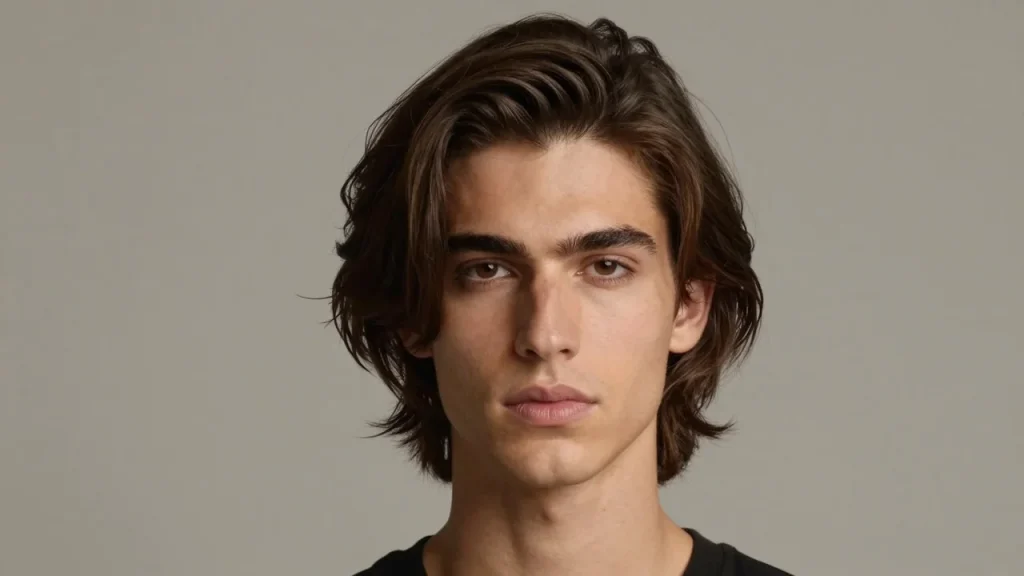
| Style | Length | Best suited to | Finish |
| Classic curtains | Medium | Straight or wavy hair | Soft |
| Short curtains | Short-medium | Fine or straight hair | Neat |
| Textured curtains | Medium | Thick or wavy hair | Casual |
| Low taper with curtains | Medium top | Most textures | Clean |
| Taper fade version | Medium top | Thick hair | Sharp |
| Long flow | Long | Wavy or straight hair | Relaxed |
| Curly curtains | Medium | Curly hair | Defined |
| Messy layered cut | Medium | Wavy or thick hair | Tousled |
| Scissor-cut curtains | Medium-long | Straight or wavy hair | Natural |
| Undercut version | Medium top | Dense hair | High contrast |
| Slick centre split | Medium | Straight hair | Polished |
| Soft K-style curtains | Medium | Straight or lightly wavy hair | Airy |
The classic curtain cut is a useful starting point if you’re unsure. It keeps enough length to experiment without committing to a dramatic fade or undercut.
A low taper is a good choice when you want a tidier look around the ears and neckline. Current haircut guides frequently pair longer centre-parted tops with tapering because it preserves movement while reducing bulk. (
Longer flow works better when you want the hair to sweep away from the face. Curly versions require less emphasis on creating a perfectly straight part; letting the natural curl pattern determine the split often creates a softer result.
What to Tell Your Barber or Stylist
Avoid asking only for “curtains.” That leaves too many details open to interpretation.
Bring one or two reference photos showing hair with a texture similar to yours. Then explain:
- How long you want the front to remain.
- Whether you want soft layers or stronger texture.
- Whether the sides should be scissor-cut, tapered, faded, or left longer.
- How much volume you want around the temples.
- Whether your preferred finish is natural, messy, or polished.
Ask for enough front length to split near the centre. You can also request soft layers for movement and a low taper around the ears.
Current barber-focused guides also recommend discussing the top length and side treatment rather than relying on the hairstyle name alone.
How to Style the Cut at Home
Start with damp rather than soaking wet hair. Find the point where your hair naturally wants to separate, then guide the front sections to either side.
For more volume, direct warm air upward and away from the roots. Use your fingers or a brush to shape each side. Finish with cooler air to help the hair settle.
Product choice depends on texture:
- Fine or straight hair usually benefits from mousse or a light texture spray.
- Wavy hair often needs only a small amount of styling cream.
- Curly hair can benefit from curl cream or a lightweight leave-in product.
- Thick hair may need a flexible paste for extra control.
Start with less product than you think you need. Heavy wax or gel can pull the front down and make the style look flat.
Common Problems and How to Fix Them
The front keeps falling forward. Re-wet the roots and dry them away from the face before adding product.
One side has more volume. Work with the growth pattern rather than forcing perfect symmetry. A slightly off-centre split can look more natural.
The sides look bulky. Ask for some weight to be removed around the temples, or consider a low taper at your next appointment.
The hair looks flat. Add root lift during drying instead of applying more product. Extra product often makes the problem worse.
The front is too short. Give it time to grow. A soft curtain effect becomes easier to achieve once the front has enough length to bend and separate.
What If You Have a Widow’s Peak or Receding Hairline?
A natural V-shaped hairline can work well with a centre split because the point may become the starting place for the part. StyleVanta’s guide to styling a widow’s peak explains how centre parts can emphasize the shape, while fringe or side-directed styles can soften it.
A widow’s peak and a receding hairline aren’t the same thing. If you notice a changing hairline, reduced density, or unusual shedding, treat that as a separate concern rather than expecting the haircut to solve it.
How Much Maintenance Does It Need?
Maintenance depends on the side treatment.
A tight fade loses its crisp outline faster than a longer scissor-cut style. Softer curtains can usually tolerate more growth because the added length becomes part of the shape.
Daily styling should remain simple once the cut works with your natural hair direction. If you need a long routine every morning to force the roots into place, ask your stylist whether a softer split or different layering pattern would better suit your growth pattern.
Choose the Version That Works With Your Hair
The best centre-parted cut isn’t necessarily the one with the sharpest fade or the longest curtains. It’s the version that works with your texture, growth pattern, face proportions, and normal styling routine.
Bring a realistic reference photo to your next appointment and explain the length, sides, layers, and finish you want. For more ideas, browse Sophie Palmer’s hair articles.
Frequently Asked Questions
Is a middle part haircut still in style in 2026?
Yes. Current 2026 haircut guides continue to feature centre-parted styles ranging from classic curtains to low tapers, fades, curls, and longer flow cuts.
How long does your hair need to be?
There is no single required length. Shorter versions are possible, but classic curtains need enough length at the front to separate and fall to both sides. If the fringe cannot bend away from the centre, growing it longer usually helps.
Can curly hair have a centre part?
Yes. Curly hair can create a fuller, softer version of the look. Let the curl pattern influence where the split sits instead of forcing every strand into equal sections.
Does the style work with fine hair?
It can. Fine hair usually looks better with light layering and lightweight products. Heavy waxes can reduce volume and separate the hair into thin sections.
Do you need a fade?
No. A fade is only one option. Scissor-cut sides, a subtle taper, or longer blended sides can all work. Choose the side treatment based on how clean or relaxed you want the finished style to look.