
This guide is general information, not medical advice. Follow the product’s allergy-test directions, and stop and seek medical advice if you develop burning, swelling or a rash. Elsewhere on the site: Pink Hair.
If you’re considering permanent hair dye, the main question isn’t whether the colour lasts. It’s whether that commitment fits your goal, hair history, and maintenance routine. Permanent colour can provide lasting shade changes and strong grey coverage, but correcting a mistake is harder than it is with lower-commitment formulas. (hair.com)
Permanent colour uses an oxidizing developer and an alkaline agent to change pigment inside the hair shaft, so the result does not simply wash away. It suits lasting shade changes and strong grey coverage. The trade-offs include visible regrowth, more difficult colour correction, and greater potential for dryness than with deposit-only formulas. (labmuffin.com)
| Question | What to know |
| Best suited to | Long-term colour changes and dependable grey coverage |
| How it works | Developer and an alkaline system help oxidative colour form within the hair |
| Can it lighten natural hair? | Some formulas can lighten untreated hair to a degree |
| Can it lighten previously coloured hair? | Usually not reliably; existing artificial pigment complicates lightening |
| Does the colour fade? | Yes. Tone and vibrancy can fade even though the colour is considered permanent |
| Typical maintenance | Regrowth often leads to root touch-ups about every 6, 8 weeks |
| Main safety step | Follow the product’s allergy- or patch-test directions before every application |
| Lower-commitment alternatives | Demi-permanent, semi-permanent, or temporary colour |
Permanent formulas remain in the hair rather than disappearing after a set number of shampoos. Yet “permanent” doesn’t mean the shade will look identical forever. Washing, heat, UV exposure, hair growth, and repeated styling can change how the colour looks over time.
StyleVanta’s editorial focus includes hair care, styling, and practical beauty guidance. You can read more about how StyleVanta approaches its fashion and beauty coverage.
Is Permanent Hair Dye the Right Choice for You?
The right formula depends on what you want to change. Someone covering noticeable greys has different needs from someone trying copper for a weekend or adding richness to faded brunette lengths.
| Colour type | Ability to lighten | Grey coverage | How it changes over time | Main advantage | Main trade-off |
| Permanent | Can lighten untreated hair to a degree | Often strongest; check the product claim | Colour remains, while tone may fade and roots grow | Long-lasting change | Harder to reverse |
| Demi-permanent | Little or no meaningful lift | Can blend greys | Gradually fades | Softer commitment | Less lasting coverage |
| Semi-permanent hair dye | No meaningful lift | Limited blending | Fades over several washes | Easy experimentation | Shorter wear |
| Temporary colour | No | Minimal | Usually washes away quickly | Lowest commitment | Limited durability |
These distinctions matter because permanent oxidative colour changes the hair differently from direct-deposit formulas. Semi-permanent colour mainly deposits pigment, while permanent formulas use developer to create a longer-lasting result.
Verdict: Choose permanent colour if you want lasting grey coverage, a long-term darker shade, or consistent colour that you’re prepared to maintain. Choose demi- or semi-permanent colour if you’re testing a shade, refreshing your tone, or want a softer grow-out.
For damaged hair, a complicated colour history, or a major lightening change, professional colour is often the more predictable option.
7 Things to Check Before You Buy Permanent Colour
1. Define the result you want
Decide whether your goal is grey coverage, going darker, enriching your natural shade, or lightening untreated hair. That choice narrows the formula and shade range before packaging or model photos influence your decision.
2. Check your colour history
Virgin hair behaves differently from hair that already contains artificial pigment. Standard colour generally cannot be relied on to lift previous colour cleanly. Correcting a dark or uneven previous application may require professional help.
Be especially cautious if your lengths have several layers of old box colour.
3. Choose both a level and a tone
Shade depth is only half the decision. Warm, cool, neutral, ash, gold, copper, and red undertones can make two colours at the same depth look quite different.
Your starting colour also affects the result. A shade pictured on the package isn’t a guarantee that every starting colour will produce the same result.
4. Read the grey-coverage claim
Don’t assume every permanent formula handles resistant greys equally. Major product ranges often distinguish between formulas designed specifically for complete or enhanced grey coverage. Check the manufacturer’s stated coverage rather than relying only on the shade name. (lorealparis.ca)
If covering greys is your main objective, make it your first filter.
5. Read the developer and safety instructions
Oxidative colour commonly combines dye ingredients with a developer. Some formulations may also contain sensitizing ingredients such as PPD.
Health Canada allows PPD in hair dyes only when products display specific warnings and directions for safe use. Follow the package’s allergy-test directions before every use, even if you’ve used the same brand before. Follow the package’s allergy-test directions before every use, even if you’ve used the same brand before.
“Ammonia-free” also shouldn’t be treated as another way of saying “risk-free.” Read the full directions and warnings for the specific formula.
6. Make sure one package is enough
Check the manufacturer’s coverage guidance before starting. Long, dense, or thick hair may require more product than short or fine hair.
Running out halfway through an application can make even saturation much harder to achieve.
7. Plan the maintenance before colouring
Permanent colour creates an ongoing commitment at the roots. Many at-home colour guides suggest touch-ups about every six to eight weeks, although your growth rate and the contrast with your natural colour can affect that timing.
Repeatedly coating already-coloured lengths isn’t always necessary. Follow the product’s retouch instructions instead of automatically applying each new mixture from root to tip.
How Permanent Colour Changes the Hair
Oxidative colour works inside the hair rather than placing all of its pigment on the surface. An alkaline ingredient helps swell the cuticle, while the developer participates in lightening natural pigment and forming new colour molecules.
That chemistry explains both the benefit and the commitment. You can achieve changes that deposit-only colour can’t provide, but the process is harder to reverse.
Hair condition matters too. Already porous or heavily processed lengths can react differently from healthy new growth.
Grey Coverage, Lightening, and Old Colour
Permanent formulas are widely used for grey coverage because many are designed to deposit enough lasting pigment to provide substantial or complete coverage. The exact result depends on the product, percentage of grey, hair texture, and application.
Lightening is more complicated. Permanent colour can lighten untreated natural hair within the limits of the formula. It cannot be relied on to remove previous artificial colour.
As colour professionals often put it, colour does not reliably lift colour. Major corrections, significant lightening, or uneven old pigment may require a different process. (vogue.com)
If a colour change is part of a wider hairstyle update, StyleVanta’s guide to working with a widow’s peak also explains how parting, hairline, and cut choices affect the finished look.
Use At-Home Colour More Safely
Hair-colouring products can cause skin irritation or allergic reactions. Health Canada advises consumers to follow package precautions and perform the recommended preliminary test each time they use a qualifying product. (canada.ca)
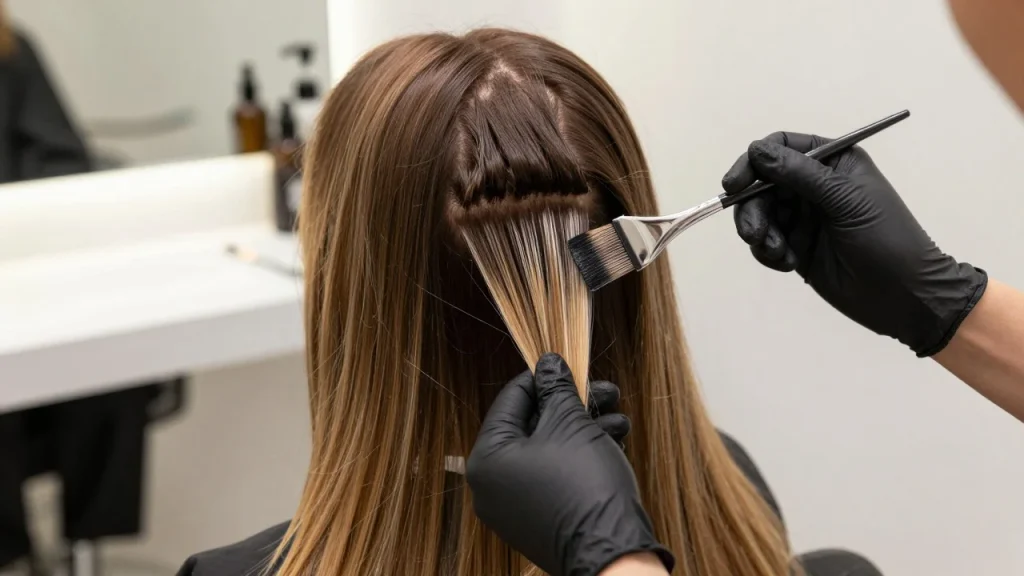
Follow the label exactly. Wear the supplied gloves, avoid exceeding the processing time, and keep the product away from your eyes. Hair-colouring products intended for scalp hair should not be used to colour eyebrows or eyelashes.
If you experience burning, marked itching, blistering, swelling, or another reaction, stop using the product and follow appropriate medical guidance.
A past reaction to so-called black henna is another reason to exercise extra caution. Health Canada warns that black henna products containing PPD can sensitize people and increase the risk of later reactions. (canada.ca)
When a Salon Is the Better Choice
At-home colour makes the most sense when your starting point and desired result are straightforward.
Professional help becomes more valuable when your hair has several previous colours, significant bleach damage, severe banding, or an unpredictable result from an earlier application. A salon is also a sensible choice for substantial lightening or major colour correction.
That doesn’t make home colouring a poor option. It means the complexity of your starting point should determine the method.
Readers looking for more hair-focused guidance can also explore Sophie Palmer’s hair articles and author profile on StyleVanta.
The Verdict
Permanent colour is a strong choice when you want a lasting change and are comfortable maintaining visible regrowth. It’s especially practical when consistent grey coverage is a priority.
For experimentation, subtle tonal changes, or less commitment, demi- or semi-permanent options make more sense. If your hair is damaged or contains layers of old colour, professional assessment can reduce the risk of an expensive correction later.
Before buying, check your starting colour, previous processing, grey-coverage needs, shade tone, safety directions, package quantity, and maintenance plan.
Then browse StyleVanta’s latest hair, beauty, and fashion guides for more practical style guidance.
Frequently Asked Questions
Does permanent hair dye wash out?
No, not in the same way as temporary or semi-permanent colour. The shade can lose vibrancy with washing, heat, and time, but treated hair remains chemically coloured. New growth eventually creates a visible contrast at the roots.
Is permanent colour damaging?
It can contribute to dryness or damage because oxidative processing chemically changes the hair. The effect depends on the formula, hair condition, processing history, and how often colour overlaps previously treated lengths.
Can permanent colour lighten previously coloured hair?
Not reliably. A permanent formula may lighten virgin hair to a degree, but previously deposited artificial colour often requires a different correction or lightening process.
Can ammonia-free colour still be permanent?
Yes. “Permanent” describes how the colouring process and result work, not whether one specific alkalizing ingredient is present. Always check the formula, developer, and manufacturer’s instructions.
How often do roots need touching up?
Around six to eight weeks is a common range, but there is no universal schedule. Your natural growth rate, grey percentage, shade contrast, and preferred finish determine how soon regrowth becomes noticeable.