
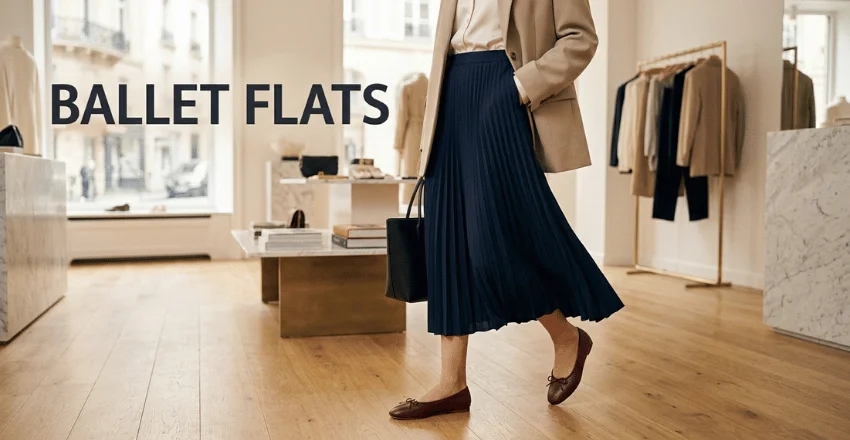
Ballet flats have moved well beyond their old reputation as a basic office shoe. In 2026, they appear in soft leather, suede, satin, mesh, Mary Jane, glove, square-toe, and lightly heeled versions. For Canadian wardrobes, the smartest pair combines a secure fit, useful sole, comfortable construction, and a shape that works with clothing you already own.
Choose ballet flats by starting with fit and comfort, then consider toe shape, material, colour, and your usual outfits. Rounded leather pairs are versatile, while glove flats, Mary Janes, mesh, satin, and bolder colours feel more trend-led. In Canada, think about weather too: these shoes work best during dry spring, summer, and fall days.
| What to consider | Practical starting point | Why it matters |
|---|---|---|
| Shape | Round, square, pointed, glove, or Mary Jane | Changes comfort and the mood of an outfit |
| Material | Leather, suede, satin, mesh, or synthetic | Affects breathability, care, and weather resistance |
| Comfort | Cushioning, secure heel, flexible but stable sole | Matters for walking and longer wear |
| Colour | Black, brown, beige, burgundy, red, or soft colour | Determines how easily the pair works with your wardrobe |
| Season | Spring through fall in dry conditions | Thin flats offer limited protection from snow and slush |
| Styling | Denim, trousers, dresses, skirts, or long shorts | A slim shoe can balance fuller clothing |
Why Ballet Flats Feel Current Again in 2026
The basic silhouette isn’t new, but the way it’s worn has changed. Current fashion coverage shows classic ballerinas beside glove-style flats, Mary Janes, soft ruched designs, mesh, satin, pointed toes, and versions with small heels. Vogue’s 2026 styling coverage has paired them with outfits ranging from skirts to more relaxed everyday separates. PORTER has also highlighted glove styles as a notable shoe direction for the year.
Colour is changing too. Black remains easy to wear, but burgundy, blue, beige, brown, red, and other softer or richer shades are appearing across current fashion coverage.
The bigger shift is proportion. Instead of building an entirely delicate outfit around a dainty shoe, current styling often creates contrast. A slim flat can sit beneath wider or longer clothing, structured tailoring, denim, or a fuller skirt. That makes the shoe easier to integrate into a real wardrobe rather than treating it as part of a specific aesthetic.
Compare the Main Styles Before You Buy
Different shapes can look similar on a product page while feeling quite different on your foot.
| Style | Strong points | Possible drawback | Works well with |
|---|---|---|---|
| Classic round toe | Timeless and easy to coordinate | Minimal pairs may lack support | Jeans, dresses, skirts, trousers |
| Square toe | More graphic and contemporary | Fit can vary around the forefoot | Tailoring, denim, midi skirts |
| Pointed toe | Creates a sharper visual line | Can feel cramped if too narrow | Workwear, trousers, dresses |
| Mary Jane | Strap adds visual interest and security | Strap placement may rub | Skirts, denim, long shorts |
| Glove flat | Higher vamp gives more coverage | Less airy in hot weather | Trousers, straight denim, knits |
| Mesh or woven | Light visual effect for warm weather | Less protection and warmth | Summer skirts, dresses, cropped pants |
| Heeled ballerina | Adds slight height while keeping the shape | Less casual than a true flat | Dresses, workwear, evening outfits |
Our recommendation: If you’re buying your first pair, start with a simple leather or leather-look style in a colour that already appears in your wardrobe. Choose a rounded or gently squared toe and enough sole structure for your normal walking routine.
Once that pair earns regular wear, a Mary Jane, glove, mesh, satin, or colourful version can add variety.
How to Style Ballet Flats Without Making the Outfit Feel Dated
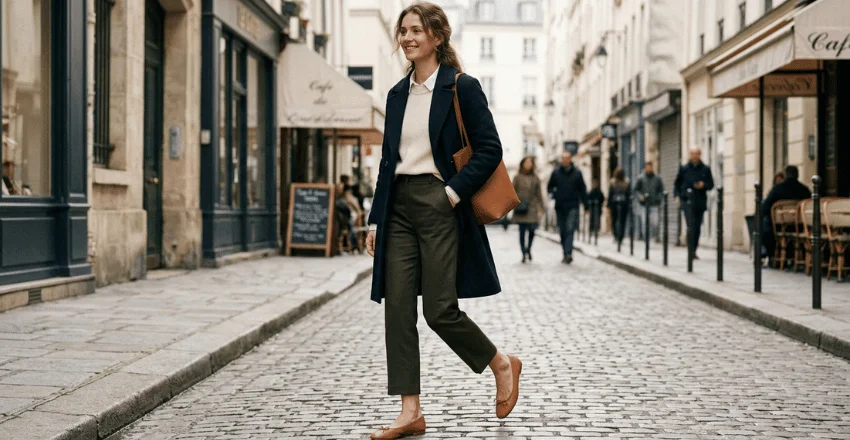
The easiest approach is contrast. If the shoe is small and delicate, you don’t need every other piece to be equally sweet. Relaxed denim, crisp shirts, tailored jackets, longer shorts, and fuller skirts can create a more current balance.
1. Pair Them With Straight or Relaxed Denim
Jeans are one of the simplest starting points. Try straight denim with a fitted knit, T-shirt, or button-down shirt. A small amount of ankle or shoe exposure helps keep the footwear visible.
For fall, add a cardigan, trench, leather jacket, or blazer. Burgundy or brown footwear can soften blue denim, while black creates a cleaner contrast.
2. Use Them to Soften Tailored Trousers
A delicate shoe can make workwear feel less formal without making it sloppy. Choose trousers that don’t drag on the ground. Cropped or ankle-length cuts give the shoe more space, while full-length trousers need a hem that clears the floor.
For more proportion ideas, browse StyleVanta’s latest fashion coverage, where clothing length and footwear are considered together.
3. Try a Full Midi Skirt
A fuller skirt creates movement while the low-profile shoe keeps the outfit grounded. The combination can work with a simple T-shirt in warmer weather or knitwear during spring and fall. Current 2026 street-style coverage has also shown flats with fuller skirts and more unexpected layers rather than only traditional preppy combinations. Keep the accessories restrained if the skirt already has a strong print, pleating, or texture.
4. Wear Them With a Flowy Dress
Soft dresses and delicate shoes naturally work together, but proportion still matters. A midi usually gives you enough hem clearance to show the shoe without requiring careful floor-length styling. StyleVanta’s flowy dress shopping guide explains how midi lengths can be styled with different footwear and for various occasions.
If your dress contains lace, tiers, florals, or several romantic details, consider a plain shoe rather than another heavily decorated piece.
5. Create Contrast With a Bohemian Dress
A clean flat can be useful when a dress already has plenty of movement or texture. StyleVanta’s boho dress guide for Canada recommends balancing noticeable bohemian details with cleaner footwear or accessories. That same principle works here.
For example, pair a floral or lace midi with a plain burgundy, brown, beige, or black shoe. The outfit still feels romantic without becoming costume-like.
6. Try Long Shorts and a Structured Layer
Longer shorts offer one of the more contemporary ways to wear a small, refined shoe. Choose Bermuda or tailored shorts and add a button-down, cropped jacket, blazer, or fine knit. Mary Janes can make the combination feel playful, while a glove or square-toe design creates a sharper result.
The contrast between the longer hem and delicate footwear is what makes the combination interesting.
7. Add Socks or Tights When the Temperature Drops
Socks and tights can extend the styling season, but they don’t turn thin footwear into winter shoes. A fine sock with Mary Janes can create an intentional layered look. Sheer or opaque tights also work with skirts and dresses during cooler fall days.
Once sidewalks become snowy, icy, or slushy, switch to footwear designed for those conditions.
Choose the Right Colour for Your Wardrobe
Black is easy, but it isn’t automatically the best first choice. Look at the colours you wear most often. If your wardrobe contains cream, camel, denim, chocolate, olive, and warm neutrals, brown or burgundy may integrate more naturally.
Beige and soft neutral tones create a lighter effect with white denim, pale dresses, linen, and spring clothing. Red can function almost like an accessory, adding one strong colour to jeans and a simple top.
Current fashion coverage has also moved beyond black toward blue, plum, green, burgundy, beige, and other less expected shades.
You don’t need the trendiest colour. Choose the shade that creates the most outfits from pieces you already own.
Comfort Matters More Than the Delicate Look
The name describes a silhouette, not a guarantee of comfort. A podiatrist interviewed by People in August 2026 recommended looking for cushioning, a more structured sole, shock absorption, and a secure fit. A shoe that twists too easily or offers almost no underfoot cushioning may be less suitable for long walking days.
Run through these checks when you try on a pair.
- Whether your heel stays in place while walking.
- Whether your toes have enough room.
- Whether an elastic edge or strap digs into your skin.
- Whether the sole feels stable rather than paper-thin.
- Whether there is useful cushioning under the heel and forefoot.
- Whether the shoe still feels secure without curling your toes.
Don’t assume your usual size will fit every shape. Pointed toes, high vamps, elastic edges, and different materials can change how the same labelled size feels.
For commuting or travel, comfort takes precedence over decoration.
What Works for Canadian Seasons?
These shoes are most useful when you treat them as fair-weather footwear.
| Season | How to wear them | What to watch for |
|---|---|---|
| Spring | Jeans, trousers, midi skirts, light knits | Rain, puddles, cool mornings |
| Summer | Dresses, skirts, shorts, linen separates | Heat, breathability, long walking days |
| Fall | Denim, tailoring, tights, knitwear | Wet leaves, cold rain, early frost |
| Winter | Mainly indoor or dry-day use | Snow, salt, slush, ice, insufficient warmth |
Leather or synthetic uppers may be easier to manage during unpredictable shoulder seasons than satin or mesh. Suede also needs more care around moisture.
For a Canadian wardrobe, don’t force a delicate pair through winter simply because it works with the outfit. Weather-ready boots make more sense when warmth, grip, and water protection matter.
What to Check When Shopping Online in Canada
Online photos can tell you the style. Product specifications tell you whether the shoe is likely to work.
Review the following details before you order.
- The retailer’s size chart and fit notes.
- Upper, lining, and sole materials.
- Toe shape and vamp height.
- Cushioning or insole details.
- Heel construction.
- Customer comments about width and sizing.
- Whether the price is displayed in CAD.
- Shipping and return costs.
- Final-sale restrictions.
- Potential taxes or cross-border charges.
Canadian retailers already offer classic, square-toe, Mary Jane, strappy, suede, leather, and other variations, so you don’t need to settle for a shape that doesn’t suit your foot or wardrobe. A good return policy is especially useful for shoes because small fit differences can become uncomfortable after walking.
The Best Pair Is the One That Earns Repeat Wear
The 2026 version of this trend gives you more choice, not more rules. Start with your wardrobe. Decide which trousers, jeans, dresses, and skirts you expect to wear with the shoes. Then choose the toe shape, material, colour, and level of support.
For most people, a comfortable neutral pair with a secure heel and useful sole is the strongest first purchase. If you already own that foundation, a glove silhouette, Mary Jane, rich colour, mesh finish, or small heel can make the trend feel fresher.
The goal isn’t to recreate a runway outfit. It’s to find a low-profile shoe that works with enough of your existing wardrobe to deserve its space.
Frequently Asked Questions
Are ballet flats still in style in 2026?
Yes. Current 2026 fashion coverage continues to feature classic ballerinas along with glove flats, Mary Janes, soft constructions, mesh, satin, bold colours, and lightly heeled versions. The styling has shifted toward more contrast and varied proportions.
Can you wear them with jeans?
Yes. Straight, cropped, and relaxed denim can all work. Pay attention to the hem so it doesn’t completely cover the shoe or drag on the ground.
Are they comfortable enough for walking?
It depends on the construction and your feet. Look for cushioning, a stable sole, enough toe room, and a heel that stays secure. Thin, highly flexible pairs may be better for shorter outings than long walking days.
Can you wear them during a Canadian winter?
They’re generally better for indoor use or dry, mild days. Most styles don’t provide the insulation, grip, or moisture protection needed for snow, ice, road salt, and slush.
What colour is most versatile?
Black, brown, beige, and burgundy are flexible starting points. The best option depends on the colours already in your wardrobe. A versatile shoe should work with several outfits you already own.
Should I choose a round, square, or pointed toe?
Choose according to comfort and the look you prefer. Round toes feel classic, square toes look more graphic, and pointed versions create a sharper line. Fit should take priority if a narrow toe compresses your forefoot.