
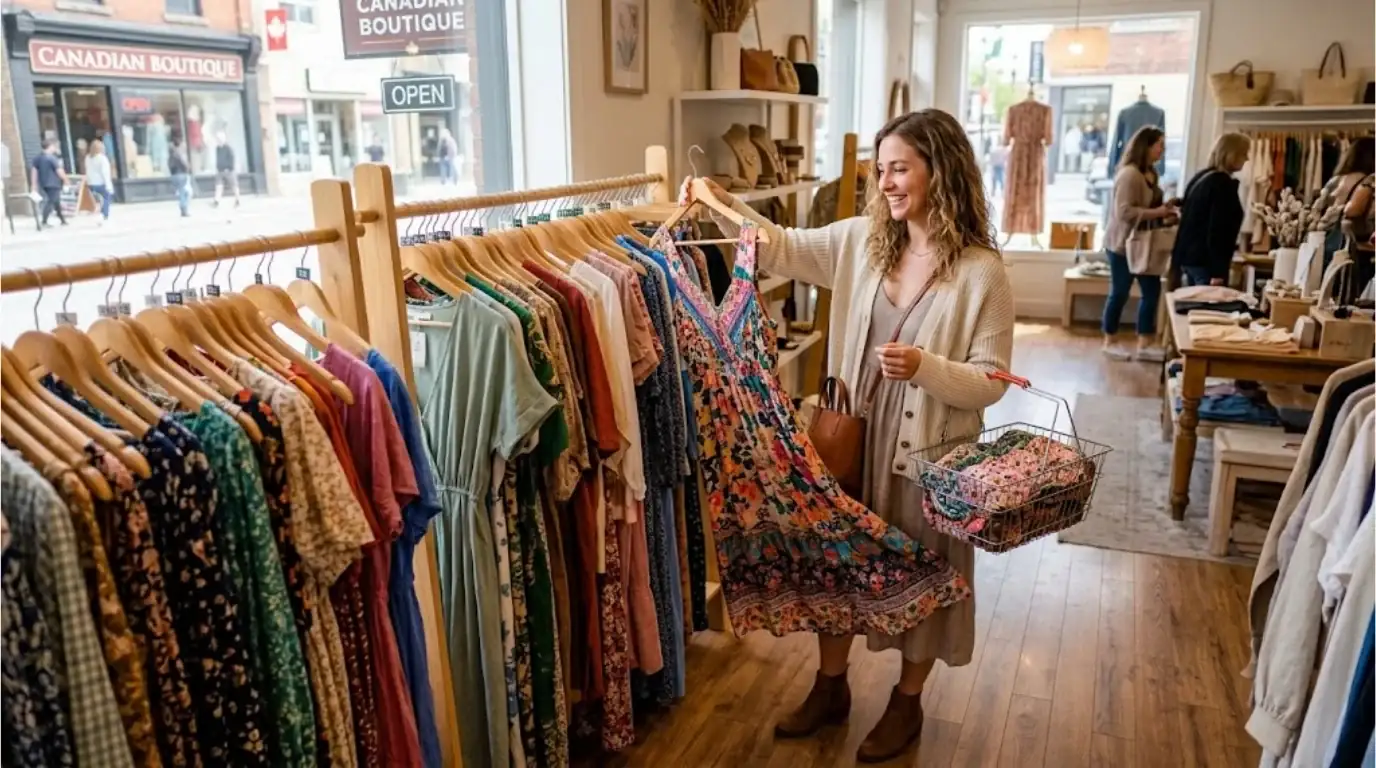
Finding the right flowy dress is less about chasing one silhouette and more about matching movement, fabric, length, and structure to your plans. Canadian shoppers also need pieces that work across warm afternoons, cool evenings, and changing seasons. The goal is an outfit that feels easy without looking shapeless. Also worth reading: Cocktail Dress in Canada.
Start with silhouette, then choose fabric and length. A-line and wrap shapes offer clearer waist definition; empire and trapeze cuts feel roomier; tiered styles add movement. For Canada, cotton and linen suit warm days, while satin, crepe, tights, knits, and outer layers make flowing styles easier to wear in cooler weather.
| Shopping decision | Good starting point | What to check |
|---|---|---|
| Silhouette | A-line or wrap for definition; empire or trapeze for ease | Waist placement, gathering, volume |
| Fabric | Cotton or linen for heat; chiffon or viscose for drape | Lining, opacity, care instructions |
| Length | Midi for versatility; maxi for coverage; mini for warm days | Hem length, footwear, your height |
| Season | Lightweight alone in summer; layered in cool weather | Sleeve room, coat length, tights |
| Occasion | Casual days, work, travel, dinners, celebrations | Fabric finish, comfort, formality |
Canadian retailers currently carry flowing silhouettes in mini, midi, and maxi lengths. Common fabric choices include cotton, linen blends, chiffon, satin, viscose, and lightweight synthetic blends. That variety gives shoppers more control over movement, coverage, and seasonal wear.
Flowy Dress Styles: Compare the Main Silhouettes
Two pieces can look equally soft on a hanger yet feel completely different once worn. The cut determines where the fabric sits close to the body and where it falls away.
| Silhouette | Advantages | Trade-offs | Works well when |
|---|---|---|---|
| A-line | Defined upper shape with room through the lower half | Less billowy than looser cuts | You want movement with structure |
| Wrap | Adjustable waist and neckline | Ties and neckline may need adjustment | You want more control at the waist |
| Empire | High waist seam with an easy lower section | Seam placement can vary by torso length | You prefer a raised waistline |
| Tiered | Plenty of movement and visual texture | Stiff fabrics can create extra bulk | You like casual or romantic styling |
| Trapeze | Roomy and easy to move in | Offers the least waist definition | Comfort and unrestricted movement matter most |
For a flexible everyday wardrobe, an A-line or wrap midi is a sensible starting point. Both give flowing fabric some structure. If you prefer a roomier outline, empire and trapeze shapes offer more ease.
Fit matters more than the name on the product page. Check how the garment looks while standing, walking, and sitting whenever photos or video are available.
Choose Fabric for the Weather You’ll Wear It In
Fabric controls much of the movement. It also affects opacity, wrinkles, warmth, and the formality of the finished outfit.
| Fabric | Typical feel | What to watch for |
|---|---|---|
| Cotton or poplin | Crisp, breathable, casual | Can hold more shape than softer fabrics |
| Linen or linen blend | Light and relaxed | Wrinkling is part of the look |
| Chiffon or georgette | Light with noticeable movement | Often needs lining |
| Viscose or rayon | Soft with fluid drape | Care requirements vary |
| Satin or crepe | Smooth or softly structured | Can feel more occasion-focused |
For hot summer days, lighter cotton, linen, and soft viscose options are practical places to start. Chiffon works well when you want more movement, but checking the lining matters.
Current styling coverage also shows flowing shapes used for holidays, weddings, and casual summer outfits. The common thread is balancing soft fabric with simpler accessories and suitable footwear.
Canadian weather makes layering worth considering before you buy. A style with enough room under the sleeves can work with a fine knit, blazer, or jacket. Tights and boots can extend lighter pieces into the colder months when the fabric-and-outerwear combination feels comfortable. Canadian style editors regularly recommend tights, boots, knitwear, and blazers as practical ways to carry softer silhouettes into winter.
Pick the Length Around Your Occasion and Footwear

Midi lengths are often the easiest to adapt. Sneakers or flat sandals can make them casual, while heels, polished flats, or boots can shift the same silhouette toward work or an event.
Maxi styles create more movement and coverage. Check the listed garment length before ordering, especially if you plan to switch between flats and heels. An extra few centimetres can change how easily the hem clears the ground.
Mini options can feel lighter during warm weather. In cooler months, tights and boots can add warmth without changing the basic silhouette. Your preferred coverage should guide the choice rather than a fixed styling rule.
Keep a Flowing Shape From Feeling Shapeless
A loose silhouette doesn’t need several fitted pieces around it. One clear point of structure is often enough.
A defined waist seam can provide that structure on its own. With roomier cuts, try a cropped jacket, blazer, structured handbag, or clean-lined shoe. If the fabric has tiers, ruffles, or a strong print, quieter accessories keep the outfit from becoming visually crowded.
Hair can create contrast too. Soft movement can complement relaxed clothing, while a sharper cut can make the outfit feel more graphic. For more ideas, see StyleVanta’s side-bangs guide, lob haircut guide, and bob-cut guide.
What to Check Before You Buy Online in Canada
Product photos show the mood of a piece. The specifications indicate whether it is likely to fit in your wardrobe.
- Compare the brand’s size chart with your measurements rather than relying only on your usual size.
- Check the fabric composition because similar-looking styles can feel quite different.
- Look for lining details, especially with white, pastel, chiffon, or lightweight fabrics.
- Review the model’s height and listed garment length before choosing mini, midi, or maxi.
- Confirm whether prices are shown in CAD and review shipping, return, tax, and possible cross-border duty information.
- Read the care instructions before buying, especially if you prefer machine-washable clothing.
Canadian retail listings commonly provide sizing, fabric composition, length, care information, and other product details that can help with these checks.
Our Recommendation: Buy for Repeat Wear, Not One Photo
Verdict: If you want one flowy dress to cover the widest range of situations, we recommend a midi with an A-line or softly defined waist. Choose an opaque or lined fabric that fits your climate, footwear, and preferred care routine.
For summer, cotton-linen blends and softer viscose fabrics make practical starting points. For celebrations, chiffon, satin, or crepe can create a more polished finish. If you want to keep wearing the piece through fall, check that it works with boots, knitwear, and your usual jacket.
Colour and print can come after those decisions. A beautiful pattern won’t fix an awkward hem or fabric you dislike caring for.
Before ordering, compare silhouette, fabric, length, measurements, and return terms. Then explore StyleVanta’s latest style coverage for more ideas to coordinate your look.
Frequently Asked Questions
What is a flowy dress?
A flowy dress uses fabric and construction that allow noticeable movement rather than holding a stiff, close-fitting shape. It can still have a defined waist or structured neckline. Flowing styles can be mini, midi, or maxi and range from casual cotton designs to chiffon and satin occasion pieces.
Are flowing styles flattering?
They can work well when the proportions match what you like to wear. Look at waist placement, neckline, sleeve volume, and hem length rather than relying on body-shape rules. A little structure at one point can also balance a looser outline.
Which fabrics work well for hot Canadian summers?
Cotton, linen blends, and lightweight viscose are useful starting points for warm weather. Fabric weight matters as much as the fibre name, so check composition, lining, and customer-facing product details before ordering.
Can flowing styles work during a Canadian winter?
Yes. Look for enough room to add a thin knit, then pair the outfit with tights, boots, a blazer, or suitable outerwear. Heavier crepe and lined options may also feel more seasonally practical than sheer summer fabrics.
Is a midi or maxi easier to wear?
A midi usually works with a wider range of shoes and outerwear. A maxi gives more coverage and stronger visual movement, but its hem needs closer attention. Choose according to your height, footwear, weather, and where you expect to wear it.