
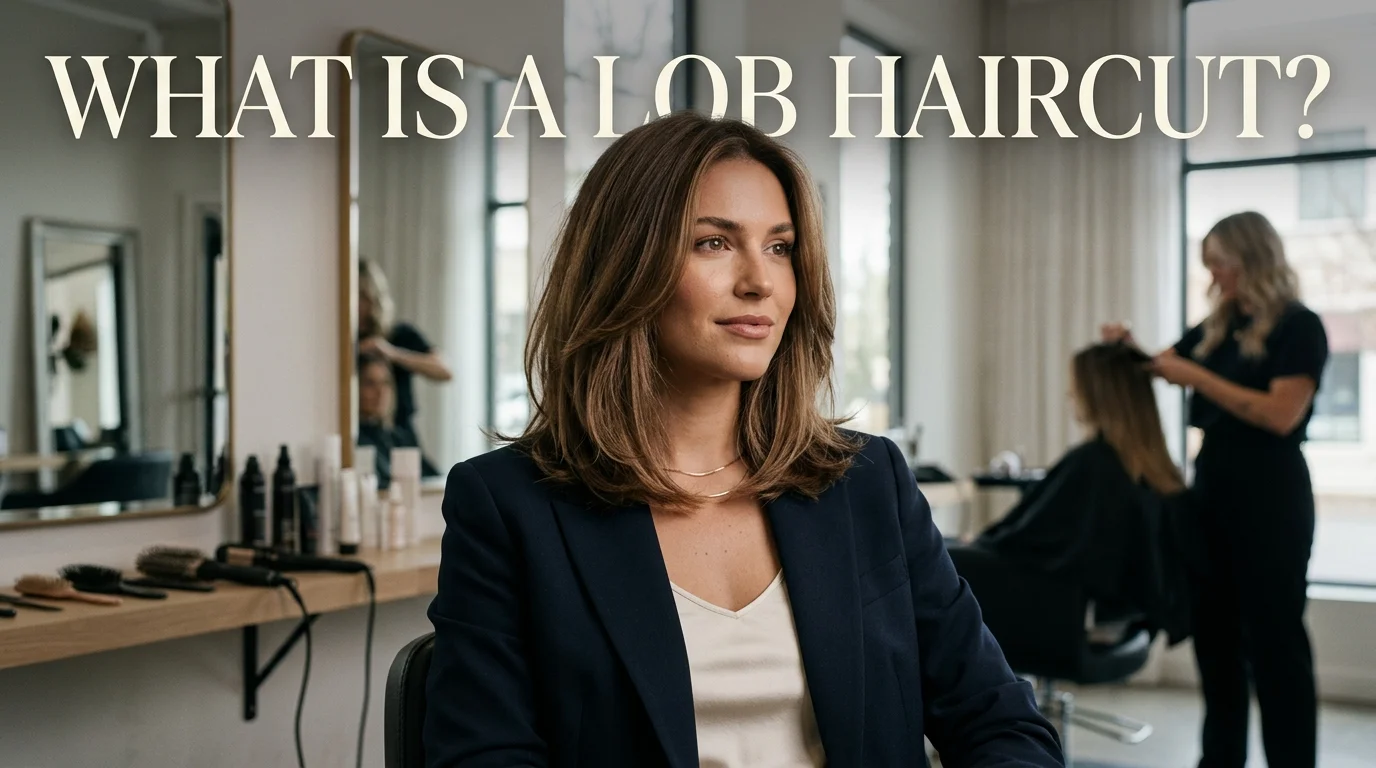
You may be asking, “What is a lob haircut?” Think of it as the longer, more flexible cousin of a classic bob. Most versions fall between the chin and the collarbone, often near shoulder length. That extra length keeps the shape polished while leaving more room for waves, curls, layers, bangs, and tie-back styles.
A lob is a long bob that usually ends between the chin and the collarbone, with many versions sitting near the shoulders. It keeps the defined shape of a bob but leaves extra length for waves, curls, layers, and face-framing pieces. The finish can be blunt, textured, layered, angled, or paired with bangs. We cover this in more depth in Butterfly Haircut.
| Feature | What to know |
|---|---|
| Full name | Long bob |
| Typical length | Below the chin to around the shoulders or collarbone |
| Shape | Usually keeps a defined bob-like perimeter |
| Layers | Optional |
| Common finishes | Blunt, textured, layered, angled, curly, or paired with bangs |
| Hair textures | Can be adapted for straight, wavy, curly, and coily hair |
| Styling options | Sleek, waved, curled, naturally textured, half-up, or tied back when long enough |
| Upkeep | Depends on how precisely the perimeter, layers, and fringe need to be maintained |
Recent editorial examples show how broad the category has become. InStyle’s August 2026 guide includes angled, shaggy, feathered, sleek, and wavy versions. Vogue describes the cut as an adaptable in-between length rather than one rigid shape.
What Is a Lob Haircut and How Long Is It?
“Lob” combines long and bob. A classic bob usually sits higher, while the longer version extends toward the shoulders or collarbone. There isn’t one exact measurement. Vogue currently defines the style as falling between the chin and the collarbone. InStyle places many modern versions around the collarbone or slightly above the shoulders.
A clavi-cut is a more specific variation. Its ends land at the clavicle, or collarbone. Vogue describes it as one particular type within the broader long-bob family. One useful distinction is the shape. Not every shoulder-length haircut needs to be called a lob. The term usually implies an intentional bob-like outline, even when layers or texture soften the perimeter. We cover this in more depth in Long Layer Haircut.
Lob vs. Bob: What Changes Besides Length?
Length is the clearest difference, but it also affects how the haircut behaves. A shorter bob creates a stronger cropped effect. The extra inches give the longer version more movement and styling flexibility.
| Feature | Bob | Lob |
|---|---|---|
| Typical endpoint | Jaw, chin, or above the shoulder | Below the chin through the shoulder or collarbone area |
| Visual effect | Sharper and more distinctly short | Softer transition between short and long |
| Tie-back options | Often limited | More options at longer lengths |
| Styling flexibility | Sleek, wavy, curly, or textured | Similar options, with extra length for half-up or low tie-back styles |
| Grow-out | Shape can change quickly | Often transitions into medium-length hair more gradually |
The longer shape can make sense if you want a noticeable haircut without losing every styling option. Allure has also highlighted “noncommittal” bob styling in 2026, in which longer hair can create a bob-like effect without requiring a short crop.
Does a Lob Need Layers?
No. Layers are a design choice, not a requirement. A blunt perimeter keeps more visual weight near the ends. This can be useful for fine or lower-density hair when you want the bottom edge to appear stronger.
Long or internal layers can create movement without turning the haircut into a heavily graduated shape. Allure’s 2026 trend coverage specifically points to internal shaping with a soft but defined perimeter for modern medium-length cuts.
Thicker hair may benefit from careful weight removal, especially if a one-length cut becomes triangular or bulky around the shoulders. Curly hair needs a different approach because its curl pattern changes how the layers sit after drying.
The goal isn’t to add layers simply because they’re fashionable. Ask what each layer is supposed to change: volume, movement, weight, or face framing.
Choose the Shape Around Your Face and Hairline
You don’t need one particular face shape to wear this length. Vogue notes that the cut can work across a wide range of face shapes because the part, bangs, texture, and endpoint can be adjusted.
For a rounder face, extra length below the chin can keep the widest part of the cut away from the cheeks. A square jaw can be paired with softer ends or face-framing movement. An elongated face may benefit from waves or layers that create width.
Heart-shaped and oval faces also have several options. Fringe, curtain bangs, off-centre parts, and the placement of the front pieces can change the visual balance more than the haircut’s name does.
Your front hairline matters too. A centre part, side part, or fringe may behave differently if you have a pronounced V-shaped hairline or a strong growth pattern. Stylevana’s guide to working with a widow’s peak explains how parts, bangs, and texture can affect how the front of a haircut sits.
Popular Lob Variations and What Each One Changes
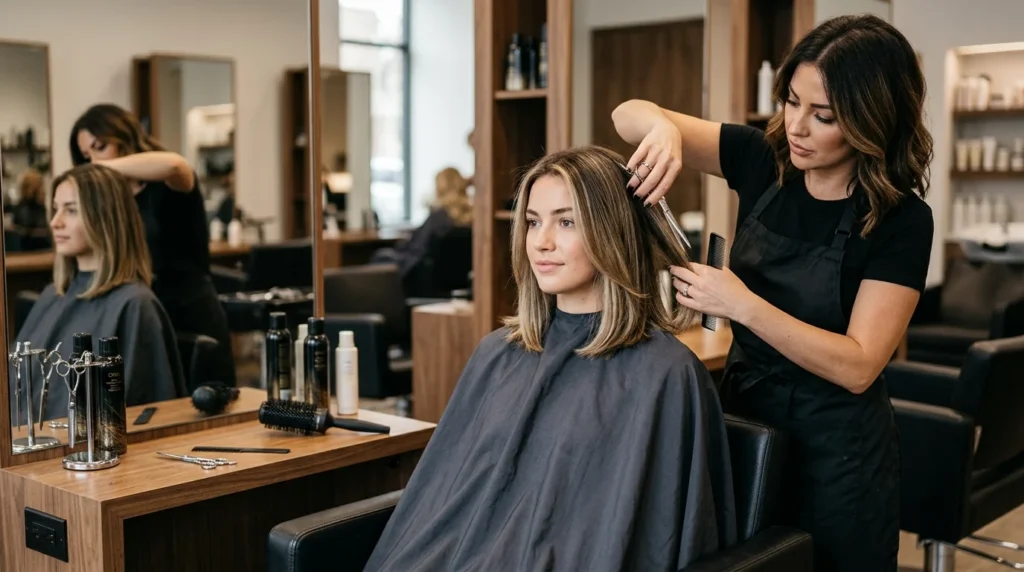
These choices aren’t entirely separate haircuts. Instead, they’re different ways to build on the same medium-length foundation. Current coverage from 2026 shows blunt, angled, layered, feathered, textured, and softly waved versions.
| Variation | Main feature | Useful if you want | Upkeep consideration |
|---|---|---|---|
| Blunt | Strong, even perimeter | Fuller-looking ends and a graphic finish | The line becomes obvious as it grows |
| Textured | Softer ends and movement | A relaxed finish | Grow-out tends to look less rigid |
| Layered | Internal or visible layers | Movement or reduced bulk | Layer placement needs balance |
| A-line | Longer front, shorter back | A more defined angle around the face | Front length should be planned carefully |
| Curly or coily | Shape follows natural curl | Volume and movement without straightening | Dry length matters |
| With bangs | Fringe added to the front | More focus around the eyes and cheekbones | Bangs usually need separate upkeep |
A reference photo helps, but choose one that shows hair similar to yours. A cut photographed on dense, straight hair may sit differently on fine waves or tight curls.
Styling a Lob Without Making It a Daily Project
Straight or fine hair can work well with a blunt or softly blunt edge. A light root lift or gentle bend through the ends can add shape without hiding the perimeter. Wavy hair often needs less intervention. A cut that supports the natural wave can be air-dried or lightly defined rather than restyled from scratch each morning.
Thick hair may feel lighter with internal shaping. A stylist can remove selected bulk while preserving enough weight for the ends to sit neatly.
For curls and coils, decide where you want the hair to finish after it dries. Curl pattern and shrinkage can change the visible endpoint, so the consultation should focus on the finished shape rather than wet length alone.
For more hair-focused coverage as Stylevanta grows its library, you can also follow Sophie Palmer’s hair articles. Stylevana identifies Sophie as a writer who covers hairstyles, hair care, techniques, and trend updates.
How Often Does It Need a Trim?
There isn’t one correct schedule. A crisp, blunt perimeter shows growth sooner than a softer, textured shape.
Allure’s stylist guidance suggests roughly six to eight weeks for keeping classic shoulder-length ends sharp. A salon guide from August 2026 gives longer intervals for some textured or layered versions, while fringe can require attention sooner.
That makes a range of about six to ten weeks a practical starting point for many versions. Your own schedule should depend on how quickly the shape loses its intended line.
Watch the haircut rather than relying on the calendar alone. If the ends stop sitting as intended, the front becomes too heavy, or the layers lose their balance, it may be time for a trim.
What to Tell Your Hairstylist
“Give me a long bob” leaves several decisions unanswered. The stylist still needs to know where the ends should fall, how strong the perimeter should look, and how much movement you want.
A clearer salon brief could sound like this:
“Keep the dry length around my collarbone with a soft, defined perimeter. Add light face framing, but leave enough length to tie it back. I want the shape to work with my natural texture without requiring a full blowout every day.”
Then show reference images featuring a similar hair density and texture. Point to the exact dry endpoint you want. Discuss your usual part, whether you wear your hair tied back, and how much daily styling feels realistic to you.
Is a Lob Right for You?
This cut makes sense if you want a visible change but aren’t ready for a jaw-length bob. It also gives you more room to adjust layers, texture, bangs, and the front shape.
Beauty coverage from 2026 supports its staying power. Vogue featured the style as a spring refresh, InStyle published a new collection of long-bob options in August, and Allure included collarbone lengths among this year’s haircut trends.
Before booking the appointment, decide on three things: your ideal dry length, how defined you want the bottom edge to be, and how much styling you want to do at home.
Stylevanta’s stated approach is to make hair and fashion information practical, researched, and easy to use. You can read how Stylevanta creates its hair and fashion content or browse Stylevanta’s latest style coverage for more guides.
Frequently Asked Questions
What is a lob haircut?
It is a longer version of a bob, usually cut between the chin and the collarbone. Many modern versions sit close to shoulder length and can be worn blunt, layered, wavy, curly, or with bangs.
What is the difference between a bob and a lob?
A bob is generally shorter and ends higher around the jaw or chin, or above the shoulders. The longer version extends closer to the shoulders or collarbone, giving you more styling flexibility.
Does a lob have to be layered?
No. It can have a blunt, one-length perimeter, subtle internal shaping, visible layers, or face-framing pieces. The best choice depends on the result you want and how your hair naturally sits.
What face shape looks good with a lob?
The cut can suit a wide range of face shapes. Adjusting the endpoint, part, fringe, layers, and volume can change how it frames round, square, heart-shaped, oval, or elongated faces.
Is a lob low-maintenance?
It can be. Softer or textured versions generally tolerate grow-out better than a highly precise, blunt edge. Your natural texture and preferred styling finish also affect the amount of daily effort required.
Can you tie a lob back?
Many shoulder- and collarbone-length versions can be pulled into a low ponytail or partial updo. A shorter version near the chin may leave the front pieces loose. Parade notes that some stylists deliberately preserve enough front length for easier tie-back styling.
How often should you trim one?
About six to ten weeks is a useful general range. A sharp, blunt line may need earlier maintenance, while a softer, layered shape can sometimes go longer.