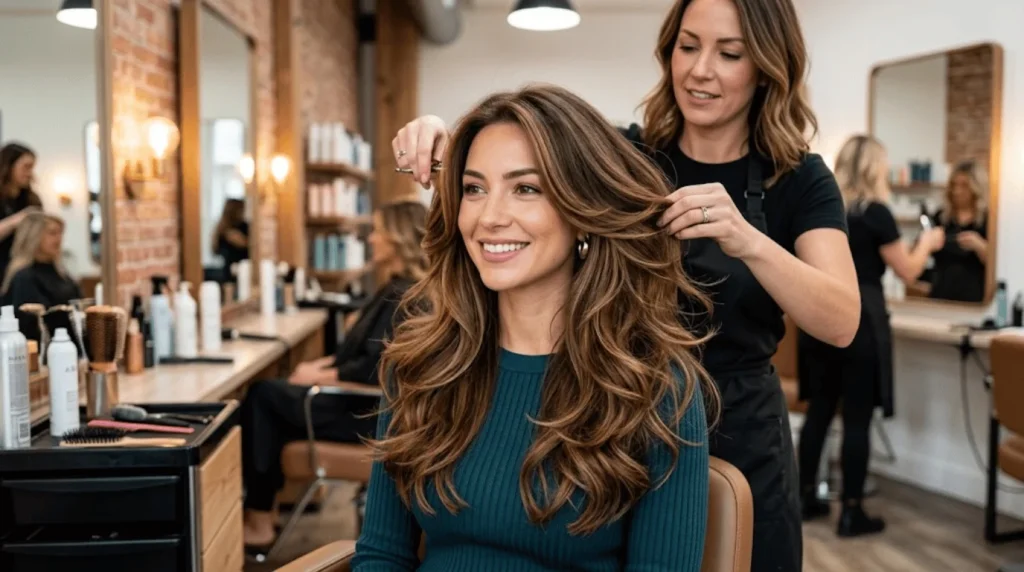

A butterfly haircut combines shorter, face-framing layers with longer layers underneath. The result is movement and volume without sacrificing most of your length. Its signature shape comes from airy pieces around the face and fuller lengths below, but the most flattering version depends on your texture, density, face shape, and daily routine. Also worth reading: Long Layer Haircut.
If you like the look of a bouncy blowout but still want enough length for a ponytail or casual updo, this cut offers both. The key is to choose your layer placement carefully rather than copying a reference photo exactly.
| What to know | Practical starting point |
| Signature shape | Shorter face-framing layers over longer lengths |
| Best starting length | Medium to long hair gives the layers more room to separate. |
| Main benefit | Movement, volume, and face framing while keeping length. |
| Fine or lower-density hair | Use fewer layers and preserve fullness at the ends. |
| Thick hair | More layering can remove bulk and create movement. |
| Styling | Blowout, round brush, rollers, waves, or natural texture |
| Typical trim timing | About 6 to 12 weeks, depending on how crisp you want the shape |
This layered cut works by creating shorter pieces around the face and crown while leaving more length at the back. It can be adapted for straight, wavy, curly, fine, or thick hair. For the best results, choose the shortest layer that suits your face, density, natural texture, and preferred styling effort.
What Makes a Butterfly Haircut Different?
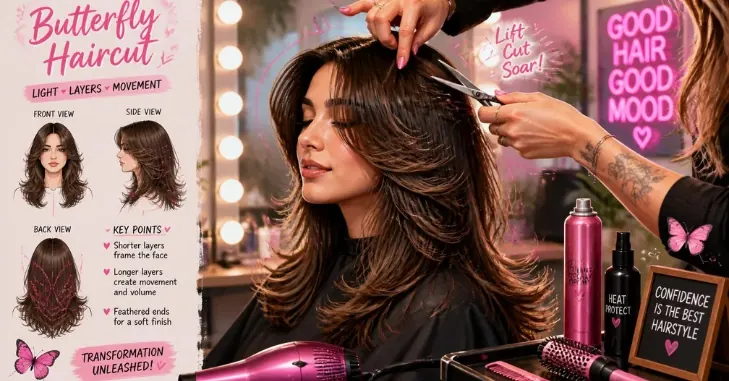
The defining feature is the contrast between the shorter front and upper layers and the longer pieces beneath them. Those shorter sections create lift and movement, while the bottom keeps the haircut feeling long.
Traditional long layers often blend more gradually from top to bottom. A butterfly shape places greater emphasis on the face-framing sections, making them a visible part of the finished style. Allure describes the look as having two distinct sections: shorter layers near the face and longer lengths below the shoulders.
Butterfly haircut: Medium-length versions can work too. If you prefer your ends around the shoulders or collarbone, compare the idea with StyleVanta’s lob haircut guide before deciding how much length to remove.
Who Does This Layered Cut Suit?
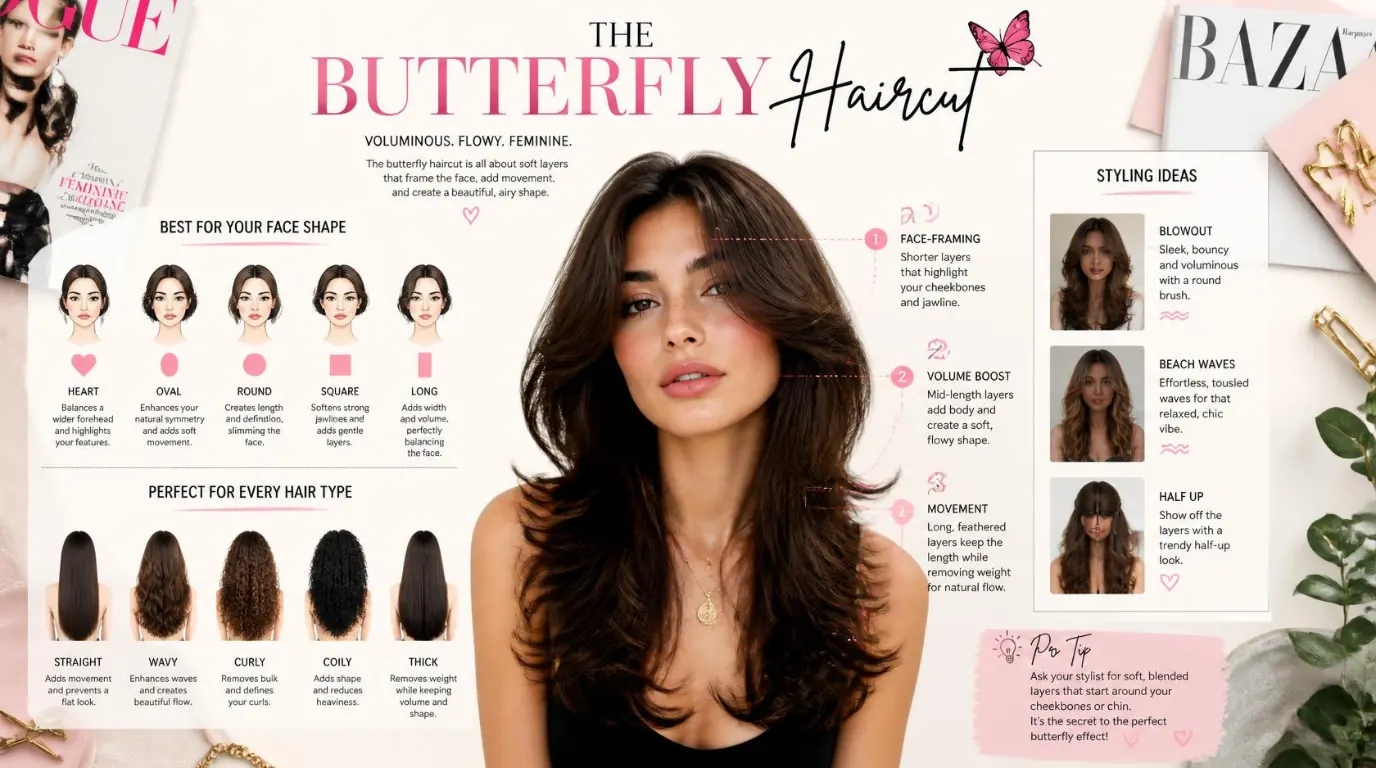
There isn’t one required face shape. Layer placement changes how the haircut frames your cheeks, jawline, and forehead, allowing a stylist to adapt the same basic idea to different proportions. Current stylist guidance consistently prioritizes customization over following a single fixed template.
Match the Front Layers to Your Face
| Face shape | Layer idea to discuss with your stylist |
| Round | Start longer, often around or below the chin, to create a lengthening effect. |
| Square | Use softer, wispy framing around the jaw. |
| Heart | Consider layers that add movement near the chin and lower face. |
| Oval | Most layer placements can work, depending on the effect you prefer. |
| Long | A curtain or side-swept fringe can add width and break up vertical length. |
These are starting points, not strict rules. Your hairline, natural part, density, and styling habits can change what looks balanced.
If you want more movement across the forehead, StyleVanta’s side bangs guide explains how the shortest and longest fringe pieces affect the finished shape.
Choose the Layers for Your Hair Type and Density
Hair texture matters, but density may matter even more. Two people with straight hair may need different layering patterns if one has denser hair and the other has fewer strands.
Fine or lower-density hair: Keep the ends relatively full and avoid removing too much weight. Fewer or longer layers can create movement without making the perimeter look sparse. Allure and L’Oréal both note that finer hair may need adjusted layering rather than the same dramatic pattern used on denser hair.
Medium or thick hair: More internal layering can reduce heaviness and make the shape easier to see. Dense hair usually gives a stylist more room to create noticeable separation between shorter and longer sections.
Straight hair: The layers may appear smooth and subtle when air-dried. A round-brush blowout, rollers, or gentle bend can make the separation more visible. StyleVanta’s straight-hair guide also explains how strand thickness and product weight affect volume.
Wavy, curly, or coily hair: The cut should follow your natural pattern rather than assume every section will fall at the same length. Curl formation and shrinkage can alter where the layers sit once dry. StyleVanta’s guide to short curly hair cuts offers more detail on density and shrinkage.
How to Ask for Butterfly Layers at the Salon
A trend name alone leaves several decisions open. Tell your stylist your desired overall length, where the shortest front pieces should sit, and how much styling you plan to do. A useful salon brief could be
“Keep my overall length at the collarbone. I want shorter face-framing pieces starting around my cheekbones, followed by longer layers through the rest. Please keep enough fullness at the ends for my density, and shape the layers to match my natural texture. I normally spend about ten minutes styling.”
Bring two or three reference photos featuring hair with a texture and density similar to yours. Byrdie’s hairstylists also recommend choosing inspiration that matches your own length, texture, or face shape, rather than showing a photo based solely on the finished blowout.
Tell your stylist how you normally wear your hair too. A cut that looks great down should still work if you regularly use a ponytail, bun, or claw clip.
How to Style the Layers at Home
The dramatic social media version usually relies on a bouncy blowout, but you don’t need to recreate that finish every morning.
- Start with light styling products. Heavy creams and oils can weigh down the shorter sections.
- Use heat protection before hot tools. Keep the dryer at a sensible temperature rather than relying on maximum heat.
- Direct the front sections away from your face. A round brush or large roller can create the familiar outward sweep.
- Build lift at the roots and crown. Focus your styling effort where the shortest layers need movement.
- Finish lightly. Flexible hold can preserve bounce without making the layers stiff.
Byrdie recommends blow-drying with a round brush or multi-styler and using lightweight finishing products to keep the layers moving. Hot rollers can add extra bounce. StyleVanta also notes that excessive heat can contribute to dryness and damage, so frequent hot-tool users should limit heat exposure.
If you have waves or curls, you can skip the full blowout. Shape the front sections according to your natural pattern, then diffuse or air-dry based on the finish you prefer.
How Often Does the Cut Need Trimming?
There’s no single maintenance schedule because the ideal timing depends on how defined you want the layers to be. A six-to-eight-week trim can keep the face framing and overall shape more precise. If you like a softer grow-out, some stylists say the cut can stretch closer to 12 weeks between appointments.
The front pieces usually show growth sooner because their placement is more noticeable. Longer sections are more forgiving. Avoid making major corrections at home if one layer starts sitting differently. Removing a little too much from the shortest section can change the balance of the entire haircut.
Common Mistakes to Avoid
- Asking for the trend without specifying your shortest and longest layers.
- Choosing reference photos with a completely different density or texture.
- Removing too much weight from fine or lower-density hair.
- Expecting an air-dried finish to look identical to a round-brush blowout.
- Using heavy oils or creams that flatten the upper layers.
- Applying high heat every day without heat protection.
- Cutting the front too short without considering your natural part or hairline.
A good consultation should cover the haircut you want and the routine required to keep it looking that way.
Choose a Shape That Fits Your Real Routine
The strongest version of this cut isn’t necessarily the one with the most layers. It’s the one that fits your density, texture, face framing, and willingness to style it.
Before your appointment, save a few realistic reference photos and decide how much length you want to keep. Then give your stylist clear landmarks for the shortest pieces and the perimeter.
For more ideas before you commit, explore StyleVanta’s hair guides on medium-length lob cuts, straight-hair styling and care, and choosing fringe length and shape.
Conclusion
A butterfly haircut is a flexible choice for anyone who wants noticeable movement, volume, and face-framing detail while keeping most of their overall length. Its signature combination of shorter layers around the face and longer layers underneath can be customized for different face shapes, hair textures, densities, and styling routines.
The most important step is not simply asking for a “butterfly haircut,” but explaining exactly how you want the layers to fall. Consider your shortest face-framing length, overall hair length, natural texture, density, and how much time you realistically want to spend styling your hair. Fine or lower-density hair may benefit from fewer layers and fuller ends, while thick hair can often support more layering to remove weight and create movement.
Frequently Asked Questions
Is a butterfly haircut good for thin hair?
It can be, but the layering needs restraint. If your hair has lower density, ask for fewer or longer layers and keep more fullness around the perimeter. Excessive thinning can make the ends look sparse. Fine strands and low density are also different, so your stylist should assess both before cutting.
Can the cut work on short hair?
A modified version can work around bob or lob lengths, but extremely short hair gives the stylist less room to create the characteristic separation between short and long layers. Medium and longer lengths usually show the effect more clearly.
Do you need curtain bangs?
No. Curtain bangs can blend nicely into face-framing layers, but they’re optional. You can keep the forehead open, add longer cheekbone pieces, or use a side-swept fringe instead.
Is this style high maintenance?
The cut itself can grow out smoothly. The styling commitment depends on the finish you want. Natural waves may already create movement, while straight hair may need a blowout or rollers for pronounced volume. Some stylists suggest trims every six to 12 weeks.
What should I take to my salon appointment?
Bring reference photos, decide your minimum overall length, and identify where you want the shortest face-framing pieces to fall. Tell your stylist how you normally part, dry, and tie back your hair.