
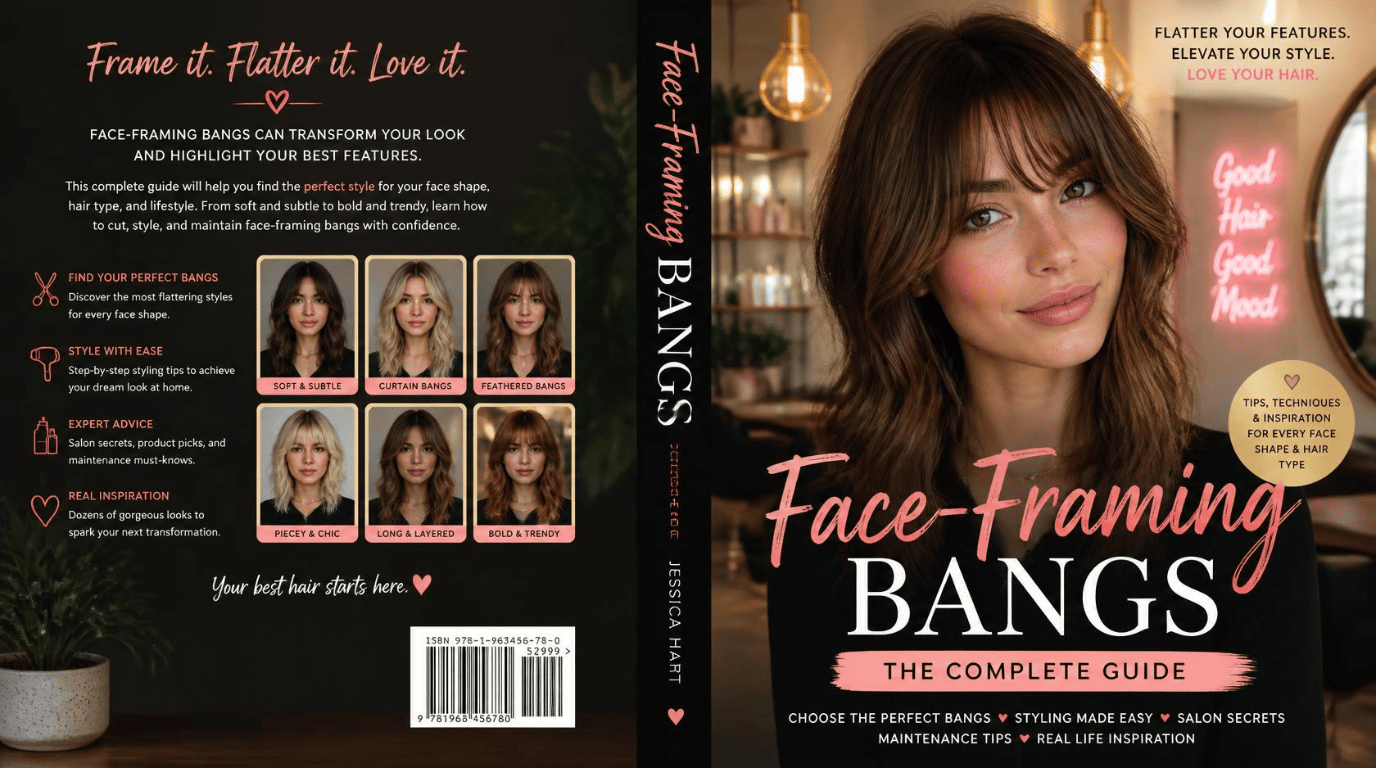
Face-framing bangs can refresh a haircut without asking you to give up much length. The right version can highlight your eyes, soften the front of a cut, or add movement near your cheekbones. Your best choice depends on length, texture, density, hairline, and how much styling you want each morning.
Face-framing fringe uses shorter pieces around the front of the hair to draw attention toward the eyes, cheeks, and jaw. The shape can be center-parted, wispy, side-swept, layered, or curly. Longer versions tend to offer the easiest styling and grow-out because they blend into the surrounding haircut.
Face-Framing Fringe at a Glance
| Style | Typical starting point | Good choice if you want | Upkeep |
| Curtain fringe | Brow to upper cheek | A soft center opening | Low to moderate |
| Cheekbone-length | Around the cheekbones | A subtle change | Low |
| Side-swept | Brow to cheekbone | Diagonal movement | Low |
| Bottleneck | Shorter center, longer sides | More definition near the eyes | Moderate |
| Wispy | Brow area with light ends | Less weight across the forehead | Low to moderate |
| Layered | Several blended lengths | Movement through longer hair | Low |
| Curly fringe | Based on the dry curl position | Natural texture around the face | Varies |
What Makes This Cut Different From Curtain Fringe or Face-Framing Layers?
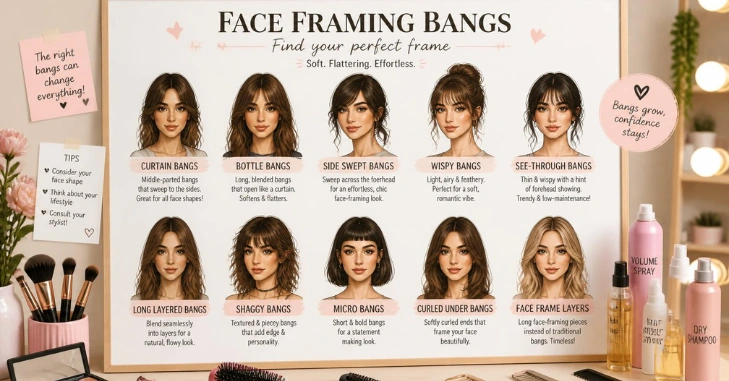
The names overlap, which can make salon inspiration confusing. Face-framing fringe is a broad category. It describes shorter front pieces designed to shape the area around your features. Curtain fringe is one version of that idea. It usually opens near the center and becomes longer toward the sides.
Face-framing layers often start lower. They may begin near the cheekbones, jaw, or chin without covering much of the forehead. If you want to see curtain, wispy, bottleneck, blunt, and layered options side by side first, StyleVanta’s rundown of the different types of bangs is a good place to start.
The practical difference is where the shortest section sits. A brow-length centrepiece makes the haircut read more like a fringe. A cheekbone- or jaw-length starting point feels closer to long front layers.
Which Face-Framing Bangs Suit Your Features?
Face shape can help you choose placement, but it shouldn’t decide on its own. Current stylist guidance also considers hair texture, growth patterns, density, and the amount of upkeep you want.
Round faces: Longer pieces and diagonal movement can add visual length. Curtain or side-swept shapes are useful starting points. Avoid choosing a heavy horizontal edge only because a reference photo looks good.
Square faces: Softer ends can break up a strong jawline. Consider wispy, feathered, bottleneck, or longer layered shapes that curve around the sides.
Heart-shaped faces: A light center section or cheekbone-length sweep can balance a wider forehead. Keeping some softness near the sides prevents the top of the haircut from feeling heavy.
Oval faces: You have room to adjust length and density. A longer curtain shape offers flexibility, while a shorter center section puts more attention on the eyes.
Long or rectangular faces: You may prefer more fullness near the forehead or cheeks. Extremely long, flat pieces can add vertical emphasis when you want the opposite effect.
A diagonal option may suit you better if your front section naturally falls to one side. StyleVanta’s guide to side-swept fringe explains how sweep, length, and parting change the finished effect.
Match the Fringe to Your Hair Texture and Hairline
Face-framing bangs: our texture decides how the cut behaves after you leave the salon. Fine or lower-density hair often benefits from a lighter section. Taking too much hair from the front can reduce fullness at the sides. A stylist can adjust the section size before changing the length.
Straight hair shows the cutting line clearly. Soft point-cut or blended ends can keep the front from looking separate from the rest of your haircut. Wavy hair already has movement, so the cut should respect where each bend forms. A long layered shape can work without needing a perfect blowout each morning.
Curly and coily textures need sufficient length to accommodate spring and shrinkage. Ask your stylist to judge the finished position when the hair is dry or close to its natural state.
Growth patterns matter too. A cowlick may push one section upward or create a natural split. A V-shaped hairline can also affect where a center part sits. StyleVanta’s widow’s peak styling guide covers those front-growth issues in more detail.
7 Face-Framing Fringe Styles Worth Considering in 2026
- Soft curtain fringe. Keep the middle light and let the outer pieces reach the cheekbones. This works well when you want an open forehead and easy grow-out.
- Long cheekbone frame. Start around the upper or middle cheek area. It gives long hair movement without creating a full forehead fringe.
- Side-swept frame. Direct the front diagonally across the forehead. It suits people whose hair already prefers a side or off-center part.
- Bottleneck shape. Keep the center shorter, then widen the length gradually toward the cheeks. It gives more definition than a classic curtain shape.
- Wispy front pieces. Use fewer strands and softer ends. This is a useful option if you want the forehead to remain visible.
- Layered frame. Connect shorter front pieces into the rest of the haircut. It works especially well with shoulder-length or longer layers.
- Natural curly frame. Shape individual curls around the forehead and cheeks instead of straightening them into one cutting line.
Shorter versions can also work with bobs, bixies, and pixies. See StyleVanta’s short-hair fringe ideas for more compact haircut combinations.
How to Style the Front in About Five Minutes
Start while the front section is damp. Once the roots dry in the wrong direction, resetting them takes more work.
Use these steps:
- Set the roots. Direct the hair forward first, then move it toward your chosen part.
- Add a gentle bend. Use your fingers, a round brush, or your usual curl-styling method.
- Direct the ends away from the face. Keep the curve soft rather than tightly curled.
- Let the shape cool. This helps the front hold its direction.
- Finish lightly. Use a small amount of flexible hairspray, mousse, or styling cream.
Heavy oils and waxes can make short front pieces separate faster. Start with less product, then add more only if your texture needs it.
How Much Maintenance Should You Expect?
Longer, blended fringe tends to be more forgiving than a short, precise cut. Growth slowly turns the front into longer layers rather than leaving a strong horizontal line.
A defined shape may need attention every four to eight weeks. The timing depends on your growth rate, starting length, and how precisely you want the front to sit.
Watch the haircut instead of relying on one fixed schedule. A trim may be useful when the shortest pieces stop opening properly or begin falling into your eyes.
If your plan is an easy grow-out, keep more length near the sides from the beginning. Pairing the front with a shoulder-length cut also gives you more styling options. StyleVanta’s guide to what a lob haircut involves can help if you’re considering that combination.
What to Tell Your Hairstylist
A reference photo helps, but give your stylist practical details too. Decide where you want the shortest piece to finish. Then choose the longest point and explain how much daily styling you will do.
A useful salon brief could be, “I want a soft front frame that stays open around my face. “Keep the shortest pieces near my cheekbones and blend the sides into my existing layers. I want enough length to tuck them back, and I don’t want a style that needs a full blowout every morning.”
Bring two or three photos with hair texture and density close to yours. One image may show the right length, while another has the part or softness you prefer.
Make the Cut Work Through Canadian Seasons
A fringe that behaves well in a salon may need small adjustments through the year. If heated indoor air leaves your front pieces static in winter, use a small amount of lightweight leave-in product. Avoid coating the roots, as it can reduce volume.
During toque season, let your hair cool before putting on a hat when possible. If the front flattens, dampen the roots slightly and reset the direction rather than adding more product.
Warm, humid days may call for lighter layers and flexible hold. If your natural wave or curl becomes more visible, working with that texture usually takes less effort than forcing a pin-straight finish.
Choose the Version That Fits Your Real Routine
Start with the amount of styling you’re willing to do on an ordinary morning. Then consider your natural part, texture, density, and the shortest length you feel comfortable wearing.
Save a few realistic reference photos before your salon appointment. A softer, longer starting point gives you room to adjust later without committing to a dense front fringe.
Conclusion
Face-framing bangs are a versatile way to change your hairstyle without sacrificing much of your length. From soft curtain fringe and wispy pieces to side-swept, bottleneck, layered, and curly styles, there is plenty of room to adjust the cut to your face shape, hair texture, natural part, and personal style. The most flattering result is not necessarily the shortest or most dramatic fringe—it is the one that works naturally with the way your hair grows and the amount of styling you are willing to do.
If low maintenance is your priority, longer cheekbone-length pieces and blended layers are usually the easiest choices because they transition smoothly as they grow.
Frequently Asked Questions
Are face-framing bangs low-maintenance?
Longer, blended versions can be relatively easy to maintain because they grow into surrounding layers. Shorter or more precise shapes need closer attention. Your natural part and texture also affect daily styling.
Are they the same as curtain fringe?
Not exactly. Curtain fringe usually has a center opening with shorter middle pieces and longer sides. Face-framing styles cover a wider range of lengths and parting patterns.
Can curly hair wear this type of fringe?
Yes. The cut should account for curl spring, shrinkage, density, and the way individual curls sit when dry. Starting with extra length gives your stylist room to adjust.
How often should the front be trimmed?
A four- to eight-week range is a practical starting point for many blended shapes. Longer pieces can stretch further between trims, while precise short sections show growth sooner.
Is it easy to grow the style out?
It can be. Longer outer pieces already connect to the haircut, so the shortest sections can gradually become cheekbone, jaw, and chin-length layers.