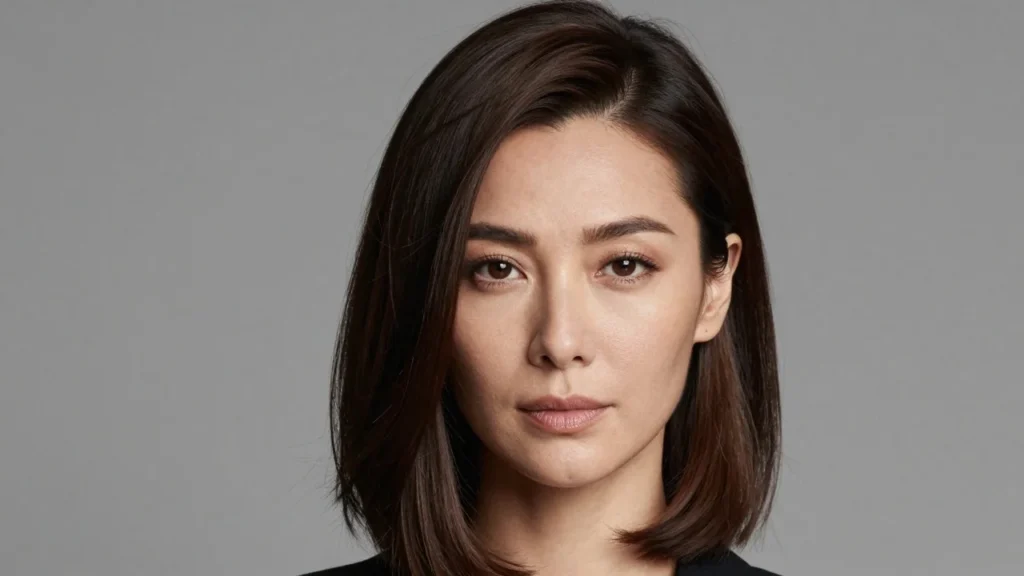


Short hair with bangs works because fringe adds face-framing detail to a bob, pixie, bixie, or shag. The most flattering choice depends on density, natural texture, growth patterns, and how much styling you’ll do. Curtain or side-swept bangs offer flexibility, while blunt or micro bangs create a sharper look and need more precise upkeep.
Bangs can also shift attention toward the eyes and cheekbones or add movement to a compact haircut. Stylists interviewed by Marie Claire specifically recommend a longer, side-swept fringe to add texture and movement to cropped styles. There is more on this in Side Swept Bangs.
| Cut and fringe | Best suited to | Styling commitment | Main effect |
|---|---|---|---|
| Chin bob + curtain fringe | Straight or wavy texture | Low to medium | Soft face framing |
| French bob + wispy fringe | Fine to medium density | Medium | Light, relaxed finish |
| Pixie + long side fringe | Most textures | Low to medium | Movement and asymmetry |
| Bixie + curtain fringe | Straight, wavy, soft curls | Medium | Flexible grow-out |
| Curly bob + curly fringe | Curly or coily texture | Medium | Natural shape and volume |
| Shaggy bob + choppy fringe | Wavy or curly texture | Low to medium | Texture and movement |
TL;DR: Start with your natural growth pattern, density, and daily routine before thinking about face shape. Longer curtain and side-swept fringe are easier to adjust and grow out. Blunt and micro styles make a stronger statement but demand more frequent trims. Curly fringe should be shaped around its natural spring rather than stretched straight.
15 haircut and fringe combinations worth saving
- Chin-length bob with curtain fringe. This is one of the easiest combinations for softness without fully covering your forehead. The centre opening keeps the look light, while the longer outer pieces can frame the cheekbones.
- French bob with soft wispy fringe. Pair a compact bob with an airy fringe rather than a dense, straight line. The contrast keeps the cut polished without making the front feel heavy. French-inspired cuts and face-opening bangs continue to appear in current editorial coverage.
- Blunt bob with feathered bangs. A precise perimeter gives the haircut structure. A lighter fringe breaks up that geometry around the forehead and eyes. This pairing is especially useful when you like a clean bob but don’t want the front to look severe.
- Layered bob with side-swept fringe. Side direction creates movement and can work well when the front naturally prefers one side. A recent Cosmopolitan trend report also notes the return of slightly off-centre parts and side parts, including on bobs.
- Textured bob with choppy fringe. Short, separated pieces make sense when your finish is intentionally undone. Ask for movement through the ends rather than a solid wall of fringe.
- Bixie with parted bangs. A bixie sits between a bob and a pixie, leaving enough length near the front for a parted fringe. This gives you more styling options than an ultra-cropped cut and creates a gentler grow-out.
- Pixie with long side-swept bangs. Keeping extra length at the front adds contrast to the shorter sides and back. Hairstylists have long recommended this combination for creating movement in cropped cuts.
- Cropped pixie with micro fringe. This is the graphic option. The exposed forehead and short fringe make the haircut feel intentional, but small changes in growth become noticeable quickly. Choose it because you like the shape, not because it appears low-maintenance.
- Shaggy bob with airy bangs. Layers through the crown and around the face prevent the fringe from looking disconnected from the rest of the haircut. The result suits people who prefer visible movement to a smooth, single-length finish.
- Curly bob with natural curly fringe. Let the stylist assess where each curl sits when dry. Curly hair springs upward after cutting, so fringe needs enough initial length to avoid becoming much shorter than planned.
- Wavy bob with bottleneck bangs. A shorter centre that gradually lengthens toward the temples creates a bridge between full fringe and curtain bangs. It works particularly well when your waves already bend away from the face.
- Asymmetrical bob with sweeping fringe. Both elements create diagonal lines, so they feel deliberate together. This pairing can also make a simple dark or single-colour haircut look more architectural without adding complicated layers.
- Jaw-length bob with blunt bangs. A straight fringe plus a strong jaw-length perimeter creates the boldest bob in this group. Thick, straight hair can support a fuller fringe particularly well, although the exact weight should still be tailored to your density.
- Choppy pixie with broken fringe. Instead of a single continuous bang line, the front is divided into irregular pieces. This helps connect the fringe to textured layers around the crown and temples.
- Rounded bob with an airy fringe. A softer, curved outline pairs well with a light, slightly uneven bang. It defines the eyes without giving the haircut the sharpness of a blunt fringe.
How to choose short hair with bangs for your face and texture
Face shape can give you useful visual cues, but it shouldn’t become a rulebook. A longer or diagonal fringe can create more vertical movement on a round face. Softer, wispy or side-swept pieces can break up a strong jawline. Curtain styles draw attention to the cheekbones and can suit several face shapes. Current stylist guidance also stresses matching the cut to the person rather than relying on one universal formula.
Your hairline and growth direction matter more each morning. A cowlick can force a blunt fringe to split. A widow’s peak may naturally encourage a centre or side opening. Stylevanta’s guide to working with a widow’s peak explains how textured fringe, side parts, and the natural direction of the front section affect styling effort.
Density changes the calculation too. Fine hair may need a fringe section that begins farther back to ensure enough visible weight. An extremely thin fringe can expose gaps rather than create fullness. Curly hair needs extra consideration for shrinkage, while thicker, straight hair can usually support a denser bang line.
The Stylevanta three-filter fringe test
Before saving another reference photo, judge the idea against these three factors.
| Filter | Ask yourself | Why it matters |
|---|---|---|
| Growth pattern | Does my front section split, swirl, or grow strongly sideways? | Determines how much root styling you’ll need |
| Density | Can I borrow enough hair for the fringe without thinning the sides? | Controls whether bangs look full or sparse |
| Daily effort | Will I reset and style the front most mornings? | Separates realistic cuts from frustrating ones |
A longer side-swept fringe is usually forgiving during grow-out. Curtain styles also transition naturally into face-framing layers. A precise blunt bang has less room for missed trims, while micro fringe makes every few millimetres of growth visible.
That commitment test is more practical than choosing based on face shape alone.
What feels current in 2026
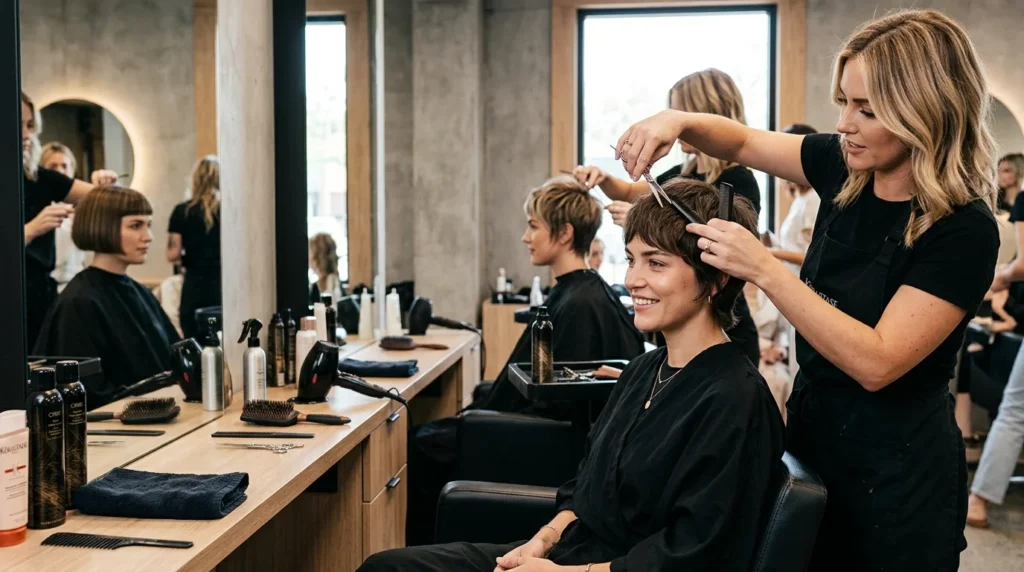
There isn’t one compulsory bang style this year. Current editorial coverage points instead toward individual texture and adaptable face framing.
Vogue’s August 2026 haircut coverage highlights French-influenced cuts and open, face-framing bangs. Its recent curly-shag feature also stresses cutting around natural movement, curl spring, and density rather than forcing every texture into the same finish.
The side part is also making a comeback in celebrity styling. Cosmopolitan reported in August 2026 that today’s version is often slightly off-centre rather than styled with the extremely deep side parts associated with earlier decades. That shift makes longer, sweeping fringe feel timely again.
Maintenance matters more than the salon photo.
The fringe will usually need attention before the rest of your haircut does. One current styling guide recommends trimming bangs every two to four weeks, depending on length, shape, and growth rate. A broader cropped shape may stay neat on a four-to-six-week salon cycle.
For daily styling, reset the roots while the front section is still damp. Direct the hair where you want it to sit instead of waiting until it has dried into its natural position. StyleVanta offers the same practical advice for stubborn front-growth issues in its hairline guide.
Before the cut, tell your stylist where your hair naturally parts, whether you have a cowlick, and how much heat styling you’re willing to do. Bring reference photos showing hair with a texture similar to yours. Hairstylists interviewed by Vogue also recommend visual references because haircut terminology can mean different things to different people.
For more styling coverage, you can follow Sophie Palmer’s hair articles on Stylevanta. Stylevanta identifies her coverage areas as hair care, styling techniques, product recommendations, and trend updates.
Choose the fringe you’ll still like on an ordinary morning
The strongest haircut isn’t necessarily the most dramatic reference photo. It’s the one that still works after you’ve washed it yourself, slept on it, and had five minutes before leaving home.
Start with your natural part and growth pattern. Decide how much forehead coverage you want and how often you’re willing to trim it. Then take two or three realistic reference photos to your stylist.
You can browse Stylevanta’s latest style coverage for more inspiration. If there’s a haircut or styling question you want covered next, send Stylevanta a topic suggestion. The site’s editorial focus includes practical hair and styling guidance.
Frequently asked questions
Does short hair with bangs work for every face shape?
Yes, because the fringe can be changed rather than treated as one fixed formula. Length, parting, density, and texture can all alter how the front frames your face. Use face-shape advice as a starting point, then give more weight to your natural hairline and styling habits.
Are curtain bangs a good choice with a bob?
They can be one of the most flexible choices. Their centre opening keeps the forehead visible, while the longer side pieces blend easily into a bob. They also grow into face-framing layers more smoothly than a short, blunt fringe.
What is the lowest-maintenance type of fringe?
A longer side-swept or curtain-style fringe is usually easier to live with because slight growth gradually changes the shape. Short, blunt bangs and micro bangs require more precision if you want to preserve their original lines.
Can curly hair have bangs?
Yes. The stylist should work with curl spring, density, and the way individual curls fall around the forehead. Current professional advice recommends leaving enough length for shrinkage and adapting the layers to the person’s natural movement.