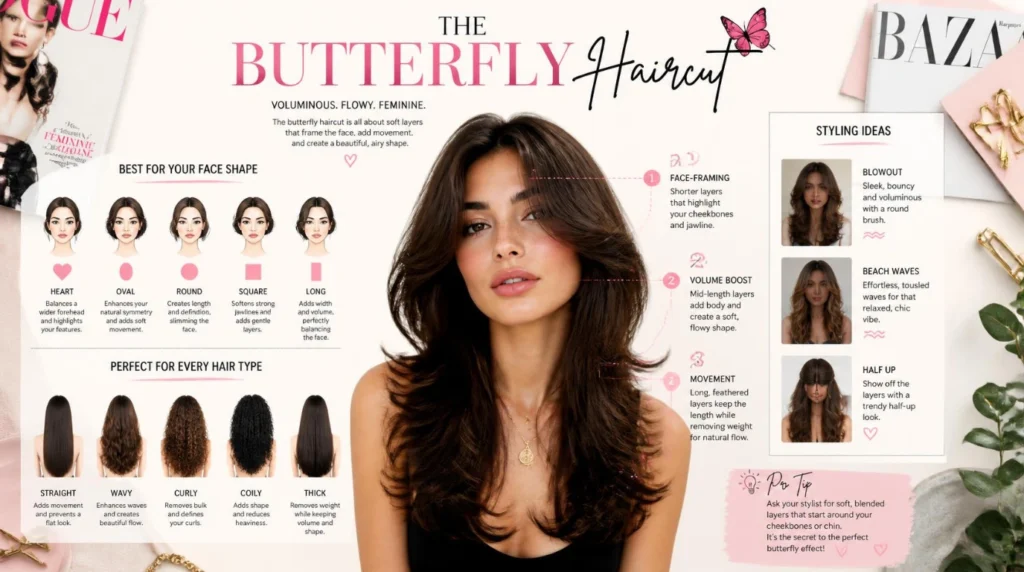

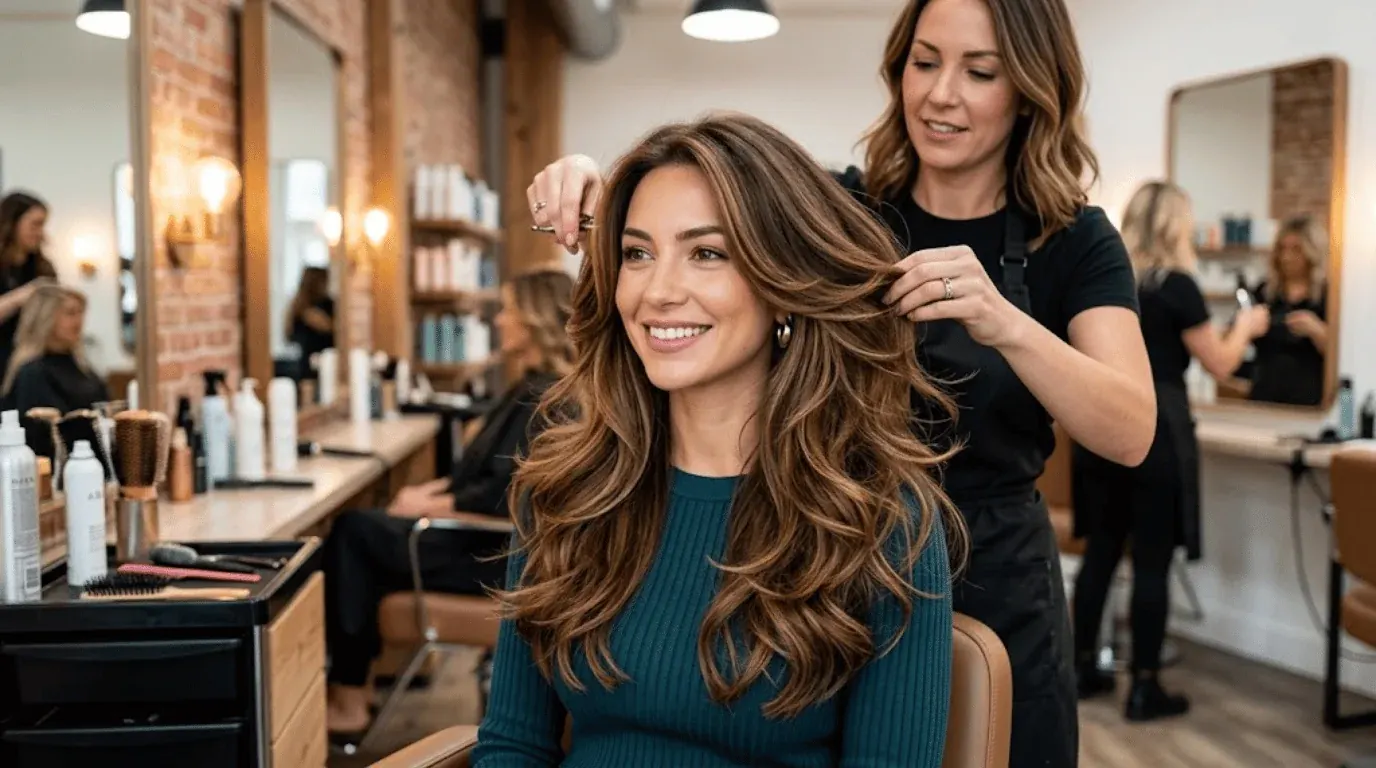
Long layers are a haircutting approach that keeps most of your length while adding movement through the mid-lengths and ends. The right version depends on density, texture, face framing, and your normal styling routine. Fine hair needs restraint, while thick or wavy hair can often support more internal shaping. Our related guide, Hair Spray in Canada, goes further into this.
| Decision | Useful starting point | Main thing to avoid |
|---|---|---|
| Fine or low-density hair | Light internal shaping with a strong perimeter | Removing too much fullness from the ends |
| Thick hair | Weight removal through selected areas | Leaving all the bulk at the bottom |
| Straight hair | Soft graduation that stays connected | Choppy sections that show every cutting line |
| Wavy hair | Shaping that follows the natural bend | Fighting the wave with a rigid outline |
| Curly or coily hair | Plan around the finished dry shape and shrinkage | Judging length only while the hair is wet |
| Face framing | Choose the shortest point before cutting | Going shorter than your daily routine allows |
| Maintenance | Often every 8, 12 weeks | Waiting until the shape becomes bottom-heavy |
Salon and haircut resources agree on the central idea: layered shaping changes weight distribution and movement without requiring a major loss of length. Great Clips recommends getting a haircut every 8- 10 weeks, while other texture-focused guidance allows longer intervals for softer shapes.
How Long Layers Change the Shape Without Taking Away Your Length
A long layered haircut creates different lengths within the same overall shape. Those shorter sections can release weight, encourage movement, or frame the face while the longest perimeter stays intact.
That distinction matters because layering does not create new hair or true density. Professional hairdressing guidance describes it as a technique that removes internal weight. Reducing weight can make styled volume easier to maintain, but the effect depends on the cutting method and your hair type.
The result can be subtle or noticeable. A few low sections may give straight hair a softer fall. More internal shaping can help dense or wavy hair move without losing its long appearance.
Seven Decisions That Determine Whether the Cut Works
1. Decide how much length you want to protect
Start with the finished length rather than the amount you want removed.
Tell your stylist where you want the longest point to sit when your hair is dry. That might be below the shoulders, at the bra line, or farther down the back.
This gives the stylist a clear boundary before any shorter sections are planned.
2. Choose where the shortest section should begin
The shortest point changes the whole impression of the cut.
A section beginning near the cheekbones creates stronger face framing. Chin- or collarbone-level placement feels softer and usually grows out with less contrast.
If you often wear a ponytail, bun, or claw clip, mention that before cutting. Short front sections may fall out of tied styles.
3. Match the amount of shaping to your density
Fine hair can lose visual fullness when too much weight is removed. MHDPro recommends techniques that protect the outer outline when working with fine hair. Texture-focused haircut guidance gives similar advice.
Dense hair gives the stylist more room to remove internal weight. The goal should still be specific. Ask whether the shaping is meant to reduce bulk, improve movement, change the outline, or frame your face.
4. Let your texture change the cutting plan
Straight hair shows cutting lines clearly, so soft transitions tend to matter more. If you wear your hair naturally straight, StyleVanta’s guide to straight hair types and care can help you identify how your texture behaves before choosing a shape.
Waves already create visible bends between sections. A good cut can support that movement instead of forcing every strand into the same outline.
Curly and coily hair require extra attention to shrinkage and the finished dry position. Discuss whether your stylist cuts your texture wet, dry, or with a combined method. The important point is that the final length should be planned around how your curls sit after drying.
5. Treat face shape as a guide, not a rule
Face shape can help you choose a starting point, but it should not determine the decision on its own.
Longer pieces below the cheekbones can create stronger vertical lines around a round face. Softer movement can reduce the effect of a sharp horizontal line near a square jaw. Current stylist guidance also emphasizes customization over fixed rules for a single face shape.
Your forehead, cheekbones, jaw, glasses, hairline, and preferred part all affect how the front sections sit.
6. Decide how much styling you will do
A haircut that requires a round-brush blowout every morning may not suit someone who normally air-dries their hair.
Be clear about your routine. Tell your stylist whether you diffuse, straighten, blow-dry, curl, or leave your natural texture alone.
The shape should still make sense on an ordinary day, not only after a salon finish.
7. Plan the grow-out before the first cut
Softer, lower shaping usually changes gradually as it grows. More dramatic face framing becomes noticeable sooner.
Ask which sections are likely to lose their shape first. That will tell you whether you need full trims or smaller maintenance appointments.
Face-Framing Pieces, Curtain Bangs, and Layered Lengths Are Not the Same
These styles can overlap, which is why salon requests sometimes go wrong.
| Feature | Face-framing pieces | Curtain bangs | Layered long cut |
|---|---|---|---|
| Shortest area | Often cheekbone, chin, or lower | Usually shorter near the centre front | Can begin anywhere through the length |
| Main purpose | Shape around the face | Create a defined fringe | Change weight and movement throughout |
| Commitment | Low to moderate | Moderate | Depends on placement |
| Grow-out | Blends into surrounding hair | Fringe changes noticeably | Usually gradual when kept soft |
If you want a defined centre-opening fringe, read StyleVanta’s curtain bangs guide before choosing the shortest point.
If you are still deciding whether you want fringe at all, the guide to different types of bangs compares softer and more defined options.
A Salon Brief That Gives Your Stylist Useful Information

Avoid asking for “lots of layering” without defining the result. That phrase leaves several decisions open.
A clearer request sounds like this:
Keep my overall length below my shoulders. I want soft, connected shaping through the mid-lengths, with the shortest face-framing pieces around my chin. Keep the bottom full, and design the cut so it still works when I air-dry it.
Then add the details that apply to you:
- Show two or three reference photos with similar density and texture.
- Point to the shortest section you are comfortable wearing.
- Explain whether you want a strong or soft perimeter.
- Mention your usual part.
- Say how often you tie your hair back.
- Tell the stylist how much heat styling you normally do.
Current haircut guides consistently recommend being specific about the shortest point, amount of graduation, perimeter, and face framing rather than relying on the word “layered” alone.
Styling the Cut Without Turning It Into a Daily Project
Start with the texture you already have.
For straight hair, a round brush can create bends through the ends and lift near the roots. A flat brush gives a smoother finish when you want less movement.
Wavy hair may need only a light styling product and air-drying or diffusing. Scrunch the hair while damp if you want the shorter sections to separate more clearly.
For curls, focus on definition around the front and balanced volume through the crown and sides. Heavy oils can pull down movement, so apply richer products mainly where your hair needs them.
A heat protectant is sensible whenever you use hot tools. Keep tool temperatures and styling frequency appropriate for your hair’s condition.
How Often Should You Maintain the Shape?
Great Clips recommends a haircut every eight to ten weeks as a general guideline for this hairstyle. Softer versions may remain wearable for longer, while shorter front sections can need attention sooner.
Watch the shape rather than the calendar alone.
Book a trim when the ends lose their intended outline, the front stops sitting where you want it, or the lower section begins to feel heavy again.
If you are thinking about losing more length at your next appointment, compare the trade-offs in StyleVanta’s practical lob haircut guide before moving to a collarbone-length cut.
Common Mistakes to Avoid
Removing too much from fine hair. Heavy thinning can leave the ends looking sparse. Protecting the outer perimeter usually matters more than adding many short sections.
Choosing an inspiration photo with different hair. A dense, blown-out style may behave differently on fine waves or tight curls.
Cutting the front without discussing your part. A centre part, side part, cowlick, or widow’s peak can shift where face-framing pieces fall.
Ignoring your normal routine. Tell your stylist if you air-dry your hair most days. A cut should not depend on a styling method you rarely use.
Confusing fringe with face framing. If you want movement without hair sitting across your forehead, keep the shortest section lower.
Choose the Cut Around Your Real Routine
The strongest result comes from matching the haircut to your hair rather than copying a photo section by section.
Before your appointment, save a few references and mark the shortest point you like. Decide how full you want the bottom to remain. Then explain how you normally style and wear your hair.
That gives your stylist enough information to design a shape that still feels right weeks after the salon visit.
Frequently Asked Questions
Are long layers good for fine hair?
They can be, but the shaping should stay restrained. Keep a strong outer perimeter and avoid aggressive thinning through the ends. Fine hair usually benefits more from carefully placed internal shaping than from many short sections.
Do layered haircuts make thick hair easier to manage?
They can reduce concentrated bulk and improve movement when weight is removed in the right areas. The amount of shaping should reflect your density, texture, and preferred finish.
What is the difference between a layered cut and face-framing pieces?
A layered cut changes lengths throughout more of the hair. Face-framing pieces focus mainly on the sections around the cheeks, jaw, and front hairline.
Can curly hair wear this style?
Yes. The stylist needs to account for curl pattern, shrinkage, density, and the finished dry shape. Discuss the cutting method before the appointment rather than assuming one technique suits every curl pattern.
Should the shortest section start at the cheekbones or chin?
Neither point works for everyone. Cheekbone placement creates stronger framing, while chin-level pieces are softer and easier to tie back. Choose based on your features, hairline, texture, and routine.
What should I bring to my salon appointment?
Bring two or three reference images, preferably showing hair similar to yours. Know the finished length you want, the shortest point you are comfortable with, and how much daily styling you are willing to do.