

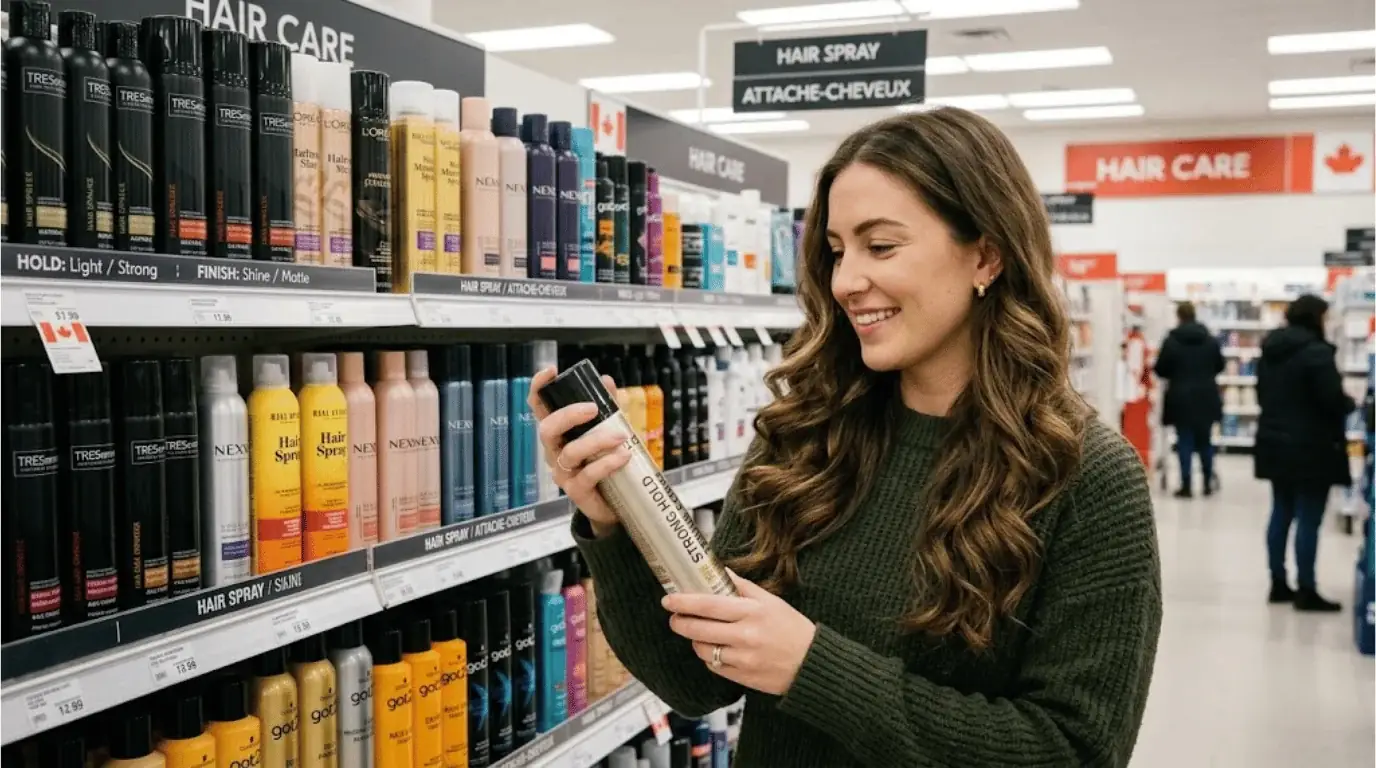
The right hair spray should keep your style in place without leaving your hair stiff, sticky, or weighed down. For Canadian shoppers, the best choice depends on your hair type, preferred finish, hold level, styling routine, and how your hair reacts to humidity.
Choose flexible hold for natural movement, medium hold for everyday curls and polished styles, and strong hold for updos or structured looks. Fine hair usually benefits from a lighter mist, while thick or coarse hair can often handle stronger control. If frizz is your main concern, look for humidity-resistant styling formulas.
| What you need | Type to consider | What to look for |
|---|---|---|
| Everyday movement | Flexible or light hold | Fine mist, brushable finish |
| Curls and waves | Medium hold | Flexible control, humidity resistance |
| Sleek styles | Medium to firm hold | Frizz control, smooth finish |
| Updos | Firm or strong hold | Long-lasting control |
| Fine or flat hair | Lightweight formula | Fine mist, minimal weight |
| Thick or coarse hair | Medium to strong hold | Stronger control |
| Styling touch-ups | Workable spray | Fast-drying, brushable finish |
| Precise application | Pump or non-aerosol | Controlled spray pattern |
How to Choose Hair Spray for Your Hair Type
Start with your hair, not the highest hold number on the can. A formula designed to secure a formal updo may feel too heavy for loose waves or fine strands.
The goal is to use enough control to maintain the style while keeping the finish comfortable.
Fine or thin hair
Fine hair can lose volume when too much styling product is applied. Look for lightweight, flexible, or volumizing formulas that provide control without heavily coating the strands.
A fine mist can help distribute the product more evenly. Apply a small amount first and add another light layer only if the style needs more support.
If you curl fine hair with a hot tool, allow each section to cool before applying your finishing product. This can help the curl set before you add more weight.
Thick or coarse hair
Thicker hair may need more control to keep a structured style in place. Medium or firm formulas can help hold the shape while reducing flyaways.
For hair that reacts quickly to damp weather, consider products labelled for humidity resistance or frizz control. These formulas are designed for styles that need more protection from moisture in the air.
Application still matters. Even thick hair can feel coated if too much product is sprayed into one area.
Wavy and curly hair
Movement is usually important for waves and curls. A product that creates a rigid shell may reduce bounce and make the hair harder to restyle.
Flexible or medium control often works well for loose waves and everyday curls. Stronger control can make sense for formal styles, stretched curls, or areas that tend to lose definition.
Try spraying lightly across the finished shape instead of saturating individual curls.
Colour-treated or dry hair
If your hair already feels dry, pay attention to how a styling formula feels after repeated use.
Look for descriptions such as brushable, flexible, soft finish, or conditioning. Some products also offer shine or smoothing benefits.
Heat protection is different. Never assume a finishing spray protects against hot tools unless the label specifically says it offers thermal protection.
Flexible, Medium, or Strong Hold: What Is the Difference?
Hold strength should match the hairstyle you want to preserve.
| Hold type | Good for | Main benefit | Possible drawback |
|---|---|---|---|
| Flexible | Loose waves, blowouts, casual styles | Natural movement | May not secure complex styles |
| Medium | Curls, polished styles, light updos | Balance of movement and control | Can feel firm if overapplied |
| Strong | Updos, sleek looks, special events | Greater staying power | Easier to overapply |
| Anti-humidity | Frizz-prone styles | Helps maintain shape in moisture | Performance varies by formula |
| Non-aerosol | Targeted styling | More controlled application | Spray can feel wetter |
The practical choice: start with the lowest hold level that keeps your style intact.
You can usually build a workable product in light layers. Removing too much strong-hold product is harder and may require brushing or washing.
Hairspray, Finishing Spray, Fixer, or Texture Spray?
Beauty brands use several names for products that may look similar on the shelf.
Traditional hairspray mainly helps preserve a finished hairstyle. A finishing spray may emphasize polish, shine, flyaway control, or a soft finish.
A styling fixer is often described as having stronger setting power, although terminology varies between brands.
Texture spray serves a different purpose. It usually focuses on grip, separation, body, lift, or a more undone finish rather than simply locking the hair in place.
This distinction is especially useful when comparing Asian and international styling products. You may see names such as fixer, styling mist, setting spray, or hair mist.
Read the product description rather than relying only on the name. Look for the specific result promised: hold, volume, texture, shine, smoothing, or humidity resistance.
Aerosol vs. Non-Aerosol: Which Should You Choose?
The delivery system changes how a styling product feels and applies.
Aerosol formulas typically create a continuous mist. This can make them useful when you want broad, even coverage across a finished hairstyle.
Pump and non-aerosol formulas often provide more targeted application. Depending on the nozzle and formula, the spray may also feel wetter when it lands on the hair.
Neither format is automatically better.
Choose based on:
- How much area you want to cover
- Whether you prefer a fine or targeted spray
- Your desired hold level
- How quickly you want the product to dry
- Whether you plan to layer the product
- The finish you want after application
Always follow the directions printed on the product. Spray products should also be stored and used according to their safety instructions.
How to Choose a Finish
Hold and finish are separate decisions.
Two products can offer similar control but leave the hair looking completely different.
Natural finish
A natural finish works well when you want your hairstyle to look touchable rather than heavily styled. This can suit blowouts, soft curls, and casual everyday looks.
Shiny finish
Shine-enhancing products can suit sleek ponytails, polished waves, and smooth styles.
If your hair becomes oily quickly, apply shine-focused styling products carefully. Too much product near the roots may make the hair look heavier.
Matte or textured finish
A more matte finish can work for undone styles, short cuts, or hairstyles where grip matters more than shine.
Texture products are often better suited to this goal than traditional finishing formulas.
What Does Hairspray Cost in Canada?
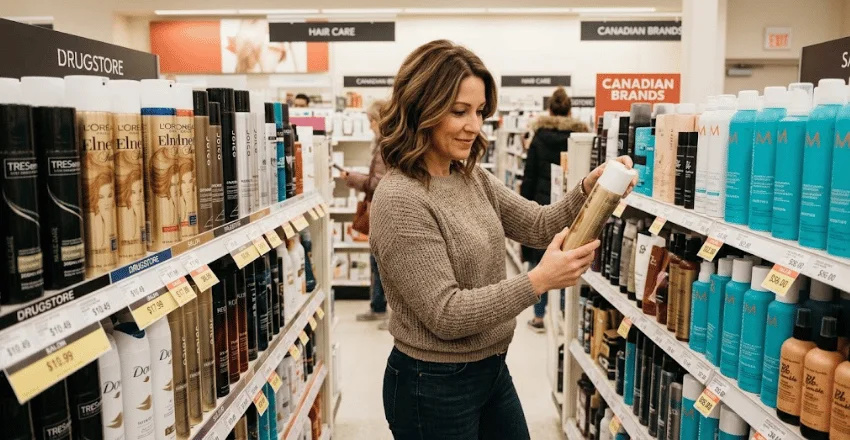
Prices vary considerably across drugstore, salon, professional, and prestige brands.
Rather than assuming a higher price means better performance, compare what you receive for the money.
Check:
- Container size
- Hold strength
- Spray format
- Finish
- Humidity-control claims
- Hair-type recommendations
- Whether the product offers additional styling benefits
Also compare the amount of product rather than the sticker price alone. A smaller container can appear cheaper while costing more per millilitre.
Travel sizes can be useful when you want to test how a formula behaves before committing to a larger can or bottle.
For products you already know you like, larger formats may offer better value.
7 Ways to Get Better Hold Without Crunch
1. Choose hold by hairstyle
Use flexible control for styles that need movement. Save firm control for hairstyles that genuinely need stronger support.
2. Start with less product
A light first layer gives you more control over the final feel.
It is easier to add another mist than to remove an overloaded layer.
3. Keep the nozzle moving
Avoid concentrating the spray in one place for too long.
Moving the product across the hairstyle helps create a more even finish.
4. Follow the recommended spray distance
Different nozzles produce different spray patterns.
Use the distance stated on the product rather than assuming every formula should be applied the same way.
5. Build hold gradually
When more control is needed, apply light layers rather than saturating the hair in a single pass.
Give each layer a moment to settle before deciding whether you need more.
6. Target flyaways instead of respraying everything
If only a few areas need extra control, focus the product on those areas.
Respraying the entire hairstyle can make sections that were already secure feel unnecessarily stiff.
7. Remove styling buildup regularly
Repeated use of styling products can leave hair feeling coated or harder to restyle.
Wash according to your hair type and routine, and make sure your regular cleansing method removes the products you use.
How Canadian Weather Can Affect Your Style
Weather can change how long a hairstyle lasts.
Humidity can encourage frizz, while dry indoor heating can leave some hair types feeling rough or static-prone. Canadian seasons can expose your hair to both conditions during the year.
If damp air is your main challenge, look for humidity-resistant formulas.
For static or dryness, avoid assuming stronger hold is the answer. A gentler styling routine and appropriate conditioning may help more than adding extra finishing product.
Winter hats can also flatten volume or disturb curls. A flexible product can be useful when you need to reshape your style after removing a hat.
For formal occasions, stronger control may make more sense if the style needs to survive changing indoor and outdoor conditions.
What to Check Before You Buy
The front of the package tells only part of the story.
Before adding a product to your routine, compare the features that affect how you will use it.
Check the:
- Hold strength
- Recommended hair types
- Finish
- Spray format
- Container size
- Directions
- Fragrance information
- Humidity or frizz claims
- Thermal protection claims
- Current price
Think about how you most often style your hair.
Someone who wears loose waves every day has different needs from someone buying a product for dance competitions, weddings, or sleek formal updos.
You may also need more than one styling product if your routine changes significantly from day to day.
A flexible formula can cover daily styling, while a firmer product can be reserved for occasions when staying power matters more than movement.
A Simple Hair-Type Matching Guide
If you are stuck between several options, use this as a starting point.
Fine hair: lightweight mist, flexible control, minimal residue.
Thick hair: medium or strong control, depending on the style.
Curly hair: flexible control for bounce, stronger hold for formal definition.
Straight hair: flexible to medium hold for everyday styling.
Frizz-prone hair: humidity-resistant or smoothing formula.
Short hair: choose according to whether you want movement, texture, or a fixed shape.
Updos: firm or strong control, preferably applied in stages.
Your hairstyle still matters more than your hair type alone. Fine hair in a structured updo may need stronger control than thick hair worn loose.
Common Mistakes to Avoid
Using too much product is one of the easiest ways to make a hairstyle feel stiff.
Another common mistake is choosing the strongest formula available even when the style does not need it.
Avoid spraying repeatedly into the same spot. Uneven application can make one section feel hard while the rest of the hair remains flexible.
Do not rely on a finishing product to perform jobs it was not designed to do. Hold, heat protection, texture, smoothing, and conditioning are different functions.
Finally, read the label before assuming two products with similar names work the same way.
Find the Right Formula for Your Routine
The best styling spray is not necessarily the strongest or most expensive option. It is the one that matches your hair type, hairstyle, preferred finish, and daily routine.
Fine hair often benefits from lighter control, while structured styles may need a firmer formula. If weather affects your hair, make humidity resistance part of the comparison.
When you want more styling inspiration before choosing your next product, browse the Stylevanta hair and beauty homepage and compare ideas that fit your routine.
Start with the hold level you genuinely need, apply it in light layers, and adjust from there. A good formula should support your hairstyle without making the product itself the most noticeable part of the look.
Frequently Asked Questions
What hold is good for everyday styling?
Flexible or medium hold works well for many everyday hairstyles because it supports the shape while allowing movement.
Strong hold usually makes more sense for sleek looks, updos, or styles that need firmer control for several hours.
Is hair spray bad for your hair?
A styling spray should be used according to its directions. Problems are more likely when a product causes irritation, is overused, or creates buildup that is not removed during normal washing.
If a product irritates your scalp or skin, stop using it.
Is non-aerosol hairspray better?
Not necessarily.
Non-aerosol products can offer more targeted application, while aerosols often produce a finer, more continuous mist.
The better option is the one that gives you the spray pattern, finish, and hold you prefer.
Can hairspray protect hair from heat?
Only if the individual formula specifically states that it provides heat protection.
If thermal protection is not listed, use a separate product designed for use before hot styling tools.
What type works for humid weather?
Look for formulas that specifically mention humidity resistance, moisture resistance, or frizz control.
These products are intended to help the finished style retain its shape in damp air.
How do I stop hairspray from feeling stiff?
Apply less, choose a more flexible formula, keep the nozzle moving, and build the product in light layers.
Too much product in one application is a common reason hair feels hard or crunchy.