
Hair toner is a colour-refining treatment that deposits pigments to soften unwanted yellow, orange, or red undertones after lightening or colouring. Violet helps counter yellow, while blue helps counter orange. It can also shift the finish toward ash, beige, pearl, or warmer tones without significantly lightening your hair.
| Quick fact | What to know |
|---|---|
| Main purpose | Refines colour and helps neutralize unwanted warmth |
| Yellow brassiness | Usually responds to violet or purple pigments |
| Orange brassiness | Usually needs blue or blue-violet pigments |
| Common formats | Demi- or semi-permanent colour, glosses, masks, shampoos, and conditioners |
| Best-known use | Blonde, bleached, highlighted, grey, and silver hair |
| Can brunettes use it? | Yes, especially on lightened or highlighted sections |
| Does it lighten hair? | Most toning products mainly deposit or adjust colour rather than lift the base |
| How long does it last? | From a few washes to several weeks, depending on the formula and routine |
TL;DR: Match the correcting pigment to the unwanted colour you see. Use violet for yellow and blue for orange. Choose a stronger colour treatment for noticeable correction and a pigmented shampoo or conditioner for maintenance. Always follow the product directions because formulas, processing times, and developer requirements vary.
How Hair Toner Works on Unwanted Brassiness
Lightened hair often reveals warm underlying pigment. Blonde hair may start showing yellow, gold, or orange tones after bleaching, colouring, washing, heat styling, or regular environmental exposure.
A toner changes how those undertones appear by depositing a small amount of colour. The colour wheel is the easiest way to understand the process. Opposite colours help neutralize each other.
Violet formulas are commonly used against yellow. Blue or cooler ash pigments can help when warmth looks more orange.
The treatment can do more than remove warmth. It can refine the final result toward pearl, icy blonde, beige, sandy blonde, silver, or another chosen reflect. If you prefer warmer brunette colour instead, the honey brown hair guide explains how golden tones and colour placement affect the finished shade.
It does not fix every colour problem. Uneven bleaching, dark bands, major colour differences, or insufficient lightening often need a colourist rather than another layer of pigment.
Choose the Correcting Colour by What You See
Don’t choose a shade because the bottle looks appealing. Start with the unwanted colour in your hair.
| What you see | Colour to consider | Common goal |
|---|---|---|
| Pale yellow | Violet or purple | Cooler blonde, pearl, silver |
| Strong yellow-gold | Violet or blue-violet | Neutral or ash blonde |
| Orange or copper | Blue | Cooler dark blonde or brunette highlights |
| Mixed yellow and orange | Blue-violet | More balanced lightened colour |
| No unwanted warmth | Beige, gold, pearl, or neutral | Refine the finish rather than correct brass |
Your starting level matters too. A violet formula designed for pale blonde hair may not correct a deep orange result after dark hair has been lightened.
Porosity also affects colour uptake. Highly lightened ends can grab pigment faster than less-processed roots. A strand test gives you a better idea of processing speed before you cover your whole head.
For Canadian shoppers, check whether a product is ready to use orrequires mixing with developer. Both types are sold through Canadian beauty retailers, but they should not be treated as interchangeable products.
Toning Treatment vs. Purple or Blue Shampoo
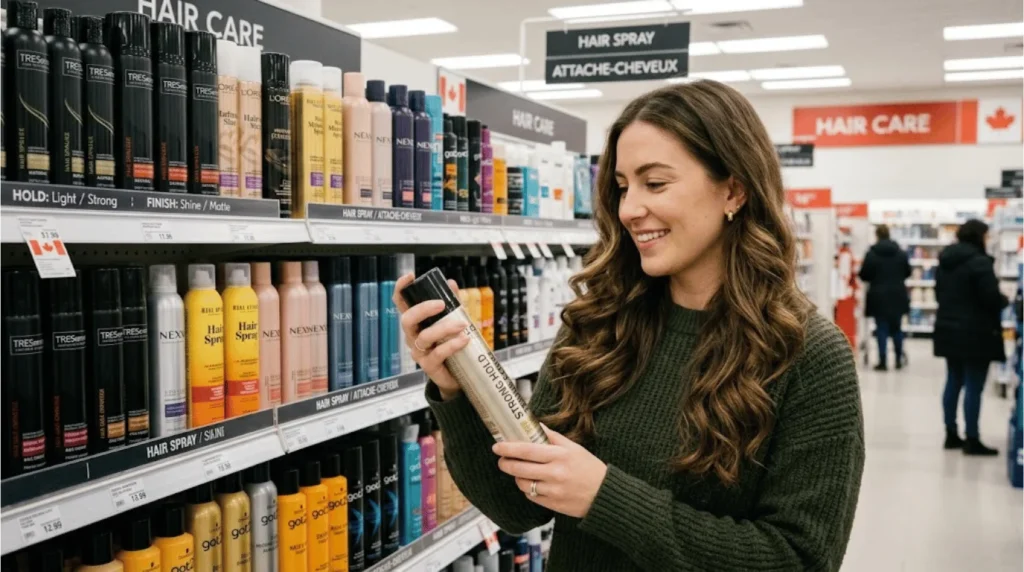
Purple shampoo is often described as a toning product, but it does not perform the same job as a stronger colour treatment.
| Feature | Colour treatment | Purple or blue shampoo |
|---|---|---|
| Main job | Correct or refine the shade | Maintain colour between treatments |
| Pigment strength | Usually stronger | Usually milder |
| Result | More noticeable correction | Gradual colour maintenance |
| Application | Depends on formula; some require developer | Used during washing |
| Best for | Brassiness after lightening or faded colour | Mild warmth returning between services |
| Frequency | As directed when colour needs refreshing | Used periodically according to the label |
If your blonde looks slightly yellow between appointments, purple shampoo may be enough. If the warmth is strong, patchy, or orange, a shampoo may not provide enough correction.
Blue shampoo follows the same principle but targets orange warmth more directly. That makes it useful for some darker blondes, balayage, and lightened brunette hair.
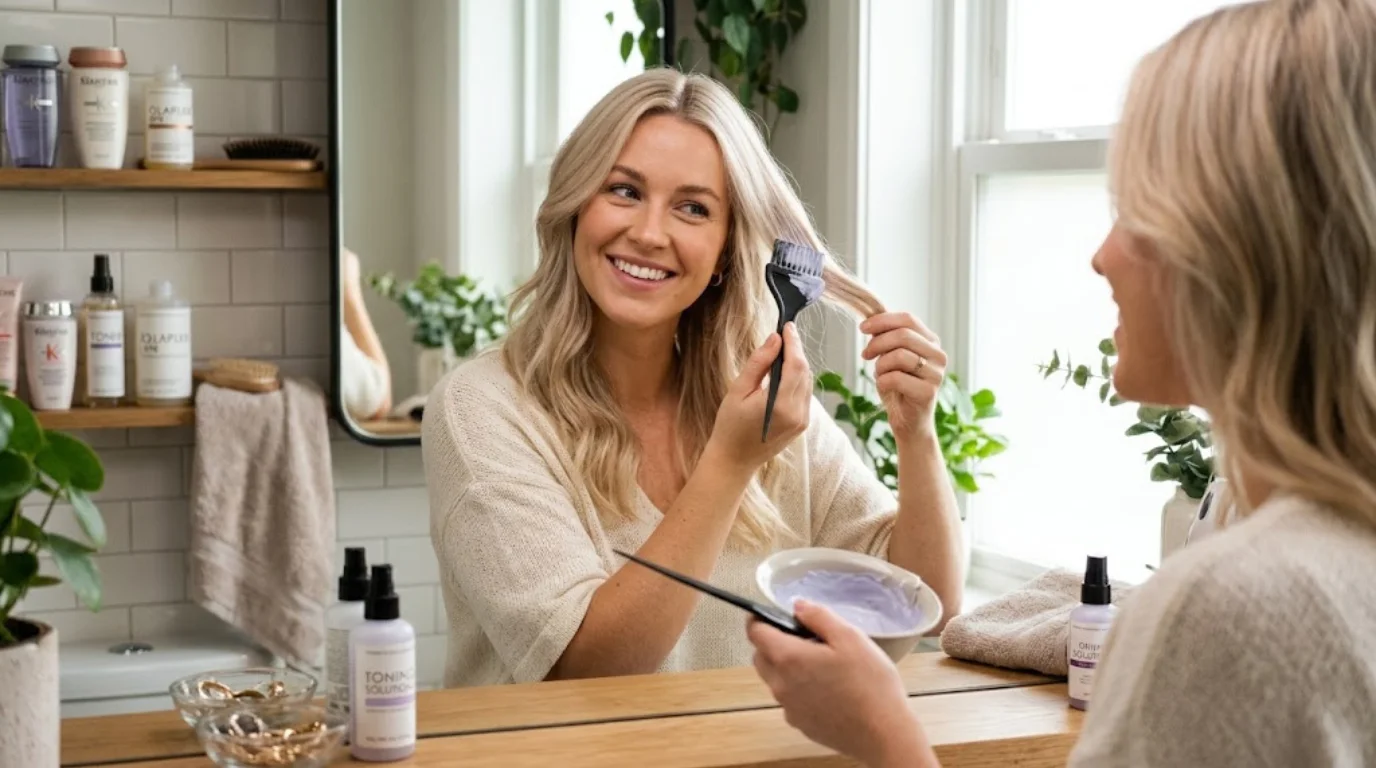
How to Use a Colour-Correcting Treatment at Home
The correct method depends on the formula. The package directions always take priority over a general guide.
- Identify the unwanted undertone. Decide whether the warmth looks yellow, orange, or mixed before choosing a correcting shade.
- Read the full instructions. Confirm whether the product is ready to use or needs a specific developer, ratio, and processing time.
- Complete the required allergy test. Follow the manufacturer’s timing and safety instructions before applying oxidative colour products.
- Do a strand test. Test a hidden section so you can see the colour result and how quickly your hair accepts pigment.
- Apply evenly. Saturate the areas that need correction. Porous or pale sections may process faster, so watch the colour rather than extending the time without guidance.
- Rinse and follow the aftercare directions. Use the recommended conditioner or treatment, then reduce unnecessary washing to help the fresh shade last longer.
These steps matter because two products labelled for blonde colour correction can have different ingredients and instructions.
Never increase developer strength or processing time because the result looks slow. That changes the chemical service and raises the risk of dryness, breakage, or an uneven finish.
Does Toning Damage Your Hair?
The answer depends on the formula and the condition of your hair.
Many modern toning formulas are designed as relatively gentle colour-refreshing options. Still, a direct-deposit mask and a permanent formula mixed with developer do not place the same demands on the hair.
Hair that has been repeatedly bleached, feels gummy when wet, snaps easily, or has an irritated scalp deserves extra caution. Adding another chemical process may worsen an existing problem.
If your hair is already fragile, ask a colourist whether a demi-permanent gloss, direct-deposit product, or a period of recovery is more appropriate.
How Long Does the Colour Correction Last?
Results fade because most toning colour is not permanent.
A pigmented shampoo or conditioner provides lighter deposits that disappear after repeated washing. Demi- and semi-permanent treatments can stay visible for several weeks, though durability varies.
Fading can be faster when you:
- wash frequently;
- use strong cleansing shampoos;
- expose colour to repeated heat;
- swim often;
- have highly porous hair; or
- use a formula that deposits only a small amount of pigment.
Maintenance does not mean using purple or blue products every day. Too much cool pigment can make pale, porous hair look dull, grey, or faintly violet.
Start with the frequency on the label. Reduce use if your colour starts to look flat or over-cooled.
If you wear curls or waves and use a diffuser after colouring, the hair diffuser guide can help you choose the right diffuser type and styling method for your routine.
Can Brunette, Red, or Grey Hair Be Toned?
Yes, but the goal changes with the base colour.
Brunette hair can benefit from highlights or balayage that develop an orange warmth. Blue-pigmented products are often more useful than purple on those sections.
Grey and silver hair can develop yellow tones, so violet products are common choices. Use them carefully on porous white sections because colour can deposit quickly.
Red and copper shades can also be refined with glosses and colour-depositing treatments. The aim may be to refresh warmth rather than cancel it.
Dark, untreated hair is different. A colour-depositing product generally cannot turn a deep natural brunette into an ash blonde because it does not provide the lightening needed to reach that level.
When a Salon Appointment Is the Safer Choice
At-home colour maintenance works best when your base is already even, and you understand the shade you need.
Book professional help when you have:
- orange bands after bleaching;
- noticeably different colours from roots to ends;
- repeated box-dye buildup;
- fragile or breaking hair;
- scalp irritation;
- a major change from dark hair to a pale blonde; or
- uncertainty about which developer a formula requires.
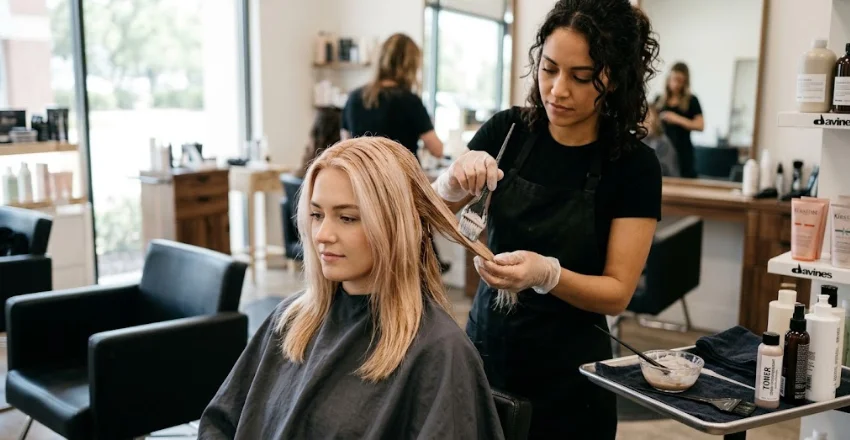
A colourist can assess the level, undertone, porosity, and previous colour history before choosing a formula. That reduces the chance of correcting one problem while creating another.
Keep the Colour Correction Simple
Start with the colour you want to remove, not the shade name on the front of the package. Yellow points toward violet. Orange points toward blue. Mild warmth may only need maintenance, while strong or uneven brassiness calls for more precise correction.
If you’re colouring at home, make the strand test part of the process. If the base is uneven or damaged, a professional correction can save you from another round of unwanted colour.
Frequently Asked Questions
Can hair toner make blonde hair lighter?
Most formulas are meant to refine tone, not create major lift. They can make blonde hair look brighter because unwanted yellow or orange pigment becomes less visible. If your base is too dark for the target shade, further lightening may be required.
Is purple shampoo enough to remove brassiness?
It can help with mild yellow warmth and ongoing maintenance. Strong yellow, orange, or patchy brassiness may need a more concentrated colour treatment.
Should I use purple or blue for orange hair?
Blue is opposite orange on the colour wheel, so blue or blue-violet pigment is usually the more logical choice. Purple is better suited to yellow tones.
Can I apply colour correction immediately after bleaching?
Some formulas are designed for use after lightening, but your hair condition and the manufacturer’s instructions matter. If the hair feels weak or the bleaching results are uneven, a professional assessment is safer.
Why did my blonde turn grey or purple?
Pale and porous areas may absorb cool pigment quickly. Over-processing or frequent use of violet products can also create an over-toned finish. Follow the recommended timing and reduce toning frequency.
How often should I refresh the shade?
Refresh it when unwanted warmth returns rather than following a fixed calendar. Stronger treatments are generally used less often than pigmented shampoos or conditioners.