
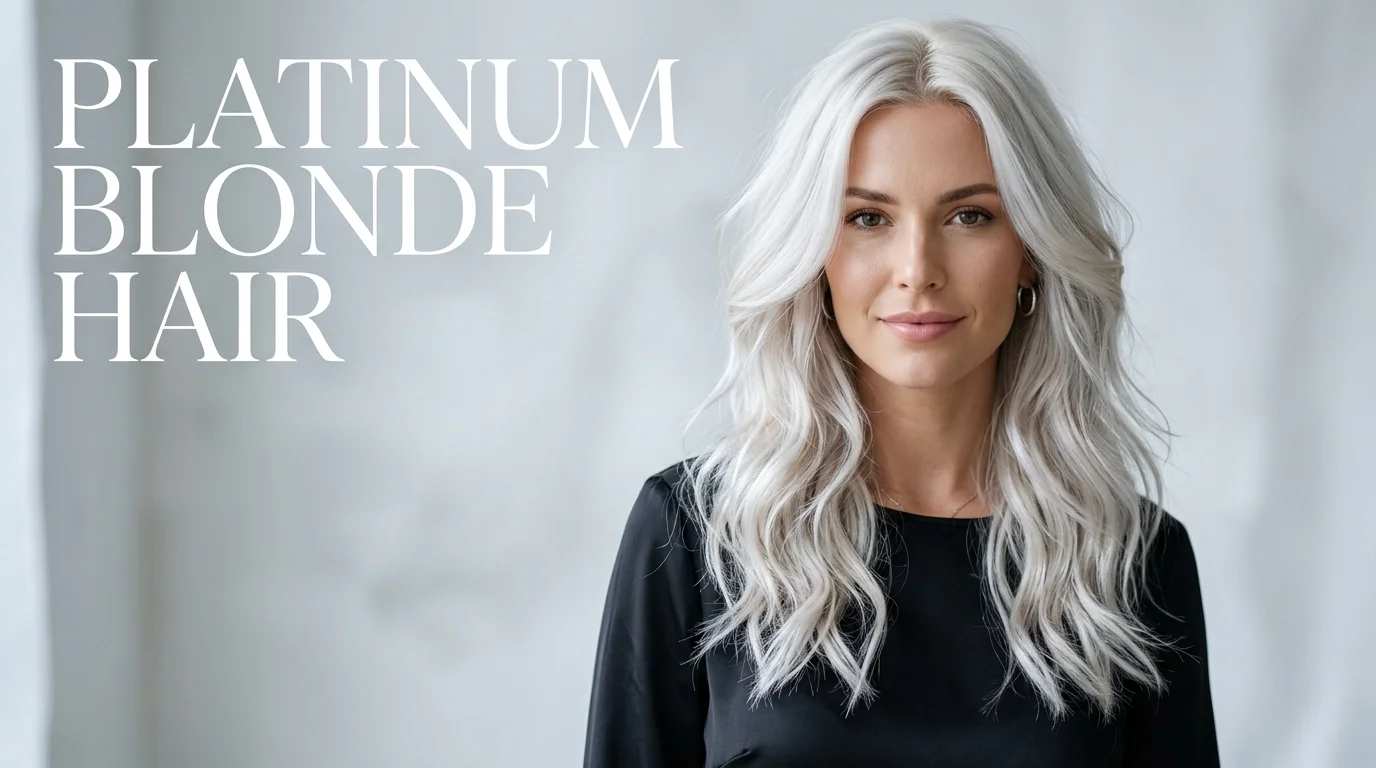
Platinum blonde hair can look crisp, bright, and modern, but getting there takes more than choosing the palest shade on a colour chart. Your starting shade, previous colour, hair condition, undertone, and tolerance for upkeep all matter. The smartest approach is to decide whether your hair can handle the lightening process before focusing on the final icy tone.
| Key question | What to know |
|---|---|
| What is the colour? | An ultra-light blonde with cool, neutral, pearl, or silvery tones |
| Does it require bleach? | Usually, because the hair must be lifted to a light enough level before toning |
| Is dark hair harder to lighten? | Yes. Dark or previously coloured hair may need a slower plan |
| Is toner important? | Yes. Toner helps neutralize unwanted yellow or warm tones |
| Is it high maintenance? | All-over icy colour usually requires frequent root and tone upkeep |
| Can you make it easier to maintain? | Shadow roots, highlights, and blended colour can soften the appearance of regrowth |
Platinum blonde is an ultra-light, cool-toned blonde that usually requires bleaching to a pale yellow base before toning. The safest route depends on your starting colour, previous dye, and hair condition. Healthy, light hair may reach it faster, while dark or previously coloured hair often needs a slower plan.
What Makes Platinum Different From Other Blonde Shades?
The defining feature is how light the hair becomes. Traditional blonde shades can include obvious gold, beige, honey, or wheat tones. Platinum sits close to the palest end of the blonde range and usually has far less visible warmth.
That doesn’t mean every version has to look silver-white. Pearl, champagne, neutral-cool, creamy, and slightly smoky finishes can all create a pale result without requiring everyone to wear the same shade.
You can also change the effect through placement. An all-over colour gives the cleanest, highest-contrast finish. Highlights, darker roots, and blended lengths add dimension and make new growth less obvious. Wella, for example, notes that brighter platinum highlights can be paired with different base tones to suit the wearer.
How to Know Whether Platinum Blonde Hair Is Realistic for You
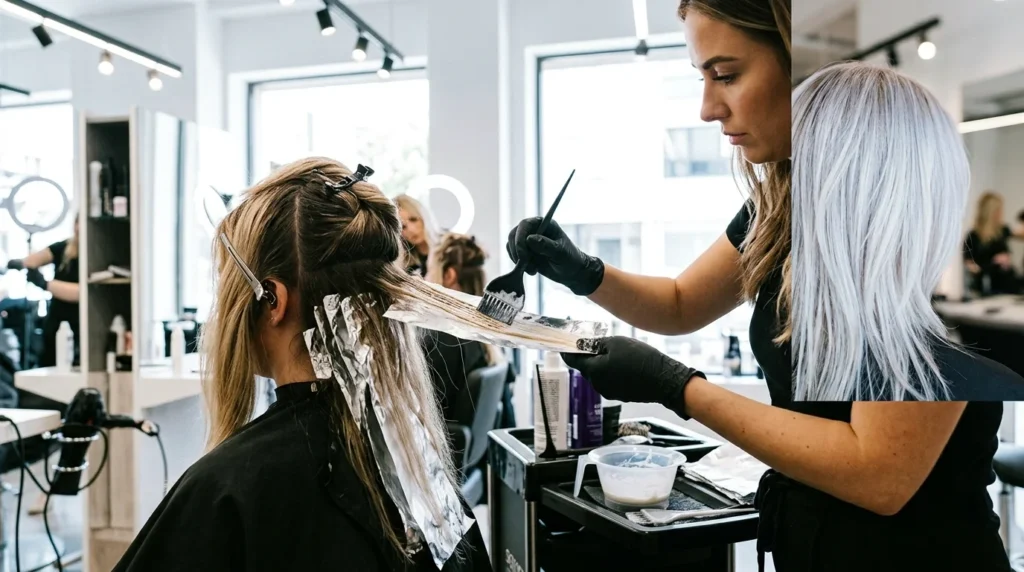
Start with the condition of your hair rather than your inspiration photo. Bleaching places more stress on hair that is already brittle, heavily lightened, or damaged. Schwarzkopf recommends beginning with healthy hair and notes that naturally lighter starting colours are generally easier to take to an extremely light shade.
Your colour history matters too. Tell your colourist about permanent dye, highlights, home colour, smoothing treatments, and previous bleaching. A dark natural base and dark artificial colour present different challenges.
A strand test can reveal how one small section responds before your whole head is processed. L’Oréal also recommends strand testing when bleaching, especially when you’re using an unfamiliar formula or don’t know how your hair will react.
If your ends are already snapping, stretching excessively when wet, or feeling rough after recent chemical services, delaying a major lightening session may be the better choice. A slower transformation is often easier to accept than losing the length or density you wanted to keep.
Choose an Icy Tone That Works With Your Complexion
Skin tone doesn’t create a rigid rule about who can wear pale blonde. Instead, it can help you decide which version may feel most balanced beside your face.
| Undertone | Platinum direction to consider | Effect |
|---|---|---|
| Cool | Icy, silver, pearl, ash | Keeps the result crisp and cool |
| Neutral | Pearl, neutral platinum, soft silver | Creates balance without leaning strongly warm or cool |
| Warm | Creamier platinum, vanilla accents, warmer root | Softens the contrast against golden or peach undertones |
| Olive | Neutral-cool blonde with dimension | Can add brightness without making the colour look flat |
Wella recommends pure, cooler tones for many cool and neutral complexions, while warmer skin can be paired with touches such as vanilla. That makes customization more useful than relying on a single rule about which skin tones suit platinum.
Eye colour, brows, makeup preferences, and your natural root depth can also change the overall effect. A dramatic contrast may be exactly what you want. If not, a soft root shadow can make the colour feel less severe.
Why Going From Dark Hair to Icy Blonde May Take Time
Bleach removes natural and artificial pigment in stages. Dark hair tends to expose warmer red, orange, and yellow undertones as it lightens. Toner can adjust the remaining warmth, but it cannot replace lightening that never occurred.
L’Oréal advises people with very dark starting hair to expect that achieving a pale, white-blonde result may require more than one session rather than forcing the entire transformation at once.
Previously coloured hair can be less predictable. Permanent dye changes the equation because a stylist may need to work through both artificial pigment and your natural base. StyleVanta’s guide to how permanent hair dye works is useful if you’re unsure how your past colour may have affected the hair shaft.
Bring clear photos to your consultation, but also show your colourist what you don’t want. “White blonde,” “pearl,” “silver,” and “creamy platinum” can mean different things to different people.
How to Keep the Colour From Turning Yellow or Brassy
Toner is one of the main tools used after lightening. It adjusts the warm undertones left after bleaching and helps create the cooler finish associated with icy blonde. Toner does not make dark hair dramatically lighter on its own.
Salon schedules vary, but a recent stylist guide places root retouches at around every four to six weeks for classic all-over colour and toner refreshes at around every four to eight weeks. Rooted finishes can make the grow-out period look softer for longer.
Purple shampoo can help counter yellow tones between appointments, but more isn’t always better. Overuse can make pale hair look dull or slightly violet. The same stylist source suggests limited use rather than treating it as an everyday shampoo.
Toning products often behave more like temporary or semi-permanent colour than permanent hair colour. StyleVanta’s semi-permanent hair colour guide explains why these pigments gradually fade instead of permanently lifting your natural shade.
Conditioning also matters. Lightened hair often feels drier, so reducing unnecessary heat and handling it gently can help protect its condition. Schwarzkopf specifically advises gentle drying, careful combing, and limiting heat styling on bleached hair.
Lower-Maintenance Ways to Wear an Icy Blonde
You don’t have to bleach every visible root to achieve the effect. A shadow root leaves controlled depth near the scalp, while the brighter lengths still provide an icy finish.
A shadow root can make platinum blonde hair easier to grow out because the contrast between your natural colour and the lightened lengths looks intentional. Rooted platinum also appears frequently in current colour guides and inspiration galleries.
Platinum highlights are another option. They create brightness while preserving more of the natural base, which can add dimension and reduce the harsh regrowth line associated with all-over bleaching.
An ombré or gradual gradient can take that idea further. StyleVanta’s guide to modern ombré hair explains how keeping depth toward the roots can create a softer grow-out.
Your haircut can complement the colour too. Bobs, lobs, pixies, long layers, and soft waves can all work, but the best choice depends on your texture and styling routine. For broader cut inspiration, see StyleVanta’s hair style ideas for 2026.
Your Next Step Before Going Icy
Save two or three reference photos that show the tone, root depth, and overall finish you like. Then book a consultation rather than asking only for “the lightest blonde.”
Tell the colourist your full colour history and ask whether your hair’s current condition supports the result. Discuss whether you can reach the goal in one visit, what maintenance will involve, and whether a shadow root would suit your routine.
The goal isn’t to become as pale as possible at any cost. It’s to find an icy blonde you can wear while keeping your hair in a condition you’re happy with and can style.
Frequently Asked Questions
Does Platinum Blonde Hair Suit Every Skin Tone?
It can be adapted to suit a wide range of complexions. The key is adjusting the temperature and contrast. Cool skin may suit icy or pearl tones, while warmer skin can look softer with creamy accents or a warmer root.
Can Dark Brown or Black Hair Go Platinum in One Appointment?
A colourist may sometimes achieve significant lift quickly, but you shouldn’t assume the full transformation can be completed in one appointment. Very dark or previously coloured hair may require a staged approach, depending on its condition and how it responds during lightening.
Does Bleaching Damage Your Hair?
Bleaching changes the hair structure and can increase dryness and fragility. Hair that is already damaged is a poorer candidate for aggressive lightening, which is why its condition and the results of a strand test matter before a major change.
Why Does Icy Blonde Start Looking Yellow?
Cool toner gradually fades with washing, revealing more of the underlying warmth. A suitable toner or purple-toned care product can help control visible yellow tones between colour appointments.
How Often Will I Need a Salon Appointment?
It depends on whether you choose all-over bleach, highlights, or deliberately darker roots. Classic all-over platinum often needs attention within several weeks, while a rooted or blended finish usually makes regrowth less obvious.