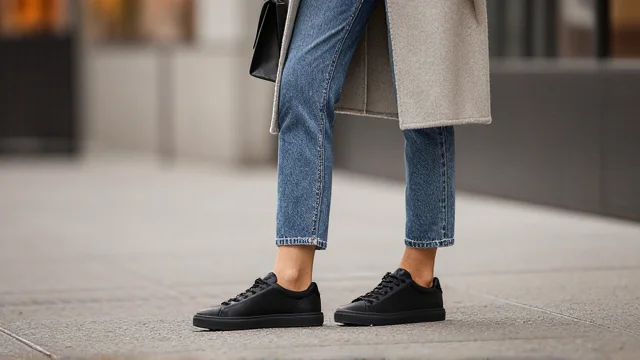

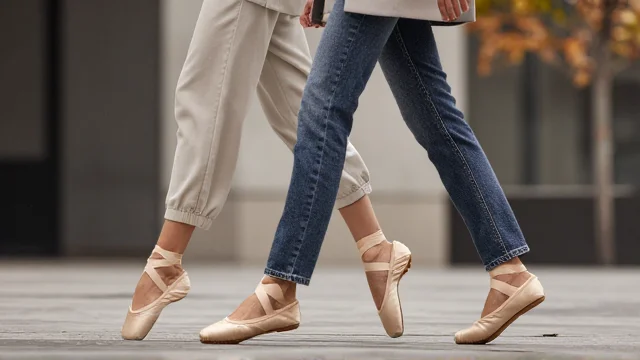
Ballet sneakers are low-profile hybrid shoes that combine the shape or strap details of a ballet flat with a sneaker-style sole. The style is often called a sneakerina. For Canadian wear, treat most pairs as dry-weather fashion shoes unless the manufacturer states otherwise, and choose based on fit, grip, upper material, and wardrobe compatibility.
The silhouette has moved well beyond a short-lived social-media experiment. Current 2026 collections range from sporty Mary Jane shapes to satin, suede, mesh, and lace-up designs, giving shoppers several ways to wear the idea without adopting a full balletcore look.
| Quick decision | Practical starting point |
|---|---|
| What is a sneakerina? | A ballet-flat-inspired upper paired with sneaker construction |
| Easiest first colour | Black, cream, white, grey, or another wardrobe neutral |
| Good Canadian seasons | Dry spring, summer, and early fall |
| Useful details | Secure straps, flexible forefoot, textured outsole, comfortable lining |
| Current mainstream price examples | Roughly CA$100 to CA$130 among several athletic-brand styles checked |
| Main drawback | Delicate uppers and low profiles may be poor choices for snow, slush, or prolonged rain |
| Best styling approach | Let the shoe be the unusual element and keep the rest of the outfit familiar |
Why Ballet Sneakers Are Still Current in 2026
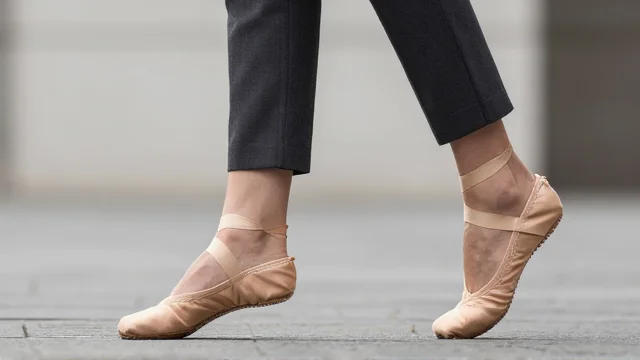
This hybrid has had time to develop. Harper’s Bazaar traces early runway momentum to Simone Rocha in 2021, while British Vogue describes the sneakerina as a major 2025 style that remains prominent in 2026. Current versions now appear across designer labels and athletic brands rather than one narrow corner of fashion.
Canadian shoppers are seeing the same shift. StyleVanta’s 2026 trending shoes guide already places sneakerinas alongside retro runners, colourful trainers, T-straps, and other current footwear directions. The dedicated hybrid deserves more detail because its fit, proportions, materials, and seasonal limits differ from a standard runner.
The strongest reason the look keeps returning is its contrast. A delicate strap, curved toe, or satin finish sits on footwear that still reads sporty. That combination makes the shoe distinctive without requiring an equally trend-heavy outfit.
What Makes a Sneakerina Different?
The name describes a design category rather than one fixed construction. Some versions lean close to a Mary Jane. Others look like slim trainers with ballet-inspired lacing, elastic straps, or softer uppers.
| Feature | Sneakerina | Traditional ballet flat | Low-profile sneaker |
|---|---|---|---|
| Visual shape | Slim and dance-inspired | Delicate and minimal | Sporty and streamlined |
| Common closure | Elastic, strap, laces, or slip-on | Slip-on or strap | Laces |
| Sole | Sneaker-influenced rubber sole | Usually thinner | Athletic or lifestyle sole |
| Styling mood | Sporty plus feminine | Polished or romantic | Casual and sporty |
| Weather usefulness | Varies widely by material | Usually limited | Varies by construction |
Don’t assume the word “sneaker” guarantees the cushioning or support of a running shoe. Fashion hybrids vary. StyleVanta’s chunky sneakers buying guide makes the same practical point about other casual footwear: appearance alone doesn’t tell you how a shoe will feel during longer wear.
What to Check Before You Buy
Start with the way the pair sits on your foot. A strap should feel secure without digging into the instep, while your heel should not lift excessively as you walk.
Then check the construction. A rubber outsole with visible texture can be more useful on city pavement than a nearly smooth fashion sole. Upper material matters too. Mesh and textile can feel light, while satin or pale suede may need more careful wear.
Before ordering online, check:
- Fit information: compare the brand’s measurements and sizing advice with shoes you already own.
- Foot security: look at the heel shape, strap placement, and whether the upper can hold your foot without excessive movement.
- Outsole: check tread, flexibility, and whether the product is intended mainly for lifestyle wear.
- Upper material: decide whether suede, satin, leather, textile, or mesh suits your cleaning habits.
- Return terms: hybrid silhouettes can fit differently from both flats and standard trainers.
Canadian pricing also gives shoppers a useful reference point. At the time of checking, PUMA Canada listed several Speedcat Ballet versions at about CA$110 to CA$120 and H-Street Ballet pairs around CA$100. adidas Canada listed women’s Samba Jane at CA$130, while Taekwondo Mei styles were around CA$120 to CA$130. Prices and stock can change.
Four Easy Ways to Style the Sneakerina
The simplest approach is contrast. Rather than dressing like a ballerina from head to toe, pair the delicate shoe with something familiar, practical, or structured. Recent Vogue and E! styling coverage uses the same tension between feminine footwear and denim, tailoring, utility pieces, or simple basics.
With cropped trousers: A slim shoe gets enough space to be seen when the hem stops above the ankle. Straight and fitted capris are especially easy because the shoe’s low profile keeps the lower half light. StyleVanta’s Capri pants fit and styling guide explains how hem placement changes footwear proportions.
With jeans: Straight denim is a low-risk starting point. Wide-leg jeans can also work, but avoid a hem that completely swallows the shoe. If the pair has ribbons or a noticeable strap, leave enough of the upper visible.
With dresses and skirts: A sneakerina can make a romantic midi feel less formal. It also gives a simple column skirt or slip-style dress a sportier edge. For more guidance on coordinating footwear with softer silhouettes, see StyleVanta’s flowy dress shopping and styling guide.
With relaxed tailoring: Try trousers, a T-shirt or fine knit, and a blazer. The unusual shoe creates interest without requiring a bright print or statement bag. Black, cream, grey, silver, or muted pink can all work if the colour already makes sense with your wardrobe.
Canadian Weather Changes the Decision
A delicate fashion shoe can look perfect in a product photo and still make little sense during a wet November commute.
For most Canadian wardrobes, the easiest wearing window is dry spring through early fall. Satin, light suede, thin textile, and low-cut uppers need more care around rain, dirty snow, slush, and road salt. StyleVanta’s broader footwear coverage also treats sneakerinas as less practical for wet conditions.
That doesn’t mean you need to store them for half the year. Indoor plans, dry fall days, offices, restaurants, and travel can extend their usefulness. Check the exact manufacturer’s specifications instead of assuming every hybrid offers the same weather protection.
For hot-weather outfit ideas around light footwear, StyleVanta’s summer outfits for Canada guide offers several seasonal formulas that can be adapted to a slim sneaker.
Try the 10-Point Canadian Wearability Check
A practical shoe should work after the excitement of the trend wears off. Use this quick StyleVanta score before you buy. It isn’t a scientific rating; it is a wardrobe decision tool.
Give the pair zero, one, or two points in five areas: secure fit, useful outsole, suitable material for your weather, compatibility with at least three existing outfits, and care requirements you can realistically manage.
A score of eight to ten suggests a strong everyday candidate. Five to seven means the pair may be better as an occasional style. Below five, another silhouette will probably earn more wear.
This check also helps separate two shoes that look equally appealing online. The stronger purchase is usually the pair that creates fewer problems once it reaches your closet.
Make the Trend Work for Your Wardrobe
The strongest pair is not automatically the most decorative or recognizable one. Choose the version that works with your clothes, walking habits, climate, and tolerance for cleaning delicate materials.
Start with three outfits you already own. Check the fit and outsole next. Then decide whether the colour and material can survive the conditions in which you plan to wear them.
If the slim profile appeals to you but the hybrid feels too delicate, compare it with retro runners or more substantial trainers in StyleVanta’s current Canadian footwear trend guide. The goal is a shoe you’ll keep reaching for after the trend label stops being the reason you wear it.
Frequently Asked Questions
Are ballet sneakers good for walking all day?
It depends on the exact model. A sneaker-style sole may offer more structure than a thin flat, but cushioning, heel security, flexibility, width, and weight still vary. Check the manufacturer’s construction details and try the pair indoors before committing it to a long walking day.
Are sneakerinas still in style in 2026?
Yes. Major fashion publications continue to feature the silhouette throughout 2026, while brands such as PUMA and adidas currently carry multiple ballet-inspired models in Canada.
What socks work with this type of shoe?
No-show socks keep the line clean when the fit allows them. Ribbed or fine ankle socks can make the shoe feel more intentional with skirts or cropped trousers. Check that added fabric does not make a fitted strap uncomfortable.
Can you wear sneakerinas during a Canadian winter?
For indoor use, yes. For snow, ice, deep slush, or prolonged cold, most fashion-led versions should not replace proper winter footwear unless the manufacturer specifically rates the shoe for those conditions.