
If you searched for black shoes women because you want one versatile pair, start with your real routine rather than the trendiest silhouette. A comfortable sneaker suits walking and casual days, while loafers and flats handle polished everyday outfits. Boots work better in colder weather, and heels make sense when dressier occasions matter most.
For most Canadian wardrobes, the strongest first choice is a comfortable black loafer, clean sneaker, or low boot with good fit and useful grip. Pick the style around where you walk, what you already wear, and the season. Then check sizing, materials, return terms, and price before ordering.
| Shopping decision | Good starting point | Check before buying. |
| Everyday wear | Sneaker or loafer | Cushioning, toe room, outsole |
| Work | Loafer, flat, or low heel | Dress code, comfort, finish |
| Events | Pump, slingback, or block heel | Heel height, stability, straps |
| Fall and winter | Ankle or taller boot | Grip, upper material, weather suitability |
| Summer | Flat, sandal, or lightweight sneaker | Breathability, straps, lining |
| Online order | Familiar brand or measurable fit | Size chart, width, returns, CAD pricing |
Why Black Shoes Women Earn Their Place in a Canadian Wardrobe
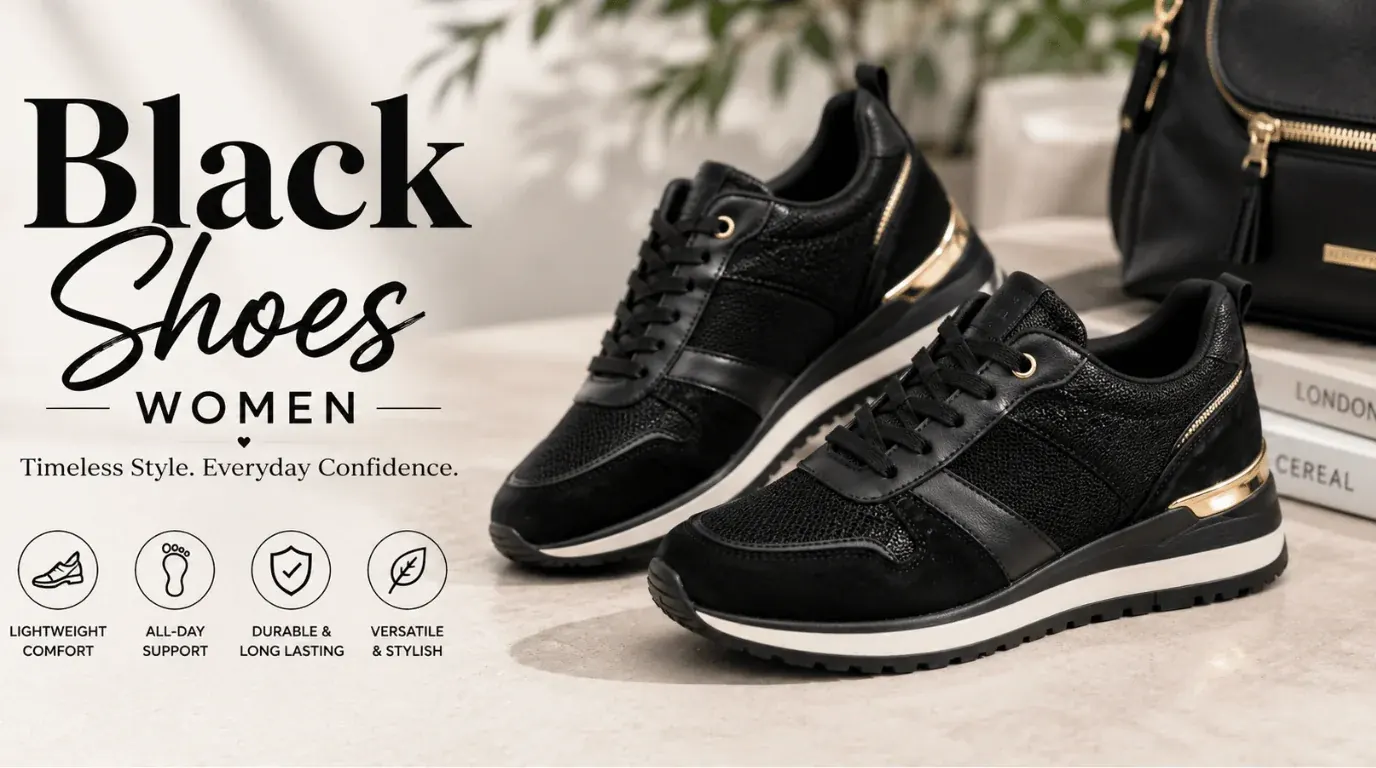
Black shoes women are easy to repeat because they work with many colors, fabrics, and levels of formality. The same basic color can appear on a running-inspired sneaker, polished loafer, pointed pump, ballet flat, ankle boot, or summer sandal.
That variety is visible across current Canadian footwear collections. Coach lists flats, sneakers, loafers, boots, and sandals in black, while adidas covers athletic, lifestyle, platform, and other casual styles. Clarks adds leather shoes and boots, and Camper carries options ranging from ballerinas to loafers and sandals. The advantage is choice. The challenge is deciding which shape deserves space in your wardrobe.
Black Shoes Women: Compare the Main Styles Before You Buy
Start with function. A shoe that looks perfect in a product photo can still be a poor purchase if it doesn’t fit your usual walking distance, clothing, or weather.
| Style | Strong points | Trade-offs | Good choice for |
| Clean sneaker | Casual, easy to repeat, and walking-friendly when well fitted | May feel too informal for some workplaces | Weekends, travel, casual offices |
| Loafer | Polished without a high heel | Stiff pairs may need a careful fit | Work, trousers, denim, skirts |
| Ballet flat | Light, simple, and easy with dresses | Thin soles may offer less support. | Office, dinners, light walking |
| Ankle boot | Useful through cooler seasons | Heavier and warmer in summer | Fall, mild winter days, commuting |
| Pump | Sharp and formal | Fit and heel height affect comfort. | Office, dinners, events |
| Block heel | More stable than a narrow heel | Adds visual weight | Weddings, work, long events |
| Sandal | Light for warm weather | Limited cold-weather use | Summer, vacations, events |
Our recommendation: If you’re buying only one pair, choose the category you could wear at least three times in a normal week. For many people, that means a clean sneaker, loafer, or low ankle boot rather than a highly specialized occasion shoe.
If you prefer athletic silhouettes, StyleVanta’s chunky sneakers guide explains how sole weight, fit, proportion, and Canadian weather affect the choice.
Pros and cons of an everyday black sneaker
Pros
- Works with denim, casual trousers, leggings, and many skirts.
- Dark uppers can look less visually delicate than pale colorways.
- Many brands offer walking, lifestyle, and performance-inspired options.
Cons
- Sporty details may clash with formal clothing.
- Mesh and fabric uppers are not automatically weatherproof.
- A fashionable sole doesn’t guarantee good walking comfort.
Pros and cons of loafers and flats
Pros
- Easy bridge between casual and polished clothing.
- Work well with trousers, cropped pants, skirts, and dresses.
- No high heel is required for a more refined finish.
Cons
- Heel slipping can make a poorly fitted pair frustrating.
- Narrow toe shapes may not suit every foot.
- Thin soles may feel less comfortable during long walking days.
Pros and cons of heels
Pros
- Useful for offices, dinners, weddings, and formal events.
- Different heel shapes let you adjust height and stability.
- Black keeps the color understated when the outfit carries more detail.
Cons
- Height, pitch, straps, and toe shape can limit comfort.
- Thin heels can be awkward on grass or uneven surfaces.
- A dress shoe bought for one event may get little repeat wear.
For a lower-profile dress option, compare StyleVanta’s kitten-heel sandal guide. The site’s nude heels guide also provides useful advice about heel height, fit, stability, and occasion dressing.
What Do Women’s Black Shoes Cost in Canada?
There isn’t one useful national price because construction, materials, brand positioning, and shoe type differ widely. Current Canadian listings show the range clearly. The Shoe Company and Reebok include sale or casual options below C$100. Clarks lists several leather styles around C$115 to C$170. Many On lifestyle and performance shoes sit around C$190 to C$230, while premium and designer footwear can climb much higher.
Treat those figures as current examples rather than a fixed market average. Prices and promotions change. A higher price can reflect materials, construction, brand positioning, or technical features. It doesn’t automatically mean the pair will fit you better.
Before paying more, check what you’re getting.
- Upper and lining materials
- Outsole construction and grip
- Cushioning or footbed design
- Width options
- Care requirements
- Warranty information, when offered
- Canadian return and exchange terms
Choose Fit Before You Choose the Finish
Black leather, suede, mesh, canvas, and synthetic materials can all look good. None can rescue a poor fit. Measure both feet when possible and use the brand’s current size chart. Check width as well as length, especially when comparing pointed shoes, loafers, boots, and structured flats.
Your toes should have usable space. Your heel shouldn’t repeatedly lift while walking unless the design naturally allows movement, as some backless styles do. When buying online, avoid assuming your usual number will fit every brand. Shoe shape, internal construction, and sizing systems vary.
Think About Canadian Weather
One pair doesn’t need to handle every weather condition. For wet spring or fall days, outsole traction and upper materials matter more than color. Smooth leather or suitable synthetic finishes may be easier to clean than delicate suede, depending on the manufacturer’s care directions.
Winter needs a separate check. A fashion boot isn’t automatically an insulated winter boot. Look for the features required for your conditions rather than relying on appearance. Road salt and slush can also mark footwear. Follow the maker’s cleaning instructions, and deal with residue before it sits on the surface for long periods. Summer changes the priorities. Breathability, lighter construction, and comfortable straps matter when temperatures rise.
How to Style Black Footwear Without Making Every Outfit Look Heavy
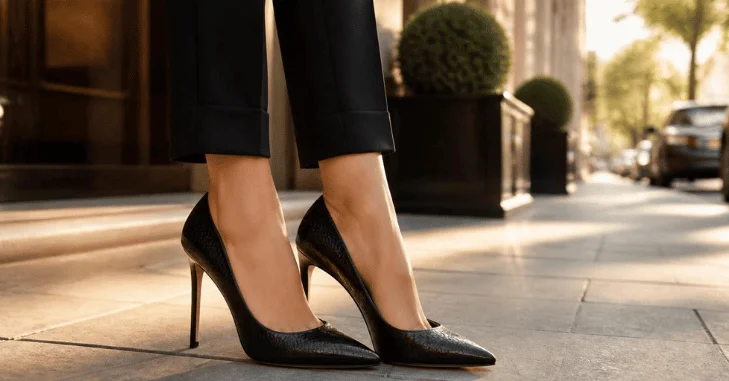
Black can visually anchor an outfit, but the rest of the look doesn’t need to be dark.
With jeans and trousers
Straight jeans with loafers or sneakers create an easy daily combination. Wide-leg trousers can work with boots, sneakers, flats, or heels, but hem length matters. Cropped trousers reveal more of the footwear. That makes toe shape, straps, and sole thickness more noticeable. StyleVanta’s Capri pants guide explains how shorter hems interact with different shoe proportions.
With dresses
A dark shoe can add structure beneath soft fabric. A simple loafer or sneaker makes a romantic dress feel more casual. A pump or low heel shifts the same outfit toward a polished occasion look. For softer silhouettes, the flowy dress shopping guide covers length, fabric, and footwear proportions in more detail.
With an all-black outfit
Texture becomes more noticeable when most of the outfit shares one color. Try mixing matte and smoother finishes rather than matching every surface exactly. Denim, wool, leather-look finishes, knits, satin, and cotton can create separation without introducing another color. You can also let jewelry, a bag, or outerwear provide the contrast.
A Three-Outfit Test Before You Order
Before buying, picture the pair with three outfits you already own. First, match it with your most-worn jeans or trousers. Second, test it against a work, dinner, or social outfit. Third, picture it with the outerwear you use during the season when you’ll wear the shoes most.
If the pair works in all three situations, it has a stronger case for repeat wear. This test also exposes highly specific purchases. A dramatic heel may look great, but a loafer could provide better value if your calendar rarely includes formal events.
What Canadian Online Shoppers Should Check
An online listing should give you enough information to judge more than the color.
Review these details before you order.
- The brand’s size chart.
- Available widths.
- Upper, lining, and outsole materials.
- Heel or platform height.
- Customer-facing fit notes.
- Care instructions.
- Whether prices are shown in CAD.
- Shipping charges.
- Return window and final-sale exclusions.
- Possible duties or cross-border fees.
Try new footwear indoors on a clean surface first when the retailer’s return policy allows it. Walk, turn, and stand long enough to notice heel movement or pressure around the toes.
The Verdict: Which Pair Should You Buy?
Buy for your most common week, not your most ambitious outfit. A clean black sneaker is the strongest starting point when walking and casual dressing dominate. Choose a loafer or flat when you need something polished but low. Pick an ankle boot for cooler-season use, and choose a block heel or pump when events and formal dressing genuinely appear on your calendar.
For most wardrobes, repeat wear, fit, and comfort matter more than owning every silhouette. Once you’ve narrowed the category, compare two or three pairs using the same criteria: fit, sole, material, weather suitability, price, and return terms. That makes the final decision much clearer than comparing photographs alone.
Frequently Asked Questions
What should I check when shopping for black shoes for women in Canada?
Start with the occasion and how much walking you expect. Then check size, width, toe shape, cushioning, upper material, outsole, Canadian pricing, and returns. For cold or wet seasons, confirm whether the exact model is designed for those conditions.
Which black shoe style is most versatile?
There is no single winner for everyone. A clean sneaker suits casual wardrobes, while a loafer works well across office and dress-casual outfits. A low ankle boot becomes useful when cooler weather takes priority.
Are black sneakers good for everyday wear?
They can be. Look for a secure fit, suitable cushioning, enough toe room, and an outsole matched to how you walk. Performance features vary by model, so don’t assume every lifestyle sneaker is designed for long-distance walking.
Can I wear black shoes with light-colored clothes?
Yes. Black can provide contrast with white, cream, beige, pastels, denim, and brighter colors. Keep the shoe shape in proportion with the clothing rather than worrying about a strict color rule.
What type works best with dresses?
Sneakers make dresses more casual. Loafers and flats create a polished daytime look. Pumps and block heels suit dressier occasions, while ankle boots can work with fall and winter outfits.
What should I buy first?
Choose the pair that solves your most frequent footwear need. If you dress most days casually, start with a sneaker. For office wear, consider a loafer or flat. For colder months, a suitable boot may offer more useful wear.