
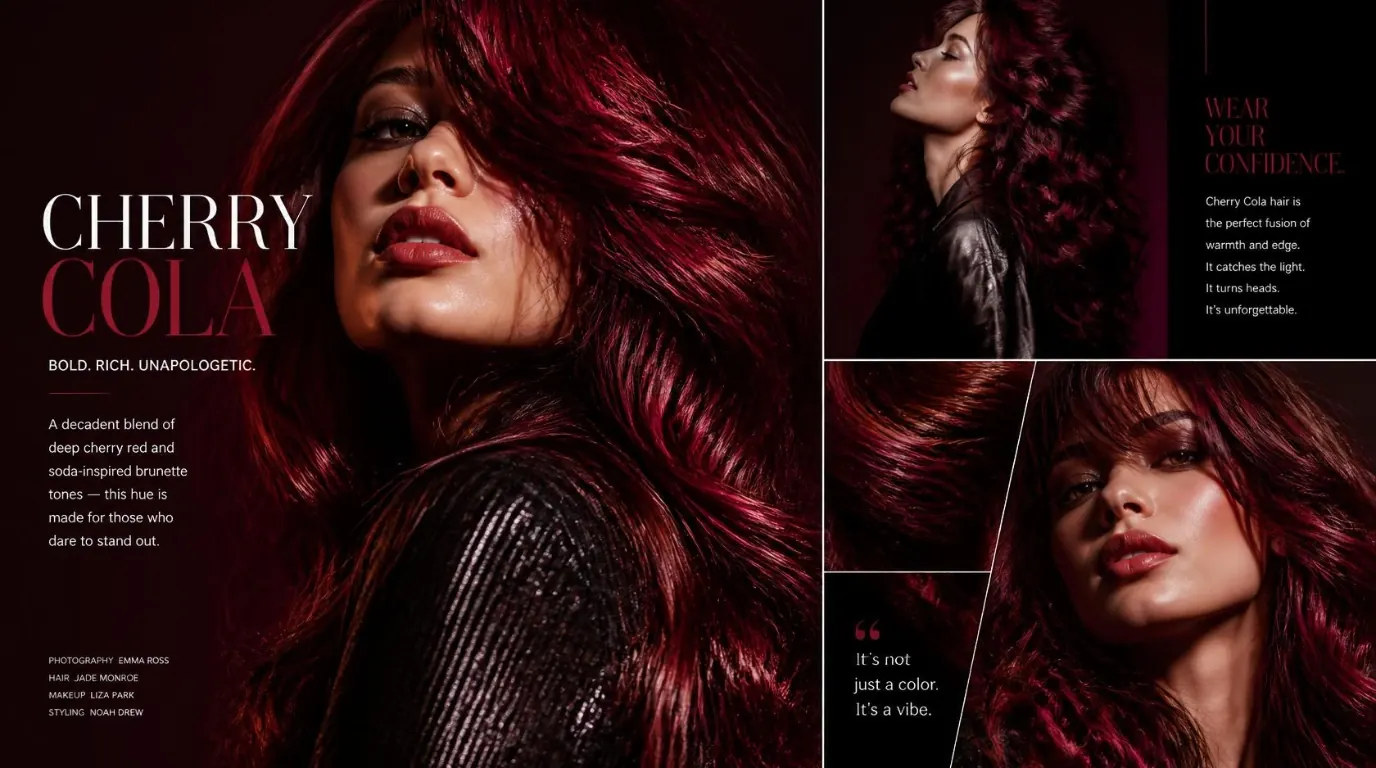
Cherry cola hair is a deep brunette-red color that mixes chocolate brown with cherry, burgundy, or mahogany tones. It can look almost brown in softer indoor light, then reveal richer red reflections outdoors. The look is customizable, so your starting color and preferred brightness matter more than following a single formula.
This shade combines a deep brunette base with cherry, burgundy, or mahogany tones. On dark hair, it can read mostly brown indoors and show more red in daylight. The right formula depends on your starting color, desired brightness, undertone, hair history, and the level of maintenance you want.
| Quick fact | What to know |
| Color family | Brunette-red with burgundy, cherry, mahogany, or red-violet tones |
| Most subtle result | Deep brown base with red reflections |
| Brighter result | More visible cherry or burgundy through the lengths |
| Dark starting hair | Can often keep significant brunette depth |
| Light starting hair | Usually shows red tones more strongly. |
| Lower-commitment route | Deposit-only semi-permanent color or a gloss |
| Placement choices | All-over color, balayage, face-framing pieces, or a rooted blend |
| Main upkeep goal | Protect the tone from unnecessary washing and high heat. |
What Cherry Cola Hair Looks Like in Real Life
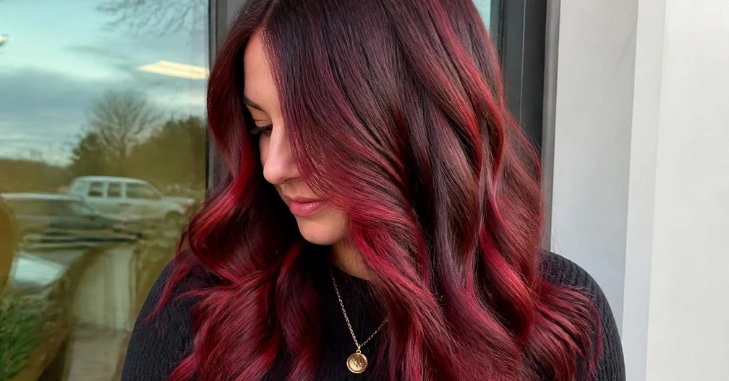
The defining feature is brunette depth. Current color guides describe the look as a dark brown base enriched with red, burgundy, mahogany, or cherry undertones rather than a bright primary red. Recent 2026 inspiration galleries also show versions that remain nearly brunette until light catches the red tones.
Cherry cola hair that makes the color flexible. You can keep it dark and polished, push it toward wine or plum, or make the cherry tone more noticeable. The finish can also be all-over and glossy or broken into ribbons through a natural brunette base.
StyleVanta’s burgundy hair color guide places cherry cola on the brown-forward side of the burgundy family. It is a useful comparison if you are deciding between a brunette result and a stronger red-violet finish.
Start With Your Current Color, Not the Inspiration Photo
Two people can request the same shade and leave with different results because their hair starts from different places. Natural depth, old permanent color, bleach, porosity, and grey coverage needs can all affect the color plan.
| Starting point | Likely direction | What to discuss |
| Black or deep brown | Subtle wine or cherry reflection | Whether you want visible red without major lightening |
| Medium brown | Clearer red-brown dimension | All-over color versus ribbons or gloss |
| Light brown | Brighter cherry or burgundy | How deep do you want the finished brunette base? |
| Blonde | Much more noticeable red | Adding enough brown depth to avoid an overly bright result |
| Previously lightened hair | Strong pigment uptake is possible. | Strand testing and evenness |
| Previously dyed dark hair | Results are less predictable. | Whether existing artificial color must be adjusted first |
Dark natural hair does not necessarily require bleach to achieve a strong brunette-red effect. A brighter or more vivid result can be a different story. Hair.com notes that virgin dark hair can achieve a burgundy-toned result without bleach, while previously colored hair may require additional lifting depending on the target shade.
If you want a lower-commitment tonal change, read StyleVanta’s semi-permanent hair color guide. Deposit-only formulas can deepen or shift tone, but they do not make naturally dark hair lighter.
Choose Your Undertone Before You Choose the Brightness
Start by deciding whether you want the red to lean cool, warm, orbalanced. A cooler version uses more burgundy, wine, berry, or red-violet. It can stay dark while giving the hair a plum-like reflection. A warmer version moves toward mahogany, dark cherry, or red-brown.
Skin undertone can help guide the choice, but it should not become a rigid rule. L’Oréal notes that warmer interpretations can complement warm undertones, while burgundy-heavy versions can work well with cooler complexions. The shade is flexible enough to be adjusted across a broad range of skin tones.
Your wardrobe and makeup can matter too. If you often wear cool pinks, berry lip colors, black, and silver, a wine direction may feel familiar. If you favor warm browns, gold, peach, or earthy colors, mahogany may integrate more easily.
7 Shade and Care Decisions to Make Before You Color
- Choose how dark you want to stay. Decide whether people should read your hair as brunette first or notice the red immediately.
- Pick your red direction. Save references that clearly show burgundy, cherry, mahogany, or red-violet rather than relying on the trend name alone.
- Decide where the color should sit. All-over color creates the greatest change. Ribbons, balayage, or face-framing pieces can keep more of your natural base visible.
- Set your commitment level. A semi-permanent formula can test a tonal shift. Demi-permanent or permanent color may suit longer-term plans, depending on your goals and hair history.
- Compare photos in different lighting. Deep red-browns can change dramatically between indoor light and daylight. A reference that looks perfect outdoors may appear much darker inside.
- Plan for the grow-out. Keeping a root close to your natural depth can make new growth less obvious than a dramatic root-to-end change.
- Plan the care routine before the appointment. Color-treated hair benefits from sensible washing, moderate heat, conditioning, and any aftercare instructions given by your colorist or product manufacturer.
If you want dimension rather than a single solid shade, StyleVanta’s balayage-versus-highlights comparison can help you decide how much separation and grow-out you want.
What to Tell Your Colorist at a Canadian Salon
The trend name alone leaves room for interpretation. Bring two or three photos and explain what you like about each one. Point out the depth, brightness, placement, and undertone rather than asking only for “dark red.” A clearer request could sound like this:
“I want to stay brunette, but I’d like a deep cherry-burgundy reflection that becomes more visible in daylight. I don’t want a bright copper or vivid red. I prefer natural-looking depth at the roots and richer color through the lengths.”
Tell your colorist about permanent dye, box color, bleach, henna, straightening treatments, or other chemical services. That history can affect which route is realistic for your hair.
How to Keep the Red-Brown Tone Looking Fresh
Red and burgundy tones can lose their visible intensity as the color wears off, so maintenance starts with avoiding unnecessary stress on processed hair. Wash according to your scalp and hair needs rather than following a fixed schedule.
Use products intended for color-treated hair and avoid excessive high-heat styling. Lukewarm or comfortably cool water is also a practical choice. If you use hot tools, apply suitable heat protection and follow the timing recommended for any color-refreshing product.
A sulfate-free cleanser may suit some coloured or dry hair, but the label alone does not tell you whether a shampoo will work for your scalp and lengths. StyleVanta’s sulfate-free shampoo guide explains how to judge the full formula instead of choosing by one ingredient category.
Tonal refresh timing varies. Permanent, demi-permanent, and semi-permanent products do not fade at the same rate. Semi-permanent formulas alone can differ substantially in their expected number of washes, so follow the specific product rather than a universal calendar.
Cherry-Brown Versus Burgundy: What Is the Difference?
The two families overlap, but they do not always create the same visual balance.
| Feature | Cherry-brown direction | Burgundy direction |
| Dominant impression | Brunette first | Red-violet first |
| Base | Chocolate or deep brown | Brown, red, or violet |
| Red character | Cherry or mahogany | Wine, plum, berry, violet |
| Indoor appearance | Often reads brown | More likely to read red-purple |
| Good choice if | You want a softer brunette transition | You want stronger wine or a violet color. |
You do not need to choose a textbook category. A colorist can place your formula between the two. The useful question is whether you want more brown, more red, or more violet.
Coloring at Home? Make Safety Part of the Plan
At-home coloring can make sense for a straightforward tonal change, but follow the product instructions exactly. Do not copy a mixing ratio or processing time from another brand or an online formula.
Health Canada requires relevant permanent and semi-permanent hair dyes to carry warnings about possible skin irritation and instructions for a preliminary sensitivity test. Its guidance states that the test should be repeated before each use because sensitivity can develop after prior exposures.
Stop using a product if the test area becomes red, itchy, burning, blistered, or irritated. If you have heavily processed hair, an uneven base, or a major color correction in mind, a professional assessment gives you more information before another chemical service.
Choose the Version You Will Still Like After the Trend Moves On
A good red-brown result is less about copying the darkest or brightest photo online and more about controlling depth, undertone, placement, andcommitment. Start with your current base. Choose whether you want brunette or red to dominate.
Then decide how much maintenance fits your routine. If you are still comparing color families, use StyleVanta’s burgundy and semi-permanent color guides to narrow the options before your next salon consultation or at-home purchase.
Conclusion
Cherry cola hair is a versatile choice if you want the richness of brunette hair with a noticeable hint of cherry, burgundy, or mahogany color. Its biggest advantage is how easily the shade can be customized. You can keep the result dark and subtle, create stronger red reflections, or add brighter pieces through balayage or face-framing sections.
The best result starts with your existing hair rather than the inspiration photo. Your natural depth, previous color, lightening history, porosity, and desired brightness all influence the final shade. If you have dark hair and want only a soft red reflection, a deposit-only color or gloss may be enough. If you want a brighter cherry or burgundy finish, controlled lightening may be necessary.
Frequently Asked Questions
Does Cherry Cola Hair Need Bleach?
Not always. Natural medium or dark brunette hair can often take on a deeper red-brown or burgundy reflection without first becoming blonde. A brighter result on very dark hair may need some lift. Existing permanent dark color can also change the process.
Does this color work on black hair?
Yes, but expect a subtle result if you do not lighten the base. The red may appear mainly as a reflection in strong light. If you want a clearly visible burgundy or cherry result indoors, discuss whether controlled lighting is needed.
What skin tone suits a cherry-brown shade?
There is no single required skin tone. Cooler burgundy and red-violet formulas can complement cool undertones, while mahogany and warmer cherry tones can suit warmer undertones. Neutral versions can sit between them.
Is it the same as burgundy?
Not exactly. Burgundy usually emphasizes wine, violet, or red-purple. This look normally keeps more chocolate-brown depth. The categories overlap so that salon formulas can fall anywhere between them.
How long will the color last?
It depends on the formula, starting hair, porosity, washing routine, and color intensity. A deposit-only semi-permanent product may fade over several washes, while permanent color remains as the hair grows, even though its visible tone can soften.
What should I bring to a salon appointment?
Bring two or three reference images, preferably showing similar starting hair and different lighting. Explain whether you want brunette depth, visible burgundy, warm mahogany, or cool red-violet. Also, tell your colorist about any previous color or lightening services.