
Choosing hair care gets confusing when shelves offer lightweight, moisturizing, repairing, volumizing, color-safe, and curl-focused formulas. The right conditioner should make your hair easier to detangle and manage without leaving it flat, coated, or greasy.
For Canadian shoppers, the best starting point is your hair type, current damage, scalp oil level, and budget. Fine or straight strands often suit lighter formulas. Dry, curly, coily, bleached, or heat-damaged lengths usually need more conditioning support.
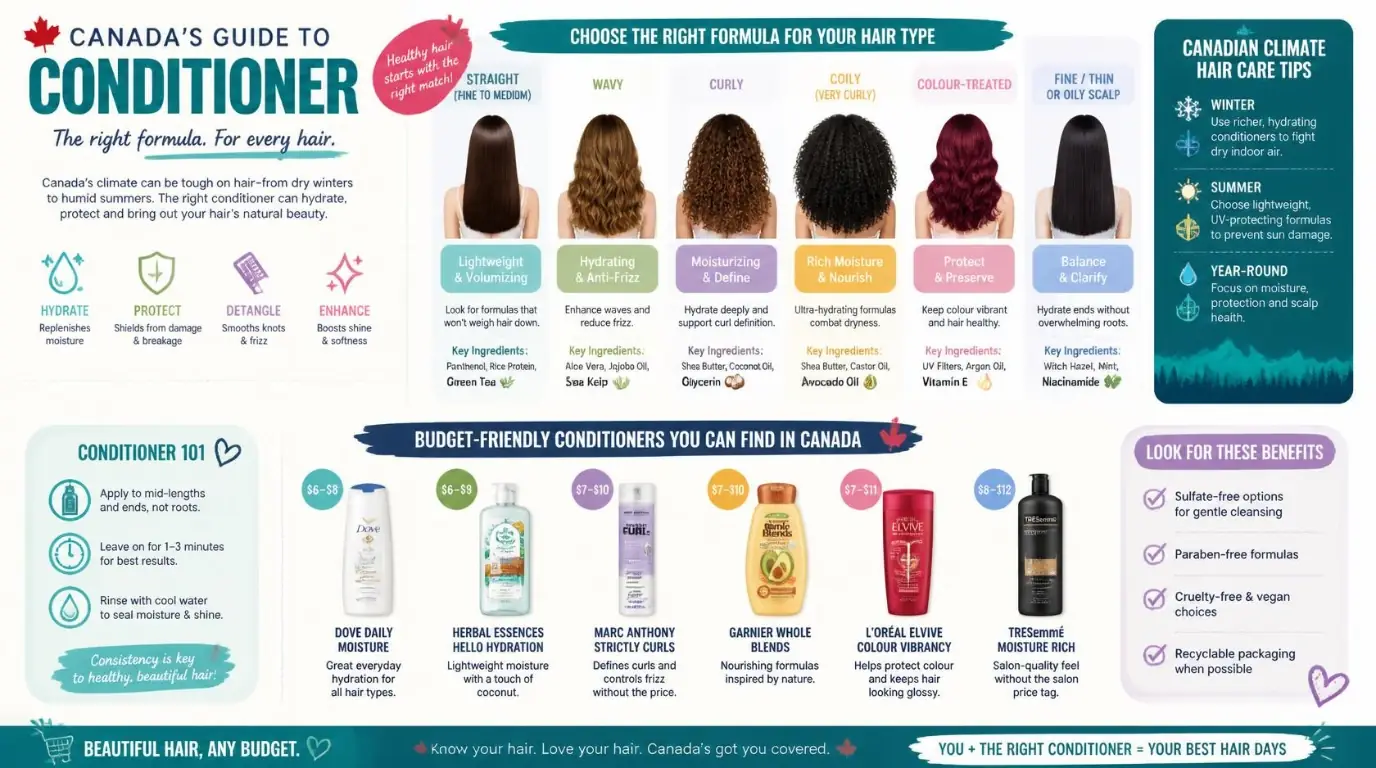
Choose a formula based on what your lengths need after washing. Fine or oily-prone hair usually benefits from lighter products focused on the ends. Dry, curly, coarse, colored, or damaged hair often responds well to richer formulas. Compare product weight, ingredients, Canadian price, and how your hair feels after several wash days.
| Hair needs | Practical starting point | Where to apply | Typical Canadian price tier* |
| Fine or straight | Lightweight rinse-out formula | Mainly mid-lengths and ends | CA$5-30 |
| Dry or coarse | Rich moisturizing formula | Through the lengths | CA$8-50+ |
| Curly or coily | Moisture-focused or detangling formula | Through the full length | CA$10-50+ |
| Colored or damaged | Smoothing or strengthening formula | Focus on vulnerable lengths. | CA$10-70+ |
| Oily roots, dry ends | Light formula | Keep mainly off the scalp. | CA$5-30 |
| Extra-dry or tangled hair | Rinse-out plus suitable leave-in care | Mid-lengths to ends | Varies by product |
*These are shopping ranges, not fixed national averages. Current Canadian listings range from mass-market options under CA$10 to prestige products above CA$60.
What Hair Conditioning Products Actually Do
Hair-conditioning formulas mainly improve softness, slip, detangling, and manageability. Dermatologists recommend conditioning after washing because it moisturizes and helps make strands easier to handle.
The cosmetic science behind that effect is fairly practical. Many formulas use positively charged conditioning agents that deposit on negatively charged areas of the hair surface. That coating can reduce friction and static while helping the cuticle feel smoother.
Conditioner: This matters most when hair feels rough after coloring, heat styling, brushing, chemical services, or repeated washing. Conditioning cannot permanently rebuild a damaged fiber, but it can improve how the surface feels and behaves.
If your routine includes chemical waving, StyleVanta’s wavy perm care guide explains why gentler washing, regular conditioning, and lower-friction handling matter after processing.
How to Choose a Conditioner for Your Hair Type
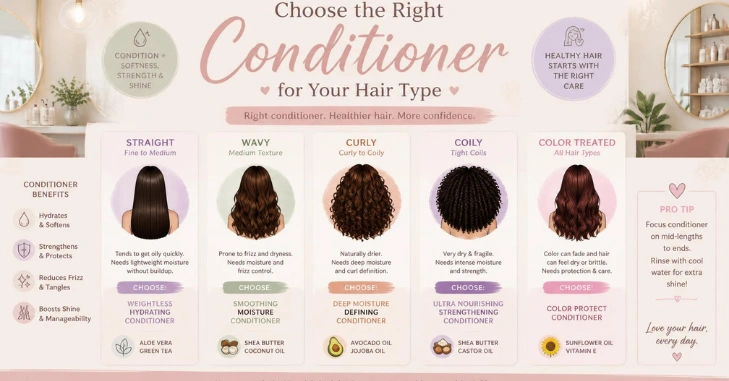
Start with the problem you can see or feel. Your curl label is useful, but strand thickness, damage, density, and scalp oil also affect your choice.
Fine or straight hair
Fine strands can lose movement when layered with rich creams, heavy oils, or too much product. Start with a lightweight formula and use a modest amount from the mid-lengths downward.
The American Academy of Dermatology recommends focusing conditioning on the ends when hair is fine or straight. StyleVanta’s straight-hair routine guide also explains how strand thickness and oily roots can change the amount of moisture your lengths need.
Curly, coily, or naturally dry hair
Curly textures often need more moisture because natural scalp oils do not travel down bends and coils as easily. A richer cream can improve slip during detangling.
The AAD recommends conditioning the full length of hair when it is dry or curly. Its curly-hair guidance also suggests ingredients such as glycerin and fatty alcohols for moisture-focused care.
If you wear your texture short, StyleVanta’s short curly hair guide can help you match product weight to density and curl shape.
Oily roots with dry ends
You do not need to treat your scalp and ends as one zone. Cleanse where oil collects, then keep most conditioning products on the lengths. A lightweight texture can soften dry ends without coating oily roots.
StyleVanta’s Canadian shampoo for oily hair guide covers the cleansing side of this routine and explains why scalp needs can differ from the last few inches of hair.
Colored, bleached, or heat-damaged hair
Damaged fibers usually create more friction and can feel rougher when wet or dry. Smoothing agents, emollients, silicones, fatty alcohols, and other conditioning ingredients can improve surface feel and combability.
Look for a formula labelled for coloured or damaged hair if those are your main concerns. Product claims vary, so check the label rather than assuming every “repair” formula works the same way.
Rinse-Out, Leave-In, and Deep Treatments: What Is the Difference?
These categories are related but not interchangeable.
| Type | Main role | Best use |
| Rinse-out conditioners | Daily or regular softness and detangling | After shampooing |
| Leave-in products | Added slip, frizz control, or styling support | After washing on damp hair |
| Deep treatments or masks | Richer periodic conditioning | When lengths need more intensive cosmetic care |
Do not turn a rinse-out product into a homemade leave-in by diluting it. Dermatologists note that rinse-off and leave-in products have different formulations and should be used as directed. A leave-in can be useful for long, curly, color-treated, heat-styled, dry, or tangle-prone hair. Start with a small amount because using too much can make fine strands look greasy.
Ingredients Worth Recognizing on the Label
You do not need to memorize a long list of ingredients. A few groups explain much of what these products do.
Cationic conditioning agents such as behentrimonium chloride and cetrimonium chloride can reduce static and improve slip.
Fatty alcohols such as cetyl alcohol and stearyl alcohol help give formulas body and a softer feel. Despite the word “alcohol,” these ingredients are different from short-chain alcohols often associated with a drying feel.
Silicones and emollients can coat and lubricate the hair surface, potentially improving shine and reducing friction.
Humectants, including glycerin, help formulas retain moisture and maintain a moisturized feel.
Ingredient lists matter, but the finished formula matters more than one fashionable ingredient. Two products containing the same headline ingredient can feel completely different because concentration and supporting ingredients vary.
What Do Conditioners Cost in Canada?
Canadian pricing spans a wide range. Current Walmart Canada listings include several mass-market bottles priced between CA$5 and CA$8, with smaller sizes priced lower. Well.ca lists many natural and specialty options at roughly mid-teens prices. Sephora Canada carries prestige formulas priced from around CA$29 to CA$60-plus, with larger salon sizes sometimes exceeding CA$100.
That does not mean a CA$60 bottle will outperform a CA$7 option on your hair. Pay for the characteristics you need: texture, detangling, color compatibility, fragrance preference, size, and the amount of product you use per wash.
Availability is broad. Current Canadian category pages show options at Walmart, Real Canadian Superstore, Well.ca, Sephora, professional hair retailers, and pharmacies.
When comparing value, look at price per 100 mL, not bottle price alone. A large salon bottle may cost more upfront yet last longer than a small prestige package.
How to Use It Without Weighing Hair Down
A simple routine works for most people:
- Shampoo according to your scalp and buildup needs.
- Rinse thoroughly.
- Gently squeeze excess water from the lengths.
- Apply the conditioning product where your hair needs slip or softness.
- Use less on fine strands and more cautiously near oily roots.
- Follow the product’s recommended contact time.
- Rinse as directed.
- Detangle gently rather than pulling through knots.
Dermatologists recommend gentler handling because wet hair is more vulnerable to damage from rough brushing and friction.
If mineral deposits or hard-water exposure are making your hair feel coated, read StyleVanta’s chelating shampoo guide before adding stronger cleansing products. Deep cleansing and daily conditioning solve different problems.
Choose by Hair Need First, Price Second
Do not begin with the most expensive bottle or the ingredient getting the most attention online. First, decide whether your hair needs light detangling, richer moisture, damage-focused smoothing, or help with dry ends. Then set a Canadian price range and compare formulas within that group.
Your Next Step
Identify your hair type and main concern, choose the lightest suitable formula, and compare price per 100 mL across Canadian retailers. Conditioner: Give the routine several wash days before deciding whether you need more or less conditioning.
Frequently Asked Questions
Should I use conditioner every time I shampoo?
Dermatologists generally recommend conditioning after washing. Your amount and placement can change with hair type. Fine or straight hair may need product mainly on the ends, while dry or curly hair may benefit from coverage through the lengths.
Should conditioning products go on the scalp?
Not automatically. If your roots become flat or greasy, focus on the mid-lengths and ends. Certain products are specifically made for scalp use, so follow the directions on the package.
Can a formula make hair greasy?
Yes. Too much product or a texture that is too rich for your strands can create a heavy finish. Fine hair usually needs smaller amounts than thick or coarse hair.
Are expensive formulas better?
Not by default. Prestige products may offer different textures, fragrances, specialty ingredients, packaging, or salon positioning. The better choice is the one that gives your hair the softness and manageability you want without unwanted buildup.
What should I choose for dry hair?
Start with a richer moisturizing formula and focus it on the dry lengths. Curly, coarse, bleached, colored, or frequently heat-styled hair may also benefit from additional leave-in care when the product is designed for that purpose.
What if my hair still breaks or feels impossible to manage?
Review heat exposure, chemical processing, rough detangling, and your cleansing routine. If persistent breakage, hair loss, scalp irritation, or other symptoms continue, a dermatologist can help identify whether the issue goes beyond cosmetic hair care.