
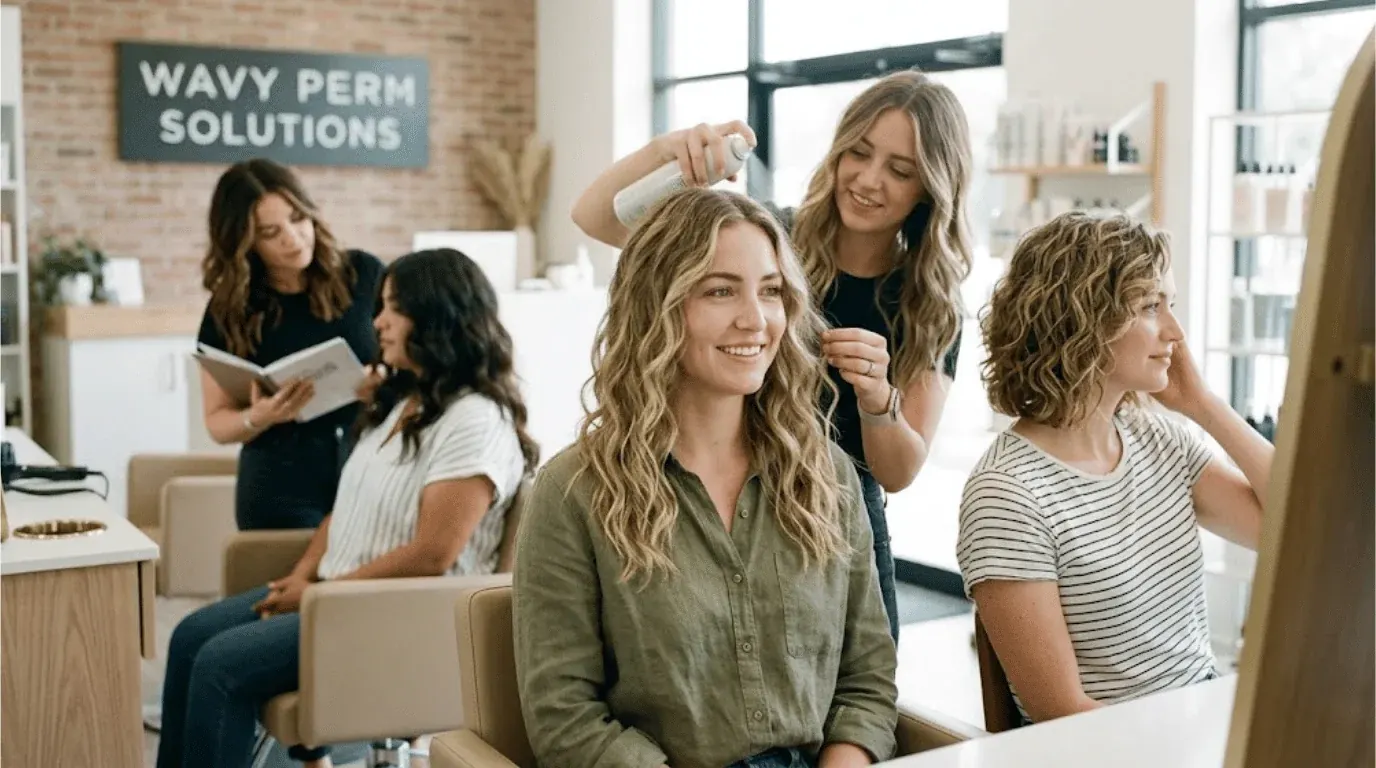
A wavy perm is a salon chemical treatment that reshapes straight or mildly textured hair into loose S-waves instead of tight ringlets. Rod size, wrapping method, hair condition, and processing technique control the final pattern. Most people choose it for lasting movement, extra body, and less reliance on daily heat styling.
The finish can range from subtle bends to defined beachy waves. Your best option depends on your hair’s condition, length, and density, as well as how much styling you want to do at home.
| What to know | Typical expectation |
| Finished look | Loose bends, S-waves, body, or beachy texture |
| Best starting point | Healthy hair with enough strength for chemical processing |
| Visible lifespan | Commonly around 3- 6 months |
| Appointment length | Often 2+ hours; heated methods can take about 2.5 to 3 hours |
| Canadian price snapshot | Basic or body-wave services often start near CA$100- 150; longer or specialty services cost more |
| Main caution | Bleached, fragile, or heavily processed hair may not be suitable |
The 3, 6 month range is common across current hair-care guidance, though loose patterns can relax sooner. Canadian salon menus also show wide price differences based on length, technique, and location.
| Decision | What matters most |
| Choosing the look | Show your stylist the wave size and movement you want |
| Checking suitability | Hair condition matters more than the trend |
| Setting a budget | Length, density, technique, and salon all affect price |
| Planning maintenance | Conditioning and low-heat styling help the finish look better |
| Managing expectations | A loose pattern still needs some styling at home |
What a Wavy Perm Actually Does
The treatment changes the bonds that help determine your hair’s shape. Your stylist wraps sections around rods, applies a chemical solution, and then uses a neutralizing step to set the new form. Larger rods and looser wrapping techniques generally create broader movement instead of tight curls.
That makes the consultation important. Two people can request “soft waves” and leave with different results because their hair length, density, previous treatments, and rod choices differ.
A photo is often more useful than a service name. Show the stylist how loose you want the bends, where you want volume, and whether you prefer polished S-shapes or a tousled finish.
Which Soft-Wave Style Should You Ask For?
Salon terminology overlaps, so focus on the finished result rather than the label alone. A body wave and a beachy finish may use similar techniques but create different amounts of movement.
| Technique | Typical look | Often suits | Main consideration |
| Body wave perm | Broad bends and soft volume | Fine or flat medium-to-long hair | Subtle patterns may relax sooner |
| Beach wave perm | Tousled, casual waves | Medium or long hair | Ask how the salon creates the uneven texture |
| Digital perm | Defined S-waves that show more when dry | Medium-to-long hair | Uses heat and usually costs more |
| Loose cold wave | Soft curl or wave set with larger rods | Several lengths and textures | Result depends heavily on rod size and wrapping |
Large rods are commonly used for softer movement. Heated digital methods tend to create waves that appear more defined once the hair dries. Current salon guides also stress that these methods are not interchangeable across all hair types.
Your haircut affects the result, too. Long layers can help waves move rather than sit in one heavy shape. Short hair can still gain texture, but there is less length available for a broad S-pattern.
Who Is a Good Candidate?
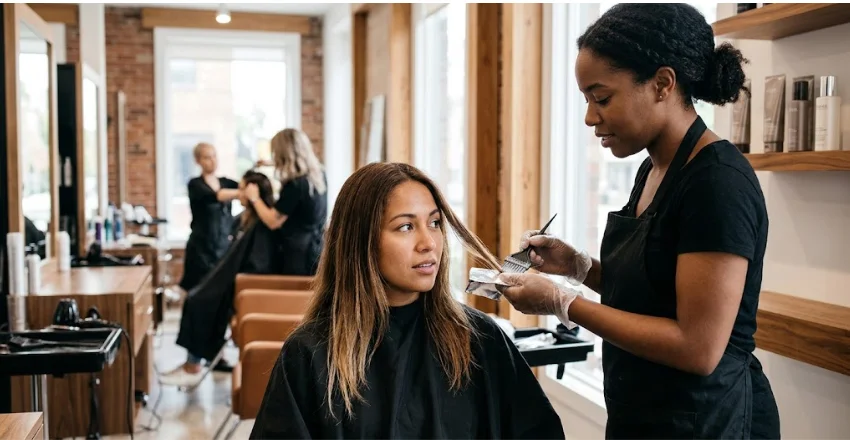
Healthy hair gives a stylist the safest starting point. Tell them if you have bleach, highlights, chemical straightening, repeated colour correction, or noticeable breakage.
The American Academy of Dermatology warns that chemical treatments can leave hair dry and brittle. Canadian salon guidance also treats bleached or overprocessed hair as a major concern, especially for heated methods.
A stylist may perform a strand test when your chemical history raises concerns. That small test can show whether your hair can tolerate the planned process before treating your whole head.
Your hairline and parting also affect how the new texture sits around your face. If your front growth pattern is strong, StyleVanta’s widow’s peak styling guide explains how part direction, layers, and texture can change the finished shape.
What It Costs in Canada
There is no single, useful national price because salons charge based on technique, length, density, and stylist level. The current Toronto and Vancouver menus show why you should ask for a quote rather than rely on a single online average.
Techne in Vancouver lists a body service at CA115 and a nuance wave from CA125. Toronto’s 105 Hair Studio lists curly or wavy services from CA150toCA265. Canada Styles lists body services from CA150 to CA400 and curl or wave services from CA200 to CA450.
Starting prices for heated digital services are often higher. Current examples include CA140 at one Toronto salon, CA245 at Techne, CA250 at Muse, and CA260 at Hair District. Some salons charge far more as hair length increases.
Treat those figures as current market examples, not a national average. Ask whether the quote includes the haircut, shampoo, finishing, treatment products, and any long-hair surcharge.
How Long the Waves Last
Three to six months is a practical expectation for many chemical wave services. Your visible result may soften sooner if the pattern starts loose, your hair grows quickly, or your routine involves frequent heat styling and washing.
The word “permanent” can also cause confusion. The treated section has been chemically reshaped, but your new growth retains its natural texture. That creates a gradual difference between the roots and the older lengths.
A loose pattern often grows out more gently than a tight curl because the contrast at the roots is less obvious. That can make the style easier to live with between salon visits.
Aftercare That Keeps the Pattern Soft
Follow your stylist’s exact first-wash instructions. Many salon guides recommend leaving the new shape undisturbed for about 48 hours. Your stylist may give different directions based on the formula used.
After that period, handle your hair with less friction and heat. Use conditioner consistently, blot excess water instead of rubbing your hair vigorously, and let it air-dry when your routine allows. The AAD recommends using conditioner after shampooing and adopting gentler drying habits to reduce damage.
Light mousse or curl cream can help define movement without weighing the hair down. A diffuser on low heat can also support the pattern. Fine hair often needs lighter products than thick or coarse hair.
Sophie Palmer’s StyleVanta author page covers hair care, styling techniques, product recommendations, and trend updates.
What to Tell Your Stylist Before the Appointment
A strong consultation is specific. Give the stylist enough information to assess both the look you want and your hair’s condition.
- Bring two or three reference photos showing hair similar in length and density to your own.
- Explain your colour, bleach, straightening, and other chemical-treatment history.
- Indicate whether you want root volume, mid-length movement, or waves at the ends.
- Ask what rod size and technique the stylist plans to use.
- Ask how the result should look when air-dried compared with when it is diffused or styled.
- Request the full price, including length charges and finishing services.
- Ask whether a strand test is appropriate before committing.
Reference photos showing a similar hair texture are especially useful. A look shown on thick, straight hair can behave differently on fine or naturally textured hair.
Do not hide previous bleach or straightening because you are worried the stylist may say no. Your chemical-treatment history affects what your hair can safely tolerate.
Your Next Step
Save two or three reference photos, then book a consultation before choosing a service by name. Ask the stylist to explain the expected wave size, maintenance requirements, limitations based on your hair’s condition, and the total price for your length.
A good consultation may confirm the look you want or steer you toward a safer option. Either outcome is useful. For more hair and personal-style ideas, browse StyleVanta’s latest fashion and hair coverage.
Frequently Asked Questions
Does a wavy perm damage hair?
Chemical reshaping can weaken and dry the hair shaft. The risk rises when hair is already fragile or when several chemical treatments are combined. A professional assessment is especially important for bleached or heavily processed hair.
How long do soft waves usually last?
A common estimate is three to six months. Loose patterns can relax earlier, while hair growth gradually creates straighter roots. Your starting texture, service method, and home-care routine all affect how the result ages.
Can short hair get soft waves?
Yes, provided there is enough length for the chosen rod and wrapping method. On short cuts, the effect often appears as texture, lift, or bend rather than long beach waves.
Can coloured hair be chemically waved?
Possibly, but condition matters more than colour alone. Healthy, gently coloured hair may be suitable after an assessment. Bleached, repeatedly highlighted, brittle, or overprocessed hair often requires more caution and may be unsuitable for the service.
Is a body wave the same as a beach wave?
The terms can overlap from salon to salon. A body wave usually emphasizes broad movement and volume. A beachy finish often aims for a more relaxed, tousled pattern. Show a reference photo so the stylist understands the result you mean.