

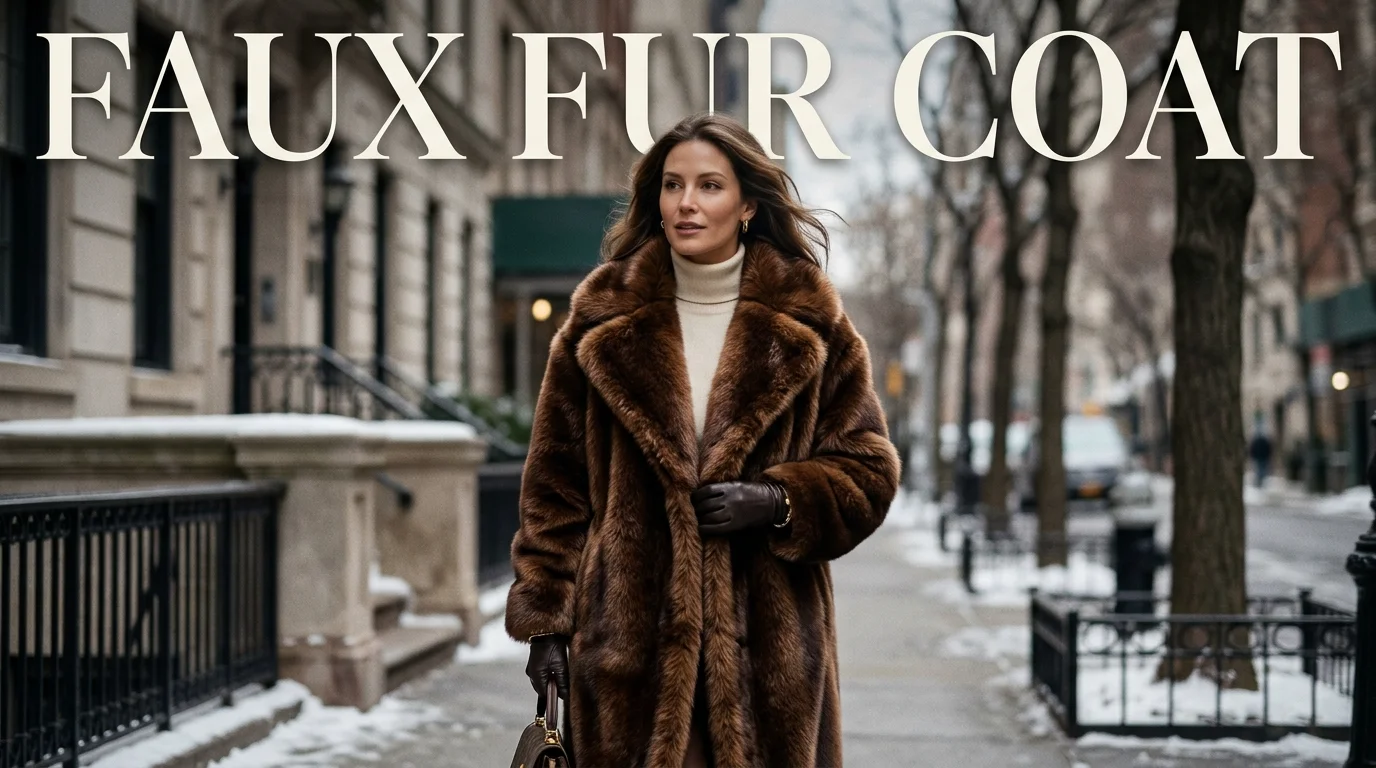
A faux fur coat can add warmth, texture, and personality to a Canadian winter wardrobe. The best choice depends on construction, lining, length, fit, and your usual weather. A plush look alone doesn’t guarantee useful insulation or lasting quality.
Direct answer: Choose synthetic fur outerwear by checking fibre content, pile density, lining, closures, fit, and length. For Canadian winters, leave room for knitwear and consider wind exposure before buying. Mid-thigh styles offer versatile coverage, while longer coats provide more protection and cropped designs suit milder days or indoor-focused routines.
| Buying factor | What to look for | Why it matters in Canada |
|---|---|---|
| Material | Clear fibre-content label | Helps you understand construction and care |
| Pile | Dense and even | Can affect feel, appearance, and warmth |
| Lining | Smooth, secure lining | Improves comfort over winter layers |
| Fit | Room for a sweater | Prevents pulling through shoulders and sleeves |
| Length | Cropped, mid-thigh, or long | Changes warmth, movement, and styling |
| Closures | Secure buttons, snaps, or zip | Helps reduce cold-air gaps |
| Care | Clear garment instructions | Synthetic piles can react poorly to excess heat |
| Price | Compare construction and use | A higher price does not guarantee better warmth |
Key Takeaways
- Judge the entire coat rather than softness alone.
- Check fibre content, lining, closures, and pile density.
- Try the fit over the layers you normally wear.
- Match coat length with your commute and winter routine.
- Treat heat carefully when cleaning synthetic pile.
- Choose a colour and shape you can wear repeatedly.
- Compare quality and construction before comparing discounts.
How to Choose a Faux Fur Coat for Canadian Weather
Start by thinking about how much time you usually spend outside. A short walk from a car needs less protection than a long transit commute. Wind, snow, temperature, and underlayers also change how warm outerwear feels.
Synthetic fur varies widely in weight, density, backing, and lining. Some pieces work mainly as fashion layers, while others provide meaningful cold-weather coverage. StyleVanta’s broader fur coat buying guide also explains how material and construction influence winter use.
Canadian textile products must generally provide fibre-content information before consumer sale. Fibres representing at least five percent by mass generally need identification by generic name and percentage. That makes the label a useful starting point before judging marketing descriptions.
Compare Cropped, Mid-Length, and Long Styles
Length changes both the appearance and practical use of textured outerwear. A shorter jacket gives easier movement, while a longer design covers more of your body. Your commute, footwear, and favourite outfits should guide your choice.
| Style | Main advantages | Possible drawbacks | Best suited to |
|---|---|---|---|
| Cropped | Easy movement, defined waist, trend-focused | Less lower-body coverage | Cars, events, milder days |
| Hip length | Versatile and easy to layer | Moderate coverage only | Daily casual wear |
| Mid-thigh | Good balance of movement and warmth | Can feel bulky in dense piles | Commuting and everyday winter outfits |
| Knee length | More cold-weather coverage | Heavier and less convenient in cars | Longer outdoor periods |
| Long | Maximum visual impact and coverage | Can meet slush or wet sidewalks | Dry cold days and dressier outfits |
A mid-thigh design is the most flexible starting point for many wardrobes. It provides more coverage without creating the bulk of a full-length style. Cropped versions make more sense if your winter routine is mainly indoors.
Longer designs suit people who value coverage and dramatic proportions. They require more attention around wet sidewalks, public transit, and vehicle seats. Consider your typical week rather than choosing length based on a styled photograph.
Check the Material, Pile, and Lining

Many synthetic fur garments use polyester, acrylic, or blended fibres. Many current Canadian products use polyester constructions, although details differ by brand. Always rely on the product label rather than assuming every plush coat uses the same materials.
Look closely at how dense and even the pile appears. Sparse areas can expose the textile backing and change the finished appearance. Gently move the surface to see whether the fibres recover or stay flattened.
The lining deserves equal attention because it sits directly against your layers. Check seams, pocket construction, and areas around closures for loose threads or pulling. A smooth lining also helps thicker knitwear slide into the sleeves more comfortably.
Get the Fit Right Over Winter Layers
Never judge winter-coat fit over a thin top alone. Try the garment with a sweater similar to what you usually wear outside. Your shoulders and elbows should still move without noticeable pulling.
Leave enough room through the chest and arms without creating excessive gaps. Oversized proportions can look intentional, but extra space can also allow more cold air inside. A balanced fit should accommodate layers without swallowing your shape.
For a refined base layer, StyleVanta’s cashmere sweater buying guide explains knit weight, fit, and winter layering. Fine knitwear can add warmth without creating excessive bulk under thick outerwear. That combination works especially well with structured or mid-length designs.
How Warm Is Synthetic Fur in a Canadian Winter?
There is no universal temperature rating for this type of outerwear. Warmth depends on pile density, backing, lining, closures, length, wind, and clothing underneath. Two coats that look similar can therefore perform differently outside.
Dense pile can hold insulating air, but wind protection still matters. A loose front or open neckline can reduce comfort during colder conditions. Severe winter weather may require insulated outerwear designed specifically for low temperatures.
Choose textured outerwear based on your climate and daily routine. Someone in coastal British Columbia may have different needs from someone in Winnipeg. A separate technical winter coat can still be useful for extreme weather.
What Should You Expect to Pay in Canada?
Current Canadian listings show a broad price range for this category. Recent examples at Canadian retailers have ranged from under CA$100 to CA$400, with many styles falling between those points.
Price should not become a shortcut for judging quality. Examine composition, pile, lining, seams, pockets, closures, return conditions, and care requirements. A lower-priced piece may offer better personal value if you wear it frequently.
Sale percentages also deserve context before they influence your decision. Compare the current price with similar garments rather than focusing on the crossed-out figure. Fit and repeat wear matter more than receiving the largest advertised discount.
Choose a Colour That Works With Your Wardrobe
Black, cream, camel, and brown pair easily with winter basics. These colours work with denim, trousers, dresses, and several boot finishes. They also let the texture create interest without requiring a complex outfit.
Animal-inspired patterns and stronger colours create a more visible statement. Keep surrounding pieces simpler when the coat already carries print or dramatic volume. Solid trousers, uncomplicated knits, and restrained footwear usually provide enough balance.
Before choosing a colour, look at the shoes and bags you wear most often. A coat becomes more useful when it works with several existing combinations. Repeat wear signals value more strongly than novelty alone.
Easy Ways to Style Textured Winter Outerwear
For casual days, pair a plush coat with straight-leg denim and a simple knit. Clean footwear prevents several heavy textures from competing at once. The result feels considered without requiring complicated styling.
Tall boots also work well with mid-thigh and knee-length coats. StyleVanta’s black knee-high boots guide covers calf fit, soles, and Canadian winter styling. A streamlined boot can balance the visual volume of a thicker upper layer.
You can also wear this outerwear over softer dresses for dinners or events. A flowing hem creates contrast against the heavier surface texture. StyleVanta’s flowy dress guide offers useful ideas for lengths, fabrics, and cooler-weather layering.
How to Care for the Pile Without Damaging It
Read the garment’s own care label before washing or cleaning anything. Care instructions vary because backing, lining, trims, adhesives, and fibre blends differ. Never assume one cleaning method works for every synthetic style.
Heat deserves special caution because many piles use synthetic fibres. Some garments allow gentle machine washing, while others require different treatment. Care instructions vary widely, so the label should guide your approach.
Give the coat enough space between wears. Heavy compression can flatten a plush surface and distort the shape. A supportive hanger in a dry closet is usually more suitable than tight packing.
Common Buying Mistakes to Avoid
The first mistake is judging warmth from visual thickness alone. A dramatic pile does not tell you how well the coat blocks wind. Check lining, closures, backing, and length before deciding.
Another mistake is ordering your usual size without checking garment measurements. Thick winter layers change how much room you need. Compare listed dimensions with an outerwear piece that already fits you comfortably.
The final mistake is buying for one photograph instead of regular use. Consider your commute, footwear, storage space, cleaning preferences, and favourite layers. Those details determine whether the garment becomes useful or stays in the closet.
Verdict: Choose for Your Routine, Not the Trend
For most Canadian shoppers, a lined mid-thigh style offers a useful balance. It combines stronger coverage with manageable length and everyday styling options. Choose secure closures and enough room for your normal sweater.
A cropped version is better for milder weather, events, or car-focused routines. Longer pieces make sense when you need extra coverage and wet conditions are manageable. The strongest choice is the one that suits your real winter habits.
Before buying, compare two or three options using identical criteria. Check composition, pile, lining, fit, length, closures, care, returns, and total price. That process gives you more useful information than brand recognition alone.
Frequently Asked Questions
Is a faux fur coat warm enough for winter in Canada?
It can be warm enough for some Canadian winter conditions, but construction matters more than the name. Dense pile, lining, secure closures, length, and underlayers all affect comfort. For extreme cold or long outdoor periods, purpose-built insulated outerwear may be more appropriate.
What material is synthetic fur usually made from?
Many current garments use polyester, acrylic, or blends of manufactured fibres. The exact composition varies by product and brand. Check the Canadian fibre-content label before comparing quality, care, or price.
Should I size up for winter layers?
Sizing up is not automatically necessary because brands use different garment dimensions. Instead, compare measurements while allowing space for your usual sweater or knit. Shoulder movement and sleeve comfort are more useful indicators than the size letter.
Are cropped or long styles easier to wear?
Cropped designs provide easy movement and work well with higher-rise bottoms. Longer coats offer more coverage but can feel less convenient in cars. Mid-thigh lengths often provide the easiest compromise for everyday use.
How do I keep the surface looking soft?
Follow the specific care instructions and avoid unnecessary heat. Store the garment without crushing it between heavier pieces. Gentle handling helps maintain the pile’s direction and appearance.
Make Your Winter Coat Work With Clothes You Already Own
The smartest purchase should fit naturally into your existing wardrobe. Check it against your favourite sweater, everyday trousers, boots, and dressier outfits before committing. A versatile coat earns its value through repeated wear across the season.
Use StyleVanta’s related winter guides to plan the layers around your outerwear. Start with the broader fur comparison, then review knitwear and footwear for practical combinations. Building around pieces you already use makes winter dressing simpler and more consistent.