
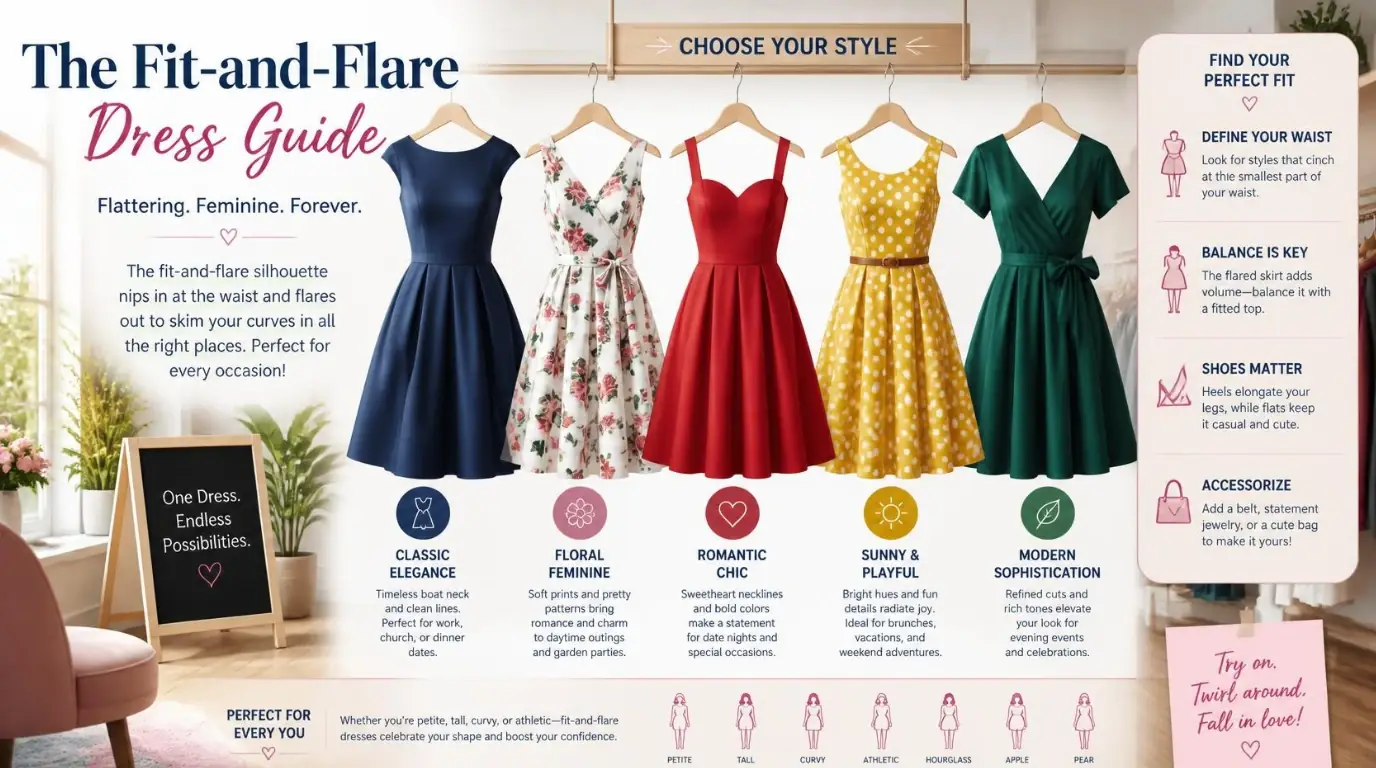
A fit-and-flare dress combines a close-fitting bodice with a skirt that flares out below the waist. The shape gives you waist definition while leaving more room through the hips and legs. For Canadian shoppers, the most useful version balances fit, fabric, length, and layering potential rather than following one rigid body-shape rule. Elsewhere on the site: Casual Dress in Canada.
Start with where the waist seam sits, then check the skirt volume and hem length. A natural-waist midi is a flexible choice for work, dinners, weddings, and events. Choose lighter cotton blends for warm weather and more substantial knits, crepe, or lined fabrics when you want to extend the dress into cooler Canadian seasons.
| Shopping decision | Good starting point | What to check |
| Waist placement | Natural waist for clear definition | Does the seam sit comfortably without riding up? |
| Skirt shape | Moderate flare for versatility | Pleats, gathers, fullness, and movement |
| Length | Midi for broad repeat wear | Your height, shoes, venue, and coat length |
| Warm-weather fabric | Cotton, linen blend, light viscose | Lining, opacity, wrinkles, care |
| Dressier fabric | Crepe, satin, chiffon, jacquard | Structure, lining, snagging, formality |
| Cold-weather use | Knit or layer-friendly woven fabric | Sleeve room, tights, boots, outerwear |
What Makes This Silhouette Different?
The defining feature is contrast. The upper part follows the torso more closely, while the skirt creates extra volume below the waist. That makes it different from a loose-shift, column dress, or relaxed-trapeze silhouette. It also explains why the style can feel comfortable even when the bodice looks structured.
A-line and fitted-flare shapes sometimes overlap, but they aren’t always identical. An A-line dress can widen gradually without having a strongly defined waist. A fitted-flare design usually makes that transition more obvious. If you’re comparing softer silhouettes, it helps to consider how fabric, movement, and hem length affect the look of looser dresses.
Compare the Main Fit-and-Flare Dress Options
Fit-and-Flare Dress: The name describes a family of shapes rather than one exact pattern. Waist position, fabric, skirt volume, and length can change how the dress looks and feels.
| Style | Main advantage | Possible trade-off | Good choice for |
| Natural-waist midi | Defined waist with practical coverage | Mid-calf length needs the right shoe. | Work, dinners, weddings |
| Mini with fuller skirt | Playful proportions and easy movement | May offer less coverage for formal settings | Parties, casual events |
| Structured cocktail style | Polished shape and stronger definition | Firm bodices can feel restrictive. | Receptions, celebrations |
| Soft cotton version | Breathable and easy for daytime | May look more casual | Summer, travel, weekends |
| Knit version | Comfortable for cooler weather | Heavy knits may lose skirt movement. | Fall and winter outfits |
| Maxi variation | More drama and coverage | Extra fabric can feel bulky on some designs. | Formal or evening events |
Natural-waist midi
Pros: Versatile, easy to dress up or down, and compatible with many jackets and shoes.
Cons: The hem can hit an awkward point at some heights. Try it with the footwear you expect to wear.
Shorter, fuller styles
Pros: The shorter hem balances a more dramatic skirt and can work well for parties or summer dressing.
Cons: Large pleats or stiff fabric can add more volume than you want. Check side-view product photos before ordering.
Structured occasion styles
Pros: Seaming, boning, or firmer fabric can produce a sharper waist and polished finish.
Cons: Structure can reduce comfort during long events. Check whether the bodice has stretch and whether the waist measurement leaves room to sit.
Soft everyday versions
Pros: Cotton, viscose, and lighter blends can make the silhouette easy to wear for daytime plans.
Cons: Lightweight fabric may need lining. Some fabrics wrinkle more quickly during travel or long periods of sitting.
How to Choose a Fit-and-Flare Dress That Fits Well

Ignore the idea that one body shape automatically “should” or “shouldn’t” wear this silhouette. The exact cut matters more than the category label. Start with the waist seam. It should sit near the point where the design intends the skirt to open. If it sits too high or too low, the proportions can feel off even when the stated size is correct.
Next, look at the bodice length. Petite shoppers may prefer a shorter torso measurement so the waist doesn’t fall too low. A longer torso can benefit from styles with a longer bodice or adjustable straps. Bust fit matters too. Pulling, gaping buttons, stretched seams, or a neckline that lifts away from the body usually indicate a fit issue.
The skirt should give you enough room to walk and sit without forcing the waist upward. Movement is part of the appeal of this shape.
Choose the Skirt Volume Around Your Style
Not every flared skirt is equally full. A softly pleated skirt creates moderate movement and often works well for everyday wear. A circle skirt produces a more dramatic swing. Box pleats can look structured, while gathers create a softer effect.
If you prefer less volume, look for a narrower skirt with fewer pleats. If you want a stronger vintage-inspired shape, a fuller skirt may suit the look better. Fabric changes the result. Crisp cotton poplin holds its shape, while viscose falls closer to the body. Satin can look fluid and dressy. Tulle creates much more volume.
For a relaxed or romantic direction, StyleVanta’s boho dresses guide for Canadian wardrobes offers useful ideas on balancing flowing fabrics, florals, lace, and accessories.
Pick a Length That Works With Your Plans
A midi is often the easiest starting point because it covers many situations without feeling too formal. For work, pair a clean midi with loafers, pumps, ankle boots, or a simple blazer. For dinner, swap the work layer for a shorter jacket and dressier shoes.
A mini can work well for casual summer plans or parties. Balance a fuller skirt with a simple neckline or streamlined footwear for a cleaner look. Maxi versions feel more dramatic. Check the hem while wearing your planned shoes, especially when shopping online.
For an event, start with the invitation rather than the dress trend. StyleVanta’s summer wedding guest dress guide explains how venue, formality, weather, and ground conditions should influence the final choice.
Dress for Canadian Seasons
Canadian weather makes repeat wear easier when you think about layers before buying. In summer, breathable cotton, linen blends, and lighter viscose can work well. Check whether pale colors are lined and whether the care instructions fit your routine. During spring and early fall, a midi can pair with a trench, cropped jacket, blazer, or cardigan. A jacket ending near the waist can preserve the dress’s shape.
In colder weather, tights and boots make many mid-length designs more practical. Knit versions can also work, especially when the skirt still holds a clear shape. A bulky long coat can hide the silhouette, but that isn’t necessarily a problem. Choose warmth first when conditions demand it, then let the dress provide its shape indoors.
Shoes Can Change the Whole Proportion
A fuller skirt creates visual width below the waist, so footwear can affect the final balance. Low-profile flats and loafers keep the outfit casual. Pumps create a cleaner, dressier line. Block heels are useful when you expect to stand for extended periods or encounter uneven outdoor surfaces.
For a lower, refined heel, StyleVanta’s guidance on kitten heel sandals can help you compare stability, height, and occasion use. Neutral footwear is another practical option when the dress carries a bold print or color. The StyleVanta nude heels guide explains how neutral shades and heel shapes can work with a range of outfits and events.
What Canadian Shoppers Should Check Before Buying Online
Product photos sell the mood. Measurements tell you whether the piece has a good chance of working.
Before ordering, check:
- Your bust and waist against the retailer’s current size chart.
- The listed garment length, especially for mini and midi styles.
- The model’s height when that information is available.
- Fabric composition and whether the material contains stretch.
- Lining details for pale or lightweight fabrics.
- Zipper placement, adjustable straps, smocking, or elastic sections.
- Washing, drying, ironing, and dry-cleaning instructions.
- Whether pricing is shown in Canadian dollars.
- Shipping costs, return windows, final-sale rules, and possible cross-border charges.
Your usual size is a starting point, not a guarantee. Different brands can cut the same labelled size differently.
Our Recommendation: Choose Repeat Wear Over a Perfect Photo
If you want one versatile option, our pick is a natural-waist midi with moderate skirt volume. Look for a fabric that suits the season when you expect to wear it most. A cotton or cotton-blend version works well for casual warm-weather use. Crepe or satin can move the same shape into weddings and evening events. A substantial woven fabric or knit is easier to style with tights and boots.
The strongest purchase is the one that already works with shoes, jackets, and accessories you own. A beautiful dress becomes far more valuable when it leaves the closet more than once.
Build the Outfit Around How You’ll Wear It
Start with fit, not color. Check the waist seam, bodice, movement, fabric, and hem before deciding whether a dress belongs in your wardrobe. Then picture three real outfits you could make with pieces you already own. If the dress works for several plans and multiple Canadian seasons, it has a better chance of becoming a regular part of your wardrobe rather than a one-time purchase.
Conclusion
Choosing the right fit and flare dress in Canada is about more than finding a silhouette that looks attractive in a product photo. The best dress should feel comfortable through the bodice, sit correctly at the waist, provide enough movement through the skirt, and suit the way you actually spend your time. Instead of relying on body-shape rules, focus on practical details such as waist placement, bust fit, skirt volume, hem length, fabric, and overall comfort. Also worth reading: Bodysuit in Canada.
For a versatile wardrobe, a natural-waist midi with moderate flare is an excellent starting point. It can transition from work and dinners to weddings and other occasions with simple changes to shoes, jackets, jewelry, and accessories. Lighter cotton and linen blends can make the style useful during warmer months, while knit, crepe, and more substantial fabrics can provide better options for cooler Canadian weather.
Frequently Asked Questions
What is a fit-and-flare dress?
A fit-and-flare dress has a fitted upper section and a skirt that widens below the waist. The amount of flare varies by design, from softly shaped skirts to fuller pleated or circle skirts.
Is this style the same as an A-line dress?
Not always. Both can widen toward the hem, but a fitted-flare silhouette usually has clearer definition through the bodice and waist. An A-line can have a gentler transition without a strongly fitted waist.
Does it work for every body shape?
There’s no body type that is automatically required or excluded. Focus on waist placement, bodice length, bust fit, skirt volume, and comfort. Try different versions because two dresses in the same category can fit quite differently.
Can I wear one to a wedding?
Yes, when the fabric, color, length, and styling suit the invitation. A refined midi can work for many cocktail or semi-formal weddings. More formal events may call for dressier fabric or a longer hem.
What jacket works with this silhouette?
Cropped jackets, blazers, cardigans, and trenches can all work. A shorter layer keeps the waist visible, while a longer coat provides more warmth. Choose based on the weather first.
What shoes look good with it?
Flats, loafers, pumps, sandals, block heels, ankle boots, and knee-high boots can all work. Match the shoe to the hem length, occasion, weather, and amount of walking.