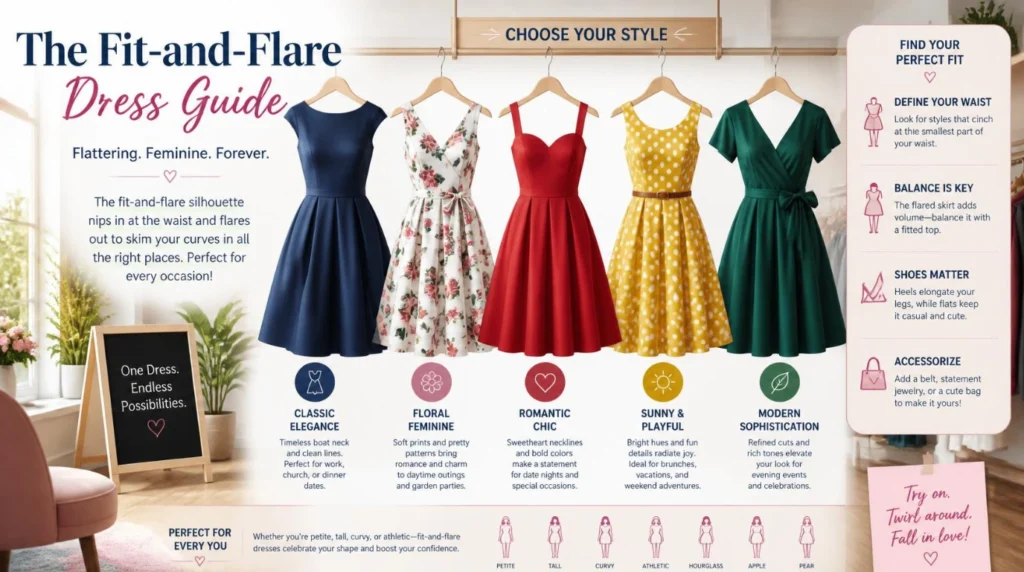

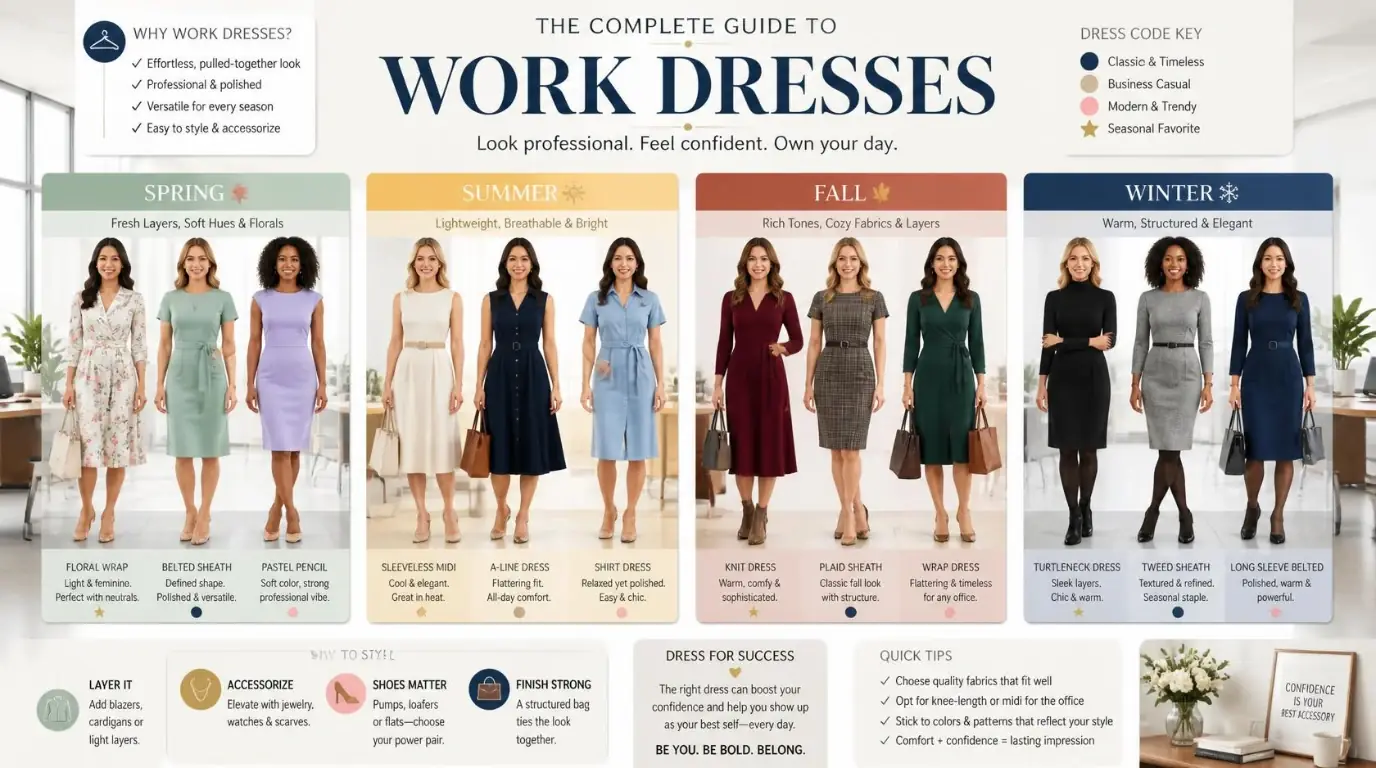
The right work dresses make getting ready easier without leaving you feeling overdressed or restricted. For Canadian offices, a strong choice usually combines a polished silhouette, comfortable fabric, practical hem length, and enough versatility for changing weather. The goal is a piece that suits your workplace and still feels like something you would choose outside office hours.
Start with a midi shirt, wrap, A-line, sheath, or ponte style that fits your workplace dress code. Look for comfortable movement, dependable coverage, and fabric that suits your commute. For year-round use in Canada, choose a piece that works alone in warmer weather and under a blazer, cardigan, tights, or coat when temperatures fall.
| Shopping decision | Practical starting point | Check before buying. |
| Silhouette | Shirt, A-line, wrap, sheath, or ponte | Sitting comfort, waist placement, movement |
| Length | Around the knee to midi | Workplace, commute, footwear |
| Fabric | Ponte, crepe, cotton blend, knit, or poplin | Opacity, stretch, wrinkles, care |
| Color | Navy, black, charcoal, brown, burgundy, muted print | Repeat-wear potential |
| Season | Layer-friendly cut | Sleeve room, tights, outerwear |
| Online fit | Use the retailer’s measurements. | Bust, waist, hip, garment length |
Compare the Main Office Dress Styles
There isn’t one silhouette that suits every workplace. A client-facing corporate office may call for more structure than a creative studio or business-casual setting. The most useful way to choose is to compare how each shape handles comfort, formality, layering, and repeat wear.
| Style | Strengths | Possible drawbacks | Good choice for |
| Shirt dress | Clean, familiar, easy to layer | Button gaps can affect fit. | Business casual and everyday office wear |
| Wrap style | Adjustable waist, flexible shape | The neckline may need a camisole. | Desk-to-dinner outfits |
| A-line | Comfortable through the lower half | Can look casual in soft fabrics | Long days and mixed dress codes |
| Sheath | Structured and polished | Less movement in rigid fabric | Formal offices and presentations |
| Ponte style | Stretchy with a neat finish | Heavy versions can feel warm. | Commuting and long workdays |
| Sweater style | Warm and simple for cold months | Fit can become too close. | Fall and winter offices |
| Belted midi | Defined shape with flexible styling | Belt placement affects proportion. | Meetings and smart-casual workplaces |
Verdict: If you want one dependable starting point, choose a structured midi with light stretch. A shirt, A-line, or ponte version usually offers the easiest balance of movement, polish, and layering.
How to Choose Work Dresses for Canadian Offices

Start With Your Actual Dress Code
“Office appropriate” can mean different things depending on where you work. A law office, school, technology company, bank, design studio, and hybrid workplace may all set different expectations. Look at what people in similar roles wear on an ordinary weekday. That gives you a better benchmark than styling a piece around a special meeting.
For a formal setting, clean lines and restrained details tend to be easier to repeat. In a business-casual office, softer shapes, prints, knit fabrics, and relaxed shirt styles may fit naturally.
Check the Dress While Sitting
A piece that looks polished while standing can feel different at a desk. Sit down before removing the tags. Check whether the hem rises beyond your preferred coverage and whether the waist remains comfortable. Make sure the shoulders allow you to reach forward without pulling.
Also test stairs and walking. Work dresses and office clothing earn their place in your wardrobe when they work during the whole day, not only in front of a mirror.
Treat Midi Length as a Starting Point, Not a Rule
Midi hems are useful because they work with many types of footwear. They can pair with loafers, flats, pumps, ankle boots, and taller boots. Your height and commute still matter. A longer midi may feel awkward on stairs or in winter slush. A knee-length piece may work better if you walk often or switch between indoor and outdoor shoes.
Choose the hem according to your daily routine rather than a fixed rule about what professional clothing “should” look like.
Choose Fabric for Comfort, Polish, and Easy Care
Fabric affects how an office outfit looks after several hours of sitting, walking, and commuting.
Ponte is useful when you want to stretch with a structured appearance. Crepe can give a cleaner drape without the stiffness of suiting fabric. Cotton and poplin can feel crisp and lighter for warmer days.
Knits offer comfort during colder months, but check the weight and fit carefully. A dense knit usually holds its shape better than a thin fabric that clings.
Before ordering, check:
- fiber composition and stretch;
- whether the garment is lined;
- washing or dry-cleaning instructions;
- opacity in light colors;
- wrinkle tendency;
- whether the fabric attracts lint.
If you like softer silhouettes, StyleVanta’s flowy-dress shopping guide is a useful companion for comparing drape, length, lining, and fabric movement.
Build a Small Office-Dress Rotation
You don’t need a large workwear wardrobe to create variety. A practical three-piece rotation could include a dark structured midi, a softer shirt or wrap option, and a cold-weather knit or ponte piece. Each can look different with changes in footwear, jewelry, knitwear, and outer layers.
Color makes repeat wear easier too. Navy, charcoal, chocolate brown, burgundy, olive, camel, and black pair easily with many office layers. A restrained stripe, check, or small print can add interest without limiting your styling options.
If your workplace allows more romantic or relaxed clothing, StyleVanta’s boho-dress guide explains how to balance flowing fabrics and decorative details with cleaner accessories.
Make One Office Dress Work Across Canadian Seasons
A year-round wardrobe depends more on layering than on finding one fabric for every temperature. In spring, add a trench, cardigan, or light blazer. Summer calls for breathable fabric and comfortable sleeves, especially if part of your commute is outdoors.
Fall is easy territory for midi styles. Add loafers or boots and a fine knit layer. During winter, tights, weather-ready boots, a warm coat, and an indoor shoe change can make a lighter office piece more practical. Consider the hem during snowy months. A floor-skimming maxi may be harder to manage around wet sidewalks and slush than a knee or midi length.
How to Style an Office Dress Without Making It Feel Repetitive
A simple base gives you more room to change the finished outfit. For a formal meeting, add a structured blazer, restrained jewelry, and polished footwear. On an ordinary desk day, switch to a cardigan and loafers. A belt can change the proportions of a straighter cut.
Try to keep one visual anchor in the outfit. If the piece has a strong pattern, keep the jacket and footwear quieter. If the garment is plain, a textured coat, scarf, jewelry, or bag can carry more interest.
You can browse StyleVanta’s broader dresses coverage when you want ideas for silhouettes that can cross between office, casual, and occasion wear.
What to Check When Shopping Online in Canada
Product photos can tell you how an outfit was styled. Measurements and product details tell you whether it is likely to work for your routine. Compare the retailer’s garment measurements with an item you already own and like. Pay attention to garment length rather than relying only on labels such as “mini,” “knee-length,” or “midi.”
Check whether prices are shown in Canadian dollars. Review shipping charges, return terms, final-sale rules, taxes, and possible cross-border costs before buying from an international seller. Care instructions deserve attention too. A workwear piece that needs special cleaning after every wear may not suit a busy weekly rotation.
Our Recommendation: Buy for Repeat Wear
The strongest office purchase is usually the one you can picture wearing in several real situations.
Our pick for versatility is a knee-to-midi A-line, shirt, or ponte style with moderate structure and comfortable movement. Choose a color that already works with your coats, shoes, and knitwear.
Then check whether it can handle three tests: a normal workday, your commute, and a change of season.
A statement piece can still be worthwhile. But for the foundation of a professional wardrobe, repeatability matters more than a dramatic first impression.
Choose the Piece That Fits Your Real Workday
Start with your workplace, commute, and climate. Then choose the silhouette. A comfortable office piece should let you sit, walk, layer, and move through your day without constant adjustment. Check the fabric, hem, fit, care instructions, and return terms before ordering.
Once those basics work, color and styling become the enjoyable part. Build around pieces you can repeat confidently, and your weekday wardrobe becomes much easier to manage.
Conclusion
Choosing the right work dresses in Canada is about more than finding a piece that looks professional in a product photo. The best dress should fit your workplace, support your daily routine, and remain comfortable from your morning commute to the end of the working day. Silhouette, fabric, length, layering potential, color, care requirements, and fit all influence whether a dress becomes a reliable wardrobe favorite or an item that stays in the closet.
For most Canadian workplaces, a knee-to-midi A-line, shirt, wrap, sheath, or ponte dress is a practical place to start. Look for moderate structure, comfortable movement, dependable coverage, and a fabric that works with your lifestyle.
Frequently Asked Questions
What length works best for work dresses?
Knee and midi lengths are practical starting points for many workplaces because they offer coverage and pair with several types of footwear. Your dress code, height, commute, and preferred coverage should make the final decision.
Can you wear a sleeveless office dress?
Yes, if it fits your workplace policy and feels appropriate for your role. A blazer, cardigan, or light jacket can add coverage in more formal settings and help with heavily air-conditioned offices.
What colors are easiest to wear to work?
Black, navy, charcoal, brown, camel, burgundy, olive, and other muted shades are easy to coordinate. You don’t need to avoid color. A restrained print or richer seasonal shade can work well when the cut remains appropriate for your setting.
Are knit styles professional enough for the office?
They can be. Look for fabric with enough weight to hold its shape and avoid excessive cling. Clean necklines, moderate hems, and polished footwear can make a knit piece suitable for many business-casual workplaces.
What shoes work with office dresses during a Canadian winter?
Ankle boots and tall boots are useful outdoors when conditions suit them. Many commuters keep separate indoor footwear at work. The easiest hem is one that stays clear of wet pavement, snow, and slush.
How many office dresses do you need?
There is no fixed number. Start with enough pieces to support your laundry schedule and typical workweek. A small rotation of versatile styles often gives you more value than several items that work with only one outfit.