
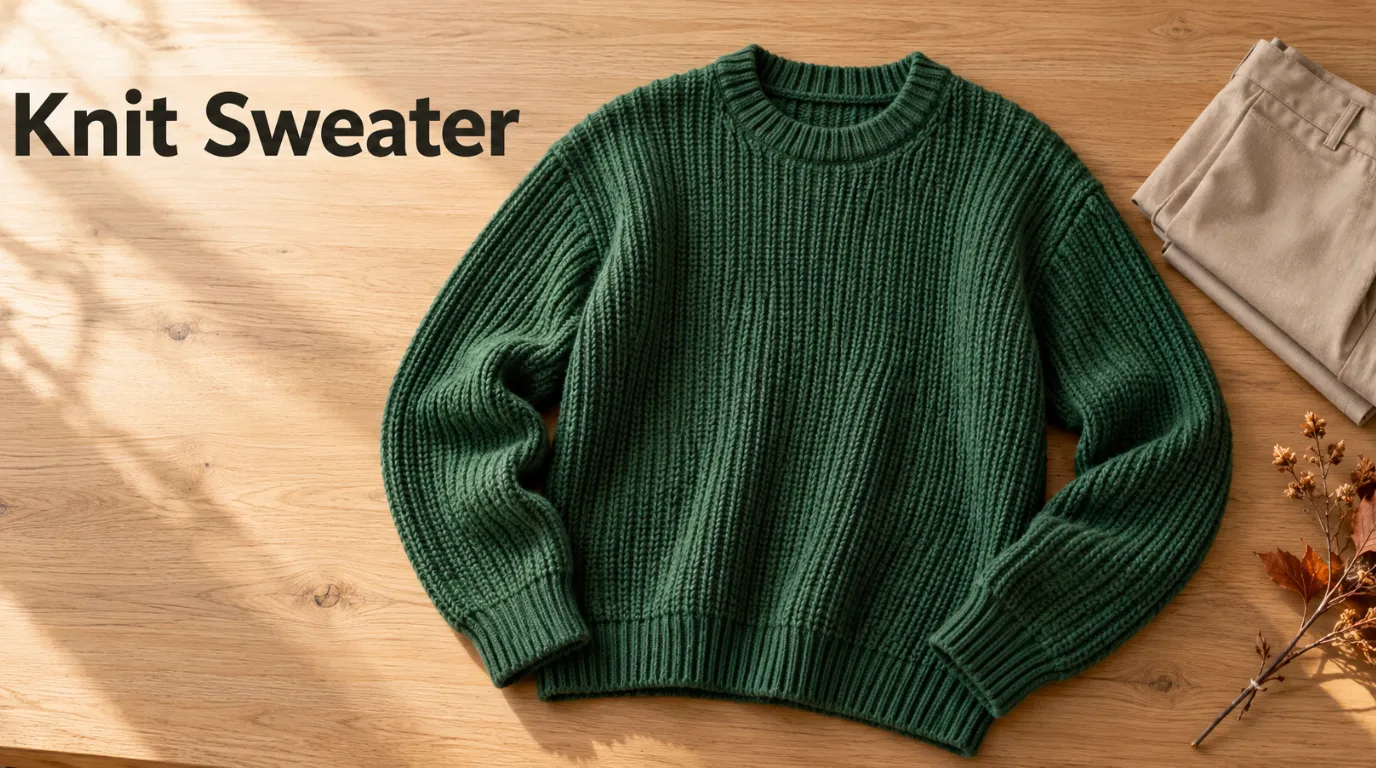
A good knit sweater earns its place by balancing warmth, comfort, fit, and easy styling. Canadian wardrobes also demand layers that work outdoors and remain comfortable inside. The right choice depends more on construction and fiber than a trend label. More from us: Hobo Bag Guide for Canada.
Direct answer: Choose knitwear by matching fiber, weight, fit, and neckline to your climate and daily routine. Fine or medium knits layer easily, while wool-rich options suit colder weather. Check fiber labels, seams, recovery, care needs, and room under your usual coat before buying.
| Shopping decision | Practical starting point | Why it matters |
|---|---|---|
| Fibre | Merino, wool blend, cotton, cashmere, or practical synthetic blend | Changes warmth, softness, care, and price |
| Weight | Fine to medium for flexible layering | Easier under coats and comfortable indoors |
| Fit | Enough room for your preferred base layer | Prevents pulling and restrictive movement |
| Neckline | Crewneck for versatility | Works with many jackets, shirts, and accessories |
| Construction | Even knit, stable seams, resilient ribbing | Helps the garment keep its shape |
| Color | Choose shades already present in your wardrobe. | Creates more repeat outfits |
| Care | Read instructions before paying. | Prevents buying something you avoid wearing |
Key Takeaways
- Start with fiber content and construction rather than softness alone.
- Fine and medium weights usually offer the most flexible Canadian layering.
- Crewnecks are versatile, while mock necks and turtlenecks provide more coverage.
- Wool and cashmere offer strong warmth without requiring excessive bulk.
- Cotton knits suit milder weather and people who prefer less insulation.
- Check whether the piece fits comfortably beneath your usual outerwear.
- Buy colors and shapes that work with at least three existing outfits.
How to Choose a Knit Sweater for Canadian Weather
Canadian conditions make versatility more valuable than maximum thickness. A heavy, chunky piece can feel useful outdoors but uncomfortable indoors. Medium-weight knitwear usually works better for commuting, work, errands, and home.
Think about your normal day before choosing a fabric or silhouette. Someone driving between heated buildings has different needs from someone walking or using transit. StyleVanta’s fall clothing guide explains how removable layers help during changing Canadian temperatures.
Your coat matters as much as the knit beneath it. Wide sleeves, thick cables, and oversized shoulders can become cramped inside fitted outerwear. Judge the complete layering system rather than each garment separately.
Compare Common Knitwear Fibers Before Buying
Different fibers solve different wardrobe problems. No material automatically wins for every buyer, climate, or budget. Use the table below to match each option with how you plan to wear it.
| Fibre | Warmth | Main advantage | Main trade-off | Good use |
|---|---|---|---|---|
| Merino wool | High | Warm with relatively low bulk | Needs suitable care | Work, layering, winter |
| Cashmere | High | Soft, light, and insulating | Usually costs more | Refined cold-weather outfits |
| Regular wool | High | Warm and widely available | Some fibers feel coarse. | Everyday cold-weather wear |
| Cotton | Low to medium | Breathable and familiar | Less insulating in deep cold | Spring, fall, indoor wear |
| Acrylic blend | Varies | Affordable and easy to find | Feel and breathability vary. | Casual, budget-focused use |
| Wool blend | Medium to high | Balances warmth and durability | Performance depends on the blend. | Frequent everyday wear |
Canada requires consumer textile products to disclose fiber content under federal textile-labelling rules. That information gives shoppers a useful starting point for comparing similar pieces. Check the label closely when you want to compare fiber content across similar pieces.
Cashmere can make sense when you value warmth without bulky layers. Yet fiber percentage alone cannot tell you how well a garment is made. StyleVanta’s cashmere buying guide covers knit density, recovery, construction, fit, and care in greater detail.
Look Beyond Softness When Judging Quality
New knitwear can feel wonderfully soft because of finishing treatments and surface brushing. Softness still matters, but it should not replace checks for density and shape. A useful garment should feel pleasant while maintaining enough structure for repeated wear.
Inspect the neckline, cuffs, side seams, shoulder joins, and hem. Ribbed sections should look even and return toward their original shape after light stretching. Inspect loose threads, distorted seams, or uneven areas more closely before purchase.
For online shopping, product information becomes more important because touch tests disappear. Look for fiber percentages, measurements, close photographs, care directions, and a clear return policy. Missing details create uncertainty that should influence how much you are willing to spend.
Choose a Fit That Works With Your Existing Clothes
A relaxed fit gives you room for T-shirts and fitted base layers. It also creates an easy shape with straight jeans, slim trousers, or leggings. Make sure the shoulders still work under your most-worn jacket. A closer fit can look polished with tailored trousers, skirts, or a blazer.
Fine-gauge pieces are especially useful when you want warmth without crowding structured clothing. StyleVanta’s business casual guide offers more ideas for using refined knitwear in Canadian workplaces. Oversized shapes can look intentional when the rest of the outfit provides balance.
Pair extra volume above with a cleaner lower silhouette or defined waist. You can also use a partial tuck when the fabric is thin enough.
Match the Neckline to How You Layer
A crewneck remains one of the easiest starting points for a small wardrobe. It works alone, above a collared shirt, or beneath many jackets. The simple neckline also leaves room for scarves and jewelry. V-necks create more open space around the face and chest. They work well over shirts, camisoles, or simple tees. Deeper cuts may need an additional layer when temperatures drop.
Mock necks and turtlenecks provide more coverage during colder months. They pair naturally with trousers, denim, and longer coats. Check neck comfort carefully because softness on your hand may feel different against sensitive skin.
Five Easy Outfit Formulas for Canada
You do not need complicated styling to make knitwear look intentional. Start with combinations that fit your routine, then repeat them in different colors. These five formulas cover casual, office, and dressier situations.
- Weekend casual: relaxed knit + straight jeans + sneakers + practical jacket.
- Office-ready: fine knit + tailored trousers + blazer + loafers or ankle boots.
- Cold-day layering: fitted base layer + wool knit + jeans + insulated outerwear.
- Soft feminine look: fitted cardigan or pullover + midi skirt + ballet flats or boots.
- Smart evening: dark fine knit, wide-leg trousers, structured coat, and simple jewelry.
Romantic details can soften a simple cold-weather outfit without requiring an elaborate theme. Think pearl jewelry, softer colors, ribbons, or a fitted cardigan. StyleVanta’s coquette style guide shows how those details can work in Canadian wardrobes.
Build Around Canadian Seasons
Spring works well with cotton, lighter wool blends, and fine-gauge layers. Temperatures can change significantly between morning and afternoon. A removable knit under a trench or light jacket adds useful flexibility.
Summer knitwear should usually stay light and breathable. Short sleeves, open constructions, and cotton-rich options can suit cooler evenings. Heavy wool pieces often make less sense unless your local conditions demand them.
Fall is where medium-weight options become especially useful. Wear them with denim, trousers, skirts, boots, and transitional jackets. The goal is adjustable warmth, not dressing for winter too early. Winter calls for insulation plus sensible layering.
Fine merino or cashmere can provide warmth while fitting comfortably beneath substantial outerwear. Chunkier styles work well when your coat has enough room through the shoulders and sleeves.
Choose Colors for Repeat Wear
Neutral shades work well because they pair easily with existing pieces. Cream, charcoal, navy, brown, black, camel, and soft grey create useful foundations. Choose the neutral already represented in your coats, trousers, and footwear.
Color can still be practical when it connects with your wardrobe. Burgundy, forest green, muted blue, red, or soft pink can provide contrast without becoming difficult to style. A colored knit earns more wear when several bottoms and jackets already complement it.
Patterns require the same repeat-wear test as solid colors. Stripes, Fair Isle designs, argyle, and cable textures can add interest to simple outfits. Keep surrounding pieces quieter when you want the pattern to remain the visual focus.
Care Can Determine Whether a Purchase Is Worth It
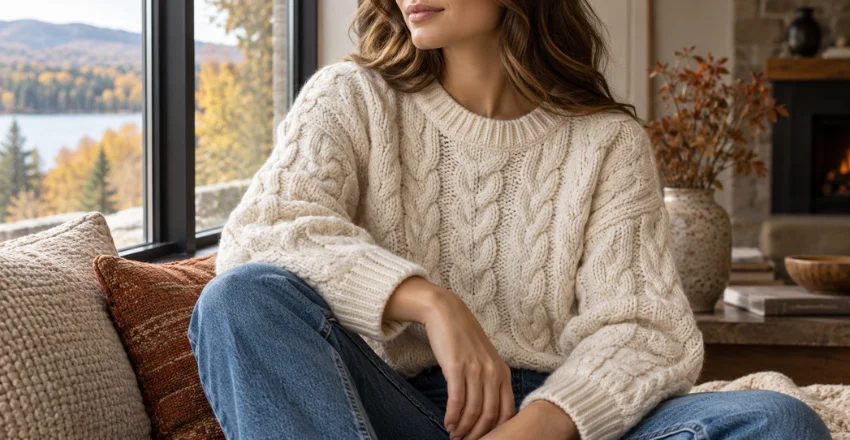
Always follow the specific care label inside your garment. Fiber, yarn, dye, construction, and finishing can change suitable washing methods. Don’t assume every wool or blended piece needs the same treatment. For washable wool, gentle handling and flat drying often help preserve its shape.
Wet knitwear can stretch when hung because water adds significant weight. Store heavier pieces folded when long-term hanging would distort shoulders. Care requirements should influence your buying decision before checkout. A beautiful garment offers poor value when its maintenance discourages regular wear. Choose something that matches the amount of care you realistically want to do.
The Verdict: What Should You Buy First?
For most Canadian wardrobes, start with a medium-weight crewneck in a color you already wear. Choose a fiber blend that matches your budget, sensitivity, climate, and maintenance preferences. Make sure it fits beneath the outerwear you use most frequently.
Merino or a wool blend offers a strong balance for cold-weather use. Cotton works better when you want lighter warmth and easier transitional styling. Cashmere deserves consideration when softness and low-bulk insulation justify the added cost.
Before buying, picture at least three complete outfits using clothes you already own. Then check the label, seams, ribbing, measurements, and care requirements. The most useful purchase is the one you will repeatedly wear rather than protect inside a drawer.
Frequently Asked Questions
What is the best knit sweater for Canadian winters?
Wool-rich options usually provide useful insulation during Canadian winters. Merino and cashmere can offer warmth without excessive bulk beneath a coat. Your outerwear, base layers, local climate, and indoor routine still affect the best choice.
Is wool warmer than cotton knitwear?
Wool generally provides better insulation than cotton at comparable garment weights. Cotton can still work well for mild conditions, indoor wear, and transitional seasons. Construction and thickness also affect how warm any finished garment feels.
Are synthetic blends a bad choice?
No, synthetic blends can be practical depending on price, construction, and intended use. They may add durability, stretch, easier care, or lower cost. Read the full fibre percentages because two blends can perform quite differently.
How should knitwear fit under a winter coat?
The shoulders and sleeves should move comfortably without bunching or tightness. You should also be able to bend your arms without pulling across the back. Test your usual layers together whenever possible before removing tags.
How many knitted pieces does a wardrobe need?
There is no fixed number because climate, work, and laundry habits differ. Start with a few options covering different weights or occasions. Add another piece only when you can identify a genuine gap in your existing rotation.