
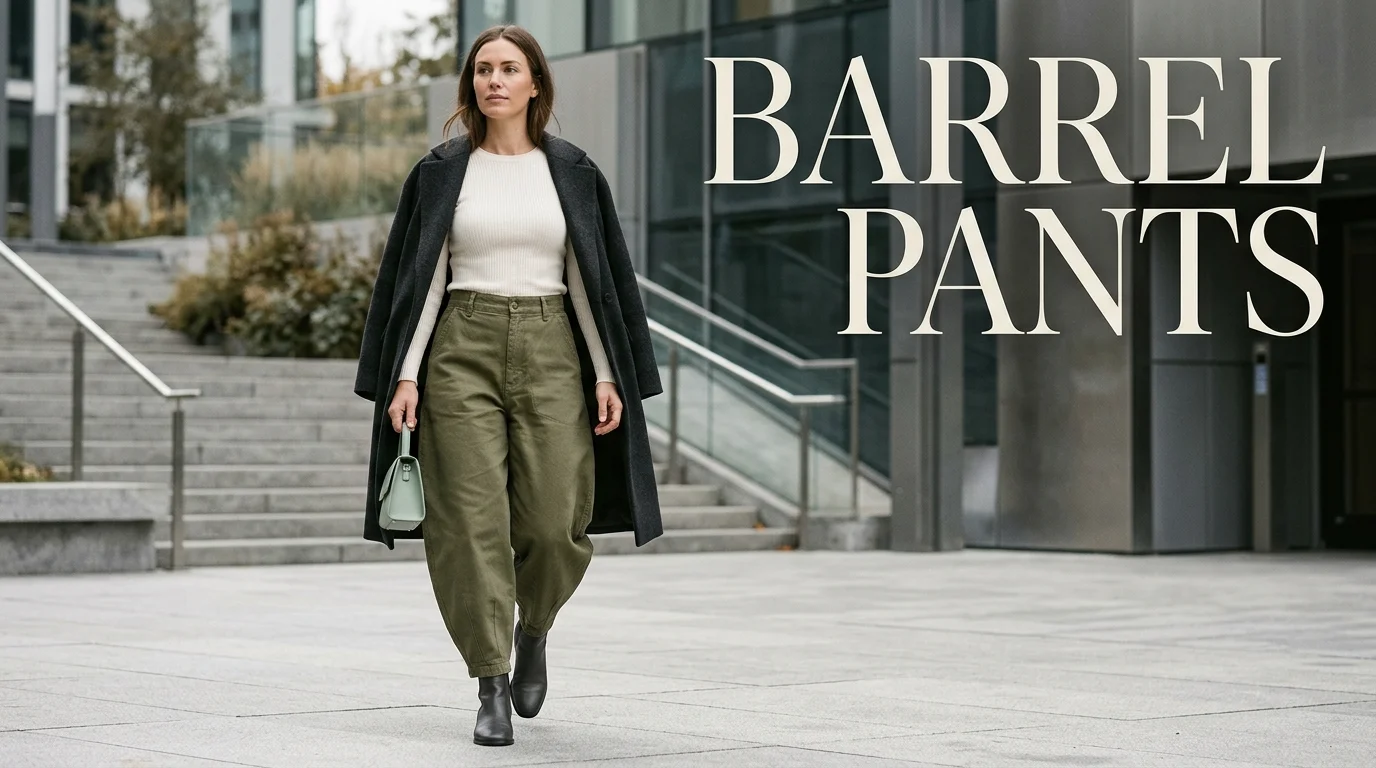
Barrel pants bring controlled volume to an outfit without the full width of traditional wide-leg trousers. Their curved shape widens through the leg, then narrows near the ankle. For Canadian wardrobes, the best pair also needs practical fabric, length, and compatibility with footwear.
Direct answer: Choose a secure waist, comfortable hip room, and a visible curve through the middle of the leg. The hem should narrow without bunching heavily over your shoes. In Canada, consider wet sidewalks, changing temperatures, and seasonal footwear before choosing your ideal length or fabric.
| What to check | Practical starting point | Why it matters |
|---|---|---|
| Waist | Secure without pinching | Keeps the curved silhouette anchored |
| Leg shape | Wider through the thigh or knee | Creates the signature rounded profile |
| Hem | Narrower than the fullest leg area | Separates the style from wide-leg trousers |
| Length | Ankle-length or slightly cropped | Keeps the curved shape visible |
| Fabric | Denim, cotton twill, wool blend, or structured woven | Changes warmth, drape, and definition |
| Shoes | Flats, loafers, sneakers, or slim boots | Affects how the tapered hem sits |
| Canadian weather | Keep hems clear of wet ground | Helps with rain, slush, and road salt |
Key Takeaways
- The defining feature is a curved leg that widens and then tapers.
- A secure waist usually works better than sizing up for extra volume.
- Shorter or cleaner hems can be practical during wet Canadian seasons.
- Structured fabrics show the curved shape more clearly than fluid materials.
- Simple tops make an easy starting point, but oversized layers can also work.
- Choose footwear before deciding whether the trouser length feels right.
How Barrel Pants Differ From Wide-Leg and Baggy Styles
The main difference is the leg shape, not the amount of fabric. Wide-leg trousers usually remain broad from the thigh toward the hem. A barrel silhouette curves outward and then moves inward again near the lower leg.
Baggy trousers describe an overall relaxed fit and can include several different leg shapes. They may stay loose through the hem without creating a deliberate curve. StyleVanta’s baggy pants guide explains how relaxed shapes differ across denim and trousers.
This distinction matters because each shape creates different outfit proportions. A curved leg has more visual presence around the knee or lower thigh. That makes hem placement, top length, and footwear especially noticeable.
Start With the Waist and Hip Fit
A roomy leg does not require a loose waistband. Your waist should remain secure when you walk, sit, and move normally. Excess space at the waist can make the entire silhouette look larger than intended.
Check the seat and hips before judging the dramatic part of the leg. Fabric should move comfortably without pulling across the front or creating an empty pocket behind you. The curved section should begin from a stable, comfortable foundation.
Avoid automatically sizing up to create more volume. Designers usually build extra room into the pattern. Compare garment measurements with trousers you already wear comfortably whenever possible.
Look for a Clear but Wearable Curve
Some versions create a soft curve, while others use exaggerated side seams or pleats. A subtle shape is usually easier for a first pair. It works with more jackets, tops, and everyday shoes.
More dramatic versions can become an outfit’s focal point. They often need fewer competing details elsewhere. Clean colours and uncomplicated layers can help the trouser shape remain intentional.
Canadian shoppers may find both restrained and sculptural versions across current collections. For example, COS Canada describes its barrel fit as curved and narrowing toward the ankle. That construction provides a useful reference when comparing unfamiliar cuts.
Choose a Length That Works With Canadian Weather
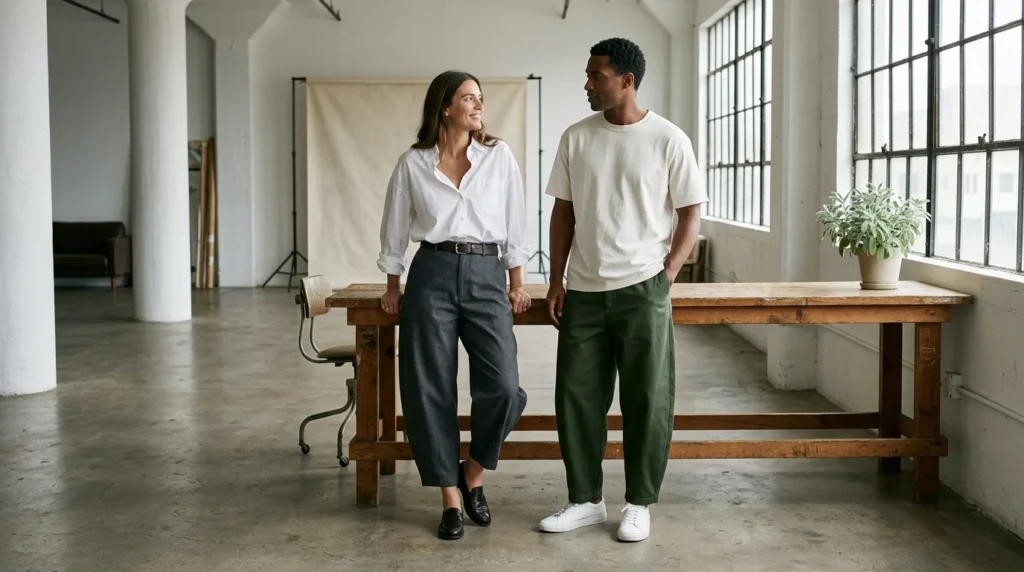
An ankle-length or slightly cropped hem keeps the narrowing section easy to see. It also reduces fabric around the ground during rainy or slushy weather. That practical difference can matter if you walk, commute, or use public transit regularly.
Longer versions can still work when the hem remains controlled. Try them with your usual footwear before considering alterations. A length that works with sneakers may sit differently over boots or loafers.
If you prefer distinctly shorter trousers, StyleVanta’s capri pants guide covers how hem placement changes proportions. Comparing both silhouettes can help you decide how much ankle exposure feels comfortable. It can also clarify which shoes suit your preferred length.
Match the Fabric to the Season
Medium-weight denim and cotton twill are useful starting points because they hold a curved outline. Structured woven fabrics can create a cleaner, more polished version. Softer materials usually create a gentler shape with less visible structure.
For summer, lighter cotton and linen blends can reduce warmth. The fabric still needs enough body to preserve the intended leg line. StyleVanta’s Canadian summer outfit guide offers more ideas for dressing through hot days and cooler evenings.
Cooler weather allows heavier twill, denim, corduroy, or suitable wool blends. These fabrics can work well with sweaters, jackets, and coats. Check care instructions because winter road salt and wet hems may require more frequent cleaning.
How to Style the Curved Silhouette
Start with a top that creates one clear area of definition. Try a tucked T-shirt, compact sweater, fitted knit, or shorter jacket. These combinations keep the shape below the waist visible.
You do not need to avoid oversized tops completely. A relaxed shirt or sweater can work when another feature creates structure. Visible waist definition, strong shoulders, or an open front layer can provide that structure.
Canadian stylists have also treated barrel-leg denim as a wearable fall option rather than only a runway shape. The Kit recommends considering proportion and balance when fitting the silhouette into everyday wardrobes.
Which Shoes Work Best?
Low-profile footwear makes an easy partner because it leaves the tapered hem visible. Ballet flats, loafers, simple sneakers, and slim shoes all keep the lower leg relatively clean. These options work for both casual and polished outfits.
Ankle boots can work well during colder months. Look for a shaft that doesn’t fight the narrowing hem. Excess fabric gathering above a bulky boot can hide the shape you chose.
Chunkier shoes are possible, but they change the visual weight. Check the complete outfit rather than judging the trousers alone. Your favourite footwear should influence both inseam length and hem width before purchasing.
Four Canadian Outfit Formulas
- Spring: curved-leg trousers, a lightweight knit, trench coat, and low-profile sneakers.
- Summer: lightweight woven trousers, a fitted tank, open shirt, and simple sandals.
- Fall: structured denim, a fine knit, cropped jacket, and loafers or ankle boots.
- Winter indoors: heavier trousers, a thin base layer, sweater, coat, and practical boots outside.
These formulas keep the lower-half volume as the main design feature. Each combination also lets you adjust layers as temperatures shift. Use colours already present in your wardrobe to improve repeat wear.
Barrel-Leg Versus Parachute Trousers
Both silhouettes can feel roomy, but they’re constructed differently. Parachute trousers often use lightweight technical fabric, adjustable hems, and utility details. Their volume usually feels softer and more casual.
Curved-leg trousers rely more on the pattern shape itself. They can appear tailored even when the fit remains relaxed. That difference makes them easier to dress up for business-casual settings when the fabric is polished.
For a closer comparison, StyleVanta’s parachute pants guide explains fabric, fit, and seasonal considerations. Reviewing both styles can prevent buying two relaxed trousers that serve the same wardrobe purpose. It also helps you choose between structure and movement.
What to Check Before Buying Online
Begin with waist, hip, rise, inseam, and leg-opening measurements. Then check the model’s height and where the hem lands. Product photographs alone can make the curve appear stronger or softer than it will on you.
Review the fabric composition before deciding how structured the trousers should look. Stretch can improve comfort, while rigid fabric can create stronger shaping. Neither option is automatically better for every wardrobe.
Canadian shoppers should also check currency, shipping terms, returns, and final-sale conditions. These details can change the real cost of trying an unfamiliar silhouette. A flexible return policy is useful when testing a new leg shape.
A Practical First-Pair Recommendation
Start with a moderate curve rather than the most exaggerated version available. Choose a neutral colour and a fabric that works for several months. Black, navy, brown, olive, or denim can connect easily with existing clothes.
Before buying, create three outfits using items you already own. Include one casual look, one layered outfit, and one polished combination. If the trousers require several new purchases, they may not fill a useful wardrobe gap.
Repeat wear is a better test than novelty alone. The strongest pair should feel distinctive without unnecessarily complicating dressing. Fit, footwear, and seasonal usefulness should lead the decision.
Frequently Asked Questions
Are barrel pants still in style in Canada in 2026?
Yes, curved and barrel-leg silhouettes remain visible in current fashion coverage and Canadian retail collections. Recent coverage includes both denim and tailored interpretations. More wearable versions use controlled volume rather than extreme proportions.
Who can wear a barrel-leg silhouette?
There is no single body type required for this shape. Fit depends more on waist security, hip comfort, curve placement, and hem position. Trying different levels of volume is more useful than following rigid body-shape rules.
Should I size up?
Usually, start with the size that fits your waist and hips correctly. The garment pattern should already include the intended curve. Size up only if the brand’s measurements or your desired fit supports it.
What tops look good with curved-leg trousers?
Fitted knits, tucked shirts, simple tees, and shorter jackets provide easy balance. Relaxed tops can also work when the outfit keeps some visible structure. The goal is proportion, not a rule requiring tight clothing.
What shoes should I avoid?
No shoe category is automatically off-limits. Problems usually arise when a bulky shoe makes the narrowed hem bunch awkwardly. Test the trousers with your regular footwear before changing the length.
Are barrel-leg trousers suitable for work?
They can suit many workplaces when made from polished woven fabric. Pair them with a knit, collared shirt, blazer, or clean jacket. Your workplace dress code should still guide the final choice.
Build Around Clothes You Already Own
A curved trouser silhouette should make your wardrobe more useful, not create several new shopping problems. Check your favourite tops, outerwear, and shoes before choosing colour or length. That approach helps you find a pair that works beyond one trend-driven outfit.
Start with fit and seasonal practicality, then consider stronger design details. Canadian weather makes hem control and fabric weight especially useful criteria when buying. A pair that works across several outfits will usually earn more wear.