
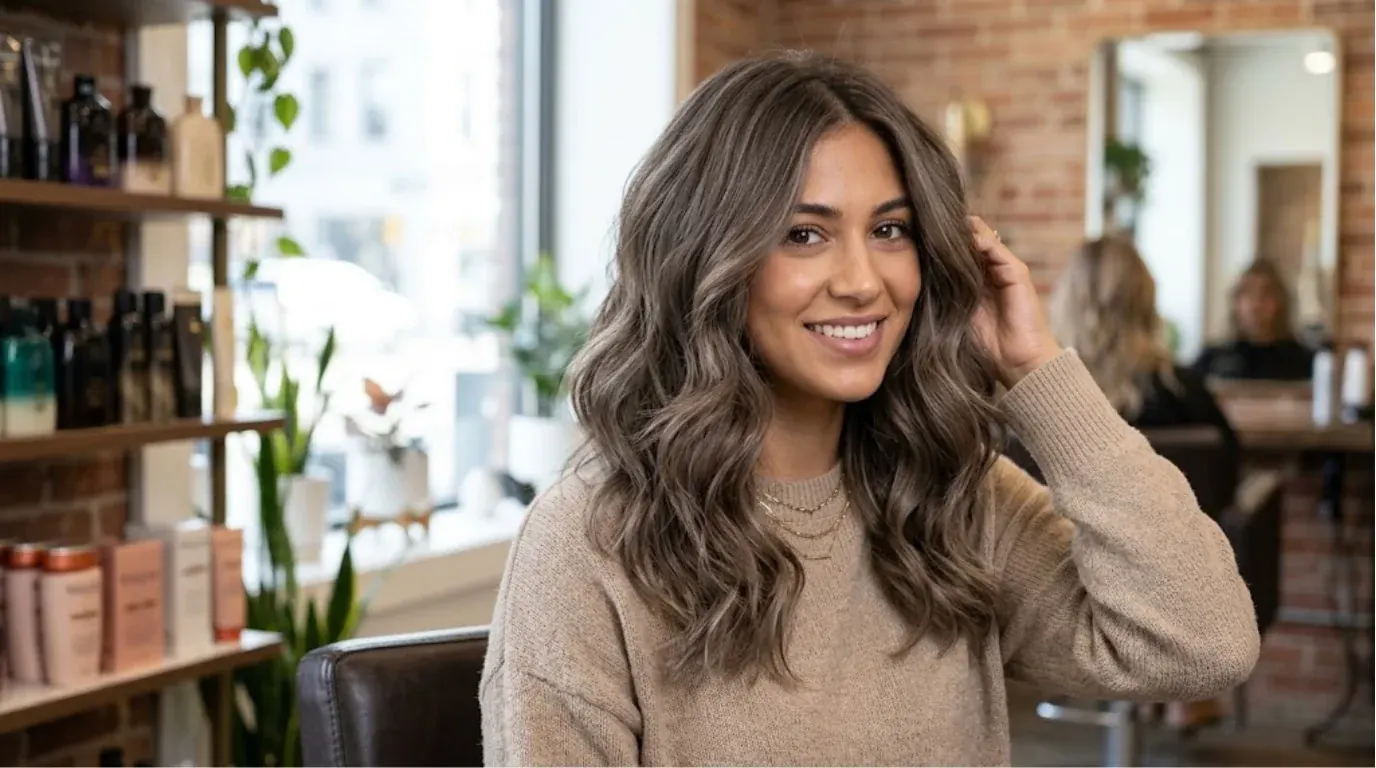
Mushroom brown hair is a cool-to-neutral brunette built from muted brown, ash, taupe, beige, and soft grey tones. A colourist can adjust the depth and placement based on your starting colour and maintenance goals. Balayage, lowlights, highlights, and root melts can all create the soft, dimensional finish associated with this shade.
| At a glance | What to know |
|---|---|
| Overall tone | Cool to neutral |
| Common undertones | Ash, taupe, beige, soft grey |
| Depth | Light brown through deep brunette |
| Popular placements | Balayage, highlights, lowlights, all-over colour |
| Main maintenance issue | Warm, orange, or yellow tones appearing between appointments |
| Good salon direction | Muted brunette dimension without strong gold or red tones |
What Is Mushroom Brown Hair?
The colour sits between traditional brunette and ashier shades. Instead of warm caramel, copper, or golden tones, it uses muted taupe, grey, beige, and ash. The result often looks earthy and softly smoky rather than obviously grey.
L’Oréal describes the shade as a mid-tone brunette with silver, grey, or beige undertones. It can lean cooler or more neutral depending on the formula and placement.
It also differs from a basic ash-brown hair color. Ash brown can look more uniform and distinctly cool. This shade often relies on several related tones to create visible depth through highlights, lowlights, or balayage.
| Shade | Typical undertones | Overall effect |
|---|---|---|
| Smoky mushroom brunette | Taupe, ash, beige, grey | Muted and dimensional |
| Ash brown | Ash, grey | Cooler and more uniform |
| Honey brown | Gold, amber, caramel | Warm and luminous |
If you prefer warmth rather than smoke and taupe, StyleVanta’s honey-brown hair guide offers a useful contrast.
Who Does This Cool Brunette Suit?
Cool or neutral undertones often pair easily with ash and taupe shades. That doesn’t mean people with warmer skin tones must avoid them. A colourist can soften the formula with beige, keep some natural warmth near the face, or use cooler tones only in selected sections.
Hair depth matters too. A pale version can create a soft bronde effect, while deeper bases can carry charcoal-taupe lowlights and subtle ash ribbons. Current colour guides also show the shade on light, medium, and dark brunette bases.
Think of your undertone as one part of the decision, not a strict rule. Your natural base, eyebrow depth, wardrobe colours, and preferred maintenance level also affect how the finished colour feels.
12 Ways to Wear the Shade
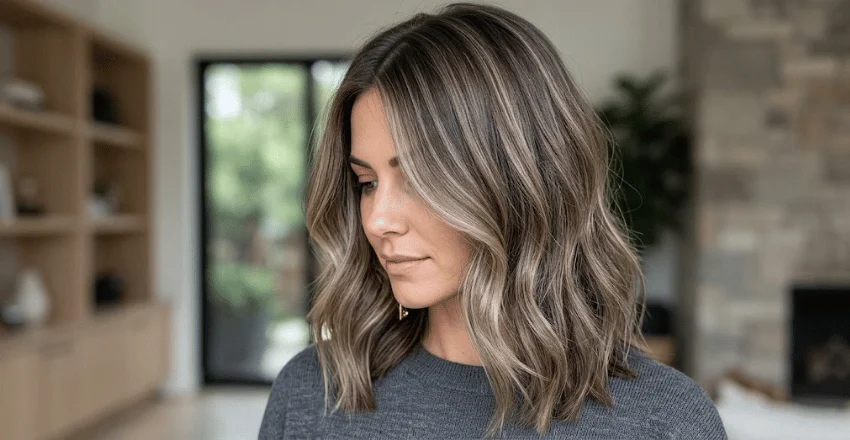
- Classic smoky brunette. Keep a medium-brown base and mix fine taupe and ash ribbons through the lengths for balanced dimension.
- Dark cool brunette. Start with a deeper brown base and use restrained ash-toned pieces so the result stays rich rather than flat.
- Light mushroom bronde. Blend beige-brown and muted blonde tones for a softer finish that sits between brunette and blonde.
- Mushroom brown balayage. Hand-painted cool pieces can create a softer grow-out than bright, high-contrast highlights.
- Fine mushroom brown highlights. Ask for narrow ribbons through the crown and around the face when you want subtle brightness.
- Shadow root with smoky ends. Keep the root close to your natural depth, then move gradually into cooler mid-lengths and ends.
- Face-framing taupe pieces. Use a few brighter beige-taupe sections near the face without changing every strand.
- Ash-beige lob. A blunt or softly layered lob makes subtle tonal shifts easier to see, especially through the ends.
- Cool brunette lowlights. Add deeper muted pieces when lightened hair has become too bright or lacks contrast.
- Soft colour on curls. Fine painted pieces can follow the curl pattern and highlight movement without creating heavy stripes.
- Smoky brown bob. A short cut pairs well with a compact colour palette of brown, taupe, and soft ash.
- Natural-rooted dimension. Keep more of your original root and concentrate cool colour through the lower lengths for easier visual grow-out.
Balayage and foiled highlights create different placement and regrowth patterns. StyleVanta’s balayage vs. highlights guide can help you choose between them before a salon appointment.
What to Ask Your Colourist
Bring two or three reference photos that show a starting depth close to your natural colour. A photo of a pale blonde result won’t tell your colourist much if your starting point is dark brown.
A useful salon brief could be:
“I want a cool-to-neutral brunette with taupe and beige dimension, without obvious gold or red. Keep the root natural-looking and tell me which placement will give me the upkeep level I want.”
Also share your full colour history. Permanent dark dye, box colour, henna, previous bleach, and old highlights can change what is achievable in one appointment. L’Oréal’s guidance notes that darker hair may need to be lightened before cooler, lighter pieces can be created.
If your hair has several layers of previous colour, a professional consultation is safer than trying to force a dramatic change at home.
How to Keep Cool Brown From Turning Warm
Cool brunette shades can develop unwanted yellow, orange, or copper tones as toner fades. Start with colour-safe shampoo and conditioner, then ask your colourist whether a toning product fits your specific shade.
The type of brassiness matters. Purple products are designed to counter yellow tones. Brunette hair that develops stronger orange or copper warmth may respond better to a blue-toned product. StyleVanta explains that distinction in its purple shampoo guide.
Don’t assume more toning is always better. Overusing strongly pigmented products can leave lighter sections looking dull or uneven. Follow the product directions and your colourist’s advice.
A gloss or toner appointment can also refresh the tone without repeating the entire lightening process. How often you need one depends on your hair, washing routine, water quality, heat styling, and chosen placement.
At-Home Hair Colour Safety in Canada
If you use an at-home dye or toner, follow the package directions rather than improvising the formula. Health Canada states that hair dyes can cause allergic reactions and advises completing the recommended skin patch test before each use. Sensitivity can develop even after a product has been used before without trouble.
Don’t use standard hair dye on your eyebrows or eyelashes. Stop using a product and seek appropriate medical advice if you experience a significant reaction.
For more colour and styling references, browse StyleVanta’s hair guides and colour resources.
Choose the Finish Before You Choose the Formula
Start by deciding how much contrast, coolness, and upkeep you want. Save reference photos that show a starting depth similar to yours, then discuss placement and colour history with your stylist. A clear plan for the root, highlights, lowlights, and toner will get you closer to the soft brunette result you have in mind.
Frequently Asked Questions
Is mushroom brown hair warm or cool?
It usually sits on the cool-to-neutral side because ash, taupe, beige, and grey tones define the look. A colourist can make it more neutral by increasing the beige tones and keeping less grey around the face.
Is it the same as ash brown?
No. The two shades overlap, but the smoky version often combines several muted tones. Ash brown can be more consistently cool and uniform. Multi-tonal highlights and lowlights give the former its characteristic depth.
Can you get this colour on dark brown hair?
Yes, but the process depends on how light and cool you want the result. Dark natural hair may require selected sections to be lightened before ash or taupe tones become visible. Previously dyed dark hair can require a more complex correction.
Is balayage easier to maintain than all-over colour?
It can be, when the placement keeps your natural root and creates a gradual transition through the lengths. An all-over shade may show root regrowth sooner when your natural colour differs sharply from the formula.
What should I do if the colour starts looking orange?
Ask whether a blue-toning product suits your brunette level. Purple targets yellow, while blue is commonly used for orange or copper warmth. Avoid layering multiple strong toners without knowing which unwanted tone you’re trying to correct.