
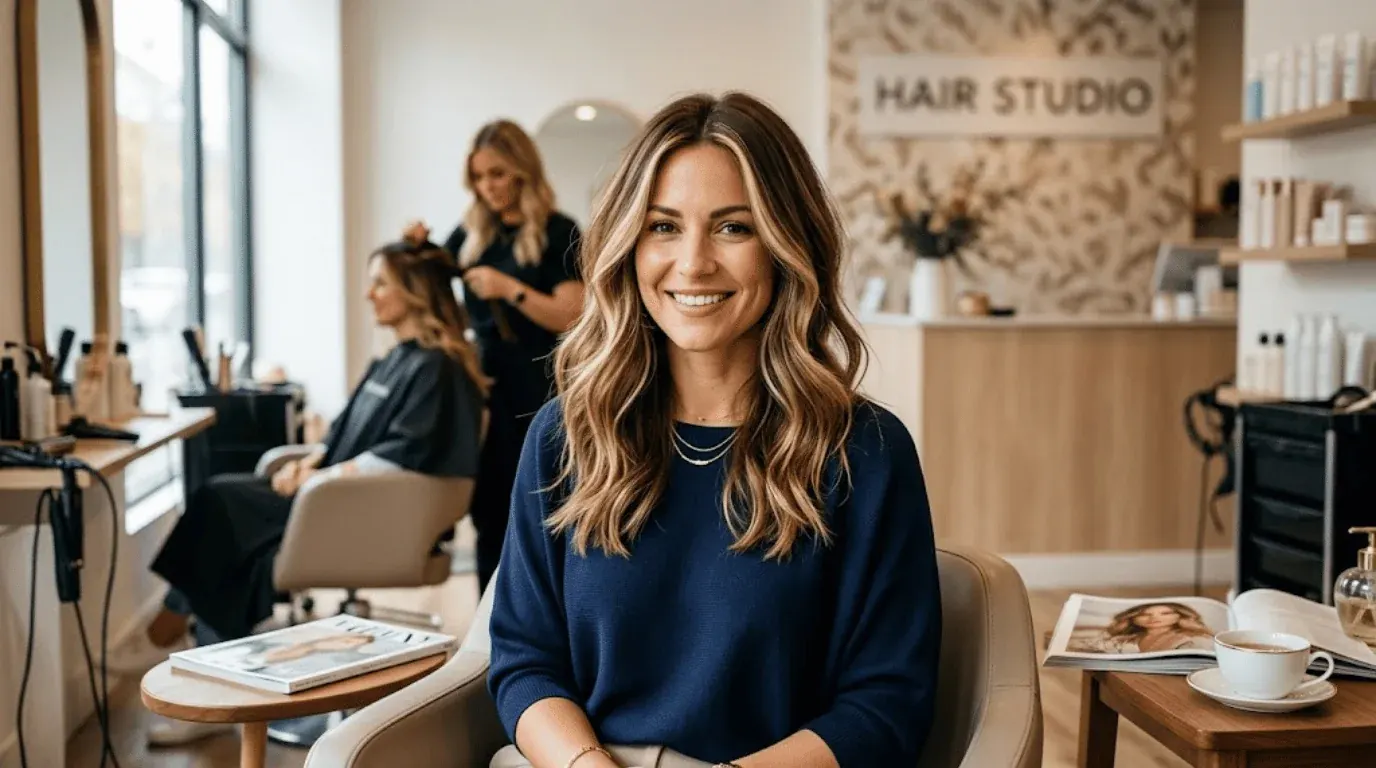
Partial highlights brighten selected areas of your hair instead of lightening every section from front to back. They’re often concentrated around the face, part, crown, and top layers. The result can add noticeable brightness while keeping more of your natural colour underneath.
If you want a softer colour change, easier grow-out, or a first step toward lighter hair, this approach can make sense. Placement matters as much as shade, so the best result starts with a clear idea of where you want the brightness to show. Stylevanta’s widow’s peak styling guide also explains how a front hairline can affect face-framing choices.
Quick Facts
| Question | What to expect |
| Main coverage | Face-framing sections, the part, crown, and visible top layers |
| Finished effect | Softer brightness with natural depth underneath |
| Typical salon time | Often around 2- 3 hours, depending on your hair and service |
| Maintenance | Commonly around 8- 12 weeks, but timing varies |
| Cost | Usually lower than a comparable full-head service |
| Best for | Subtle changes, first-time colour, face framing, and maintenance |
| Main limitation | Darker underneath sections may show when the hair is worn up |
A partial highlight service lightens the areas people see most, usually around the face and across the top of the hair. It gives you added brightness without processing the entire head. Compared with a full service, it normally takes less time, costs less at the same salon, and can create a softer grow-out.
What Does a Partial Highlight Service Cover?
There isn’t one universal foil map that every salon follows. Your stylist may work mainly around the hairline and part or extend the colour through the crown and upper sides.
That flexibility is useful. Someone who wants a small, face-framing change needs a different placement than someone trying to refresh an existing blonde colour.
The underneath layers usually stay darker or closer to your natural base. This preserves depth and reduces the amount of hair that needs chemical lightening. L’Oréal describes the technique as lightening selected sections rather than the entire head.
This is also why you should bring reference photos to your consultation. Two salons can both call a service “partial” while using different amounts and placements of colour.
Partial Highlights vs. Full Highlights
The biggest difference is coverage, not necessarily the colour itself. A full service distributes lighter pieces across the top, sides, back, and underneath sections. A partial service concentrates them in selected, visible areas.
| Factor | Partial service | Full service |
| Coverage | Selected visible sections | Throughout the head |
| Brightness | Focused and softer | More even from every angle |
| Natural depth | More remains underneath | Less natural base remains visible |
| Appointment | Usually shorter | Usually longer |
| Hair worn up | Darker sections may show | Colour appears more consistent |
| Commitment | Good for gradual change | Better for a larger transformation |
Choose partial highlights when you mainly want brightness around your face or a specific area. A full service makes more sense when you want an all-over lighter result or often wear ponytails, buns, and other styles that expose the underneath layers. Salon colourists make the same distinction when helping clients choose coverage.
Who Is a Good Candidate?
Partial highlights can work across straight, wavy, curly, and coily textures. Your starting colour, previous chemical treatments, hair density, haircut, and styling habits matter more than texture alone.
They can be especially useful if you:
- want to try lighter colour without changing your entire head;
- prefer brightness near your face;
- have existing colour that mainly needs refreshing around the crown and hairline;
- want to preserve more natural depth;
- usually wear your hair down;
- want fewer strands exposed to the lightener during a single appointment.
Dark brown hair can also work well with selective colour. Caramel, honey, beige, or cooler brown-blonde tones can add contrast without requiring an all-over blonde result. The amount of lift your hair can safely achieve should be determined during your consultation.
How Long Does the Appointment Take?
Two to three hours is a useful planning estimate for many salon appointments. The Hair Standard and The Look both give roughly that range for a typical partial service.
Your appointment may take longer if your hair is dense, long, previously coloured, or requires extra toning. A consultation, sectioning, foil placement, processing, rinsing, toner or gloss, and styling can all be part of the visit.
Ask what your salon includes before booking. Toner, gloss, a haircut, extra product, or a blow-dry can affect both the appointment length and the final price.
What Should You Expect to Pay?
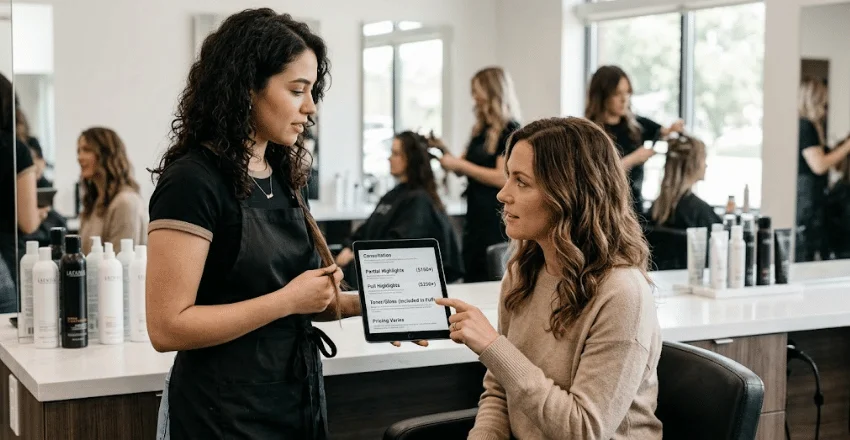
There isn’t a useful universal price because salon rates vary by city, stylist level, hair length, density, technique, and the services included.
At the same salon, a partial service is commonly priced lower than a comparable full-head appointment because it requires fewer sections, less product, and less application time. Both L’Oréal and salon sources note this difference.
Before comparing prices, ask whether the quote includes toner or gloss. A cheaper base price can become less meaningful when common finishing services are charged separately.
Maintenance and Grow-Out
Many clients plan their next partial highlight appointment somewhere around the 8-to-12-week range, although there is no fixed schedule. Some salon colourists report that clients can stretch the result longer when the placement and base colour create a soft transition.
Your ideal timing depends on contrast. Dark roots against much lighter pieces become noticeable faster than a subtle change that stays close to your natural shade.
Between appointments:
- use products intended for colour-treated hair;
- limit unnecessary high-heat styling;
- use heat protection when you do style;
- ask your stylist whether a toner or gloss would help between lightening sessions;
- use purple-toning products only when they suit your colour and your stylist recommends them.
Lightening can leave treated strands feeling drier because the colouring process changes the hair. Processing fewer sections does not make the service damage-free, but it does mean less hair is exposed during the appointment.
Placement Matters More Than the Number of Foils
A good colour plan considers how you part and style your hair every day.
If you nearly always use a centre part, brightness around that part may have more impact than extra foils hidden farther back. A frequent side part may require a different placement plan.
Face-framing pieces also draw attention to your forehead and hairline. If you’re deciding how colour will interact with your front hairline, consider how parts, fringe, and face framing change that visual balance.
Think about updos, too. If you regularly wear high ponytails or buns, leaving most underneath sections dark may create more contrast than you want. That is one situation in which fuller coverage can be worth the extra time.
Five Questions to Ask Before You Book
Bring photos, but also explain what you like about each one. “I like the bright pieces around the face” gives your colourist more useful information than asking them to copy an image exactly.
Ask these questions during your consultation:
- Which sections will your partial service include?
- How light can my current hair safely go in one appointment?
- Will the underneath sections look noticeably darker when my hair is tied up?
- Are toner, gloss, drying, and styling included in the price?
- What maintenance schedule fits the placement you’re recommending?
These questions solve a common problem: the word partial doesn’t tell you exactly how your finished colour will be distributed.
Choosing the Right Amount of Colour
If partial highlights match your goal, go into your appointment thinking about placement rather than foil count. Decide where you want brightness, how you usually wear your hair, and how much natural depth you want to keep.
A consultation is the best place to settle on the final shade and coverage because your existing colour and hair condition affect what can be achieved safely.
For more practical hair and styling coverage, browse Sophie Palmer’s hair guides or return to the Stylevanta homepage for new fashion and beauty guides.
Frequently Asked Questions
How long do partial highlights last?
There is no expiration date because the lightened hair stays coloured as it grows. What changes is the visibility of new growth and the tone of the treated sections. Many salon schedules fall around eight to twelve weeks, while softer placement may allow longer intervals.
Are partial highlights cheaper than a full service?
Usually, yes, when you compare both services at the same salon. Fewer sections generally mean less product and application time. Your final bill still depends on hair length, density, toner, treatments, and stylist pricing.
Can you get partial highlights on dark hair?
Yes. A colourist can use selected lighter sections to create contrast on brunette and darker bases. The achievable shade depends on your starting colour, hair condition, previous dye, and desired level of lift.
Can you switch to full coverage later?
Yes. Your colourist can add lighter sections to areas that were previously left natural. L’Oréal notes that moving from a partial to a full service is generally a matter of adjusting placement during a later appointment.
Do selective lightening services damage hair?
Any chemical lightening can affect hair condition. The advantage of limiting coverage is that fewer strands are processed during that session. A stylist should assess hair that has been previously lightened or is fragile before adding more bleach.