

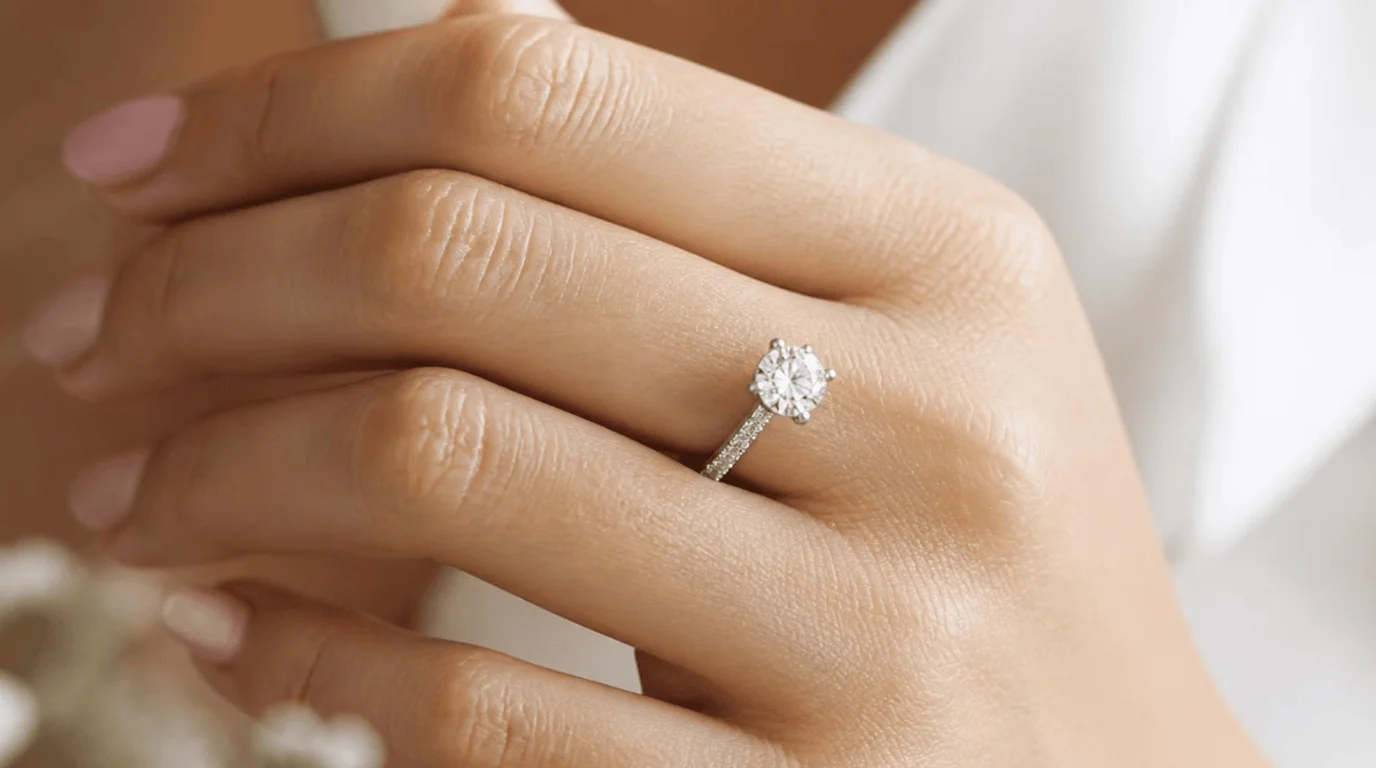
In Canada, the ring finger is the fourth finger when counting from the thumb, between the middle finger and the pinky. Engagement and wedding rings are traditionally worn on this finger of the left hand. That convention is common across Canada, the United States, the United Kingdom, and several other Western countries.
For most Canadians, engagement and wedding jewelry goes on the fourth finger of the left hand. The wedding band is commonly worn closest to the hand, with the engagement ring above it. These are cultural traditions rather than rules, so your family background, comfort, work, style, or personal meaning can justify a different choice.
| Question | Canadian convention |
|---|---|
| Which finger? | Fourth finger from the thumb |
| Which hand? | Usually the left |
| Engagement ring | Left fourth finger |
| Wedding band | Usually the same finger |
| Traditional stacking order | Wedding band below the engagement ring |
| Promise ring | Either hand or another finger |
| Can you choose differently? | Yes. |
| Main consideration | Meaning, comfort, fit, and personal tradition |
Why Is It Called the Ring Finger?
The name comes from centuries of using the fourth finger for symbolic jewelry associated with marriage and commitment.
A familiar explanation links the tradition to the vena amoris, or “vein of love.” Ancient tradition held that a vein from the fourth finger of the left hand connected directly to the heart. Modern anatomy does not support the idea of a unique vein running straight from that finger to the heart. The romantic symbolism survived even though the anatomical explanation did not.
That distinction is useful. You can appreciate the symbolism without treating the old story as a medical fact.
For Canadians today, the meaning is largely cultural. A ring on the left fourth finger is widely understood as a sign of engagement or marriage, although jewelry worn there does not automatically define a person’s relationship status.
Which Hand Do Canadians Traditionally Use?
The left hand is the conventional choice in Canada for both engagement and wedding jewelry. Current guides from Canadian and international jewelers consistently place Canada among countries following the left-hand tradition.
That does not make the right hand incorrect.
Ring customs vary considerably around the world. Countries and communities in parts of Central Europe, Eastern Europe, Scandinavia, and elsewhere may traditionally use the right hand instead. Religious and family customs can also affect placement.
Canada’s multicultural population makes that distinction especially relevant. Someone living in Toronto, Vancouver, Calgary, Montréal, or another Canadian city may follow a family tradition that differs from the broader Canadian convention.
If your heritage favors the right hand, you do not need to switch simply because you live in Canada.
Engagement Ring and Wedding Band: What Goes Where?
Canadian couples commonly wear both rings on the left fourth finger.
Before marriage, the engagement ring usually sits there alone. During or after the wedding ceremony, the wedding band joins it.
The traditional stacking order places the wedding band closest to the hand, followed by the engagement ring. This arrangement is often described symbolically as keeping the wedding band closer to the heart.
Some people temporarily move their engagement ring to the other hand during the ceremony. That leaves the left finger clear for the wedding band. The engagement ring can then be returned and placed above the band.
You can also reverse the order if the rings sit more comfortably that way. The physical design of the two pieces may matter more in everyday life than traditional stacking etiquette.
A curved or contoured band, for example, may nest beside a raised engagement setting better than a straight band.
If you’re comparing larger engagement styles, StyleVanta’s 5-carat diamond ring guide for Canadian buyers explains why setting design, profile, comfort, and secure construction become increasingly important as center stones get larger.
What About Promise Rings?
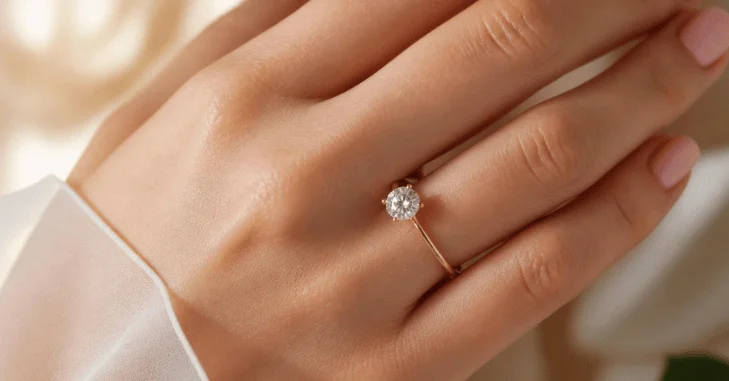
Promise jewelry has much more flexible placement.
It does not have one universally required hand or finger. The jewelry represents a commitment defined by the people exchanging it, rather than a formal marriage proposal.
StyleVanta’s promise ring meaning and wearing guide notes that either hand can work. The left fourth finger may feel natural for a romantic commitment, but it can also cause others to assume an engagement has taken place.
The right fourth finger creates more visual separation from conventional Canadian engagement jewelry.
You can also choose the middle or index finger if that placement feels more comfortable or matches your existing jewelry.
The useful rule is simple: choose the meaning first, then choose the placement.
Does a Ring Have to Stay on the Traditional Finger?
No.
Tradition gives jewelry a shared cultural meaning, but comfort and practicality matter when you wear a piece every day.
Several practical reasons can make another finger or hand the better choice.
- work that makes a raised setting inconvenient;
- arthritis, swelling, an injury, or changing finger size;
- cultural or religious customs;
- a desire to separate sentimental rings;
- left-handed or right-handed comfort preferences;
- an existing ring stack;
- personal style.
A ring worn daily should feel secure without squeezing the finger.
Seasonal temperature changes can also affect how jewelry feels. Fingers may feel tighter in warmer conditions and slimmer when cold. That makes it especially worth checking if you are buying jewelry during an extreme Canadian temperature.
For more styling inspiration, StyleVanta’s 2026 jewellery trends for Canadians look at current approaches to wearable jewellery, layering, and statement pieces.
How Should a Ring Fit?
A properly fitted ring should slide over the knuckle with mild resistance and sit securely at the base of the finger.
It should not spin constantly, fall off when your hand points downward, or leave a deep indentation after normal wear.
Finger measurements can differ between hands. A ring that fits the fourth finger on your right hand may not fit the corresponding finger on your left.
That is why measuring the specific hand and finger where the jewelry will be worn is better than assuming both sides match.
Canadian retailers generally use the North American numerical sizing system. StyleVanta’s promise jewelry guide notes common Canadian sizing practices and recommends measuring a ring from the intended finger when buying a surprise piece.
If the ring will sit beside another band, try the pieces together. Stacking two wider rings can make the combined fit feel tighter than wearing either one alone.
Choosing Tradition Without Feeling Bound by It
The Canadian convention is easy to remember: engagement and wedding rings usually sit on the fourth finger of the left hand.
The more useful lesson is that convention is not a requirement.
A Canadian couple may follow the familiar left-hand custom, maintain a family tradition from another country, switch hands after marriage, wear matching bands differently, or skip conventional placement altogether.
The best choice is one that communicates the meaning you want and remains comfortable enough for regular wear.
Jewelry works best when symbolism and everyday life agree.
Frequently Asked Questions
What is the ring finger in Canada?
It is the fourth finger when counting from your thumb, positioned between the middle finger and pinky. Canadian engagement and wedding rings are traditionally worn on this finger of the left hand.
Which hand does an engagement ring go on in Canada?
The traditional choice is the left hand. The engagement ring is normally placed on the fourth finger from the thumb. Personal, cultural, or religious traditions may favor a different hand.
Which hand does a wedding ring go on in Canada?
Most Canadians traditionally wear a wedding band on the fourth finger of the left hand. The engagement ring usually shares the same finger.
Does the wedding band go above or below the engagement ring?
Traditional Western styling places the wedding band closest to the hand and the engagement ring above it. You can reverse the arrangement if the design, fit, or your preference makes another order more comfortable.
Can I wear a wedding or engagement ring on my right hand?
Yes. Right-hand placement is traditional in several cultures and is also a valid personal choice in Canada. There is no Canadian rule requiring jewelry to be worn on the left.
What finger should a promise ring go on?
There is no required placement. Either the fourth finger can work, while a middle or index finger can make the jewelry less likely to be mistaken for an engagement ring. StyleVanta’s promise-ring guide recommends choosing the placement according to the commitment and the wearer’s comfort.
Find the Placement That Works for You
Start with the Canadian tradition if its meaning feels right: left hand, fourth finger, with the wedding band closest to the hand after marriage. Then consider your culture, lifestyle, ring design, fit, and existing jewelry. A meaningful ring does not become less significant because you wear it differently. Choose the placement that lets you wear it comfortably, confidently, and often.