
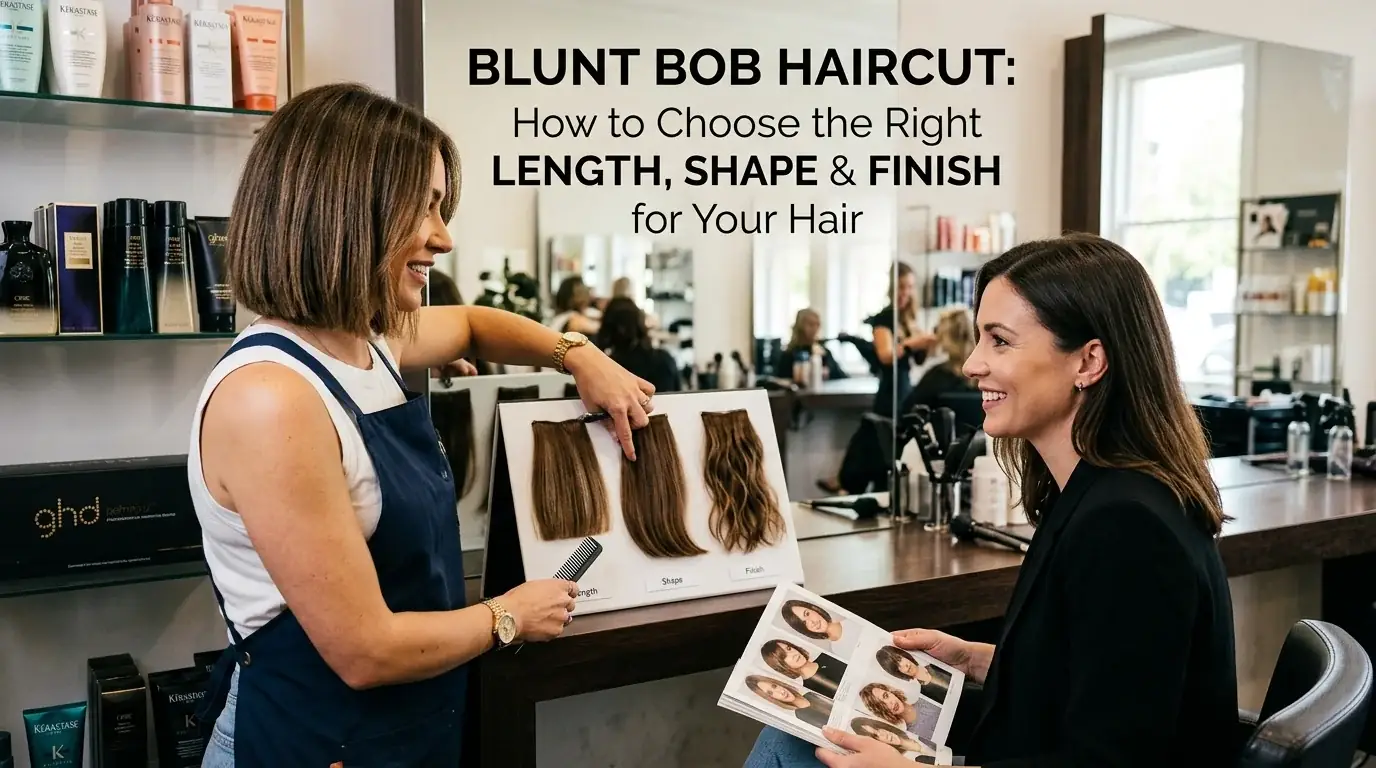
A blunt bob uses a strong, defined perimeter instead of heavily layered or feathered ends. The result can look sleek and graphic, softly waved, or naturally textured. What matters most is choosing the right dry length, weight distribution, parting and styling routine for your own hair.
A blunt cut keeps most of the weight at the perimeter, creating a clean line around the jaw, chin, neck or shoulders. Fine hair can gain the appearance of fuller ends, while thick, curly or coily hair may need careful internal shaping. Your ideal version depends on texture, density, face proportions and maintenance preferences.
| Decision | Practical starting point | Why it matters |
|---|---|---|
| Length | Jaw, chin, neck or longer | Changes face framing and styling flexibility |
| Perimeter | Crisp or slightly softened | Controls how graphic the finished shape looks |
| Fine hair | Preserve weight through the ends | Can make the outline appear fuller |
| Thick hair | Consider subtle internal weight removal | Helps control unwanted bulk |
| Curly or coily hair | Plan around dry shape and shrinkage | Prevents the finished length from sitting too high |
| Parting | Decide before the final cut | A centre and side part can change the balance |
| Maintenance | Expect regular shape checks | Precise edges show growth sooner |
What makes a blunt bob different?
The defining feature is the strong perimeter. Instead of relying on obvious layers for movement, the cut keeps the outer edge looking substantial and intentional. That doesn’t mean every strand must sit at one mathematically identical length. A skilled stylist may make small adjustments for density, curl pattern, growth direction or face framing while preserving the clean outline.
Current 2026 hair coverage is also showing less rigid versions of this idea. InStyle’s recent Scandi-style coverage, for example, pairs a defined perimeter with natural bends, side flips and softer movement rather than requiring a glass-straight finish. If you want to compare this shape with other short cuts, Stylevanta’s guide to bob cuts for different face shapes and hair textures explains how perimeter, layering and length change the result.
How to choose the right blunt bob length
Length may matter more than the haircut’s name. A difference of only a few centimeters can change how the style frames your jaw, cheeks and neck. A jaw-length cut creates a compact, graphic outline. Chin length gives a little more softness while keeping the cropped effect. A version that finishes below the chin can provide more visual length around the face and often gives you extra styling flexibility.
Professional stylist guidance published by Cosmopolitan recommends considering face shape alongside hair type and desired length. Its expert notes that longer versions can be useful when someone wants more elongation around a rounder face. If you’re unsure about cutting short, compare the idea with Stylevanta’s practical lob haircut guide. A longer shape can keep the solid edge while leaving enough length for more tie-back styles.
Use your everyday part before deciding
Tell your stylist whether you normally wear a middle part, deep side part or move your part around. This matters because hair doesn’t fall identically from every parting. Current stylist advice around clean-cut Scandi shapes specifically recommends discussing your usual styling direction before the cut. Bring reference photos that show a texture and density similar to yours. A photo of a sleek style on fine, straight hair may not predict how the same outline will behave on dense waves or tight curls.
Is a blunt bob good for fine, thick, wavy or curly hair?
Fine or lower-density hair is one of the clearest matches for a strong perimeter. Keeping more weight at the ends can make the hair appear denser than heavily feathered ends. Both ELLE and current stylist-led InStyle coverage highlight this fuller-looking effect. Straight hair also shows the cutting line clearly. If you like a precise finish, that natural fall can reduce how much work is needed to reveal the shape.
Wavy hair can keep the defined outline while adding movement. You don’t need to straighten every bend. A little natural texture can make a precise cut feel less severe. Thick hair needs more planning. Removing no weight at all may create more width than you want. Strategic internal shaping can reduce bulk while allowing the outside edge to stay clean. Curly and Coily hair can wear the same general silhouette, but the technique should follow the curl pattern and finished dry position. Shrinkage, volume and density affect where the edge ultimately sits. For more texture-specific planning, see Stylevanta’s guide to choosing short curly haircuts.
Face shape is a guide, not a rule
Haircut advice often turns face shapes into strict categories. That can make choosing a style harder than it needs to be. Start with proportions instead. Ask where you want the strongest horizontal line to sit. A shorter edge draws attention toward the jaw and lower face. Moving that line lower can visually extend the silhouette.
Oval faces have plenty of flexibility with cropped lengths. Heart-shaped faces may benefit from visible weight near the jaw. A longer version can alter the proportions around round or square faces. These are useful starting points, but hair texture, density and personal preference still matter. You can also change the balance without changing the main length. A soft side part, natural bend or fringe can shift where the eye lands. If fringe is part of your plan, Stylevanta’s side bangs guide explains how length, sweep and natural growth direction affect the face frame.
How to style a blunt bob without making it a daily project

You don’t need one fixed finish. The strong edge gives the haircut its identity, while styling can change from day to day. For a polished result, apply heat protection and dry the hair smoothly before using a straightener only where needed.
Keep heavy products away from fine roots if you want lift. For waves, create a loose bend through the mid-lengths and avoid curling every section identically. Leaving the ends a little straighter helps the perimeter remain visible. Natural texture can work too. Recent stylist guidance favours adapting the clean silhouette to the individual instead of forcing every texture into the same sleek formula. A side flip is another simple option. Moving the part can create instant root lift without changing the haircut.
How much maintenance should you expect?
Precision cuts tend to show growth earlier than soft, heavily textured shapes. As the hair grows, the endpoint shifts and the once-crisp perimeter can start to lose its original balance. Glamour’s stylist-led 2026 coverage suggests trims around every six to eight weeks for maintaining a sharp edge. Your own schedule may be shorter or longer depending on length, growth rate and how precise you want the line to remain.
Daily maintenance is more personal. Someone with naturally straight hair may find a clean cut quick to style. A person who straightens dense curls each morning could face a much larger time commitment. Choose the version that works on an ordinary weekday, not only after a salon blowout.
What to tell your hairstylist
Go into the appointment with decisions rather than only a hairstyle name.
Tell your stylist the following.
- where you want the dry perimeter to finish.
- whether you want a crisp or slightly softened edge.
- how you normally part your hair.
- whether you wear your natural texture or use heat most days.
- how much volume you want at the sides.
- whether being able to tuck or tie back your hair matters.
- how often you’re comfortable returning for trims.
Ask how your density and growth pattern could change the reference photo. That conversation is more useful than requesting an exact copy of someone else’s cut.
Frequently asked questions about a blunt bob
Does a blunt bob have layers?
Usually, the visible perimeter stays strong and layering is limited. Some hair types still benefit from subtle internal shaping. This can remove bulk or help curls sit properly without making the outer edge look heavily layered.
Can fine hair look thicker with this cut?
Yes. Keeping more hair at the perimeter can make the ends appear denser. Professional stylists frequently recommend strong, restrained edges for fine hair rather than removing excessive weight.
Can curly hair wear a blunt shape?
Yes, but the cut should account for shrinkage, density and curl pattern. The finished dry silhouette matters more than copying a straight-hair cutting formula.
Is it high maintenance?
It can be medium to high maintenance if you want a consistently sharp edge or need daily heat styling. Softer natural finishes can reduce daily effort, though the perimeter still needs periodic trims.
What is the difference between this cut and a French bob?
A French style is usually compact and often paired with fringe or a softer, more relaxed perimeter. The strong one-length version focuses more heavily on its clean edge. Stylevanta’s French bob guide covers the differences in length, fringe and styling.
Choose the version that fits your real routine
A strong perimeter can make a short haircut feel polished without adding complicated layers. The key is deciding where that line should sit and how much internal shaping your texture needs.
Save two or three reference photos, wear your usual part to the appointment and tell your stylist how you style your hair at home. A cut tailored to your density, texture and routine will be easier to live with than a perfect copy of a salon photo.