
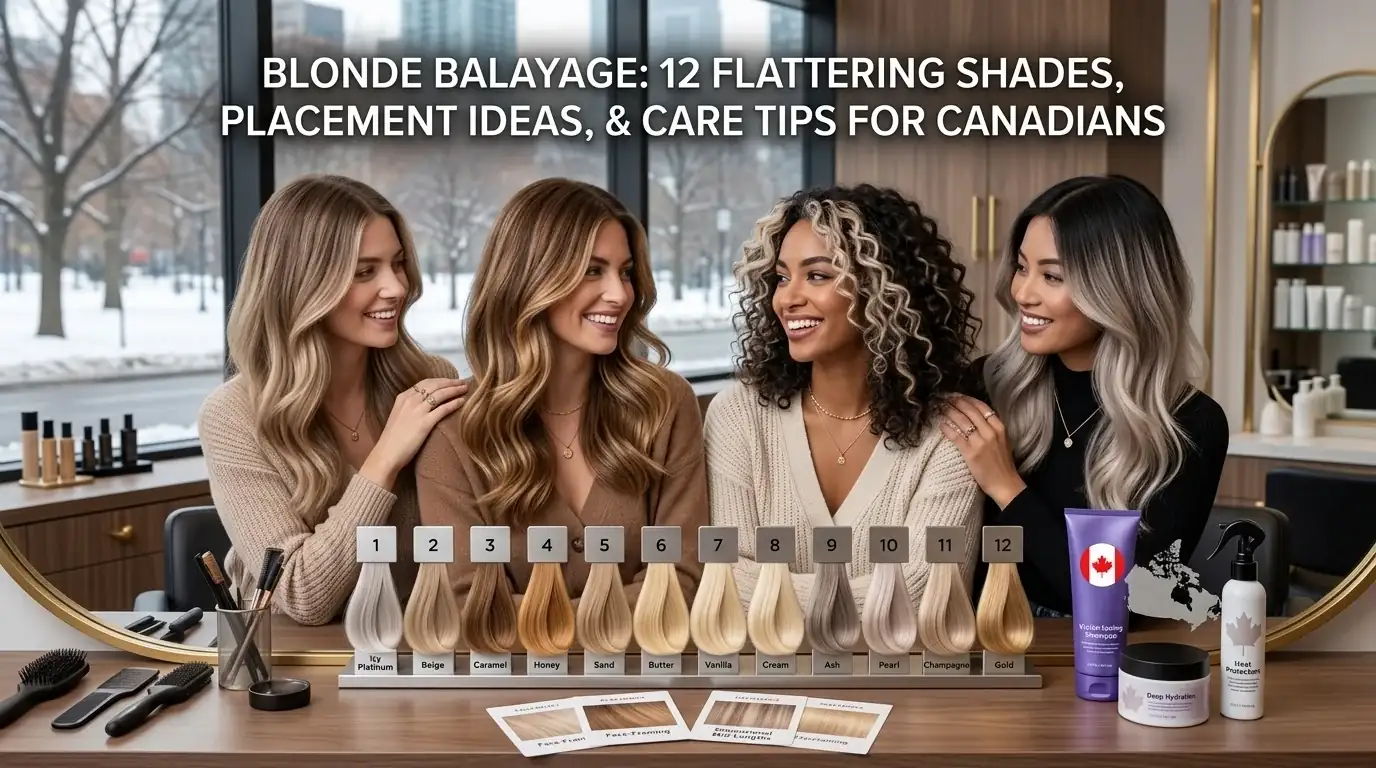
Blonde balayage gives you lighter, dimensional colour without requiring every strand to become blonde from the root. The technique can range from subtle beige ribbons to bright champagne ends, depending on your starting colour and desired contrast. It also offers a softer-looking grow-out than many traditional root-to-tip highlighting patterns.
Blonde balayage uses strategically painted lighter sections to create gradual brightness through the hair. Your colourist can keep depth near the roots, brighten selected mid-lengths and ends, and adjust the tone from honey to ash. The result can be subtle, high-contrast, warm, cool, or somewhere between.
| Quick fact | What to know |
|---|---|
| Main effect | Dimensional blonde with softer transitions |
| Common tones | Honey, beige, champagne, caramel, ash and bronde |
| Good starting bases | Blonde, light brown, brunette and darker hair |
| Lower-upkeep option | Natural-looking roots with brightness farther down |
| Main care concern | Dryness and unwanted yellow or warm tones |
| Best consultation tool | Reference photos with a similar starting base |
What Is Blonde Balayage, and Why Does It Look Softer?
Balayage comes from the French word associated with sweeping. In hair colouring, the term refers to lighter colour being painted or placed to create a blended effect rather than uniform stripes. Modern colourists may combine freehand work with foils or other methods when more lift is needed. The main visual difference is where the brightness begins and how it blends. A natural root can remain visible while lighter sections become more noticeable through the lengths and ends. That makes the technique useful when you like blonde dimension but don’t want a sharp line of regrowth. It can still look bright near the face, especially when a colourist adds lighter face-framing sections.
12 Blonde Colour Ideas to Consider
The easiest way to choose inspiration is to compare the starting base, amount of contrast and tone rather than focusing on a celebrity photo alone. Current colour guides show everything from warm golden ribbons to champagne, bronde and high-contrast finishes.
- Honey blonde: Warm golden pieces create a sunny result without requiring an icy finish.
- Beige blonde: A balanced beige can sit between distinctly warm gold and cool ash.
- Champagne: Pale beige-gold or cooler champagne tones work when you want a brighter finish.
- Caramel blonde: Caramel can bridge the gap between brunette roots and lighter ends.
- Bronde: Brown and blonde tones stay close enough in depth to create restrained contrast.
- Ash blonde: Cooler pieces can reduce the visual warmth of a naturally neutral or cool result.
- Golden blonde: Rich gold works well when you want warmth to remain part of the finished colour.
- Sandy blonde: Beige and soft gold combine for a muted, beach-inspired effect.
- Face-framing blonde: Concentrate the brightest pieces around the face while keeping more depth elsewhere.
- Rooted bright blonde: Maintain a deeper root while increasing lightness through the lower lengths.
- High-contrast blonde: Deep roots paired with pale sections create a more graphic result.
- Soft lived-in blonde: Fine ribbons, a natural root and restrained contrast create an understated finish.
If warmer brunette-blonde colour appeals to you, StyleVanta’s honey brown hair guide offers related caramel, gold and bronde ideas.
Choose Your Shade Around Your Starting Base
Your natural or current hair colour changes how much lifting may be needed. A person starting with dark blonde may reach pale pieces more easily than someone with deep brown, black or previously dyed hair. Dark hair can still work with painted blonde sections. The key question is how much contrast you want. Caramel, honey and darker beige tones usually create less contrast than pale champagne or platinum.
Previously coloured hair needs extra consideration. Permanent dark dye, repeated colour applications and old bleach can affect how evenly the hair lightens. Tell your colourist about your full colour history before planning a major change. For readers choosing lighter tones against deeper complexions, StyleVanta’s guide to hair colour for brown skin explains how undertone, depth and contrast can work together.
Warm, Neutral or Cool: Which Blonde Direction Fits?
Undertone can be a useful starting point, but it doesn’t need to become a strict rule.Warm honey, caramel and gold can create harmony with golden or peach undertones. Beige and bronde offer a more balanced direction. Ash, pearl and cooler champagne tones create a cooler finish. You can also choose contrast intentionally. Someone with a warm complexion may prefer an icy blonde, while someone with cooler colouring may like rich honey.
Bring reference photos showing both the tone and your preferred amount of root depth. A pale-blonde photo taken on someone with a much lighter starting colour may not represent the process needed for your own hair.
Balayage vs. Highlights vs. Ombré
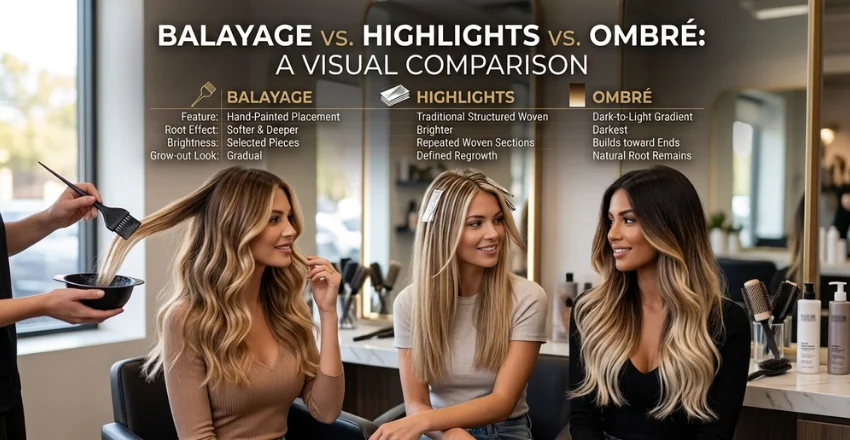
These terms overlap, but they don’t describe the same thing. Vogue’s colourist guidance describes balayage as a hand-painted approach, while traditional highlights tend to be more structured. Ombré describes a visible dark-to-light progression through the hair.
| Feature | Painted placement | Traditional highlights | Ombré |
|---|---|---|---|
| Root effect | Often softer and deeper | Often brighter near the root | Usually darkest at the root |
| Brightness | Selected pieces | Repeated woven sections | Builds toward the ends |
| Grow-out look | Can appear gradual | Regrowth may look more defined | Natural root can remain |
| Best for | Dimensional lightness | More uniform brightness | A noticeable gradient |
If you’re drawn to a stronger dark-to-light transition, StyleVanta’s modern ombré hair guide shows how contrast and placement change the finished look.
How Much Maintenance Should You Expect in Canada?
A rooted, dimensional result can reduce how quickly new growth becomes visually obvious. That doesn’t mean the blonde portions need no maintenance. Lightened hair may feel drier than untreated hair, so conditioner, careful heat styling and regular trims can help keep the ends manageable. Toners can also fade before the underlying lightness disappears.
Yellow warmth is common in lighter blonde sections. Purple products deposit violet pigment to counter yellow tones rather than making the hair lighter. StyleVanta’s purple shampoo guide explains when violet toning makes sense and when orange warmth may call for a different approach. Canadian weather can also affect your routine. Heated indoor air during colder months can leave already-processed lengths feeling dry, so you may find that conditioning needs change between seasons.
Can Lightening Damage Your Hair?
Lightening changes the hair fibre, so condition matters when deciding how pale to go. More dramatic lifting from a dark base usually places greater demands on the hair than adding a few warmer pieces. That is one reason professional assessment matters for major transformations. Vogue’s expert guidance specifically cautions against attempting complex blonde painting at home because uneven lift, brassiness and breakage can result.
If permanent or semi-permanent dye forms part of your home routine, Health Canada says applicable products carry skin-sensitivity warnings and patch-test instructions. It advises repeating the recommended test before each use because sensitivity can develop over time.
What to Tell Your Colourist
A strong consultation is more useful than asking for a shade name alone. Two people can ask for “beige blonde” and picture completely different results.
Bring two or three photos and be ready to explain the following points.
- How much of your natural root you want to keep.
- Whether you prefer warm, neutral or cool colour.
- How bright you want the pieces around your face.
- How much contrast you want against your base.
- Your previous colour and chemical-service history.
- How often you’re prepared to return for toning or larger colour appointments.
Ask what is realistic in one session. If your current hair is dark or heavily coloured, a staged approach may protect its condition better than forcing the palest possible result immediately.
Choose Contrast Before Chasing the Lightest Blonde
Start with three decisions: how much root depth to keep, how bright the ends should become and whether the tone should feel warm, neutral or cool. Then choose inspiration photos with a starting colour close to yours. That approach gives your colourist a clearer target and helps you plan the upkeep before lightener ever touches your hair.
Frequently Asked Questions
How long does blonde balayage last before it needs refreshing?
There isn’t one fixed schedule. Rooted placement can remain visually blended as your hair grows, while toner or gloss may need attention sooner. Washing habits, chosen tone, heat exposure, starting colour and the amount of contrast all affect how the result ages.
Can brunettes get a light blonde result?
Yes, but the amount of lifting needed varies. Naturally dark or previously coloured brunette hair may need more than one session if the goal is significantly lighter. A colourist can advise whether honey, beige or a brighter blonde is practical for your current condition.
How much does balayage cost in Canada?
Prices vary by city, salon, hair length, density and the work required. As one regional example, a 2026 Toronto pricing guide reports roughly CAD $150 to $400+, with higher prices possible for complex services. Treat that as a Toronto reference rather than a Canadian average.
Is it lower maintenance than regular highlights?
It can be when the design keeps natural depth near the scalp. Traditional highlights placed close to the roots can create a more visible regrowth pattern. The maintenance difference depends on the exact placement and how bright you want to stay.