
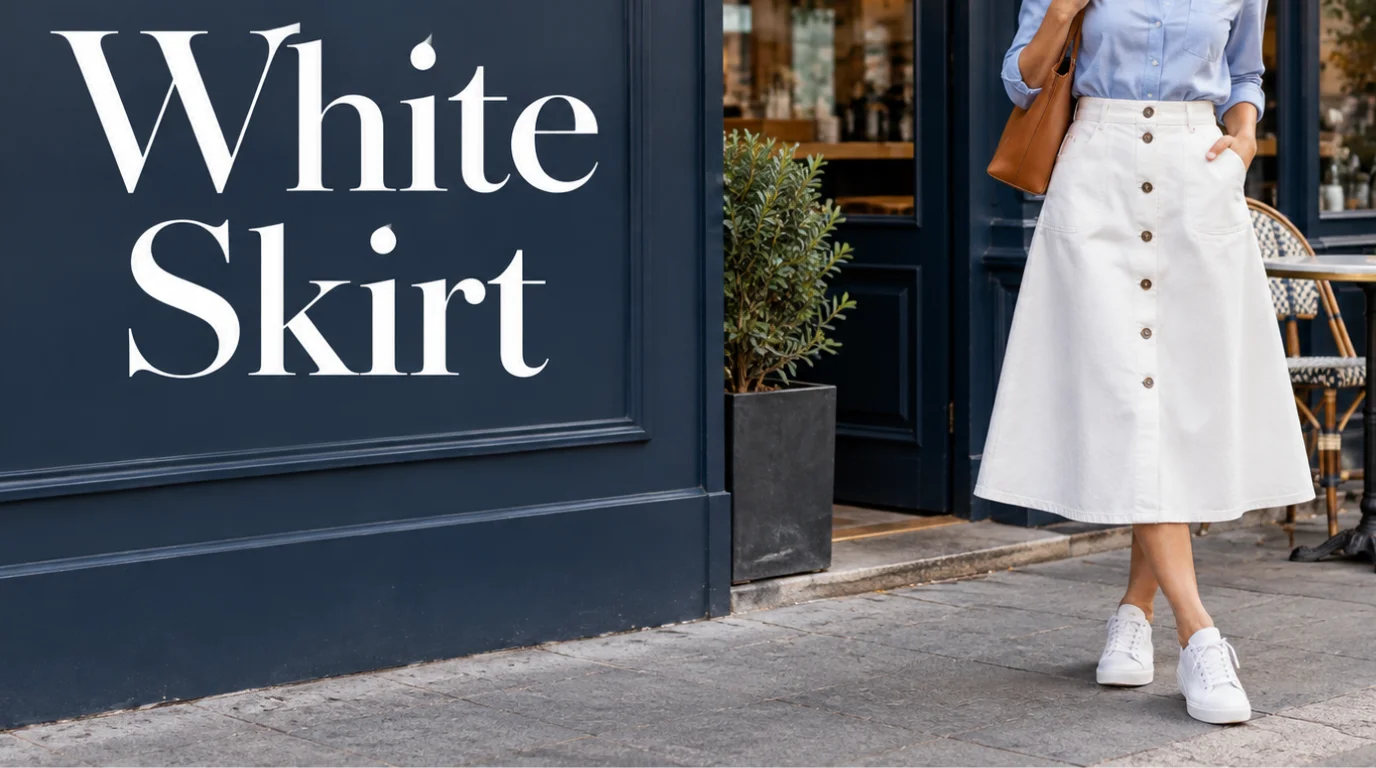
A white skirt can work far beyond a few warm summer weekends. The right design can suit casual days, offices, dinners, holidays, and seasonal layering across Canada. Your best choice depends on length, fabric, opacity, fit, and what you already have in your wardrobe. Elsewhere on the site: Necklace Lengths.
Direct answer: Choose a skirt with reliable opacity, comfortable movement, and a length that suits your usual shoes and activities. Midi styles offer the broadest versatility, while minis feel casual and maxis create more movement. Cotton, denim, linen blends, satin, and structured woven fabrics each create a different look. Also worth reading: Leather Skirt Guide for Canada.
| What to consider | Practical starting point | Why it matters |
|---|---|---|
| Length | Midi for versatility | Works with flats, sneakers, boots, and heels |
| Fabric | Choose for season and occasion. | Changes warmth, drape, structure, and care |
| Opacity | Check in natural light. | Pale fabrics can reveal more than expected. |
| Fit | Allow comfortable sitting and walking. | A good fit reduces pulling and the need for constant adjustment. |
| Lining | Useful for light woven fabrics | Adds coverage and can improve drape |
| Shoes | Match the skirt’s volume and length. | Footwear changes the outfit’s proportions. |
| Season | Layer instead of storing it away. | White works beyond spring and summer. |
Key Takeaways
- Midi lengths are a practical first choice for work, weekends, and dinners.
- Cotton and linen blends suit warmer weather, while denim and knits add structure.
- Always check opacity under daylight before removing tags.
- Neutral, dark, pastel, and saturated tops can all work with white.
- Tights, boots, knitwear, and outerwear make Canadian fall and winter styling easier.
- Choose a style that works with your existing wardrobe instead of buying for one outfit.
White Skirt Styles Compared: Which One Should You Choose?
Current Canadian retailer assortments show substantial variety rather than one dominant silhouette. Shoppers can find poplin, linen-blend, satin, denim, eyelet, lace, pleated, knit, and tiered options. Mini, midi, maxi, and skort formats are also widely represented.
That variety means silhouette should come before trend when you shop. Think about where you will wear the piece most often and which shoes you already own. A practical choice should create several outfits without requiring several new purchases.
| Style | Best suited to | Main advantage | Check before buying. |
|---|---|---|---|
| Mini | Casual days, evenings, summer outfits | Easy with sneakers and flats | Sitting comfort and coverage |
| Midi | Work, weekends, dinners, events | Broad styling range | Where the hem meets your calf |
| Maxi | Holidays, warm days, relaxed outfits | Movement and coverage | Hem length with flat shoes |
| Denim | Casual wardrobes | Structure and durability | Waist comfort and stiffness |
| Satin | Dinner and dressier outfits | Fluid, polished appearance | Cling and visible lines |
| Cotton or poplin | Everyday warm-weather wear | Breathability and crisp shape | Wrinkling and opacity |
| Linen blend | Hot weather and holidays | Airy texture | Sheerness and care needs |
| Pleated | Preppy or polished outfits | Built-in movement | Bulk around the waistband |
Our recommendation: start with a lined or sufficiently opaque midi if you want one adaptable option. You can shift it from casual to polished by changing your top, shoes, and outer layer. Choose another length first when it better matches your lifestyle or preferred proportions.
Check Opacity Before You Focus on Color or Trends
White fabric can appear opaque on a hanger yet become transparent in daylight. Stretching across the hips can also change how much the material reveals. Check the garment from several angles in strong natural or fitting-room light.
Fabric weight alone does not guarantee coverage. Weave, lining, fiber content, pocket bags, and garment construction can all affect transparency. Similar considerations apply when choosing white linen pants for Canadian summers, especially with lightweight fabrics.
Skin-toned undergarments are usually less visible beneath pale clothing than bright white underwear. Bonded, edge-free underwear can also reduce visible lines under smooth fabrics. Your preferred coverage should guide the final decision rather than a rigid styling rule.
Choose a Length That Works With Your Daily Life
Mini skirts give an outfit a youthful, relaxed feel and work easily with sneakers, loafers, and boots. Check whether you can sit, bend, and walk without repeatedly adjusting the hem. A built-in short or skort construction can provide extra coverage for active days.
Midi lengths are especially adaptable because they sit between casual and formal dressing. A straighter midi can look polished, while a fuller cut feels softer and more relaxed. Canadian business-casual outfits can also include midi skirts when the fabric and styling suit the workplace.
Maxi styles create more visual movement and often work well with fitted or compact tops. Watch the hem when choosing footwear for rain, slush, or wet pavements. A slightly shorter maxi may be more practical if you walk or use public transit often.
How to Style One for Casual Days
For an uncomplicated daytime outfit, combine the skirt with a T-shirt, tank, polo, or relaxed button-down. Sneakers, flat sandals, ballet flats, or loafers can keep the result comfortable. Add a denim jacket or cardigan for temperature changes during the day. Also worth reading: Tennis Skirt Guide for Canada.
Proportion matters more than following one formula. A fuller bottom often looks balanced with a fitted or tucked top, while a narrow cut can handle more volume above. These are starting points rather than rules, so adjust them around your comfort and preferred silhouette.
For warmer months, use breathable layers that can handle shifting temperatures. StyleVanta’s summer outfit ideas for Canada offer more combinations built around light fabrics and practical layers. That approach helps the same wardrobe work through hot afternoons and cooler evenings.
Make It Work for the Office
A white midi can work in many business-casual settings when the fabric is opaque, and the silhouette looks polished. Pair it with a fine-knit top, blouse, button-down shirt, or simple shell. Finish the outfit with loafers, slingbacks, ankle boots, or understated heels.
Choose structure based on your workplace rather than a universal office rule. Denim and short hems may suit relaxed teams but feel too casual elsewhere. A lined A-line, straight, pleated, or softly tailored midi gives you a more conservative starting point.
Color can keep the outfit from feeling too summery. Navy, charcoal, chocolate, burgundy, camel, forest green, and black add contrast without becoming difficult to coordinate. A matching belt, bag, or shoe colour can make the combination feel more intentional.
Build a Dressier Outfit Without Overcomplicating It
Satin, lace, pleats, or a clean structured shape can move easily into dinners and celebrations. Pair the bottom with a fitted knit, an elegant blouse, a camisole with a jacket, or a coordinated tonal top. Refined flats and modest heels both work, depending on the occasion.
Texture becomes useful when you wear several pale shades together. Pair smooth fabric with knitwear, suede, leather, or subtle jewelry to keep a tonal outfit from looking flat. Cream and ivory can also sit beside bright white without requiring an exact color match.
Romantic details can push the outfit in a softer direction without becoming costume-like. Bows, fitted cardigans, Mary Janes, lace, and pearls provide options if you enjoy the aesthetic. The StyleVanta guide to coquette style explains how to use those details with simpler wardrobe pieces.
Wear White Through Canadian Fall and Winter
You do not need to retire pale skirts when summer ends. Heavier textures, darker layers, tights, and closed footwear can make them work in colder months. The practical issue is usually weather and fabric care rather than color.
Try a knit or denim midi with a sweater, long coat, and ankle- or knee-high boots. Opaque tights add warmth with shorter designs and create deliberate contrast. Grey, black, brown, burgundy, and navy layers can ground bright white in cooler seasons.
Winter conditions still require common sense. Long hems can collect road salt, slush, and moisture on messy days. Save floor-skimming pieces for dry conditions and choose washable fabrics when the forecast looks unpredictable.
What Colors Look Good With White?
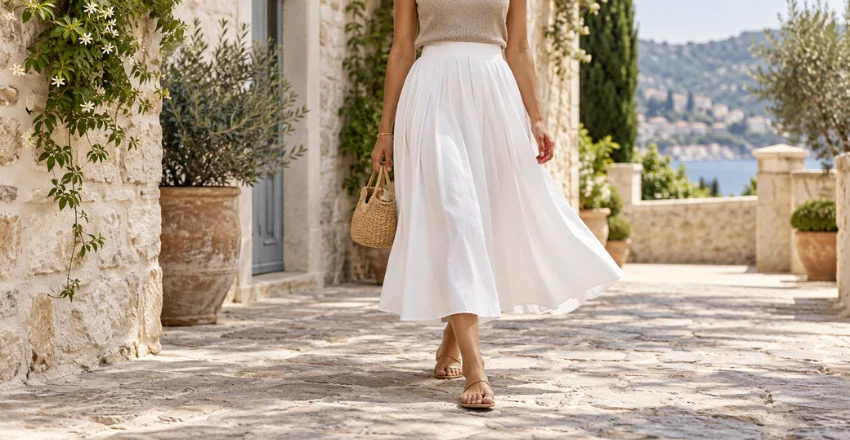
Almost any color can coordinate with a neutral base, but different combinations create different moods. Black and navy offer crisp contrast, while beige and cream create a quieter tonal result. Pastels feel soft, and saturated red, green, or cobalt can become the outfit’s focal point.
Denim blue is another easy pairing because it introduces color without demanding precise matching. Brown leather accessories can add warmth, especially during fall. Metallic shoes or jewelry can dress up a simple combination without adding another strong color.
Do not assume every item called white has the same undertone. Some pieces lean icy, creamy, grey, or ivory. Comparing the garments together in daylight helps you decide whether the difference looks intentional.
Practical Care Tips for Keeping Light Skirts Wearable
Read the garment label before treating a stain because fabric requirements vary. Cotton, denim, linen blends, knits, satin, and delicate lace may need different washing methods. Treat visible marks promptly instead of repeatedly washing the entire garment unnecessarily.
Store pale clothing away from dirty footwear, dark makeup, and color-transfer risks. Make sure the skirt is completely dry before placing it in a wardrobe or storage container. Clean storage also prevents small marks from becoming harder to remove later.
Carry practical protection when the occasion calls for it. A long coat can shield light fabric during a commute, while a small stain-removal product can help during travel. The goal is to wear the piece confidently rather than treating it as too delicate to use.
Frequently Asked Questions
What should I wear with a white skirt?
Start with tops you already wear, including T-shirts, button-downs, knits, blouses, and tanks. Choose footwear based on the length and occasion, then add one practical layer for the weather. Neutral colours are simple, but bright colours and prints work just as well.
Is a white midi suitable for work?
Yes, it can suit many workplaces when the fabric is opaque, and the cut matches the dress code. Pair it with a polished top and appropriate closed or refined footwear. More conservative offices may call for a lined, structured design rather than sheer or casual fabrics.
Can I wear white skirts after Labour Day in Canada?
Yes, there is no practical reason to stop wearing white because of a calendar date. Fabric weight, footwear, outerwear, and weather have a greater effect on seasonal suitability. Knits, denim, boots, tights, and darker layers can carry pale skirts into fall and winter.
What underwear works best under a light skirt?
A close match to your skin tone usually shows less under pale fabric than bright white underwear. Edge-free finishes can also reduce lines under fitted or fluid materials. Test the full outfit in daylight because fabric transparency varies.
Which length is the most versatile?
A midi is a strong starting point for shoppers who want one piece for several settings. It can work with sneakers, flats, boots, and heels while offering useful coverage. Your height and preferred proportions should still determine the exact hem position.
Choose for Your Wardrobe, Not One Photograph
The most useful purchase is one that works with clothes and shoes you already own. Check opacity, movement, comfort, fabric care, and seasonal practicality before focusing on a single trend. A versatile design should give you several believable outfits instead of one carefully staged combination.
For many Canadian wardrobes, an opaque midi in cotton, poplin, denim, satin, or another practical fabric offers the easiest starting point. Minis and maxis remain strong choices when their proportions better suit your routine. Start with how you live, then choose the silhouette that makes getting dressed easier.