
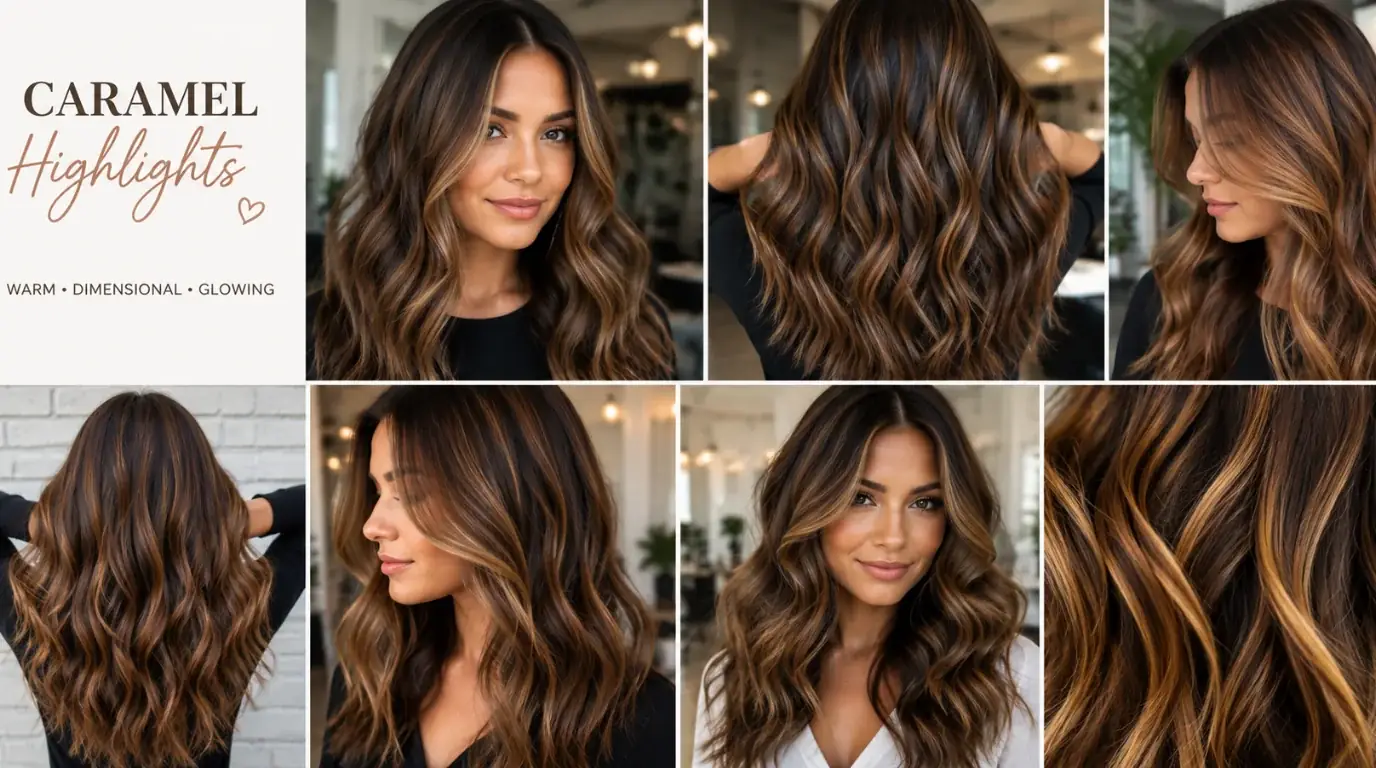
Caramel highlights can brighten brunette hair without taking away the depth that makes brown hair look rich. The shade ranges from soft golden brown to deeper amber and toffee, while placement can be subtle or bold. For most people, the best result depends on their starting color, undertone, hair condition, and preferred upkeep.
Caramel-toned highlights add warm golden-brown dimension to brunette hair through techniques such as balayage, babylights, ribbons, and face-framing pieces. A softer placement keeps more natural depth and usually creates an easier grow-out. Darker hair may need to be lightened first, while the final toner determines whether the result looks golden, neutral, or deep toffee.
| Caramel Highlights | What to know |
|---|---|
| Color family | Warm golden-brown to amber and toffee |
| Best base colors | Light brown through deep brunette |
| Popular placement | Balayage, babylights, ribbons, and face framing |
| Softest grow-out | Rooted balayage or fine painted pieces |
| More noticeable result | Brighter face frame or wider ribbons |
| Main care focus | Protect lightened lengths and maintain the desired tone. |
| Canadian consideration | Salon costs and upkeep vary by city, hair length, and service. |
How to Choose Caramel Highlights for Your Hair
Start with contrast, not a shade name. Someone with medium brown hair may need only a gentle lift to create visible warmth. A person with espresso or black hair may need a more pronounced contrast before the lighter pieces become easy to see.
Placement matters just as much. Fine highlights scattered through the hair create a blended effect, while wider ribbons make the color a stronger feature. Keeping the root area deeper can also reduce the appearance of new growth.
StyleVanta’s guide to balayage and how the technique works explains why hand-painted color often gives softer root placement than more structured highlighting. The site notes that balayage is a technique rather than a specific blonde look, so it can work with warmer brunette tones too.
12 Caramel Hair Ideas Worth Saving
1. Classic caramel balayage on medium brown hair
Keep the crown close to your natural brown and add warm painted sections through the middle and ends. This gives the hair visible movement without turning the entire color lighter. It works particularly well if you want a softer regrowth line. Ask your colorist to leave enough brunette between the lighter areas so the result remains dimensional.
2. Fine babylights through dark brunette hair
Babylights use smaller highlighted sections to create a more delicate change. On deeper brunette hair, they can break up a solid base without making the finished color feel heavily highlighted. Choose a deeper toffee tone if pale gold would create more contrast than you want.
3. Face-framing caramel pieces
Concentrating brightness around the face can change the look of your color without lightening every section. Ask for narrow pieces for a softer result. Wider front sections create a stronger money-piece effect and require more deliberate upkeep as the roots grow.
4. Chocolate brown with warm ribbons
A chocolate base and medium caramel ribbons sit close enough in depth to look rich rather than striped. This pairing also works well on layered hair, as lighter sections can emphasize movement throughout the cut.
5. Deep espresso with toasted caramel
You don’t need to move dark brunette hair toward blonde. Toasted, deeper caramel can create enough separation to show dimension while keeping the finished look grounded. Darkly colored hair can respond differently to lightener, so tell your colorist about any old permanent dye before the service.
6. Golden caramel on curls
Curly and coily hair can show highlighted pieces differently as individual bends catch the light. Placement should follow the hair’s shape and movement rather than copying a pattern designed for straight strands. Keeping some darker sections also makes individual curls easier to see.
7. Neutral caramel for cooler undertones
Caramel doesn’t have to look strongly orange or yellow. A colorist can keep the brunette base more neutral while adding controlled warmth in select areas. If you’re deciding which warm family suits your complexion, StyleVanta’s hair color guide for brown skin and different undertones compares caramel, honey, chestnut, chocolate, and cooler brunette directions.
8. Caramel and honey blended together
Honey generally reads as more golden, while caramel often feels slightly deeper, more amber or toffee-toned. Combining the two creates a multi-tonal brunette rather than relying on one uniform light shade. For a closer comparison, see StyleVanta’s honey-brown hair guide, which explains how golden brunette, caramel brown, honey blonde, and chocolate brown differ.
9. Subtle highlights on a bob
Short hair gives a colorist less length to work with when blending gradually. Fine pieces around the front and crown can add dimension without making the shape look busy. A softly brightened fringe or front section can also create a noticeable change with fewer processed strands.
10. Caramel ombre ends
Keep the root and upper lengths brunette, then increase warmth toward the bottom half. This produces a stronger dark-to-light progression than scattered highlighting. StyleVanta’s guide to modern ombré hair explains that ombré refers to the color effect, while balayage refers to the placement method.
11. Soft caramel around layered hair
Long layers give a colorist several places to position lighter ribbons. Colors near the movement points can make the cut appear more defined. Instead of asking for brightness everywhere, identify the sections you most want to emphasize.
12. Rooted caramel brunette
A root melt keeps the top deeper before moving into a warmer color through the lengths. It’s a useful choice when you want noticeable brightness but dislike a sharp regrowth line. It can also preserve the visual depth that prevents a highlighted brunette from reading as an all-over lighter brown.
Which Placement Is Easiest to Maintain?
A rooted or hand-painted placement usually gives you more flexibility than highlights that begin uniformly near the scalp. StyleVanta notes that a larger balayage refresh commonly falls around eight to sixteen weeks, although timing changes with placement, contrast, and personal preference. Toner or gloss may need attention before the lightened sections themselves do.
That doesn’t mean every warm brunette needs the same appointment schedule. Watch the tone, visible root contrast, and condition of your ends. Refresh when the color no longer looks the way you want rather than following an arbitrary calendar.
How to Keep Highlighted Hair Looking Fresh
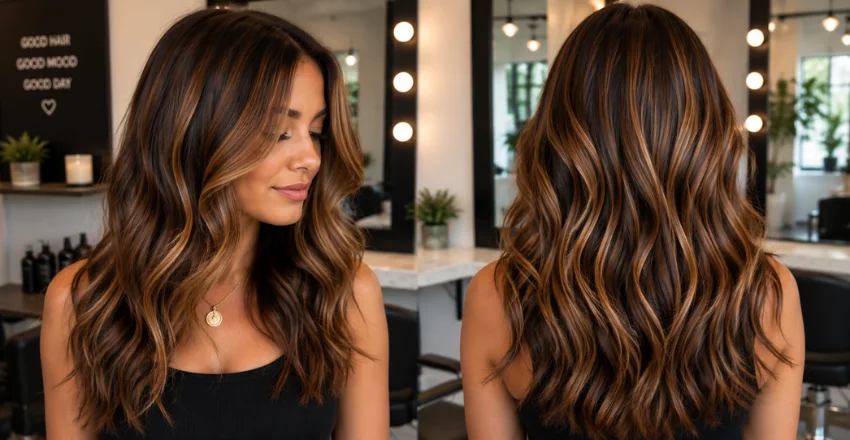
Lightened sections deserve more conditioning than untouched hair if they begin to feel rough or dry. Use heat protection before hot tools and avoid unnecessary high temperatures. A moisture treatment can also help when processing leaves that feel dry.
StyleVanta’s hair mask guide for dry and color-treated hair explains how fine, thick, and processed strands may require different levels of conditioning. Don’t reach automatically for purple shampoo because your color is warm. Purple pigment is designed mainly to counter unwanted yellow.
Whether a toning cleanser is appropriate depends on which unwanted tone appears and the finish you’re trying to preserve.
What to Tell Your Colorist
Bring two or three reference photos rather than relying on the word “caramel.” The shade name covers a broad range of results.
Tell your stylist:
- Your natural color and current dyed color.
- Whether you want to stay clearly brunette.
- Where you want the brightest sections.
- Whether you prefer gold, amber, beige, or deeper toffee warmth.
- Your previous bleach, permanent dye, or chemical-service history.
- How often you’re willing to return for maintenance.
A useful request could be: “I want to keep my brunette base, with soft warm ribbons through the lengths and a little more brightness around my face. I want the roots blended rather than sharply highlighted.” That gives the colourist more useful information than a shade name alone.
A Note for Canadians Colouring Hair at Home
If you use an at-home dye, follow the manufacturer’s warnings and testing directions each time. Hair-colour sensitivity can develop after earlier problem-free use, so previous tolerance doesn’t guarantee the next application will be the same.
StyleVanta’s current Canadian hair-colour guidance also recommends following package directions carefully and avoiding hair dye on eyebrows or eyelashes, in line with Health Canada safety guidance. Complex corrections are different. Previously dyed dark hair, uneven color, or a major jump in lightness is usually easier to assess during a professional consultation.
Choose the Result Before the Formula
The strongest plan starts with three decisions: how light you want to go, where you want the brightness to be, and how much maintenance you’ll accept. Save inspiration photos that resemble your current hair depth and texture. Then compare subtle ribbons, brighter face framing, balayage, and rooted color before your appointment.
A clear visual goal makes it easier for your colorist to translate “caramel” into a result that suits your hair.
Frequently Asked Questions
Are caramel highlights good for dark brown hair?
Yes. Dark brunette hair can provide enough contrast for warm golden-brown or toffee sections to show clearly. The amount of lightening required depends on the starting depth, previous color, and desired brightness.
Is caramel warmer than honey brown?
Both belong to the warm family, but they aren’t identical. Honey brown tends to look more golden. Caramel often moves toward richer amber or toffee tones.
Is balayage better than regular highlights?
Neither method is automatically better. Balayage often creates softer placement and less obvious root growth. Traditional highlights can produce more consistent brightness closer to the scalp. Choose based on the result and upkeep you prefer.
Can you get this color without bleach?
That depends on your current shade. Deposit-only color can add or change tone but cannot make naturally dark pigment substantially lighter. Deeper hair often requires some form of lightening when the goal is clearly brighter pieces.
How do I know which caramel tone suits me?
Use your starting hair color, complexion, desired contrast, and maintenance tolerance as a guide. People with warm complexions often suit clearer gold and amber tones. On neutral or cooler complexions, a balanced brunette base with more selective warmth tends to look better.