
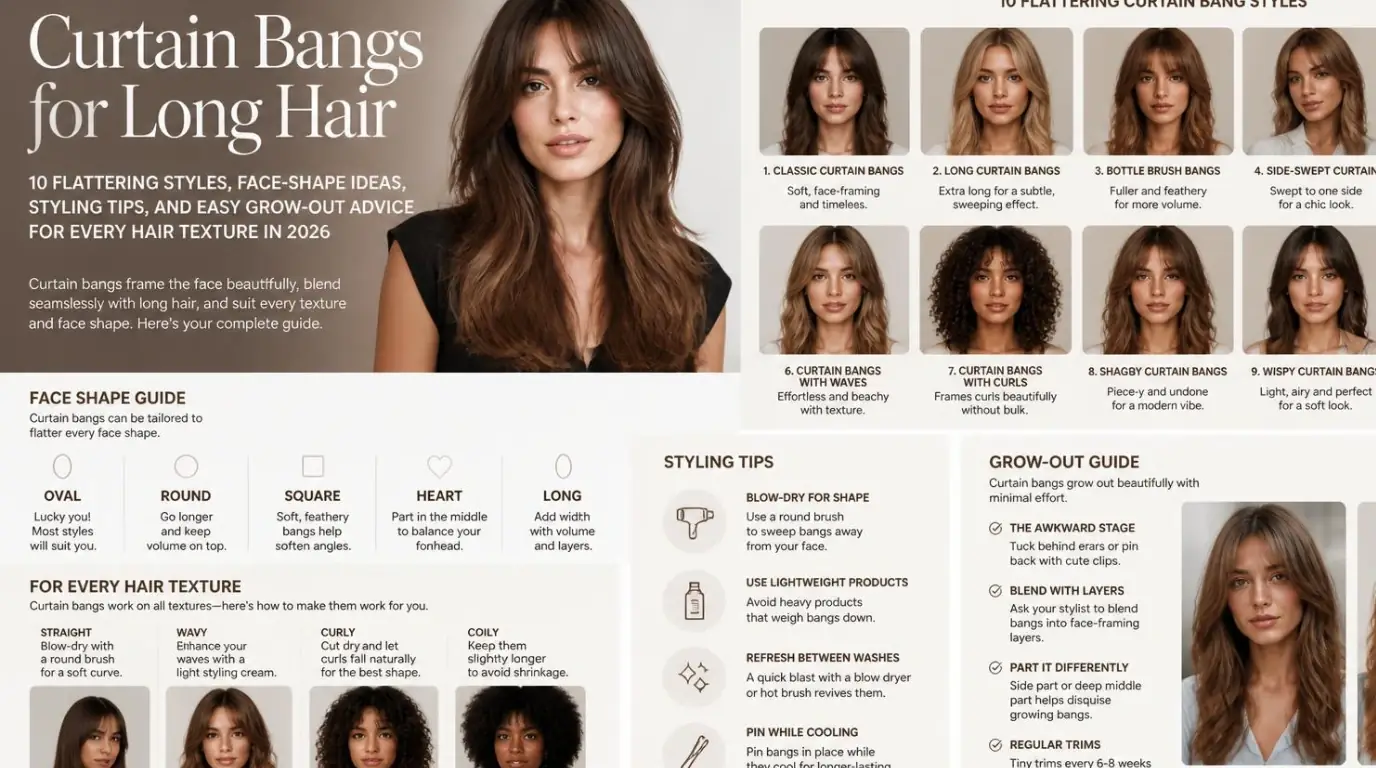
Curtain bangs for long hair can keep their length and still feel noticeably different when the front is reshaped. If you’re searching for curtain bangs long-hair inspiration, the strongest looks connect the fringe to the rest of the haircut rather than treating it as a separate section.
This fringe works well with long hair because shorter center pieces add shape around the eyes while longer sides blend into layers. The most wearable version is tailored to your face proportions, natural texture, density, part, and styling routine. Longer pieces also make the grow-out easier.
| What to decide | Practical starting point |
| Fringe length | Shortest pieces near the brows, eyes, or cheekbones |
| Outer pieces | Blend toward the cheekbones or jaw. |
| Lowest-commitment option | Longer, cheekbone-skimming fringe. |
| Best layer connection | Face-framing layers that continue into the length |
| Styling effort | A few minutes to reset and shape the front |
| Upkeep | More frequent trims for a defined shape; fewer for longer blends |
| Hair texture | Straight, wavy, curly, or coily when the cut is adjusted correctly |
Why This Fringe Works So Well With Long Hair
Long lengths can sometimes look heavy around the front, especially when most of the shape sits below the shoulders. Curtain bangs move the focal point upward without requiring you to lose much overall length. The center opening keeps part of the forehead visible. Longer side pieces then guide the eye toward the cheekbones and connect with the rest of the haircut.
Curtain bangs for long hair That blend is what makes the style flexible. You can wear the length straight, waved, curled, tied back, or in a loose bun while keeping soft pieces around the face. If you’re still comparing fringe shapes, StyleVanta’s guide to the main types of bangs explains how curtain, wispy, blunt, bottleneck, and side-swept styles differ.
10 Curtain Bangs for Long Hair Styles to Save for Your Next Cut
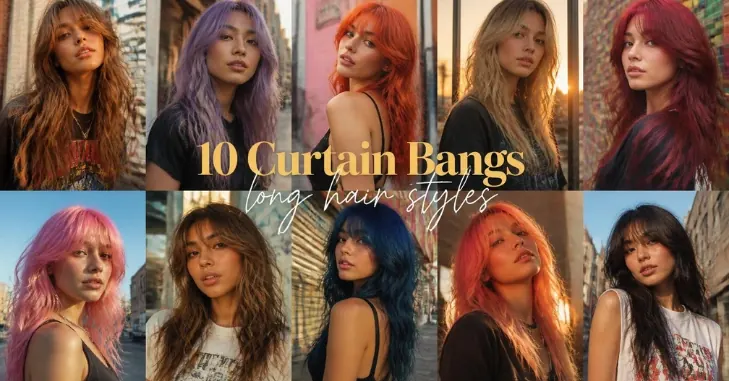
1. Long Layers With a Soft Cheekbone Fringe
This is a practical starting point if you want movement without a dramatic change. Keep the center soft, then let the longer pieces reach toward the cheekbones. Ask for face-framing layers that continue below the fringe. That connection stops the front from looking disconnected from the rest of your hair.
2. Chin-Length Fringe for a Low-Commitment Change
A longer fringe that falls near the chin gives you plenty of styling flexibility. It can sweep away from the face, tuck behind the ears, or blend into a ponytail. This version also suits anyone who worries about growing bangs out. The front already sits close to face-frame length.
3. Wispy Front Pieces With Sleek Long Hair
Straight lengths create a clean contrast with a soft, airy fringe. Keep enough separation through the front so the forehead remains partly visible. If your natural texture is Type 1, StyleVanta’s straight-hair guide can help you consider strand thickness, volume, and product weight before choosing a cut.
4. Soft Fringe With Loose Waves
Loose waves and a parted fringe create movement from the face through the ends. The result works especially well when you prefer an undone finish instead of a polished blowout.
Ask for the sides to merge gradually into the first visible layers. A harsh gap between the fringe and length can make the haircut look unfinished.
5. Butterfly Layers With a Fuller Front
Butterfly-style layers place more visible movement around the face while keeping length through the back. A fuller fringe can become the shortest part of that layered shape. This option suits people who like volume around the cheekbones and upper lengths. It also gives a blowout more structure.
6. Curly Parted Fringe With Long Natural Texture
Curly hair does not need to be straightened to wear a center-parted fringe. The cut should follow the curl pattern rather than forcing every section to match the same length. Ask your stylist to consider shrinkage and where each curl rests when dry. The finished shape matters more than the wet cutting line.
7. Feathered Fringe With Thick Long Hair
Higher-density hair can support a fuller front section, but too much weight may cause it to fall as a single heavy block.
Softening the ends can create movement while preserving density near the roots. The goal is controlled shape, not aggressive thinning.
8. Slightly Off-Center Parted Fringe
You do not need a perfectly centered part for the style to work. A small shift can suit a natural growth pattern or make daily styling easier. If you prefer stronger side movement, compare the look with StyleVanta’s side bangs guide before your appointment.
9. Long Face-Framing Pieces for Ponytails and Buns
If you wear your hair up often, keep the outer pieces long enough to sit softly beside the cheekbones or jaw. Those pieces create shape around the face when the rest of your hair is tied back. They can also be pinned away when you want a cleaner finish.
10. Barely-There Curtain Pieces
You can get the effect without committing to a thick section. Ask for a narrow, soft front area that opens at the center and gradually lengthens. This option works well if you want to test how fringe fits your routine before taking more density from the front.
Choose the Length for Your Face Shape
Curtain bangs can be adjusted rather than assigned to one face shape. The useful question is where you want the shortest and longest pieces to create movement.
| Face shape | Starting point to consider | Main effect |
| Round | Longer pieces below the cheekbones | Adds vertical and diagonal movement |
| Square | Soft, feathered edges | Reduces the look of a rigid front line |
| Heart | Center pieces with fuller sides | Balances a wider upper face |
| Oval | Short or long versions | Offers broad flexibility |
| Long or oblong | Fuller fringe near brows or cheekbones | Breaks up vertical length |
| Diamond | Soft outer pieces around cheekbones | Frames prominent cheekbones |
Treat this table as a starting point, not a rule. Your hairline, density, texture, forehead proportions, and normal part may affect the result more than a face-shape label.
Match the Fringe to Your Texture and Density
Fine or Lower-Density Hair
Keep enough hair at the front to create a visible shape. Removing too much density can leave separated strands rather than a soft frame. A lighter fringe can work well, but ask your stylist how much hair needs to be borrowed from the front section.
Straight Hair
Curtain bangs on straight hair may need a little root direction to open rather than fall flat. A small round brush or controlled blow-dry can create the bend. Use light products so the fringe does not become oily or separated too quickly.
Wavy Hair
Natural bends can help the sides move away from the face with less styling. Ask your stylist to place the fringe where your strongest waves naturally sit. You may only need to reset the roots and let the lengths follow their usual pattern.
Curly or Coily Hair
Plan the cut around the hair when it is dry or close to its natural finished state. A curl spring can change where short pieces land. Choose a stylist who is comfortable shaping textured fringe and discussing shrinkage before cutting.
Thick Hair
Thick hair gives the stylist more density to create a fuller shape. The challenge is keeping the front from feeling bulky. Selective weight removal through the ends can help while leaving enough fullness near the roots.
What to Ask Your Hairstylist
A reference photo helps, but your stylist needs more than a trend name. Before asking for curtain bangs, decide where you want the shortest pieces and how much styling you will do.
Bring two or three photos with hair that resembles your own texture and density. Then explain these points:
- where you normally part your hair;
- whether you have a cowlick or strong front growth pattern;
- where you want the shortest piece to sit when dry;
- how long the outside pieces should be;
- whether you want them to tuck behind your ears;
- how much density you want left through the front;
- whether you usually air-dry, blow-dry, straighten, or curl your hair.
If your hair naturally separates at the center, StyleVanta’s widow’s peak and front hairline guide has more advice on working with growth direction rather than fighting it.
A useful salon request could be: “I want a soft, parted fringe with the shortest pieces around my eyes and longer sides blending into face-framing layers. Please keep the shape easy to grow out.”
How to Style the Front at Home
Curtain bangs usually respond best when you shape the roots before they dry completely.
- Start with the front section damp rather than soaking wet.
- Set your center or slightly off-center part first.
- Direct the roots side to side with a dryer to reduce stubborn separation.
- Use a small or medium round brush to create a soft bend away from the face.
- Let the section cool before breaking it apart with your fingers.
Use only a small amount of finishing product. Heavy oils, waxes, and creams can make shorter front pieces look greasy faster than the rest of your hair. If you prefer heat-free styling, experiment with a roller or soft clip while the front is slightly damp. The goal is a bend, not a tight curl.
Make the Style Work Through Canadian Seasons
Hair routines often need small seasonal changes. A fringe that behaves well during one part of the year may need a different product weight or hold later. During dry indoor winter conditions, use light moisture through the lengths while avoiding heavy product near the roots. If static affects the front, smooth the ends with a tiny amount of lightweight serum.
On humid days, let your natural texture guide the finish when possible. A flexible styling product can help the fringe keep its direction without making it stiff. The best routine is the one you can repeat on a normal weekday. Do not choose a shape that only works after a long blowout unless you enjoy that process.
Trims, Maintenance, and Growing It Out
A defined fringe usually needs attention sooner than the rest of long hair. A four- to six-week check is a common starting point when you want to preserve a specific shape. Longer versions often stretch farther because new growth pushes them toward face-framing layers.
When you decide to grow the front out, ask your stylist to keep connecting the shortest pieces into the surrounding layers. That prevents an obvious gap between the old fringe and the rest of the haircut.
Avoid making a large correction at home when one side feels longer. A small change near the center can alter the entire balance of the front.
Choose the Version That Fits Your Real Routine
The best fringe is not the one that looks perfect in one reference photo. It is the version that works with your texture, part, density, hairline, and normal styling habits. Save a few examples that resemble your own hair. Decide where you want the shortest and longest pieces to sit, then bring those details to your stylist.
Curtain bangs for long hair—you have room to keep the change soft. A well-connected fringe can add shape around the face while leaving the length you already enjoy.
Conclusion
Ultimately, the best curtain bangs long hair style is one that complements your natural texture, face proportions, hair density, and everyday routine. From soft cheekbone-framing pieces and wispy fringe to fuller butterfly layers and curly curtain bangs, there is plenty of room to customize the look without sacrificing your long length. We cover this in more depth in Long Hairstyles.
Curtain bangs for long hair The most important choice is not simply how short the bangs should be, but how smoothly they connect with the rest of your haircut. Longer outer pieces, carefully blended face-framing layers, and a fringe shaped around your natural part can make the style easier to wear and grow out. Our related guide, 12 Warm, Dimensional Ideas for Brown Hair That Grow Out Beautifully, goes further into this.
Frequently Asked Questions
Are Curtain Bangs and Long Hair Styles Hard to Maintain?
They require some front-section styling, but longer versions are more forgiving than short, blunt fringe. Keeping the sides near the cheekbones or jaw also makes them easier to tuck back as they grow.
Do Curtain Bangs Suit a Round Face?
They can. Longer outer pieces create diagonal movement and can keep extra width away from the cheeks’ fullest part. Your stylist can adjust the center opening and length to your proportions.
Can You Wear This Fringe With Fine Hair?
Yes. The key is protecting enough density at the front. Ask for a lighter shape that still has enough hair to look intentional rather than sparse.
Can Curly Hair Wear a Center-Parted Fringe?
Yes. The stylist should account for curl spring, shrinkage, and the dry position of each section. The fringe does not need to be straight to create a parted shape.
Is This Style Easy to Grow Out?
Longer versions tend to transition well because the outer pieces already resemble face-framing layers. Regular blending appointments can make the change even less noticeable.