
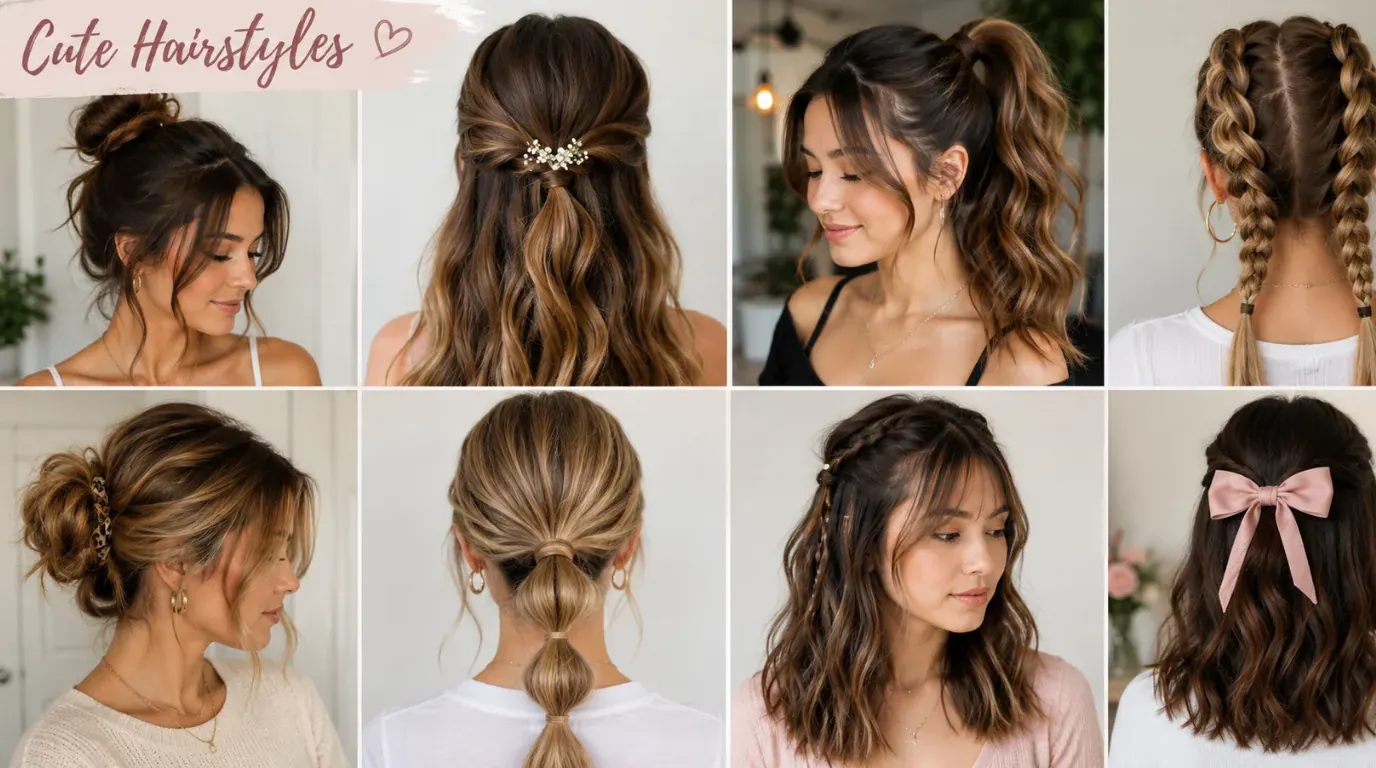
Cute hairstyles don’t need complicated braiding skills, expensive tools, or an hour in front of the mirror. The most wearable looks work with your natural length and texture while adding one interesting detail. Think a soft twist, polished ponytail, small braid, bow, or well-placed clip.
For an easy cute look, start with a simple base such as a ponytail, bun, braid, or half-up style. Then add one detail that suits your hair, such as face-framing pieces, a ribbon, a twist, or extra crown volume. Choose placement based on your length, texture, and plans for the day.
| If you want cute hairstyles, | Try this first. | Best suited to | Typical effort |
|---|---|---|---|
| A fast everyday look | Claw-clip twist | Medium to long hair | Low |
| Something playful | Bubble ponytail | Medium to long hair | Low |
| A soft romantic finish | Twisted half-up style | Most textures | Low |
| A neat school or work look | Low braided ponytail | Medium to long hair | Low |
| A style for short hair | Mini half-up clip | Bob or lob lengths | Low |
| More volume | High half pony | Fine to thick hair | Medium |
| Natural texture on display | Curly half-up puff | Curly or coily hair | Low |
17 Cute Hairstyles to Try in 2026
1. Soft claw-clip twist
Gather your hair loosely at the back, twist it upward, and secure it with a claw clip. Leave the ends tucked in or let them fall over the top. This works especially well when you need a quick style that still looks intentional. Choose a smaller clip for lower-density hair and a larger one for thicker lengths.
2. Classic lifted half pony
Take a shallow section from the temples toward the crown and secure it behind your head. A slightly higher placement creates lift without requiring a full updo. Keep the lower section straight, wavy, curly, or natural. StyleVanta’s half-up, half-down hair guide has more placement ideas for different lengths and textures.
3. Low twist-back
Take one small section from each side of your face. Twist both pieces backward and pin them together near the center. The low position keeps the result relaxed. It also works nicely when you want your haircut, curls, or color to remain visible.
4. Bubble ponytail
Secure a regular ponytail, then add small elastics several centimeters apart down the length. Gently pull each section outward to create rounded bubbles. Keep the sections even for a polished finish. Looser bubbles create a softer effect for casual days.
5. Low ponytail with a wrapped base
Make a low ponytail at the nape. Take a thin piece from underneath, wrap it around the elastic, and pin the end beneath the ponytail. It takes only a small change to make a basic pony feel more finished. A center part gives it a cleaner shape, while a side part feels softer.
6. Mini half-up clip for short hair
Short hair does not need enough length to make a full ponytail look styled. Gather a small crown section and secure it with a miniature claw clip or barrette. This works particularly well on bobs and longer pixies. If you’re considering more length, StyleVanta’s lob haircut guide explains how shoulder-skimming cuts open up more tie-back options.
7. Loose side braid
Move your hair over one shoulder and create a simple three-strand braid. Secure it near the ends, then gently loosen the outer edges. A side braid gives long hair shape without requiring heat. It can also help keep lengths controlled on windy days.
8. Half-up bow
Create a small half pony and tie a ribbon or bow over the elastic. Keep the rest of the styling simple so the accessory stays the focal point. A narrow ribbon feels subtle for daytime. A larger velvet or satin bow can make the same base work for dinner or an event.
9. High pony with soft volume
Gather the hair near the crown instead of directly on top of the head. Secure it comfortably, then loosen the crown slightly with your fingertips. For a fuller finish, shape the loose lengths with your natural texture or a soft blowout.
StyleVanta’s guide to at-home blowout techniques covers brush placement and controlled heat for smooth volume.
10. Braided low ponytail
Start with a low ponytail, then braid the loose length. It is simple, secure, and useful for keeping hair away from your face. You can keep the braid sleek or loosen it slightly for a softer shape. Use a covered elastic that holds without feeling painfully tight.
11. Face-framing waves
Leave your hair down and add movement mainly around the front sections. You don’t need to curl every strand. This approach puts the styling where people notice it most. If your cut already has face-framing pieces, the shape becomes even easier to define.
12. Mini top knot
Gather only the crown section into a small bun, leaving the rest down. Twist the section loosely before pinning or tying it. The result has the face-opening effect of a bun while keeping most of your length visible. It works on straight, wavy, curly, and textured hair.
13. Sleek low bun
Create a center or side part, gather the hair at the nape, and secure it in a low bun. Keep the tension comfortable around your temples and hairline. A lower position can also be practical during colder Canadian months because it avoids adding a large bun at the crown beneath a toque.
14. Curly half-up puff
Gather a loose crown section while leaving the sides and back free. Secure the upper portion without flattening your natural curl pattern. Adjust the amount of hair you take until the front-to-side proportions feel balanced. The goal is shape, not making every curl look identical.
15. Loose double braids
Divide the hair into two sections and create a simple braid on each side. Begin lower on the head for a relaxed finish. This option keeps longer hair controlled while remaining easy to undo. Small face-framing pieces can soften the look if you prefer less structure.
16. Straight hair with tucked front pieces
Sometimes the easiest idea is barely an updo. Create your preferred part, smooth the front sections, and tuck them neatly behind your ears. A small barrette can keep one or both sides in position. If straight texture is your natural starting point, StyleVanta’s guide to straight hair types and care explains how Type 1A, 1B, and 1C can differ in body and product needs.
17. Messy low bun with loose pieces
Make a loose ponytail at the nape, twist it into a bun, and pin the shape rather than trying to make it perfectly round. Release a few pieces around the face. The slightly undone finish makes this useful for casual plans, second-day hair, or mornings when you have limited styling time.
How to Choose a Style for Your Hair Length

Short hair benefits from smaller sections and accessories. Mini clips, barrettes, short twists, textured front pieces, and shallow half-up sections usually require less length than full braids or buns. Medium hair gives you the widest range of options.
Ponytails, twists, half-up looks, small buns, and braids are often possible once enough hair reaches an elastic comfortably. Long hair gives you more room for braids and wrapped styles, but you don’t need to use all that length each time. A shallow half-up section or simple low pony can look cleaner than an elaborate updo.
Match the Look to Your Natural Texture
Straight hair often shows parting and fastening details clearly, so neat sections can make a simple style feel polished. Fine straight strands may need smaller clips or elastics that don’t slide. Waves already provide movement. Try a loose twist, claw clip, low bun, or half pony without smoothing out the bends first.
Curly and coily textures can make volume part of the design. Puffs, loose crown sections, braids, twists, and pinned shapes keep the texture visible rather than hiding it.
Easy Hair Ideas for Canadian Weather
Canada can make a single styling routine impractical in every season. Summer humidity may change a smooth finish, while winter hats can flatten high-volume styles. If you expect to wear a toque, choose a low pony, low braid, or loose style that you can refresh after removing the hat.
For humid days, working with your natural wave or curl often requires less correction than trying to maintain a pin-straight finish. Dry indoor winter air can also make flyaways more noticeable. Instead of adding heavy product everywhere, smooth only the sections that need control.
Keep Everyday Styling Hair-Friendly
A pretty result shouldn’t hurt. If an elastic, braid, bun, or ponytail creates soreness around your scalp or hairline, loosen it. When you use hot tools, avoid using more heat than the style needs. You can create many of these looks on air-dried or naturally textured hair.
Accessories matter too. Choose clips that hold the amount of hair they need. A clip that is too small may pinch, while an oversized one can slide.
Find the Version That Fits Your Routine
The best everyday style is one you can repeat without fighting your hair. Pick two or three ideas that suit your real length, texture, and schedule, as well as your favorite accessories. Start simple, then change one detail for variety. Save these cute hairstyles as a starting point, and browse StyleVanta’s hair guides when you want to adapt a look to a specific cut or texture.
Frequently Asked Questions
What are the easiest cute hairstyles for beginners?
Start with a low ponytail, claw-clip twist, bubble pony, mini half-up clip, or simple three-strand braid. Each uses a basic fastening technique, so you can focus on placement rather than learning a complex braiding pattern.
What style can I do in five minutes?
A claw-clip twist, low ponytail, half pony, mini bun, or tucked-front look can all be quick once you know where you want the hair to sit. Keep your everyday accessories in one place to make mornings easier.
What looks good for short hair?
Try mini clips, pinned twists, small half-up sections, barrettes, side parts, textured front pieces, or a tiny top knot if your crown has enough length.
How can I make a basic ponytail look prettier?
Change one detail. Wrap the elastic with a strand of hair, add a ribbon, adjust the height, create soft volume at the crown, or braid the loose length.
Can I make these looks without heat?
Yes. Braids, buns, ponytails, twists, claw clips, bows, and many half-up options can work with your natural texture. Heat is optional for most of the ideas in this guide.