

Dark red hair is a family of deep red shades that can lean toward warm, cool, brown, or violet tones. Burgundy, black cherry, mahogany, cherry cola, and deep auburn all fit the category. The right choice depends on your skin undertone, starting colour, desired brightness, and how much upkeep you want.
You can make the result subtle enough to read as brunette indoors or vivid enough to show a strong ruby tone. Choosing the shade before choosing the dye formula makes the process much easier.
| Quick fact | What to know |
|---|---|
| Main shade families | Burgundy, black cherry, mahogany, cherry cola, auburn, merlot |
| Cool direction | Wine, violet, plum, blue-red |
| Warm direction | Auburn, red-brown, mahogany, copper-red |
| Best starting point | Depends on the brightness and finish you want |
| Commitment | Temporary, semi-permanent, demi-permanent, or permanent |
| Main upkeep concern | Red pigment can lose visible intensity with washing and heat |
| Helpful maintenance | Colour-friendly cleansing, lower heat, and tonal refreshes |
What Counts as a Deep Red Hair Colour?
Deep red is broader than one salon swatch. It includes shades that combine red with brown, purple, violet, or near-black depth.
A burgundy can appear wine-toned and cool. Mahogany usually brings more brown into the mix. Black cherry stays close to brunette until stronger light reveals its red character.
That range makes these shades useful for people who want different levels of impact. You can keep your natural root, add red through the lengths, or choose a full-head colour.
If wine and violet tones appeal to you, StyleVanta’s burgundy hair colour guide explains how burgundy shifts between plum, cherry, mahogany, and deeper wine shades.
How to Choose Dark Red Hair for Your Undertone
Start with undertone rather than skin depth alone. Your undertone can help decide whether a warm, cool, or balanced red feels more harmonious.
Cool undertones often pair well with burgundy, merlot, plum-red, and black cherry. These colours carry violet or blue-red notes instead of strong orange warmth.
Warm undertones can suit mahogany, warm auburn, red-brown, and red velvet shades. Neutral undertones have more flexibility and can often move between both groups.
You don’t have to follow these pairings as strict rules. Contrast can look striking. The goal is to understand whether you want harmony or deliberate contrast before the colour goes on.
9 Rich Shades Worth Considering
The easiest way to narrow your choice is to compare tone, depth, and how noticeable you want the red to look.
| Shade | Colour direction | Good choice if you want |
|---|---|---|
| Burgundy | Cool red-violet | A classic wine-toned result |
| Black cherry | Near-black red | A subtle change on a dark base |
| Cherry cola | Brown with cherry-red | Brunette depth with visible red reflection |
| Mahogany | Red-brown | A softer move away from brunette |
| Merlot | Deep wine-red | Rich colour without bright copper |
| Deep auburn | Warm red-brown | A more natural-looking red direction |
| Red velvet | Warm, red-forward | A richer and more noticeable finish |
| Plum red | Violet-heavy red | A cool, dramatic result |
| Chocolate cherry | Brown-red | Depth with restrained brightness |
Bring reference photos in multiple types of lighting. A colour that looks almost brown indoors may appear far redder beside a window or outdoors.
That detail matters most with black cherry, cherry cola, and deeper burgundy shades.
Your Starting Colour Changes the Result
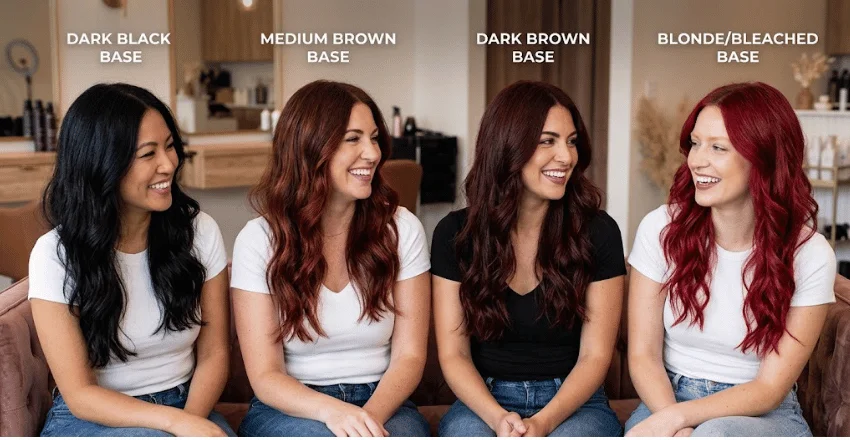
The same formula can look different on black, brown, blonde, or previously lightened hair.
Dark brunette bases often produce deeper, quieter results. You may see a wine, cherry, or mahogany reflection instead of a bright red finish.
Medium brown hair can show stronger red definition without losing all brunette depth. Lighter starting colours usually reveal brighter pigment.
Blonde, bleached, or porous lengths can absorb colour more intensely. They may also take pigment unevenly if the hair has different levels of porosity.
A dark starting base does not automatically require bleach. If you want a subtle wine or cherry result, keeping the existing depth may work well. Brighter ruby or vivid cherry results can require more lift, especially on black or deep brown hair.
Pick the Right Level of Commitment
Colour choice and formula choice are separate decisions. Decide how long you want the change before buying dye.
A lower-commitment formula can make sense if you are unsure about the tone. Deposit-only colour can add richness without creating the same commitment as oxidative permanent colour.
Permanent colour makes more sense when you want a lasting change, stronger grey coverage, or regular root maintenance. It can also be harder to reverse if you change your mind.
Before choosing that route, read StyleVanta’s permanent hair dye guide to compare lasting colour with lower-commitment options.
If you have old box dye, bleach, highlights, or several layers of colour, tell your stylist. Previous pigment affects what can be achieved safely and predictably.
How to Keep Deep Red Colour Looking Fresh
Red tones can lose brightness with repeated washing, hot water, heat styling, and normal colour wear. A simpler routine can help the shade look richer between colour appointments.
Try these habits:
- Wash only as often as your scalp and routine need.
- Choose shampoo and conditioner made for colour-treated hair.
- Use cool or comfortably lukewarm water rather than very hot water.
- Limit unnecessary high-heat styling.
- Apply heat protection before using hot tools.
- Follow the aftercare directions supplied with your colour product.
A tonal refresh can also help when the shade looks dull, but the underlying colour still looks good. Tinted glosses can add pigment and shine without repeating a major colour service.
StyleVanta’s hair gloss treatment guide explains the difference between clear and tinted glosses and where they fit into a colour-care routine.
Dyeing at Home? Make Safety Part of the Plan
Read the instructions for the exact product you buy. Mixing ratios, processing times, and testing directions differ between formulas.
In Canada, permanent and semi-permanent hair dyes in relevant categories carry warnings and preliminary skin-test directions. Health Canada advises repeating the test before each use because sensitivity can develop over time.
Stop if the test area becomes red, itchy, swollen, burning, blistered, or irritated. A strand test is also useful because it shows how your hair responds to the colour before you colour your whole head.
For complicated colour corrections, significant lightening, or heavily processed hair, a professional consultation can reduce guesswork.
Choose the Shade Before You Choose the Box
Start by saving three reference photos showing the colour under different lighting conditions. Then compare those photos with your current base and skin undertone.
Next, decide whether you want a subtle brunette-red finish or a clearly visible red result. That decision helps determine whether you need simple pigment deposit, permanent colour, or professional lightening.
A good shade should fit your maintenance tolerance and your style. Choosing with both in mind makes it easier to enjoy the colour after the first week.
Frequently Asked Questions
What skin tones suit deep red shades?
There is no single required skin tone. Undertone is more useful. Cool complexions often pair well with wine and violet reds, while warm undertones can suit auburn, mahogany, and red-brown shades.
Does dark red hair need bleach?
Not always. A brunette base can often take on a deep wine, mahogany, or cherry reflection without becoming blonde first. Lightening becomes more relevant when you want a brighter result on a dark starting colour.
What does deep red colour fade to?
There is no universal fade colour. Burgundy may soften toward muted red, berry, violet, or brown. Warm auburn shades can soften and turn more copper-brown as intensity decreases.
Your formula, starting colour, porosity, and washing routine all influence the result.
Is cherry cola different from burgundy?
Yes. Cherry cola usually keeps more brown in the mix, which can make it feel closer to brunette. Burgundy normally carries a stronger wine, violet, or purple-red direction.
Can brunettes try a deep red shade without a dramatic change?
Yes. Black cherry, chocolate cherry, mahogany, and brown-forward burgundy can keep much of the original brunette depth. Ask for a result that shows its red tone mainly in brighter light if you want a restrained change.