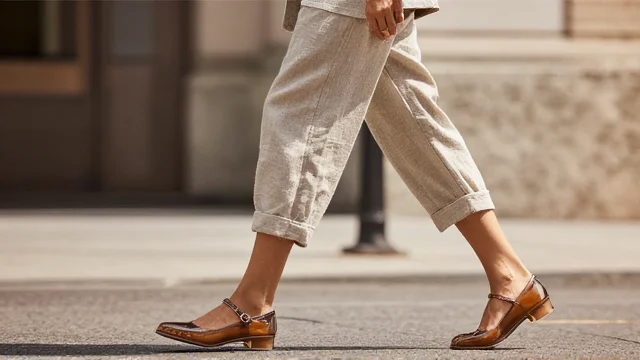

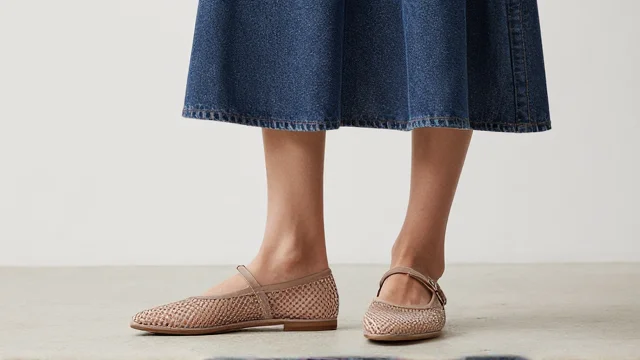
Mesh flats give you the light look of a ballet shoe with a breathable, often semi-sheer upper. For Canadian wardrobes, choose them by fit, toe shape, outsole grip, footbed support, and weather suitability. A secure ballet or Mary Jane shape is usually the easiest option for everyday warm-weather wear.
| What to check | Good starting point | Watch for |
|---|---|---|
| Upper | Soft woven or synthetic mesh | Rough seams, weak structure, excessive stretching |
| Shape | Round, square, almond, or softly pointed toe | Toe pressure and narrow soles |
| Security | Close-fitting topline or Mary Jane strap | Heel slipping while walking |
| Footbed | Light cushioning for everyday use | Paper-thin padding on walking days |
| Outsole | Flexible sole with visible grip | Smooth soles on wet pavement |
| Season | Dry spring, summer, early fall | Heavy rain, slush, snow, road salt |
| Styling | Cropped pants, denim, skirts, dresses | Pairings that expose more foot than you prefer |
The appeal is easy to understand. Mesh gives a classic flat a lighter visual weight, while the sheer construction makes familiar ballet and Mary Jane shapes feel more current.
Canadian shoppers have another consideration: weather. A delicate upper can be useful during warm, dry months but makes less sense for a wet commute or an early snowfall. That means the strongest purchase isn’t only the prettiest pair. It is the one that suits your feet, walking habits, wardrobe, and local conditions.
How to Choose Mesh Flats for Comfort and Repeat Wear
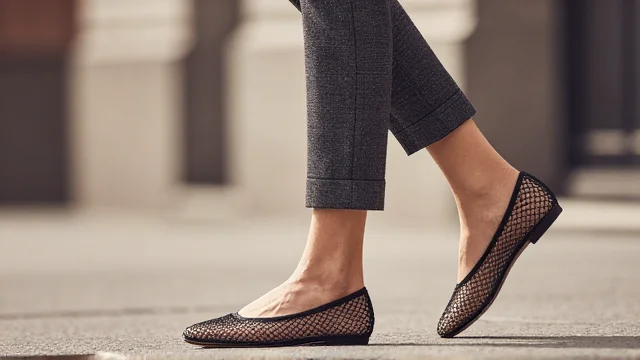
Start with fit rather than colour.
A soft upper can give the impression that sizing is forgiving, but the sole still determines where your foot sits. If the sole is too narrow, your foot may spill over the edge even when the upper stretches comfortably.
Check the retailer’s size chart and read comments about length and width. Fit feedback on current Canadian retail listings shows that similar-looking ballet styles can feel short, wide, narrow, or snug depending on the design.
If you switch between European and Canadian sizing, don’t rely on one universal conversion. StyleVanta’s size 40 shoe conversion guide explains why brand charts and actual foot measurements matter more than the number alone.
Give Your Toes Enough Space
Toe shape affects comfort more than it may appear in product photos.
A rounded or square front usually provides a more relaxed visual shape. Pointed versions can look polished but may reduce usable space around the forefoot. That doesn’t make a pointed pair uncomfortable by default. It means the width and length need closer attention.
Stand, walk, and flex your toes when trying a pair on. Your heel should stay reasonably secure, and the upper shouldn’t pull sharply across the widest part of your foot.
Look Beyond the Airy Upper
Breathability is only one part of comfort.
Check the footbed, outsole, heel edge, trim, and any elastic around the opening. A light shoe with a harsh edge can become irritating after an hour of walking.
For longer days, look for the following features.
- light cushioning under the heel and forefoot;
- a sole that bends without feeling flimsy;
- enough grip for smooth indoor floors and sidewalks;
- a topline that holds the foot without digging in;
- straps that sit securely across the instep.
A mesh upper can help a shoe feel lighter in warm conditions, but it doesn’t replace support or a stable outsole.
Ballet, Mary Jane, Pointed or Embellished: Which Style Fits Your Wardrobe?
There isn’t one version that works for everyone. The best choice depends on what you already wear.
| Style | Main advantage | Possible drawback | Easy pairing |
|---|---|---|---|
| Classic ballet | Simple and versatile | Can slip at the heel | Jeans, skirts, casual dresses |
| Mary Jane | Strap adds security | Strap position can affect instep comfort | Cropped pants, midis, workwear |
| Pointed flat | Sharper, dressier line | Less forgiving through the toe box | Tailored trousers, evening looks |
| Embellished mesh | Adds texture or sparkle | Less versatile for daily wear | Simple dresses, events |
| High-vamp shape | More coverage and structure | Can feel warm or tight across the instep | Trousers, longer skirts |
Our recommendation: choose a simple ballet or Mary Jane shape first if you want the most repeat wear. A strap is particularly useful if slip-on flats tend to move at your heel.
If your closet already contains neutral everyday shoes, a pointed, colourful, or embellished version can fill a more specific styling gap.
StyleVanta’s guide to trending shoes in Canada is useful if you’re comparing ballet-inspired footwear with T-straps, retro runners, and other current shoe shapes.
Think About Canadian Weather Before You Buy
The open construction is a strength in warm weather and a limitation in poor conditions.
Dry spring days, summer outings, office wear, dinners, and early-fall afternoons are the easiest settings. Heavy rain can leave your feet wet quickly. Snow, slush, and salty sidewalks are harder on both the upper and the sole.
If the forecast is uncertain, carry a more protective shoe for the commute and change indoors. This approach works well for offices, restaurants, weddings, and events where you want a lighter shoe without exposing it to bad weather.
For hot-weather outfit planning, StyleVanta’s Canadian summer outfit ideas offer more ways to build looks around breathable pieces.
How to Style the Sheer Look Without Overthinking It
Because the upper exposes more of the foot, these shoes already create texture. You don’t need to add several competing details.
Straight or relaxed denim gives the delicate shoe some contrast. Cropped trousers make the full shape visible and can create a clean ankle line. If you’re working with a shorter hem, the Capri pants styling guide explains how footwear changes the balance of cropped bottoms.
With skirts and dresses, pay attention to visual weight. A fine, simple flat can keep a full midi from feeling heavy. It can also make a casual mini or flowing summer dress feel more polished without adding heel height.
For softer outfits, see StyleVanta’s flowy dress shopping guide. It covers how hem length, fabric, and footwear work together.
Black, Neutral or Colour?
Black gives the strongest contrast against the foot and is easy to combine with dark trousers, denim, and evening clothes.
Beige, cream, tan, and other skin-adjacent neutrals create a quieter effect. Pale shades can also make the sheer construction more obvious, so look closely at product photographs before buying.
Colour works best when you treat the shoe as the outfit’s focal point. A red or bright pair can sit comfortably with blue denim, white, grey, black, or another restrained base.
What Should You Check When Ordering Online in Canada?
Product photography can’t tell you everything about a flat’s fit.
Before checkout, use a quick buying checklist:
- Compare your foot measurement with the retailer’s size guide.
- Read width, length, and heel-slip comments in customer reviews.
- Check the upper, lining, footbed, and outsole materials.
- Look closely at how sheer the upper appears on a foot.
- Confirm whether the outsole has texture or grip.
- Read cleaning instructions before choosing a pale colour.
- Review the Canadian return window and any final-sale restrictions.
- Check shipping and possible cross-border costs if ordering outside Canada.
Opacity deserves extra attention. Two pairs described as “mesh” can look quite different once worn. One may resemble fine netting, while another may be almost transparent.
If you prefer more coverage, look for denser weaving, decorative overlays, embroidery, a higher vamp, or reinforced panels around the toes.
Are They Worth Adding to a Canadian Wardrobe?
They make the most sense when you treat them as a warm-weather fashion flat rather than an all-season replacement for sneakers or boots.
Verdict: buy a pair if you already reach for ballet flats, cropped pants, skirts, or summer dresses and want something lighter. Prioritize fit, sole grip, and comfort before decorative details.
Skip them as your main walking shoe if you need substantial cushioning or weather protection. A supportive sneaker will usually be more practical for long distances, while boots remain the stronger choice for winter conditions.
The strongest wardrobe purchase should work with at least three outfits you already own. Picture those outfits before ordering. If the shoe only works with one trend-led look, its repeat-wear value may be limited.
Choose the Pair That Fits Your Real Routine
A good pair should feel easy before it looks fashionable. Check the width, toe room, heel security, cushioning, grip, and return policy first. Then decide whether the colour and level of transparency fit the clothes you already wear.
Frequently Asked Questions
Are mesh flats comfortable for walking?
They can be comfortable for ordinary daily wear when the sole fits your foot, the upper doesn’t rub, and the footbed has enough cushioning. For long walking days, check support and outsole thickness rather than assuming a lightweight upper means a comfortable shoe.
Do sheer ballet shoes stretch?
Some woven and synthetic uppers can relax with wear, but the amount varies by material and construction. Don’t buy a painful size expecting it to stretch enough later. The sole length and width still need to fit from the start.
Can you wear them to work?
Yes, depending on your workplace. Simple black, neutral, pointed, Mary Jane, and high-vamp versions can work with tailored trousers, midi skirts, and dresses. More transparent or embellished designs may read as more casual or event-focused.
Can you wear mesh flats in fall?
Yes, on mild and dry fall days. Their limited weather protection makes them less suitable once temperatures drop or sidewalks become wet, snowy, or salty. A closed leather shoe, sneaker, or boot is more practical in harsher weather.
What socks should you wear with sheer flats?
Many people wear them barefoot, with no-show liners, or with fine socks that are intentionally visible. Choose based on comfort and the amount of transparency you like. Make sure the added layer doesn’t make the toe box too tight.