

A good trench coat women in Canada can rely on should do more than complete an outfit. It needs enough room for layers, a useful length, comfortable movement, and fabric suited to the weather you expect. Classic beige remains easy to style, but black, navy, olive, cropped cuts, and relaxed longline shapes give you plenty of choice.
Start with when you plan to wear the coat. Pick a lightweight or water-resistant fabric for spring and fall, then choose a length that works with your wardrobe. Check shoulder room, sleeve space, closure, lining, and care instructions before buying. Neutral colours usually offer the most outfit combinations.
| Buying decision | Good starting point | What to check |
|---|---|---|
| Length | Mid-thigh to knee for versatility | Height, commute, usual skirts and pants |
| Fit | Relaxed with room for a light knit | Shoulders, sleeves, button closure |
| Fabric | Cotton blend or technical weave | Water resistance, breathability, care |
| Colour | Beige, black, navy, olive | Existing shoes, bags, trousers |
| Season | Spring and fall | Lining and space for layers |
| Style | Classic belted or clean single-breasted | How often you will wear it |
| Online purchase | Use garment measurements | Returns, CAD pricing, fabric details |
Modern versions range from traditional belted designs to cropped, oversized, leather, suede, and minimalist styles. Current 2026 fashion coverage also shows both heritage shapes and new proportions, while Canadian retailers stock classic and cropped options.
Why a Trench Works So Well in a Canadian Wardrobe
Canada rarely gives you one simple outerwear season. Spring can move between rain, wind, mild afternoons, and cold mornings. Fall creates a similar problem.
That makes a trench useful as a transitional layer. It can sit over a T-shirt on a mild day or accommodate knitwear when temperatures drop. It is less bulky than a winter parka, yet more polished than many lightweight rain jackets.
The classic design also crosses dress codes easily. You can wear one with jeans for errands, tailored pants for work, or a dress for dinner. COS highlights this same flexibility, showing the style in both tailored and casual, everyday pieces.
For colder days, knitwear makes the coat more useful. StyleVanta’s guide to choosing a cashmere sweater for Canadian weather can help you build a warm layer without adding excessive bulk.
Trench Coat Women Can Choose by Length
Length changes both the look and the practicality of the coat. There isn’t one correct option, so start with your routine.
| Style | Main advantage | Possible drawback | Good choice for |
|---|---|---|---|
| Cropped | Light, casual, easy with high-rise bottoms | Less weather coverage | Mild days and casual outfits |
| Mid-thigh | Easy everyday proportion | Less leg coverage in rain | Commuting and daily wear |
| Knee-length | Balanced coverage and versatility | Can feel formal on some outfits | Work and mixed wardrobes |
| Longline | More coverage and dramatic shape | Can feel bulky on petite frames | Dresses, wide-leg pants, cool weather |
| Oversized | Plenty of layering room | Shape can overwhelm smaller frames | Sweaters and relaxed outfits |
Cropped styles
A cropped version feels lighter and more casual. It works especially well with high-rise jeans, straight trousers, skirts, and dresses with a defined waist.
The trade-off is simple: less fabric means less coverage. If rain protection is a priority, a longer coat may serve you better. Canadian retailers such as Simons currently carry cropped and traditional variations, showing how broad the category has become.
Knee-length styles
A knee-length cut offers an easy middle ground. It covers enough of your outfit to feel useful in damp weather without creating the visual weight of a full-length coat. This length can also work with most trouser shapes. Straight jeans, leggings, tailored pants, and wide-leg trousers all pair naturally with it.
Longline styles
Longer cuts offer greater visual impact and more protection from wind or light rain. They also pair neatly with midi dresses because the two hems can create a cleaner line.
If you like flowing silhouettes, see StyleVanta’s flowy dress shopping guide for Canada for ideas on balancing fabric volume, dress length, footwear, and outer layers.
Compare the Main Trench Styles Before Buying
Today’s market goes well beyond one beige double-breasted design. Vogue’s current 2026 edit includes heritage, cropped, suede, minimalist, leather, and updated neutral versions.
Classic belted trench
Pros
- Easy to dress up or down
- Belt lets you adjust the waist
- Works across many seasons
- Pairs with most wardrobe basics
Cons
- Extra straps and hardware can feel busy
- Belt placement may not suit every torso
- Some versions require more care
Minimal single-breasted style
Pros
- Cleaner, simpler appearance
- Easy over office clothes
- Less hardware and bulk
- Works well in dark neutrals
Cons
- Less traditional trench character
- May offer fewer fit adjustments
- Open shapes can feel less protective in wind
Oversized trench
Pros
- Room for sweaters and jackets
- Relaxed modern shape
- Comfortable through the shoulders
- Easy with casual outfits
Cons
- Too much volume can hide your proportions
- Sleeve length needs careful checking
- Loose cuts can catch more wind
Cropped trench
Pros
- Easy with jeans and high-waisted pants
- Fresh alternative to a classic coat
- Useful in mild weather
- Less fabric to manage
Cons
- Limited rain coverage
- Harder to layer over longer tops
- Less useful once temperatures fall
Our recommendation
For the widest range of Canadian outfits, choose a knee-length or slightly longer belted style with enough room for a light sweater. A neutral colour and a fabric with some weather resistance will usually give you more repeat wear than a highly seasonal statement version.
If most of your wardrobe is casual, a relaxed single-breasted design may suit you better. If you already own a basic coat, a cropped or oversized version can add variety.
Choose Fabric Based on Weather, Not Appearance Alone
Fabric is one of the easiest details to overlook when shopping online. Two coats can appear almost identical in photos but perform differently outside.
Traditional trenches are closely associated with tightly woven cotton fabrics. Modern versions may use cotton-polyester blends, nylon, technical materials, leather, suede, or lighter synthetic fabrics.
Aritzia, for example, offers versions made from water-repellent cotton twill, while RW&CO. has sold stretch twill cotton-polyester designs. Those examples show why checking the composition matters more than relying on the product name alone.
For Canadian spring and fall, consider:
- Cotton or cotton blends: breathable and classic, but water resistance varies.
- Technical synthetics: useful when wind and light rain are a concern.
- Lined fabrics: warmer for cool mornings, though less comfortable in mild weather.
- Leather or suede: style-led options that need more care and aren’t substitutes for technical rainwear.
- Lightweight unlined fabrics: good for warmer transitional days.
Never assume the word “trench” means waterproof. Check the manufacturer’s fabric and care information.
Get the Fit Right Before You Focus on Colour
A coat can look perfect online and still fail if the shoulders or sleeves feel restrictive.
Try the piece over the clothing you expect to wear underneath. If you plan to use sweaters, don’t judge the fit over a thin tank top.
Check these areas:
- Shoulders: You should be able to reach forward without strong pulling across the back.
- Sleeves: They need enough space for a shirt or knit without bunching.
- Chest: Buttons should close without pulling.
- Belt position: The belt should sit close to your natural waist or the intended design point.
- Armholes: Higher, narrow armholes can restrict layering.
- Back vent: A vent can make longer coats easier to walk and sit in.
For online orders, compare your body measurements to the size chart, then check the garment’s actual length if the retailer provides it.
Which Colour Gives You the Most Wear?
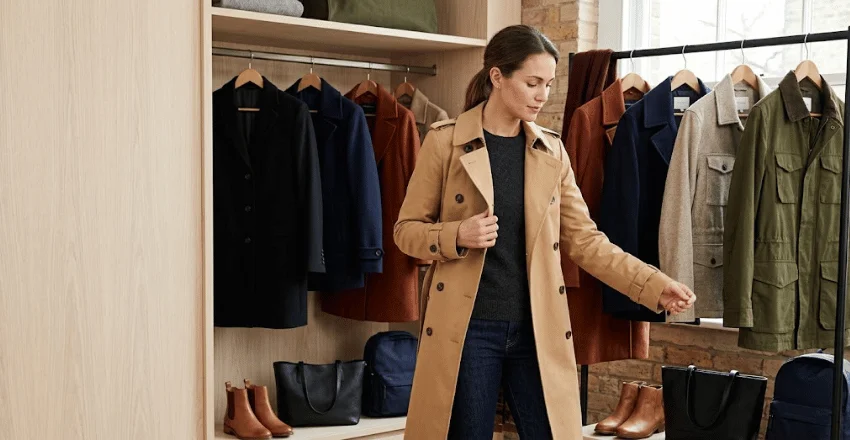
Beige, camel, stone, black, and navy are popular because they combine easily with other colours. Fashion coverage continues to favour traditional stone and camel shades, though black and deeper neutrals remain strong choices.
Beige or camel works well with denim, black, cream, brown, navy, and olive. It gives the strongest traditional look.
Black feels sharper and can easily transition from office attire to evening outfits. It also hides some marks better than pale fabric.
Navy offers a softer alternative to black while remaining easy to coordinate.
Olive suits casual wardrobes and pairs naturally with denim, cream, tan, and black.
A statement colour can be worthwhile if your wardrobe is already neutral. Still, your most-used outer layer should work with the shoes and bags you already own.
How to Style a Trench Without Making Every Outfit Look the Same
You don’t need a complicated formula. Change the pieces underneath and let the outer layer provide structure.
For everyday errands
Pair it with straight-leg jeans, a plain tee or fine knit, and sneakers or loafers. Leave the coat open for a more relaxed shape.
For work
Wear it over tailored trousers, a button-down shirt, a knit top, or a simple dress. A structured bag and loafers or ankle boots keep the outfit polished.
With dresses
A trench can balance softer fabrics by adding structure. This works well with floral, flowing, or bohemian dresses.
StyleVanta’s guide to boho dresses in Canada recommends using a cleaner outer layer to balance romantic details such as lace, embroidery, and flowing fabric.
For cooler fall days
Add a fine-knit, straight-leg pair of jeans or trousers, ankle boots, and a scarf. Make sure the coat still closes comfortably over your layers.
With wide-leg pants
Choose either a fitted, clean upper layer or a coat long enough to create a deliberate vertical line. Avoid piling too many oversized pieces into the same outfit unless you want a strongly relaxed silhouette.
What Canadians Should Check Before Ordering Online
Online shopping makes fabric and fit harder to judge, so product details matter.
Before you order, check:
- Whether prices are shown in CAD
- The retailer’s Canadian shipping policy
- Whether duties may apply to cross-border orders
- Return deadlines and final-sale rules
- Fabric composition
- Lining
- Garment measurements
- Model height and size
- Cleaning instructions
- Whether the fabric is described as water-resistant or waterproof
Checking these details matters most with outerwear, because returning a bulky parcel can be less convenient than returning a lightweight top.
You can also browse StyleVanta’s fashion and styling coverage when building outfits around pieces you already own.
Buy for Your Real Routine
The most useful trench coatfor women isn’t necessarily the trendiest version. It is the one that fits your weather, clothing, commute, and layering habits now.
If you need one main option, start with a neutral knee-length style that closes comfortably over a sweater. Choose a fabric suited to spring and fall conditions, then check the construction and care instructions.
If you already own that basic, consider a cropped shape, an oversized cut, a dark colour, or a more fashion-led fabric as your second option.
A strong wardrobe doesn’t require several near-identical coats. One carefully chosen outer layer can cover workdays, weekends, travel, dinners, and much of Canada’s transitional weather.
Frequently Asked Questions
What is the best trench coat women can wear in Canada?
For broad everyday use, look for a knee-length or slightly longer style with room for light layers. A neutral colour and some weather resistance make it easier to wear through spring and fall.
Are trench coats warm enough for Canadian winter?
Most traditional versions aren’t designed for deep winter cold. They work better in spring, fall, and mild winter conditions. For colder temperatures, choose insulated outerwear appropriate for local conditions.
Should I size up for sweaters?
Not automatically. Try your usual size with the thickest layer you expect to wear. Size up only if the shoulders, sleeves, chest, or armholes feel restricted.
Is beige or black more versatile?
Both are flexible. Beige creates a classic look and pairs well with warm and cool neutrals. Black feels sharper and may be easier for office or evening wear.
Are trench coats waterproof?
Not always. Some fabrics are water-resistant, while others provide little rain protection. Read the product specifications instead of assuming the style name indicates waterproof construction.
What length is easiest to wear?
Mid-thigh to knee length is a practical starting point for many wardrobes. It gives useful coverage while pairing comfortably with jeans, trousers, skirts, and dresses.
Can petite women wear a long trench?
Yes. Pay attention to the shoulder width, sleeve length, belt position, and hem fall. A clean, controlled shape can matter more than height alone.
Are cropped trenches still in style in 2026?
Yes. Current fashion and retail coverage includes cropped versions alongside longline and heritage designs, so both classic and shortened proportions remain relevant.