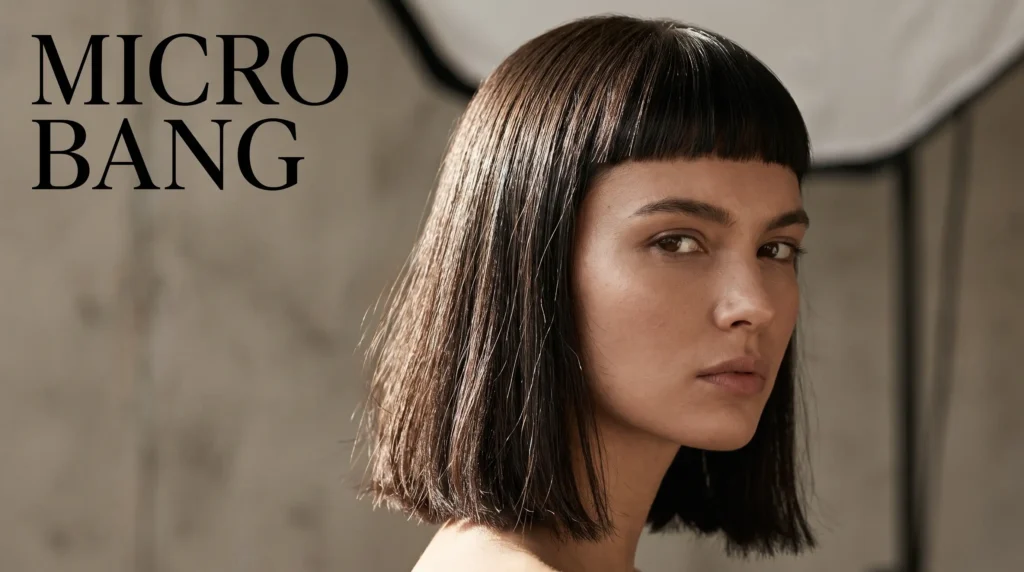


The messy fringe haircut gives you movement around the forehead without the sharp line of traditional blunt bangs. It can be short and cropped, longer and shaggy, straight, wavy, or curly. The key is choosing a shape that works with your natural texture instead of forcing every strand into place.
A textured, messy fringe keeps extra length at the front, breaks up the ends for separation, and lets the hair fall forward with controlled movement. The easiest version matches your natural growth pattern, keeps product use light, and pairs the top with a taper, fade, or scissor-cut side shape that suits the level of contrast you want.
Current 2026 haircut coverage continues to favour natural movement, softer tapers, point-cut texture, and less polished finishes. Canadian barbers also report strong demand for textured crops paired with low tapers.
| Key detail | What to know |
|---|---|
| Front shape | Uneven, separated, and textured rather than one heavy line |
| Length | Can sit above the brows, at brow level, or longer |
| Side options | Scissor taper, low taper, low fade, mid fade, or fuller sides |
| Hair texture | Adaptable to straight, wavy, curly, and coily hair |
| Finish | Natural or matte usually suits the deliberately undone look |
| Styling effort | Usually light, but growth patterns can increase the work |
| Upkeep | Textured versions tolerate growth better than precise blunt edges |
If you’re still deciding between fringe shapes, StyleVanta’s guide to 15 types of bangs compares choppy, layered, curly, wispy, side-swept, and other options.
12 messy fringe styles worth considering in 2026
- Low-taper fringe. Keep the taper close to the ears and neckline while leaving more weight through the sides. This gives the textured top a softer, less dramatic frame.
- Textured crop fringe. A shorter top with broken ends gives you a compact shape and keeps less hair around the eyes. Point cutting can prevent the front from forming a heavy block.
- Medium eyebrow fringe. Let the longest pieces reach close to the brows. This length gives you enough hair to push forward, sideways, or slightly upward.
- Long shaggy fringe. Longer front sections blend well with shag-inspired layers. Keep products light so the extra length still moves instead of sticking together.
- Wavy messy fringe. Natural bends already provide much of the separation this look needs. Work with the wave pattern instead of straightening it before styling.
- Curly fringe. Leave room for curl spring and judge the finished length when the hair is dry. StyleVanta gives similar advice in its guide to short hair with bangs and natural texture.
- Straight-hair choppy fringe. Straight strands may need more deliberate layering or point-cutting to prevent the front from falling as a single flat sheet.
- Airy fringe for finer hair. Preserve enough density at the front rather than removing too much weight. Lightweight styling products help prevent fine strands from collapsing.
- Mid-fade fringe. A mid fade creates more contrast than a taper. It makes the volume and movement on top more noticeable, so the front becomes the visual focus.
- Side-swept messy fringe. Let the front follow its natural direction rather than pushing everything straight down. This can be useful when the hair naturally grows sideways.
- Messy French crop. Keep the top shorter and direct it forward with a broken, textured edge. This version suits people who like the look but want less length around the forehead.
- Shag or mullet fringe. Blend the front into longer layers at the crown and back for a less structured result. It works especially well when the hair already has some wave or curl.
How to choose a messy fringe haircut for your hair
Start with your growth pattern before thinking about a saved photo. A cowlick, centre split, or strong sideways growth pattern can determine where the front naturally wants to sit.
StyleVanta already uses growth pattern, density, and daily effort as practical filters when choosing bangs. Those same questions work well here.
| If your hair is… | A useful starting point | Be careful with… |
|---|---|---|
| Fine and straight | Airy or medium-textured front | Too much thinning or heavy clay |
| Thick and straight | Choppy layers or textured crop | Leaving excess bulk above the forehead |
| Wavy | Medium or longer piecey front | Flattening all the natural bend |
| Curly | Longer, curl-shaped fringe | Cutting to the final length while stretched |
| Coily | Shape that follows the natural pattern | Treating it like straight hair |
| Strong cowlick | Side-directed or flexible fringe | A rigid blunt line |
Straight hair also varies in thickness, body, and oiliness. StyleVanta’s guide to straight hair types 1A, 1B, and 1C can help if you’re unsure how much natural movement your hair has.
Face shape can guide proportions, but it shouldn’t dictate the cut. Longer or angled pieces can change how much of the forehead is visible. Fuller front sections create a different effect. Texture, density, hairline, glasses, and your usual part can matter just as much.
If the front naturally separates around a V-shaped hairline, read StyleVanta’s widow’s peak hair guide before choosing a dense, straight-down fringe.
What to tell your barber or stylist
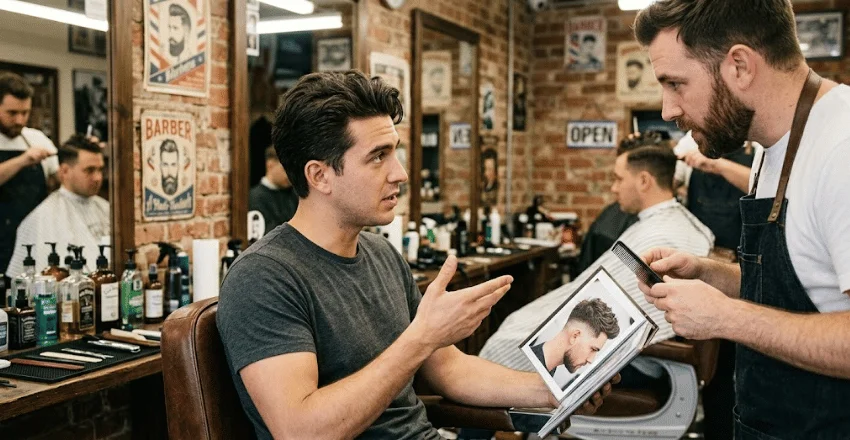
Avoid asking only for “messy hair.” Describe the length, texture, and sides separately.
Ask your barber or stylist to keep enough length at the front for movement. Request separation at the ends rather than a solid line, then choose a low taper, fade, or scissor finish to achieve your preferred level of contrast.
Barber-focused guides repeatedly recommend clearly describing the fringe length and side treatment. Reference photos also reduce confusion because haircut terms can mean different things from one shop to another.
Bring a front photo and a side photo. Pick examples showing hair density and texture reasonably similar to yours rather than choosing a haircut only because you like the model.
How to style it without making it look greasy
| Step | What to do |
|---|---|
| Start | Work with damp rather than dripping-wet hair |
| Set direction | Use your fingers to push the roots forward or slightly sideways |
| Add movement | Scrunch, twist, or separate small sections instead of combing them flat |
| Choose product | Use a light texture spray, cream, paste, or matte clay |
| Finish | Stop once the pieces hold their shape; extra product can reduce movement |
Waves and curls may need moisture more than added grip. Straight, softer hair often benefits from root lift and a lighter texturizing product. Current professional styling advice also favours minimal product when the goal is natural bounce and separation.
For a softer alternative that opens up around the face, StyleVanta’s curtain bangs styling guide explains how to direct and blend longer front pieces.
Fix the three problems that make a messy fringe fail
| Problem | Likely cause | Try this |
|---|---|---|
| Fringe looks flat | Heavy product or little root movement | Use less product and reset the roots while damp |
| Hair looks greasy | Too much clay, wax, or oil near the front | Start with a smaller amount and keep rich products away from the roots |
| Front becomes fluffy | Too little control or unsuitable drying technique | Direct the hair while damp and use a light finishing product |
The goal isn’t random disorder. Strong examples look loose because the cut already contains shape and separation. A poorly shaped front usually won’t become convincing simply by adding more styling product.
Maintenance and grow-out
Textured edges are more forgiving than a precise blunt fringe, but the front can still lose its intended shape as it reaches the eyes. Barber guidance commonly recommends textured cuts for a roughly monthly refresh, while sharper fades may need attention sooner.
You don’t always need to shorten the whole haircut. Ask whether a small fringe or taper clean-up between full appointments would help preserve the shape.
Longer versions usually grow into face-framing layers more smoothly. Short crops change character sooner because even a small increase in front length is easier to notice.
Choose the version that will still work on an ordinary morning
A good fringe should suit your hair after you wash and style it yourself, not only when you leave the salon. Start with your natural growth pattern, decide how much forehead coverage you want, and be realistic about daily styling.
Save two or three reference photos showing hair similar to yours. Then show your barber or stylist both the front shape and the side finish. That gives them far more useful information than asking for a trendy haircut by name alone.
Frequently asked questions
Is a messy fringe haircut high maintenance?
Usually not, provided the cut follows your natural texture and growth direction. A low taper and medium-length textured front can be relatively forgiving. A sharp fade or fringe that must be kept at an exact length requires more frequent attention.
Can straight hair get a messy fringe?
Yes. Straight hair may need point cutting, layering, a root lift, or a light-texture product to create visible separation. Avoid removing so much density that the front becomes sparse.
How long should the front be?
There is no single correct length. A short crop exposes more of the forehead and needs less daily control. Brow-length hair gives you more styling options. Longer pieces create a softer, shaggier effect but need lighter products.
Does a messy fringe work with curly hair?
Yes. Keep the natural curl pattern in mind when choosing the final length. Curls can sit noticeably shorter after drying, so the stylist should account for spring and movement.
Should you choose a taper or a fade?
Choose a taper for softer sides and an easier grow-out. Choose a fade for stronger contrast between the sides and the textured top. A scissor-cut side works when you prefer more fullness.