

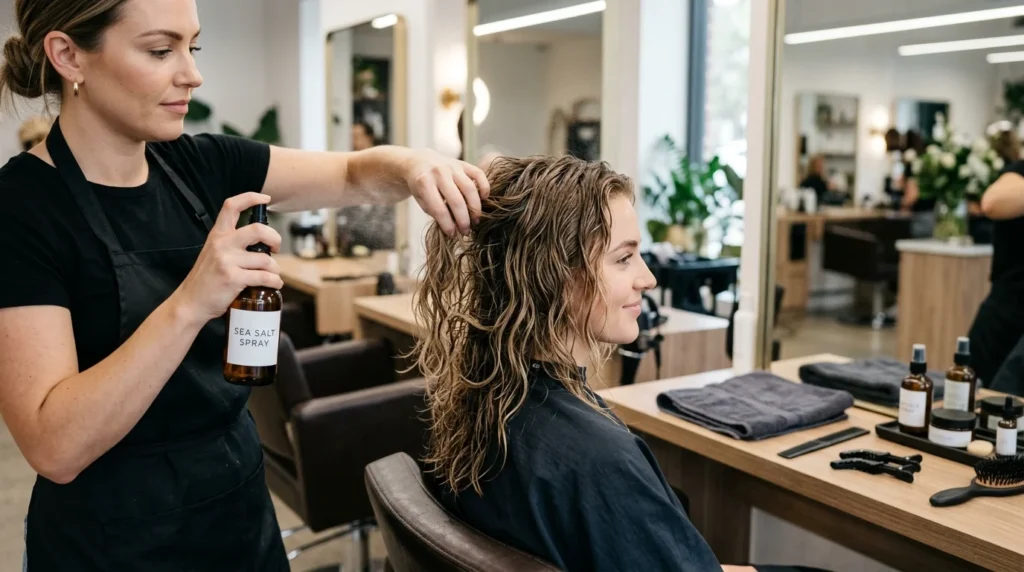
Sea salt spray for hair adds grip, texture, volume, and a matte, tousled finish. Use a light mist on damp hair for loose waves or on dry hair for separation and lift. Because salt can pull moisture from strands, start with a small amount and pair it with regular conditioning.
| Styling goal | Best starting point | Application | Main thing to avoid |
|---|---|---|---|
| Root volume | Damp hair | Light mist near roots, then blow-dry | Saturating the scalp |
| Beachy waves | Damp hair | Mist lengths, scrunch, then air-dry or diffuse | Using too much product |
| Second-day texture | Dry hair | Light mist through selected sections | Coating the whole head |
| Definition | Wavy or curly hair | Scrunch into damp lengths | Brushing after application |
| Texture on dry or coloured hair | Damp or dry hair | Use sparingly with conditioning care | Frequent heavy applications |
What the product actually does
A salt-based texturizing mist makes the surface of each strand feel less slippery. That extra grip helps sections separate and makes natural bends easier to see. It can also give roots more lift and help fine hair appear fuller.
Cleveland Clinic explains that salt exposure can roughen the hair cuticle and create temporary texture. The same effect can leave hair feeling dry when exposure becomes frequent or prolonged.
Think of the product as a styling aid rather than a hair treatment. It changes how your hair looks and behaves for the day. It doesn’t repair damage or permanently change your natural pattern.
That distinction matters for straight hair. A texture spray can create grip and body, but it won’t automatically produce lasting waves without some shaping. Scrunching, twisting, braiding, or drying your hair while creating movement can help produce more bend. Current styling guidance also focuses on enhancing a person’s natural texture rather than coating the hair until it feels stiff.
How to use sea salt spray for hair without crunch
The most common mistake is starting with too much. A few light applications give you more control than soaking an entire section.
- Start with damp, towel-dried hair. Remove excess water first so the styling product doesn’t become too diluted.
- Mist only where you need texture. Apply near the roots for lift or through the mid-lengths for movement.
- Shape the hair while it dries. Scrunch waves, twist selected sections, or use a diffuser if that suits your natural pattern.
- Finish dry hair sparingly. Add a small amount to selected pieces if you want extra separation or a more lived-in finish.
Damp application is useful when you want the product to help shape the finished style. Dry application gives you more control over specific sections. Davines and Adore Beauty both describe damp and dry techniques, with scrunching and drying used to build texture.
If your hair dries stiff, don’t keep adding water or more product. Gently break up the cast with your fingers. Next time, use less and apply it to fewer sections.
Which hair types get the most from a salt-based texture spray?
You can adapt the technique to many hair types, but the amount and placement should change.
| Hair type | What it can add | Best approach |
|---|---|---|
| Fine or flat | Grip and root volume | Start with a small amount and concentrate on roots or upper lengths |
| Straight | Separation, body, light bend | Apply lightly, then shape while drying |
| Wavy | Definition and beachy movement | Scrunch into damp lengths and air-dry or diffuse |
| Curly or coily | Targeted texture and grip | Use on selected areas and pair with moisture-focused care |
| Thick | Separation and a less polished finish | Work in sections instead of spraying the surface only |
| Dry, bleached, or colour-treated | Texture with more risk of dryness | Use less often and choose a formula with conditioning ingredients |
The drying effects of salt can be more noticeable on hair that already struggles to retain moisture. Cleveland Clinic specifically warns that repeated salt exposure may contribute to dryness, brittleness, breakage, and faster colour fading.
If your front sections also behave differently because of your natural hairline, StyleVanta’s widow’s peak styling guide can help you choose styles that work with the direction your hair already grows.
How to keep the texture soft instead of dry or stiff
Good texture should still move when you touch it. If your strands feel coated, brittle, or difficult to reshape, your routine may need less product or more moisture.
Try these adjustments:
- Start with less. You can add another light mist after drying if the first application isn’t enough.
- Target the application. Roots may need lift, while dry ends may need no salt at all.
- Condition consistently. Use your normal conditioner and add a leave-in product when your hair needs more softness.
- Watch how your hair responds. Cut back if repeated styling leaves it rougher, frizzier, or more brittle.
- Avoid turning DIY salt water into a daily styling habit. Formulated products can combine texture-building ingredients with ingredients designed to improve how the hair feels.
Cleveland Clinic recommends balancing salt exposure with conditioning care and suggests professionally formulated sprays rather than simply mixing salt and water at home.
What to look for in a formula
Don’t judge a bottle by the word “beach” on the label. Read the ingredient list and consider what your hair already needs.
Some commercial formulas combine salt with humectants or conditioning ingredients such as glycerin or aloe. These ingredients don’t negate the effects of salt, but they can help a formula feel less harsh on hair.
A lighter mist may suit fine hair because it is less likely to leave heavy residue. If your hair is dry or processed, look for formulas that also focus on softness and conditioning.
The finish matters too. Choose a stronger matte texture for grit and separation. Pick a softer texturizing formula if touchable movement matters more than maximum grip.
For more hair-care and styling coverage on the site, browse Sophie Palmer’s StyleVanta hair guides.
Get texture without fighting your natural hair.
The useful part of a salt spray is the control it gives you. You can add lift to flat roots, encourage natural waves, or give a polished style more movement without having to rebuild your whole routine.
Start with a light application, shape the hair you already have, and protect its softness. If there is another styling question you’d like StyleVanta to cover, you can suggest a topic to StyleVanta.
Frequently asked questions
Can I use sea salt spray for hair every day?
Daily use won’t suit every hair type. Salt exposure can remove moisture, and repeated use may leave some strands rough or brittle. Dry, bleached, damaged, or colour-treated hair deserves extra caution. If you use a texture product often, watch how your hair feels and balance it with conditioning care.
Is salt spray better on damp or dry hair?
Neither method is always better. Use it on damp hair to shape waves and textureas it dries. Apply it to dry hair when you want finishing grip, separation, or extra lift in specific areas.
Does it work on straight hair?
Yes, but set realistic expectations. Straight hair can gain volume, grip, and a more tousled finish. Creating visible bends usually requires extra shaping with scrunching, twisting, braiding, or your preferred drying technique.
Why does my hair feel crunchy after using it?
Too much product is often the reason. Heavy application can leave sections stuck together instead of separated. Start with less, spread it through the hair with your hands, and add more only after you see the dried result.
Do I need to wash it out the same day?
Not necessarily. Follow the product directions and judge by how your hair and scalp feel. If your hair feels coated, dry, tangled, or uncomfortable, wash or rinse it rather than adding another layer the next day.