

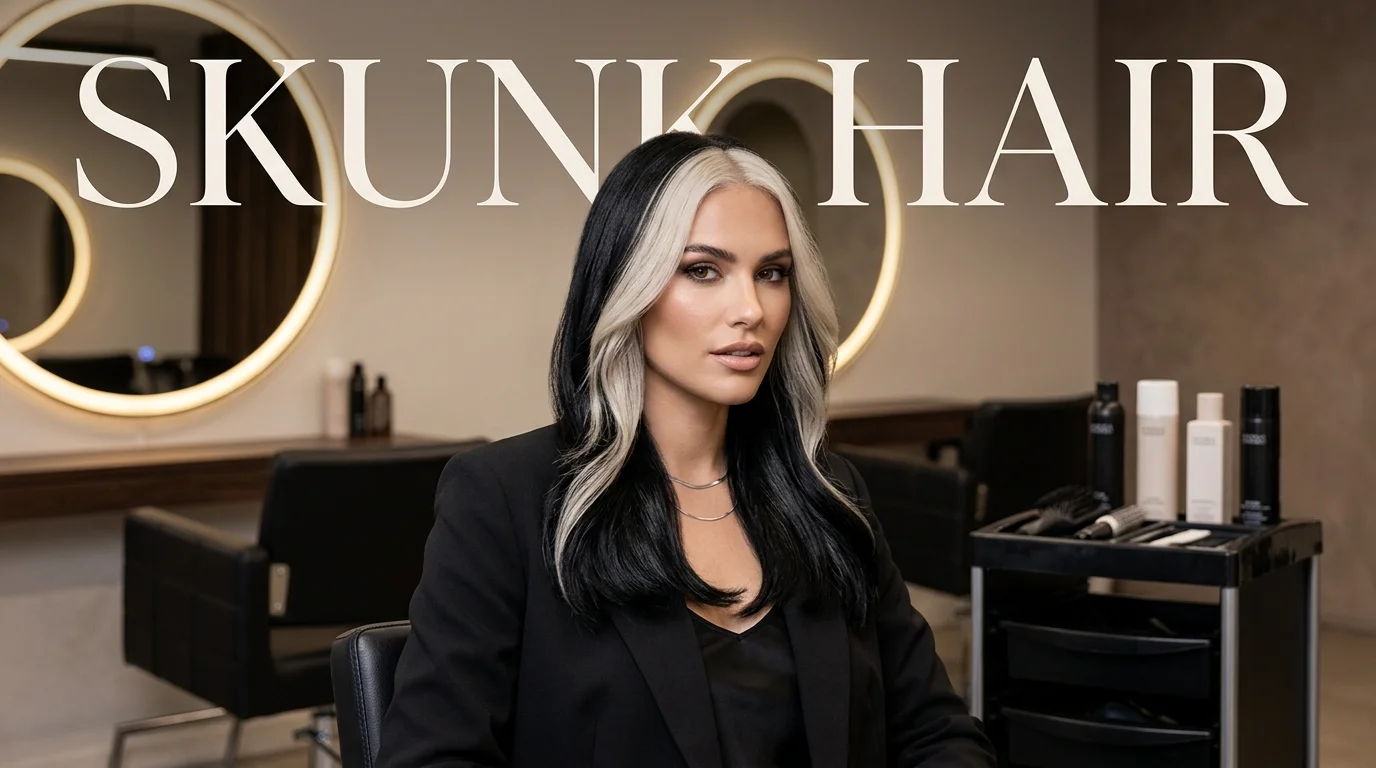
Skunk hair is a high-contrast colour-blocking look built around one or more distinct panels rather than blended highlights. The classic version pairs a dark base with a platinum or white stripe. Current versions also use copper, red, blue, pink, grey, and softer brunette pairings. The key is deliberate contrast, clean placement, and an upkeep plan you can live with.
This look uses thick, separated colour panels with stronger contrast than a standard money piece. Black and platinum remain the clearest reference point, but the same idea works with warm browns, vivid shades, or an underlayer. Placement determines how bold the look feels and how noticeable regrowth becomes.
At a Glance
| Decision | Lower-impact option | Bolder option |
|---|---|---|
| Contrast | Brown with caramel or copper | Black with platinum or vivid colour |
| Placement | Hidden underlayer | Front panel or half-and-half |
| Commitment | Clip-in extension or wig | Lightened and coloured panel |
| Grow-out | Less noticeable with softer tones | More visible with strong root contrast |
| Main question | Does the placement suit you? | Are you ready to maintain the contrast? |
What the Look Means in 2026
The trend is no longer limited to a white streak against jet-black hair. Current 2026 hairstyle roundups feature coloured panels, curly versions, bangs, side sections, half-and-half colour, and softer blonde-and-brunette combinations.
That flexibility is useful. You can borrow the strong colour-blocking idea without copying the most dramatic version. The result can feel graphic, punk-inspired, playful, or more restrained, depending on the stripe width and level of contrast.
For ideas beyond colour, browse StyleVanta’s latest hair and fashion guides to see how the hairstyle can fit into your wider look.
How Skunk Hair Differs From a Money Piece and Split Dye
These styles can overlap, but they don’t create the same visual effect. L’Oréal describes a skunk stripe as chunkier and more strongly contrasted than a typical money piece. Money pieces usually concentrate brightness around the face.
| Style | Typical placement | Contrast | Visual effect |
|---|---|---|---|
| Skunk stripe | Front, side, underlayer, or another defined panel | High | Deliberate colour block |
| Money piece | Around the face | Soft to bold | Brightens and frames the face |
| Split dye | Large sections or opposite halves | Usually high | Two large colour zones |
| Peekaboo colour | Beneath the top layer | Any level | Hidden until the hair moves |
If you like the face-framing effect but don’t want a large panel, a stronger money piece may be an easier middle ground.
Choose Your Placement Before Your Colour
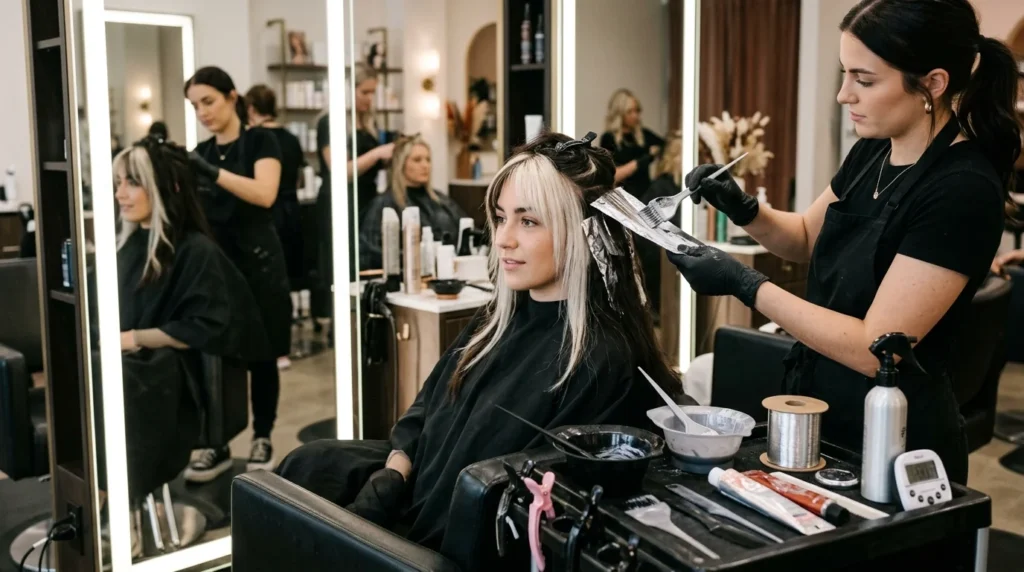
A face-framing panel gets noticed first, especially when centred. It also makes root growth easier to see. A single side stripe looks more asymmetrical and can be positioned away from the centre of the hairline. An underlayer stays quieter when the hair is down, then appears in ponytails, clips, and updos.
Half-and-half colour creates the largest visual change. It also gives you the least flexibility if you later decide you want a subtler look.
Your hairline shape can affect how a front section sits. StyleVanta’s guide to choosing a flattering hairstyle for a widow’s peak can help you think through front placement before choosing a section.
9 Colour Pairings Worth Considering
Black and platinum is the reference look, but it isn’t your only option. Current inspiration pages also feature reds, blues, pinks, greys, and warmer combinations.
- Jet black + platinum: maximum light-dark contrast.
- Espresso + icy beige: graphic without pure white.
- Dark brown + caramel: a warmer, softer interpretation.
- Chocolate + copper: rich contrast with less tonal distance.
- Black + cherry red: sharp and saturated.
- Black + cobalt blue: cool-toned and highly visible.
- Brunette + magenta: colourful without changing the whole head.
- Silver + black: a monochrome variation with strong separation.
- Warm brown + creamy blonde: lighter contrast with a softer finish.
Take reference photos to your appointment. Colour names can mean different things to different people, while a picture makes the desired contrast much clearer.
Use a Commitment Ladder Before You Colour
One useful way to choose the technique is to decide how permanent you want the result to be.
| Commitment | Route | What to expect |
|---|---|---|
| Low | Clip-in panel or wig | Tests colour and placement without chemical lightening |
| Medium | Semi-permanent colour on light or pre-lightened hair | Colour fades, but previous lightening remains |
| High | Lightened panel with toner or permanent colour | Clearest contrast and the most visible grow-out |
A temporary colour may not show strongly on naturally dark hair. Clip-ins and wigs give you a more predictable way to test the look without changing your natural colour.
For dark hair paired with a much lighter stripe, significant lifting is commonly required. Research on peroxide bleaching shows damage to both the cuticle and cortex, with protein loss increasing as bleaching severity increases.
What to Ask Your Colourist Before the Appointment
Break the look down into six decisions instead of asking for a vague “chunky stripe.”
- Show the exact panel width you like.
- Decide whether it starts at the hairline, on the side, or underneath.
- Show the amount of contrast you want.
- Ask whether your current colour needs to be lightened first.
- Explain how much regular maintenance you’re willing to do.
- Ask how you could return to one colour later.
That final question matters. Returning a very light panel to a darker shade can require a separate colour plan rather than simply covering it once.
If you want more hair-focused content from the site, you can also browse more hair guides from Sophie Palmer.
Keep the Contrast Fresh Without Overworking Your Hair
Treat a lightened panel as colour-treated hair. Gentle cleansing, conditioner, heat protection, and occasional conditioning treatments can help manage dryness. Blonde or cool-toned sections may also need toning as warmth becomes more visible.
Don’t book touch-ups according to somebody else’s schedule. The right timing depends on your rate of hair growth, placement, starting colour, and how much root contrast bothers you. A narrow underlayer can tolerate more visible grow-out. A platinum panel beside dark roots usually makes regrowth noticeable sooner.
Your Next Step
Save two or three reference photos before booking. Pick one for placement, one for colour, and one for the amount of contrast you want. Then ask your colourist what that result will require for your current hair. A good plan should cover the first appointment, ongoing care, and how you would change the look later.
Frequently Asked Questions
Is skunk hair still in style in 2026?
Yes, it remains active in 2026 editorial hairstyle coverage. Newer versions extend beyond the original black-and-white combination, with colourful stripes, softer neutrals, textured hair, and different panel placements appearing in current roundups.
Does a skunk stripe require bleach?
Not every version does. Dark hair usually needs lightening if you want a pale blonde or vivid, high-contrast section. Naturally light or previously lightened hair may take some semi-permanent shades without another full bleaching step.
Is it the same as a money piece?
No. A money piece focuses on face-framing highlights and can be fairly soft. A skunk stripe is usually thicker, more separated, and designed to create obvious colour contrast.
Can curly or short hair wear the trend?
Yes. Current inspiration collections show the colour-blocking idea on curls, short cuts, bangs, and longer styles. The shape of the stripe changes with your hair texture and haircut, so placement matters more than length alone.
Can I try the look without permanently colouring my hair?
Yes. A clip-in extension or contrasting wig lets you test the placement and colour first. Temporary sprays can also work, though the result depends on your starting shade and the product you use.