
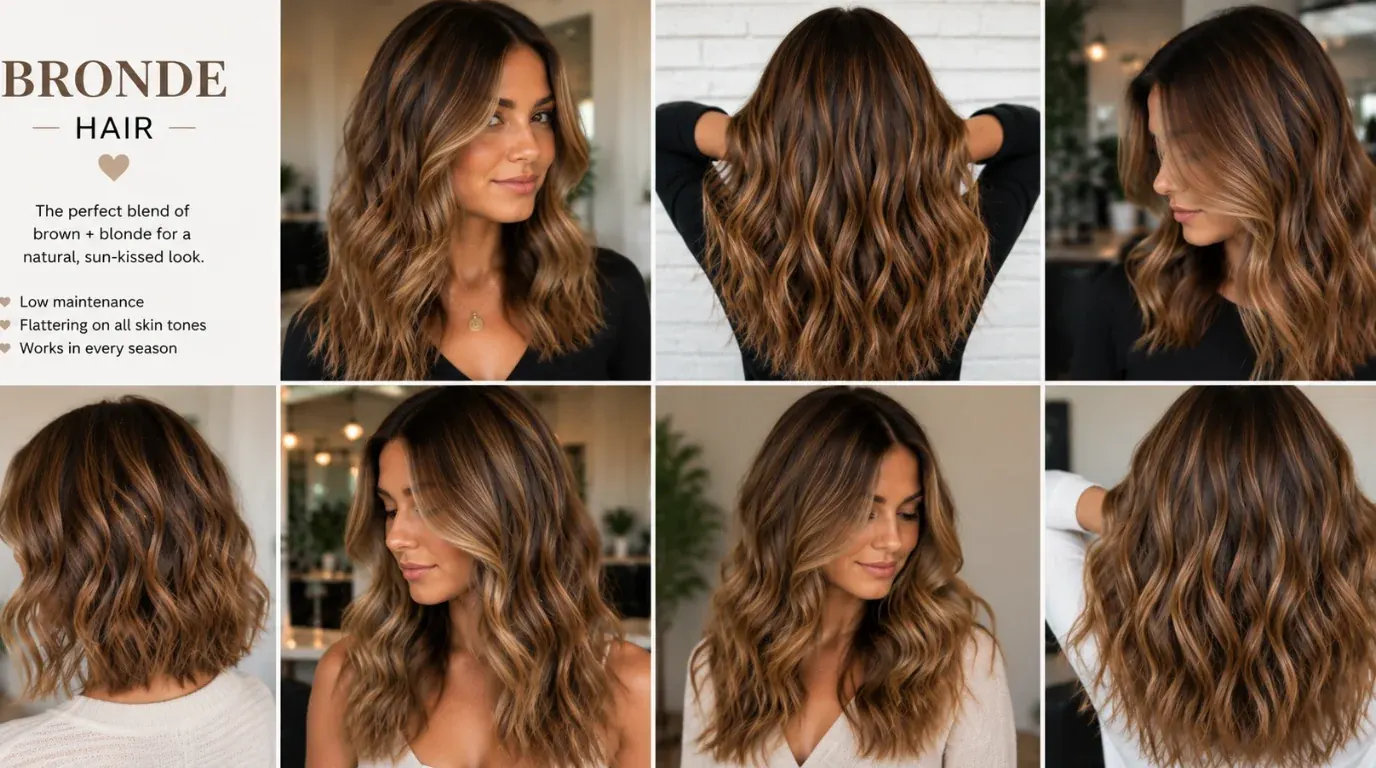
Bronde hair blends brunette depth with blonde brightness, usually through highlights, balayage, a root melt, or selective face-framing pieces. The most flattering version keeps enough brown to suit your natural base, then adjusts the blonde tone, whether golden, beige, caramel, or ash, to suit your undertone, contrast preference, and upkeep.
| Bronde Hair | What to know |
|---|---|
| Color family | A blend of brunette and blonde |
| Common tones | Honey, caramel, beige, gold, ash, and neutral brown |
| Popular techniques | Balayage, fine highlights, root melts, and face-framing pieces |
| Good for | Brunettes going lighter or blondes wanting more depth |
| Lower-upkeep approach | Keep roots close to your natural color. |
| Main maintenance focus | Tone, moisture, and protecting lightened sections |
Quick take
If you want a noticeable change without committing to solid blonde, this brown-and-blonde blend offers plenty of flexibility. You can keep it deep and subtle or make the lighter pieces much more visible. The key is to decide three things before your appointment: how light you want to go, how warm or cool you want the color to be, and how much upkeep fits your routine.
What Is Bronde Hair?
The term combines “brown” and “blonde.” Rather than describing a single fixed shade, it refers to a color result that falls between the two. The Cambridge Dictionary defines bronde as a hair color that combines brown and blonde areas, while professional color guides commonly describe it as a customizable, dimensional blend.
That distinction matters because two people can ask for the same color name and leave the salon with different results. One version may have a chocolate base with fine caramel ribbons. Another may sit closer to dark blonde with a soft brunette root.
Balayage is a common way to create the effect, but it isn’t the color itself. Balayage describes a freehand highlighting technique. Bronde describes the finished color balance. For a closer look at placement, StyleVanta’s guide to modern ombré hair explains how gradients and painted color differ.
12 Bronde Color Ideas to Compare
There isn’t one formula that suits every base or complexion. Use these ideas to narrow down the depth, warmth and placement you prefer.
| Color idea | What it looks like | Consider it if you want… |
|---|---|---|
| 1. Classic caramel blend | Medium brown with caramel ribbons | Warm, visible dimension |
| 2. Honey brunette | Golden highlights over a warm brown base | A sunlit finish without full blonde |
| 3. Beige neutral blend | Beige blonde mixed through neutral brown | Less obvious gold |
| 4. Ashy brunette-blonde | Cool brown with muted ash pieces | A cooler finish |
| 5. Rooted dark blonde | Deep roots fading into dark blonde lengths | Softer regrowth |
| 6. Face-framing ribbons | Lighter pieces concentrated near the face | Brightness without coloring everything |
| 7. Fine babylight blend | Narrow, scattered highlights | Subtle dimension |
| 8. Brunette balayage | Painted lightness through mids and ends | A softer grow-out |
| 9. Mushroom-toned blend | Taupe and beige against muted brown | A cool-to-neutral result |
| 10. Golden bronze blend | Rich brown with warm gold reflections | More warmth without pale blonde |
| 11. Deep dimensional brunette | Dark base with restrained lighter ribbons | A change that still reads brunette |
| 12. Light brown-blonde melt | Light brunette gradually shifting toward blonde | A brighter result with blended roots |
If warm shades appeal to you, compare them with StyleVanta’s honey-brown color ideas. If you prefer taupe and ash, the mushroom-brown hair guide shows a cooler direction.
Choose the Tone Around Your Undertone
Skin depth and undertone aren’t the same thing. Fair, medium, and deep complexions can each have warm, cool, neutral, or olive undertones. Use undertone as a starting point rather than a rule. L’Oréal’s color guidance notes that the shade can be adjusted across warm, neutral, and cool directions, which is one reason the color works across many complexions.
Warm or golden undertones often pair naturally with honey, caramel, and golden beige. Cool undertones may prefer neutral beige, taupe, or softer ash. Neutral undertones can move in either direction. Olive complexions often benefit from preserving enough brunette depth so lighter pieces don’t become the only visible feature.
StyleVanta’s guide to hair color for brown skin has more examples based on undertone and contrast. Your preference still matters more than a color chart. If you love a warmer shade despite having a cool undertone, a colorist can adjust its depth and placement rather than ruling it out.
Balayage, Highlights, or a Root Melt?
The technique changes how the color looks and grows out. Balayage selectively adds lightness and often leaves more natural depth near the roots. It works well when you want a softer transition and less obvious regrowth.
Traditional or fine highlights can create more brightness from higher on the head. Fine pieces keep the result blended, while wider sections produce stronger contrast. A root melt, or shadow root, blends a deeper root into lighter lengths. This can help a blonde move darker without making the change look abrupt.
If maintenance is your main concern, keep your root close to its natural depth and concentrate the lighter color where it can grow out softly. Current professional guidance also emphasizes keeping depth beneath lighter pieces to avoid a blocky result.
What to Tell Your Colorist
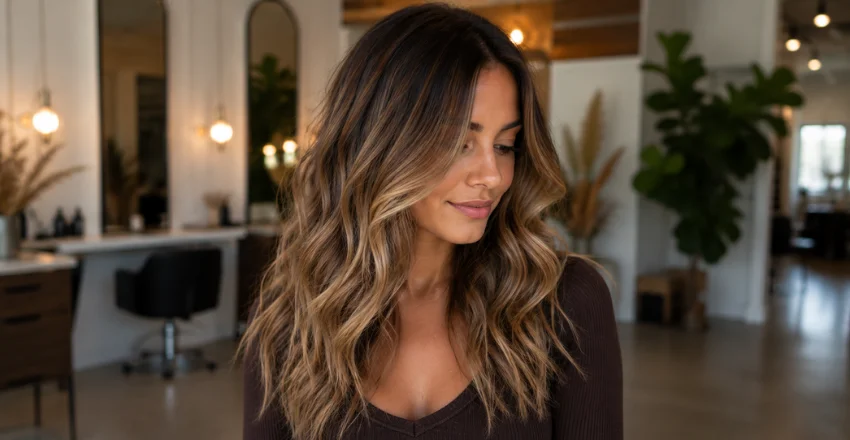
A photo is useful, but a clear description is better than relying on a shade name alone.
Tell your colorist your natural color, previous dye history, and whether any sections have been bleached. Then explain whether you want the final result to read more brunette or more blonde.
You can also specify a few more details.
- The amount of brightness you want around your face.
- Whether you prefer honey, caramel, beige, neutral, or ash tones.
- How much natural root you want to keep.
- How often are you comfortable returning for colour services?
- Whether you want noticeable contrast or a subtle blend.
A useful salon request could sound like this. “I want to stay brunette overall, with soft beige-golden ribbons, natural-looking roots, and a little more brightness around my face.” That gives the colorist more useful information than asking for a trend name by itself.
How to Maintain the Color
Lightened sections usually need more care than untreated hair. The American Academy of Dermatology notes that significant lightening can make hair more prone to dryness and damage, especially when moving several shades lighter.
Wash according to your scalp and hair needs rather than trying to preserve color by avoiding shampoo for long stretches. Use conditioner on the lengths, limit unnecessary high heat, and use heat protection when styling. If pale sections start looking more yellow than you prefer, an occasional toning product may help.
StyleVanta’s purple shampoo guide explains when violet pigment is useful and when it can be unnecessary. You may also need a gloss or toner between larger color appointments. How often depends on your formula, washing routine, water, heat exposure, and the amount of lightening involved.
A Canadian Safety Note for At-Home Cooking
If you plan to color your hair at home in Canada, read the package directions and warnings each time. Health Canada states that permanent and semi-permanent hair dyes using certain colorants must include skin-irritation warnings and instructions for a preliminary patch test.
The agency advises repeating the patch test before every use because sensitivity can develop after earlier, problem-free applications. Stop using a product if the test area develops redness, burning, itching, blistering, or irritation. Follow the manufacturer’s processing time and don’t use hair dye on eyebrows or eyelashes.
Major lightening, correcting old box dye, or working over previously bleached sections can be less predictable. A professional consultation is a sensible choice when the color history is complicated.
Is Bronde Hair Right for You?
This color family makes sense when you like brunette depth but want more light around the face or through the lengths. It can also work for blondes who want a softer, deeper result without returning to solid brown. Start with the amount of maintenance you can live with. Then choose your depth, tone, and placement.
Save two or three reference photos that match your starting colour and texture. Bring them to your consultation and explain what you like about each one. That gives your colourist a clearer target than copying a single photo exactly.
Frequently Asked Questions
Is blonde hair low maintenance?
It can be. Rooted color, fine balayage, and selective highlights generally make regrowth less obvious than an all-over lighter color. Your maintenance still depends on how far the lighter pieces sit from your natural shade.
Does the color work on dark brown hair?
Yes, but the amount of lightening needed depends on how bright you want the blonde sections to be. A deep brunette can keep most of its natural depth and add restrained caramel or beige pieces.
Can the color be cool instead of golden?
Yes. Beige, taupe, and muted ash tones can create a cooler version. If you dislike strong warmth, show your colorist reference photos taken in natural light.
Is balayage the same thing?
No. Balayage is a color-application technique. The final shade can be brunette, blonde, copper, or another color family. A stylist can use balayage to create this particular brown-blonde result.
Will purple shampoo always be necessary?
No. It is most useful when lighter sections develop unwanted yellow tones. Golden or honey versions are intentionally warm, so aggressively neutralizing that warmth can work against your chosen color.
Can I get the look without going noticeably blonde?
Yes. Keep most of your base brunette and add narrow caramel, beige, or honey ribbons. This creates movement while preserving a darker overall impression.