
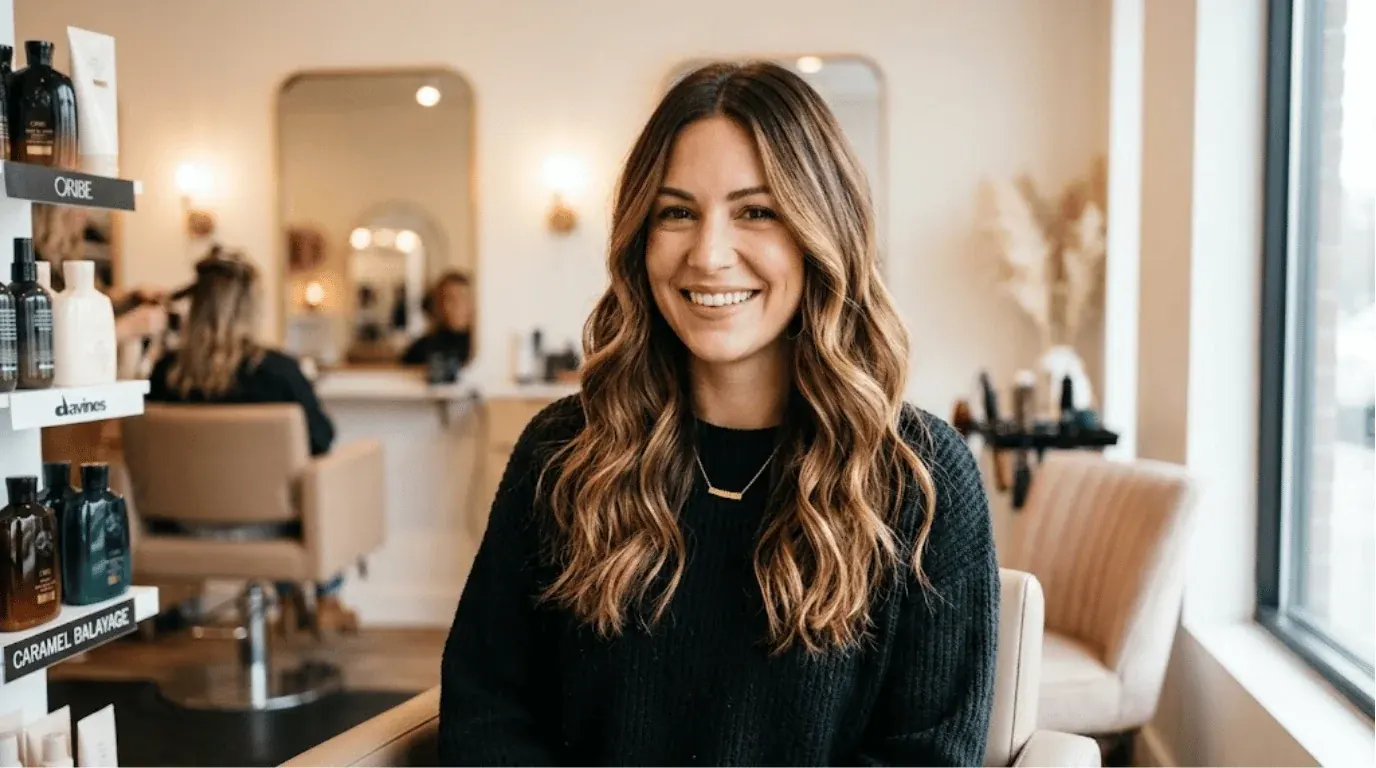
Caramel balayage adds warm golden-brown, amber, and toffee-toned dimension while keeping much of your natural base visible. The hand-painted placement can create anything from subtle brightness to stronger face-framing contrast. Your best version depends on your starting colour, undertone, hair condition, desired brightness, and how often you want salon maintenance.
| Quick fact | What to know |
| Colour family | Warm brunette to bronde |
| Common tones | Caramel, toffee, amber, honey-brown, soft gold |
| Best-known effect | Dimensional colour with a softer root transition |
| Common starting bases | Dark brown, medium brown, light brown, dark blonde |
| Lower-maintenance choice | A deeper root with selective mid-length and end brightness |
| Canadian salon pricing | Published balayage examples commonly range from about CA$150 to CA$350+ |
| Main care focus | Protect lightened lengths, maintain tone, and limit unnecessary heat |
StyleVanta’s broader guide to what balayage is and how it works explains that the technique uses freehand placement rather than one fixed shade. Canadian pricing also varies by salon, stylist level, hair length, density, and what the service includes.
12 Caramel Balayage Ideas to Consider in 2026
- Classic caramel on chocolate brown. Keep the root rich and deep, then add medium-width warm ribbons through the mid-lengths. This gives brunette hair visible movement without pushing the result toward blonde.
- Soft caramel on dark brown hair. Choose finer painted sections and keep the lightness within a few levels of the base. The lower contrast can make grow-out feel less obvious and keeps the result understated.
- Espresso with warm face-framing pieces. Concentrate more brightness around the face while leaving the back deeper. This works well if you want a noticeable change without lightening a large percentage of your hair.
- Toffee-toned brunette. A richer caramel that leans brown rather than yellow can suit anyone who wants warmth without a strong golden finish. It also pairs naturally with chocolate and chestnut bases.
- Honey-caramel ribbons. Blend deeper amber pieces with brighter golden sections for more tonal variety. If you prefer a more golden result, StyleVanta’s honey-brown hair guide shows how honey tones differ from deeper caramel shades.
- Caramel money pieces. Use brighter sections near the hairline while keeping the rest of the colour quieter. Ask for a soft blend at the roots if you don’t want the front pieces to look stripey as they grow.
- Warm ribbons on curls and coils. Strategically painted sections can make individual bends and curls more visible. Placement matters more than copying a pattern designed for straight hair, so bring reference photos with a similar texture.
- Caramel on a bob or lob. Shorter hair gives the colour less vertical space to blend. Finer placement or a restrained face frame can keep the transition balanced, rather than concentrating too much lightness at the ends.
- Rooted caramel bronde. Keep a brunette crown and gradually increase brightness through the lower lengths. This gives you a lighter result while preserving depth near the scalp.
- Chestnut and caramel blend. Combining red-gold chestnut with amber-brown ribbons creates richer warmth than a classic golden brunette. This can be a useful direction if pure honey tones feel too yellow.
- Muted caramel for neutral or olive undertones. Caramel doesn’t have to be strongly orange or gold. A colourist can soften the warmth with beige or neutral-brown tones while keeping enough amber to preserve the caramel effect.
- Dark-to-caramel gradient. If you want the ends to become clearly lighter than the roots, ask whether a stronger gradient makes more sense than scattered ribbons. StyleVanta’s ombre hair guide explains how ombré differs from hand-painted placement.
Current inspiration pages consistently favour brunette bases, soft root transitions, face-framing brightness, and variations from deep toffee through lighter honey-caramel tones.
Choose the Tone Around Your Undertone and Desired Contrast

A shade name alone doesn’t tell you whether a colour will suit you. Two people can ask for “caramel” and leave with noticeably different results because depth, warmth, and placement change the finished effect.
Warm complexions can pair naturally with gold, amber, and richer toffee tones. Neutral or olive complexions may prefer a slightly muted caramel with less yellow. Cooler complexions can still wear warm brunette colour, but a beige-brown version may create a softer contrast.
Skin depth also matters separately from undertone. StyleVanta’s hair-colour guide for brown skin explains why complexion depth and undertone should be considered as separate decisions rather than rigid colour rules.
Does Dark Hair Need to Be Lightened First?
Often, yes, when the goal is clearly lighter ribbons on a naturally dark base. Deposit-only colour can change tone, but it cannot create the same visible lift on deep untreated hair.
How much lightening you need depends on your starting level and the target photo. Previous permanent colour also affects what a stylist can achieve safely. A dark or previously coloured base may require staged appointments rather than a single aggressive session.
That is why your colour history matters. Tell your colourist about bleach, box dye, permanent colour, straightening, or other chemical services before the appointment. StyleVanta’s main balayage guide also recommends judging the condition of the mid-lengths and ends before significant lightening.
How Much Maintenance Should You Expect in Canada?
The painted sections themselves remain lightened, but the tone, shine, and contrast can change as your hair grows and the toner fades. StyleVanta found current salon guidance places larger balayage refreshes at around 8 to 16 weeks, although softer placements can sometimes be worn longer.
Your schedule depends on how bright you go. A subtle brunette blend with a natural root generally gives you more flexibility than pale pieces placed close to the scalp.
Lightened hair may also feel drier, especially at the ends. Use conditioner consistently, protect your hair before hot styling, and avoid adding heat when you don’t need it. If processed lengths become rough, StyleVanta’s guide to choosing a hair mask for dry hair can help you match treatment weight to your texture and level of damage.
What to Tell Your Colourist
A useful consultation is more specific than asking for caramel balayage and showing one edited photo. Bring two or three examples with a starting depth and texture close to your own hair.
Explain whether you want subtle or obvious contrast, how bright the front should be, and whether you prefer gold, amber, toffee, or neutral warmth. Tell the stylist how often you’re willing to return and whether your main priority is brightness, easy grow-out, or protecting previously processed lengths.
A clear request might sound like this: “I want to keep my natural brunette root and add warm toffee-brown brightness through the mid-lengths and around my face. I want visible dimension, but I don’t want the ends to become pale blonde.”
That gives your colourist far more useful information than the colour name alone.
A Canadian Safety Note for At-Home Colour
If you use permanent or semi-permanent hair dye at home, follow the product label and its allergy-test instructions. Health Canada says these products must include warnings about potential skin irritation and instructions for a preliminary patch test. It recommends repeating the test before each use because sensitivity can develop after previous exposure.
Complex lightening is harder to control at home, especially on previously coloured hair. If you want several levels of lift, a colour correction, or precise hand-painted placement, a professional consultation can give you a clearer idea of what is realistic.
Your Next Step
Start by choosing the contrast, not the trendy shade name. Save two or three photos with a base colour, length, and texture similar to yours. Then discuss your colour history, desired warmth, maintenance budget, and the amount of lightening your hair can reasonably handle.
The strongest result should look intentional on your hair rather than like a copy of someone else’s photo.
Frequently Asked Questions
Is caramel balayage low maintenance?
It can be lower maintenance than colour placed directly from the root because the deeper root area helps soften visible regrowth. Toner or gloss may need attention before the lightened sections are repainted.
How long does the colour last?
There is no single expiry date. Your lightened sections remain, while warmth, toner, shine, and root contrast change over time. A larger refresh typically lasts about 8 to 16 weeks, depending on placement and your goals.
Can you get this look on black hair?
Yes, but visible caramel ribbons usually require some degree of lightening on a naturally black base. The amount of lift depends on the target shade, previous colour, and current hair condition.
Is caramel warmer than honey brown?
Caramel usually reads a little deeper and more amber or toffee-like. Honey brown tends to lean more clearly golden. The two can also be blended into a one-dimensional brunette result.
Does it work on short hair?
Yes. Bobs, lobs, and other shorter cuts can carry dimensional colour, but the placement needs to account for less blending space. Finer pieces or selective face framing can keep the result balanced.