
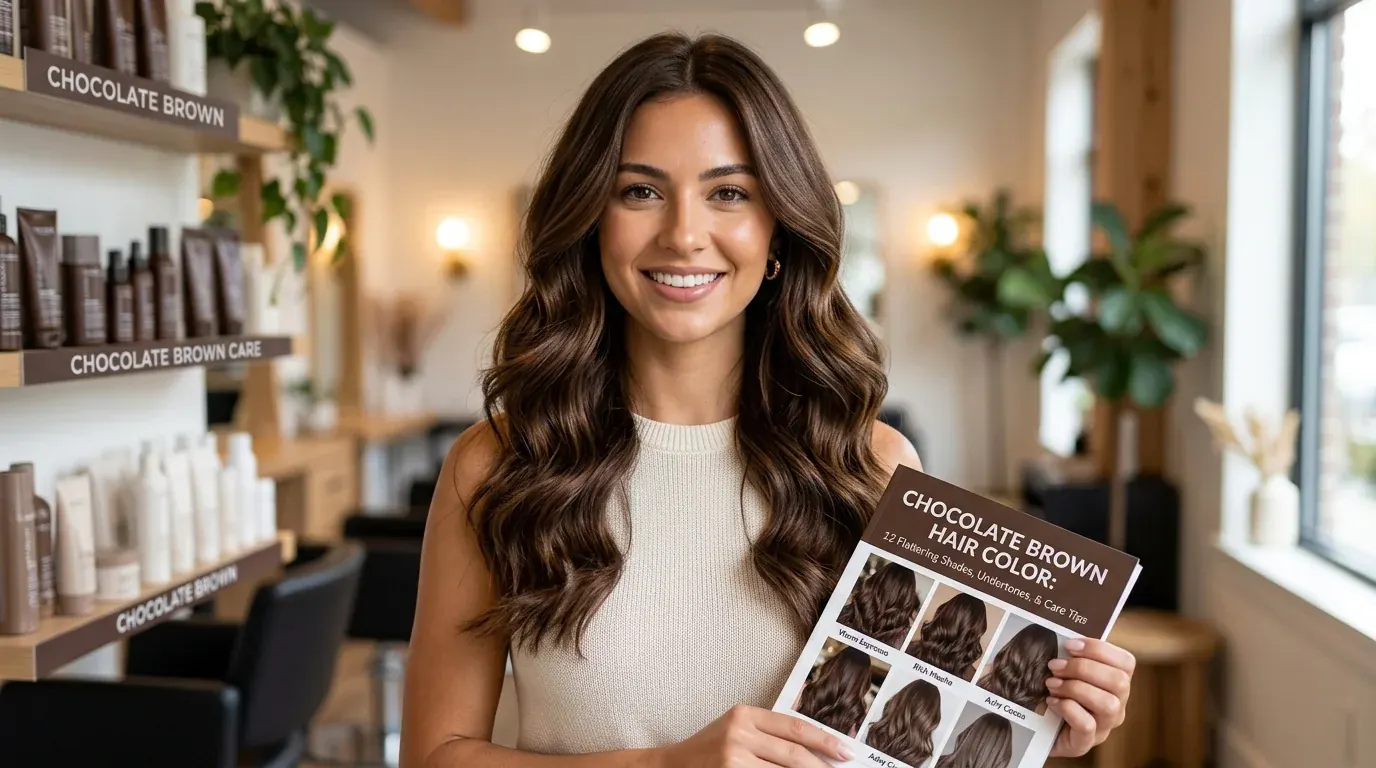
Rich brunette colour doesn’t have to look flat or one-dimensional. If you’re considering chocolate brown hair color, think of chocolate as a flexible colour family rather than a single fixed shade. It can range from soft milk-chocolate brunette to deep cocoa, with warm, neutral, or cooler undertones.
Chocolate brunette is a medium-to-deep brown colour with cocoa-like depth and customizable warm, neutral, or cool undertones. The right version depends on your natural base, skin undertone, and maintenance preferences. Choose all-over colour for uniform richness, balayage for softer grow-out, or highlights for more visible dimension.
| Quick fact | What to know |
| Colour family | Medium to deep brunette |
| Possible undertones | Warm, neutral, golden, red-brown, or cooler mocha |
| Popular finishes | Glossy all-over colour, balayage, highlights, face-framing pieces |
| Good starting bases | Light, medium, and dark brunette, with the process adjusted to your base |
| Lower-maintenance option | Rooted colour or softly placed balayage |
| Main care goal | Keep the brunette tone glossy while limiting unnecessary fading |
Current professional colour guides show how broad this colour family can be. Wella Professionals Canada features light, dark, caramel-accented, and dimensional versions rather than defining it as a single formula.
What Is Chocolate Brown Hair Color?
Chocolate brunette usually refers to a rich brown base with more depth and softness than a plain neutral brown. Classic versions often lean warm, but that doesn’t mean every result needs obvious gold or red tones.
A colourist can make the finish more neutral, add subtle mocha tones, deepen it toward dark cocoa, or brighten selected sections with caramel. This flexibility matters because your complexion, natural depth, and existing colour history can affect how the same inspiration photo looks on you.
The goal isn’t to match a dessert-inspired shade name perfectly. It’s to find the depth and undertone that create the effect you want.
12 Chocolate Brunette Ideas Worth Considering
- Classic glossy brunette: Choose a rich medium-brown base with restrained warmth and a polished, reflective finish.
- Dark cocoa brown: Keep the base deep and saturated for a subtle change on naturally dark brunette hair.
- Milk-chocolate brunette: Use a lighter brown base with soft beige or golden warmth for a gentler finish.
- Neutral chocolate: Balance warm and cool tones when you want richness without obvious red or gold.
- Mocha brunette: Add cooler brown notes for a deeper finish that feels less golden than classic chocolate.
- Chocolate balayage: Keep darker roots and paint lighter brown ribbons through the mid-lengths and ends.
- Caramel-accented brunette: Add warm caramel pieces when you want stronger contrast and more visible brightness.
- Fine chocolate highlights: Use narrow ribbons to break up a solid dark base without changing every strand.
- Face-framing brunette: Place slightly lighter brown sections around the face for a small but noticeable change.
- Chocolate on curls and coils: Strategic dimension can help individual curls catch the light without replacing the deeper base.
- Rooted light brunette: Keep your natural root depth while shifting the lengths toward a softer cocoa tone.
- Deep brown with subtle red warmth: Add controlled mahogany or red-brown notes for a richer, warmer finish.
Choose the Shade Around Your Undertone
Your skin undertone can help narrow your options, but it shouldn’t act as a strict rule. Hair texture, eye colour, contrast level, and personal preference also affect the final result.
| Your undertone | A useful starting direction |
| Warm | Golden cocoa, caramel accents, soft red-brown warmth |
| Cool | Neutral chocolate, mocha, cooler dark brown |
| Neutral | Classic chocolate, balanced beige-brown, subtle caramel |
| Olive | Neutral or warm-neutral brunette, adjusted to avoid excess orange |
If you have a cool complexion but love warmer brunette colour, you don’t need to avoid it. Keep the base more neutral and place warmth selectively through highlights or the ends. Professional guides also describe chocolate brunette as adaptable across undertones when the formula is customized.
Chocolate vs. Honey Brown, Chestnut, and Espresso
Shade names often overlap, so focus on the visible undertone and depth rather than the label.
| Shade | Typical depth | Main impression |
| Chocolate | Medium to deep brown | Rich, soft cocoa tones |
| Honey brown | Light to medium brunette | More obvious gold and amber |
| Chestnut | Medium brown | Warmer red, copper, or golden influence |
| Espresso | Deep brunette | Darker and often more neutral or cool |
If you want noticeably golden warmth, StyleVanta’s honey-brown hair guide is a better comparison. Chocolate usually stays richer and deeper, while honey tones place more emphasis on gold and brightness.
Can Dark or Black Hair Get This Look Without Bleach?
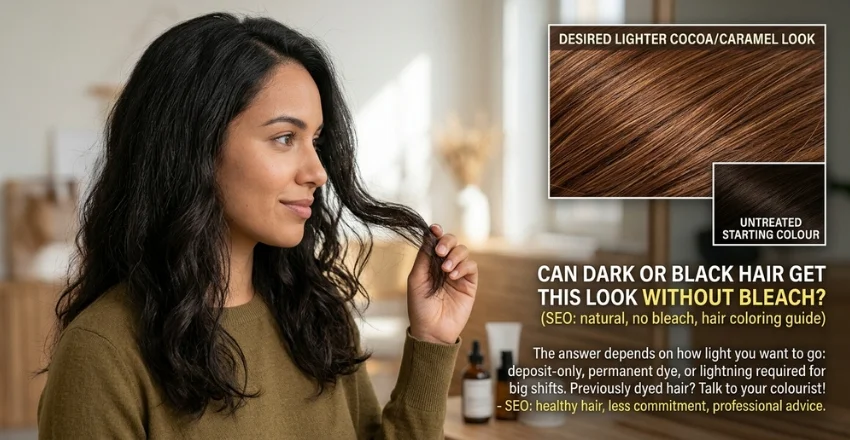
Sometimes, but the answer depends on how light you want to go.
A deposit-only formula can add brown warmth or richness when your starting colour is already suitable. It cannot significantly lighten naturally dark pigment. If you want to test a tonal change with less commitment, StyleVanta’s semi-permanent hair colour guide explains how deposit-only colour works.
Permanent dye may alter untreated natural pigment more noticeably, depending on the formula and your starting level. Review the permanent hair dye guide before choosing an at-home option.
A bigger shift from black or deep brown to visibly lighter cocoa or caramel ribbons may require lightening. Previously dyed dark hair can be more complicated, so share your complete colour history with your colourist.
All-Over Colour, Balayage, or Highlights?
Choose the technique based on the finish and level of maintenance you want.
| Technique | Result | Grow-out |
| All-over colour | Uniform, saturated brunette | Roots can become more noticeable |
| Balayage | Soft dimension through selected lengths | Usually more blended at the root |
| Highlights | Controlled ribbons and stronger contrast | Root regrowth may show sooner |
Balayage often makes sense if you like dimensional brunette colour but want to preserve your root depth. Traditional foils suit people who want more precise brightness. StyleVanta’s balayage vs. highlights guide compares placement, contrast, maintenance, and grow-out in more detail.
What to Tell Your Colourist
Don’t rely on the word “chocolate” alone. Bring two or three reference photos showing hair that is close to your natural starting depth.
Tell your colourist whether you want a warm, neutral, or cooler finish. Explain how much contrast you prefer and whether you want your natural root to remain visible. Share any previous permanent dye, bleach, henna, or other chemical services as well.
A clear request could be: “I want to stay brunette, with a rich medium-brown base, neutral-to-warm cocoa tones, soft dimension, and a root that grows out naturally.”
That gives the colourist far more useful information than a shade name alone.
How to Keep Rich Brunette Colour Looking Fresh
Wash and condition your hair according to your hair and scalp needs, using products that are suitable for coloured hair. Excessive heat can make processed lengths feel drier, so use heat protection when styling.
Glosses or toning services can refresh the visible tone when the colour starts to look dull. How often you need one depends on your formula, washing routine, starting shade, and chosen placement.
Sun exposure and repeated high-heat styling can also affect the appearance and condition of coloured hair. Professional colour-care guidance recommends protecting coloured lengths rather than relying only on frequent recolouring.
A Canadian Safety Note for At-Home Hair Dye
If you colour your hair at home in Canada, follow the product instructions and warnings every time.
Health Canada states that permanent and semi-permanent hair dyes must include warnings about possible skin irritation and directions for a preliminary skin test. It also advises repeating the patch test before every use because sensitivity can develop even after previous problem-free applications.
PPD, an ingredient used in some oxidative hair dyes, is a known sensitizer. Stop using a product if testing causes redness, burning, itching, blistering, or irritation. Never use regular hair dye to colour your eyelashes or eyebrows.
Your Next Step
Choose your preferred depth first, then decide on warmth and placement. Save reference photos with a starting shade similar to yours and compare them with your current colour history.
If you’re still deciding between techniques or related brunette shades, browse StyleVanta’s hair guides before your salon consultation. A clear idea of the depth, undertone, and level of upkeep you want will make the conversation with your colourist much easier.
Frequently Asked Questions
Is chocolate brown hair color warm or cool?
It can be either. Traditional versions often contain warm cocoa, caramel, or red-brown notes, but a colourist can create a neutral or cooler mocha result by adjusting the undertones.
Is this brunette shade suitable for cool skin tones?
Yes. A neutral or cooler brown base can work well, while warmer accents can be used more selectively. Your preferred level of contrast matters too.
Can naturally black hair become chocolate brunette without bleach?
A deeper tonal change may be possible without major lightening. A visibly lighter brown or caramel result may require lift, especially on previously coloured hair.
Is chocolate brunette high maintenance?
Not necessarily. A colour close to your natural depth can be fairly forgiving. High-contrast highlights or an all-over shade that differs significantly from your natural root usually make regrowth more noticeable.
Should I choose balayage or an all-over brown?
Choose balayage if you want dimension and a softer root transition. Choose all-over colour if you want a more uniform, saturated brunette result from roots to ends.