
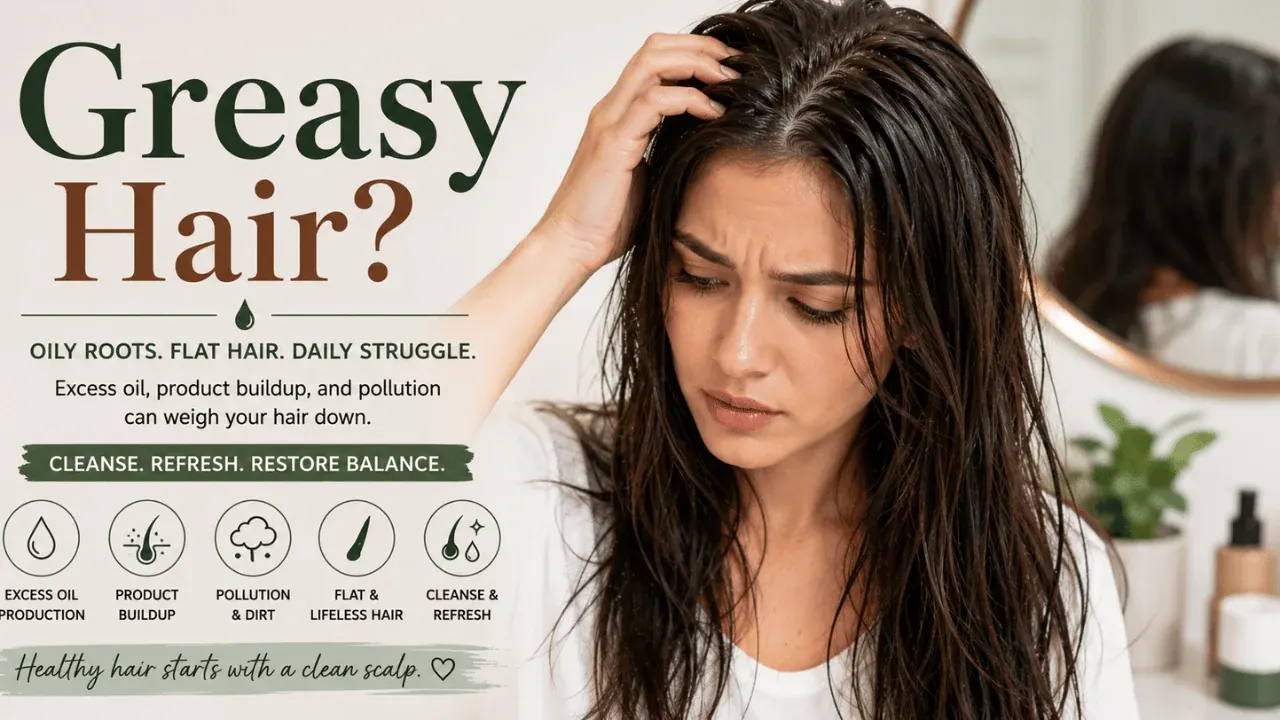
Greasy hair usually starts at the scalp, where sebaceous glands produce a natural oil called sebum. Your roots may become oily faster because of genetics, hormones, hair type, sweat, styling residue, or a routine that does not suit your scalp.
The Canadian Dermatology Association notes that straighter hair textures tend to become oily sooner than curly or kinky textures. It also recommends adjusting shampoo frequency according to your scalp and hair type rather than following one schedule for everyone.
Oily Roots briefly
| Greasy Hair | Possible reason | What to try first |
| Roots look oily within a day. | Natural sebum production, fine hair, or straight strands | Wash as needed with a suitable cleanser. |
| Roots feel coated after washing. | Product residue or incomplete rinsing | Rinse thoroughly and reduce heavy products near the roots. |
| Ends feel dry, but roots look oily. | Different needs at the scalp and lengths | Cleanse the roots and condition mainly the lengths. |
| Oil appears after workouts. | Sweat mixing with sebum and residue | Cleanse as needed after heavy sweating. |
| Flakes appear with oil | Dandruff or seborrheic dermatitis may be involved. | Consider an appropriate dandruff shampoo. |
| Hair feels dull or stiff after a water change. | Mineral buildup may be contributing. | Consider whether a chelating cleanser suits the problem. |
What Causes Greasy Hair?
Sebum is normal. It helps protect the scalp and provides lubrication for the hair. The problem begins when oil becomes visible faster than you would like or combines with sweat, dead skin cells, and product residue. Several factors can affect how quickly this happens.
Your natural oil production
Some scalps naturally produce more sebum than others. Hormonal activity and genetics can influence oil production, so two people using the same products may need different washing schedules.
You cannot judge scalp cleanliness by how many days have passed since your last wash. Instead, pay attention to visible oil, discomfort, sweat, residue, and how your roots respond.
Straight or fine strands
Oil moves down straight strands more easily, which can make the roots look greasy sooner. Fine hair may also lose volume quickly when coated with sebum.
If this describes your hair type, Stylevanta’s straight-hair care guide explains how hair texture, product weight, and scalp oil can affect your routine.
Styling-product buildup
Oils, waxes, creams, serums, hairsprays, and repeated dry-shampoo use can accumulate around the roots. The result may resemble excess sebum even when your scalp’s oil production has not changed.
Apply heavier products from the mid-lengths downward unless the label specifically instructs you to use them on the scalp.
Sweat and frequent touching
Exercise, warm conditions, and frequently touching your hair can spread oil and sweat through the strands. Brushing may also move scalp oil farther down the hair shaft. Try to avoid excessive or vigorous brushing when oiliness is a concern.
Dandruff or seborrheic dermatitis
Oiliness combined with persistent flakes, itching, redness, or scaly patches may indicate more than a cosmetic issue. Seborrheic dermatitis commonly affects oily areas such as the scalp and can cause greasy-looking scales.
Medicated dandruff shampoos are commonly used to manage these symptoms. Follow the product instructions carefully because active ingredients and recommended contact times can vary.
7 Ways to Keep Oily Roots Under Better Control
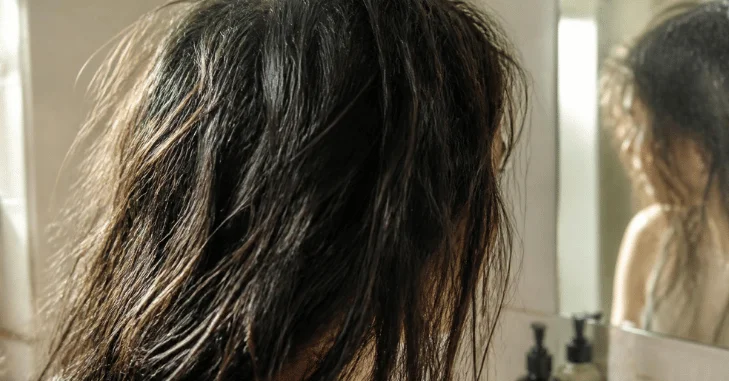
You do not need a complicated routine. Start with steps that address the scalp directly, then change one part of your routine at a time.
1. Wash according to your scalp.
There is no benefit in stretching wash day if your roots already feel coated and uncomfortable.
Shampoo frequency can range from daily to weekly depending on hair texture, scalp oil levels, and personal needs. People with straight hair and oily scalps may prefer more frequent washing.
2. Put shampoo where the oil is.
Work your cleanser into the scalp instead of aggressively scrubbing the entire length of your hair.
This helps remove sebum, dead skin, sweat, and product residue where they collect most. The shampoo that runs through the lengths while rinsing is often enough to clean them without exposing drier ends to excessive cleansing.
If you need help choosing a suitable formula, compare the Canadian options in Stylevanta’s shampoo for oily hair guide.
3. Rinse more thoroughly.
Roots that feel waxy immediately after washing may still contain shampoo, conditioner, or styling-product residue.
Spend extra time rinsing around the crown, hairline, and back of the scalp. If you have thick hair, separate sections with your fingers so the water can reach the scalp properly.
4. Keep rich conditioner away from oily roots.
Your scalp and ends do not need to receive the same treatment.
If you have fine or straight hair, concentrate conditioner mainly on the mid-lengths and ends. Drier, curlier, or coarser hair may need more conditioning, but that does not mean the scalp needs a layer of rich cream.
5. Use clarifying products for the right problem.
A clarifying cleanser can help remove accumulated sebum and styling residue, but it should not automatically become your everyday shampoo.
If the coated feeling began after moving, swimming, or repeated exposure to hard water, mineral buildup may be contributing to the problem. Stylevanta’s chelating-shampoo guide explains how mineral removal differs from ordinary clarifying.
6. Treat dry shampoo as a temporary solution
Dry shampoo absorbs visible oil, but it does not actually wash the scalp.
Rather than continually layering powder or spray over existing residue, return to regular shampoo and water after using dry shampoo between washes.
Apply a small amount only where needed, allow it to work for the time recommended on the label, and then distribute or remove any excess as directed.
7. Stop trying to “train” your scalp through discomfort.
Skipping washes may help reduce styling time, but there is little reason to tolerate uncomfortable, oily roots because you expect your scalp to eventually produce less oil.
Sebum production is influenced mainly by factors such as hormones and genetics. Simply delaying shampooing does not reliably retrain sebaceous glands to produce less oil.
Choose a washing schedule that keeps your scalp comfortable without unnecessarily drying out the lengths of your hair.
Why Do Your Roots Look Oily Right After Washing?
When your roots look greasy almost immediately after washing, the problem may involve more than natural sebum production.
Possible causes include:
- Conditioner applied too close to the scalp
- Shampoo or conditioner that was not rinsed out completely
- Heavy serums, oils, waxes, or leave-in products
- Dry-shampoo residue from previous days
- A cleanser that does not remove your usual styling buildup effectively
- Mineral deposits that create a coated feeling
- An oily or flaky scalp condition that requires targeted care
Change one part of your routine first. For example, keep conditioner below the ears for several washes and see whether your roots stay lighter for longer.
If nothing changes, assess your cleanser and potential product buildup next.
When Should You See a Dermatologist?
Routine oiliness is usually a grooming concern rather than a medical emergency. Consider booking an assessment if the greasiness is accompanied by persistent redness, burning, sores, thick scaling, significant itching, or noticeable hair shedding.
A dermatologist can distinguish ordinary oil buildup from conditions such as seborrheic dermatitis, psoriasis, or product reactions. You should also seek professional advice if an over-the-counter dandruff routine does not improve persistent scalp symptoms.
Conclusion
Greasy hair is usually a result of natural sebum production combined with factors such as hair texture, sweat, styling-product buildup, and scalp conditions. The most effective approach is to build your routine around your scalp rather than following a fixed wash-day schedule.
Wash as often as your scalp requires, focus shampoo on the roots, keep richer conditioners on the lengths, and use dry shampoo only as a temporary between-wash option. If oiliness comes with persistent itching, redness, heavy flaking, sores, or increased shedding, professional advice can help identify an underlying scalp condition.
Build a Routine Around Your Scalp, Not a Wash-Day Rule
Oily roots do not necessarily mean you are doing something wrong. Start by matching your shampoo frequency to the amount of sebum and buildup your scalp produces. Cleanse the scalp thoroughly, protect drier ends, reduce unnecessary products near the roots, and use clarifying or medicated formulas only when the problem calls for them.
For a practical next step, compare Stylevanta’s Canadian oily-scalp shampoo options and choose a cleanser that suits your hair type, washing frequency, and any dandruff or buildup concerns.
Frequently Asked Questions
How often should I wash an oily scalp?
Wash your hair according to how quickly oil, sweat, and buildup appear. Some people with straight hair and oily scalps may prefer daily shampooing, while drier, curly, or coily hair often benefits from less frequent washing.
Can greasy hair be caused by washing too often?
A harsh or poorly matched cleanser can leave the scalp or hair lengths feeling dry, but washing more often does not automatically mean your sebaceous glands will produce extra oil. Match your cleansing frequency and shampoo strength to your scalp rather than following a rigid rule.
Why does my scalp get oily after one day?
Natural sebum production, straight or fine hair, exercise, product residue, and frequent touching can all make oil visible quickly. Experiencing oiliness after one day does not automatically mean your routine is wrong.
Is dry shampoo good for oily roots?
Dry shampoo can make roots look fresher between washes because it absorbs excess oil. However, it does not remove sebum, dead skin, sweat, or accumulated product in the same way as shampoo and water.
What if my scalp is oily but my ends are dry?
Treat the two areas differently. Cleanse the scalp thoroughly and concentrate conditioner on the drier mid-lengths and ends. Avoid coating the roots with oils or rich masks unless the product is specifically intended for scalp use.